The Shirt Pulled at the Instant of the Shot (Claims)
These frames sit at the exact second Charlie Kirk was killed, which is why they are argued over so hard: they are the closest visual record anyone has of the explosive-device explanation for his death.
:::caution Attributed claims only The ordinary baseline is that fabric on a body struck by a high-energy projectile moves violently and unpredictably, and that reading meaning into individual frames of a compressed zoom is a textbook route to seeing patterns that are not there. The theory's own cited explosives expert contradicts the theory's mechanism, and this page leads with that. Everyone named below is discussed as a claimant or a subject of claims, not as someone accused of a crime by this site. Tyler Robinson is charged, not convicted. :::
Claim snapshot
| Field | Value |
|---|---|
| The claim | A 4K close-up reportedly shows a blast beginning at the left-side mic pack, an object driven up under the fabric, the shirt "pinched" and yanked over the left shoulder toward the neck wound, then falling diagonally to the lower right |
| Exact time in window | 12:23:30 PM MT — the instant of the shot |
| Raised by | @matt82704417 (Matthew St Baker), crediting Jon Bray; Candace Owens; @realhonestash; @DiligentDenizen |
| First surfaced | Post dated 2026-06-21 |
| Rests on | Anonymous post — frame-by-frame interpretation of a zoomed video clip; no forensic report, no test, no chain of custody |
| Evidence rating | SPECULATIVE |
What is alleged
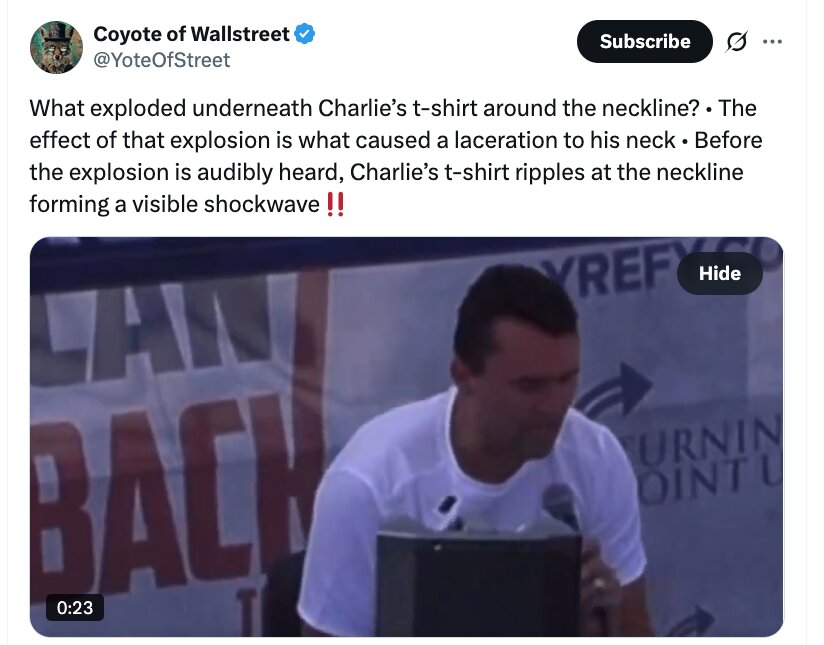
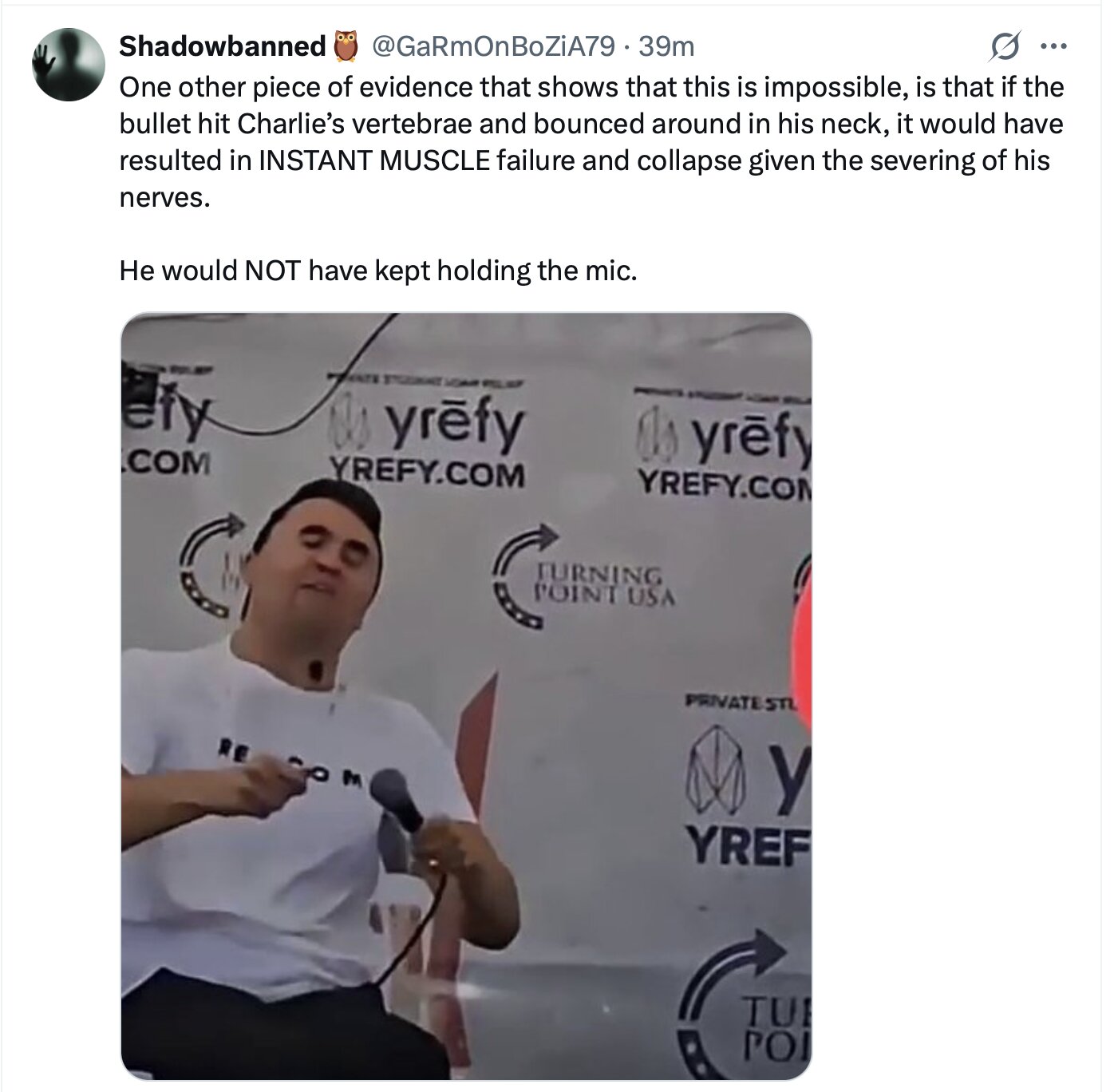
@matt82704417 (Matthew St Baker), crediting Jon Bray with the underlying work, posted what he called "visual proof" that the wound was caused by an internal explosion rather than a rifle round. His reading of the footage runs in five steps: the blast reportedly starts at the mic receiver pack on Kirk's left belt; the explosive force drives an object up under the shirt; the shirt is reportedly "pinched and yanked violently over his left shoulder" as the object travels toward the neck wound; the object then falls, tracking diagonally under the fabric; and a bulge is said to be visible as it comes to rest on the lower-right side of the shirt. He identifies the charge as PETN and writes: "It's over. The 30.06 gunshot narrative is dead."
The claim circulates alongside related exploding-mic material. Candace Owens has argued a rigged microphone explains a cluster of oddities at the scene, and has said her theory is that a shaped charge was intended for the chest and struck the neck instead. @DiligentDenizen amplified Owens photographs reported to show shattered tempered glass on the SUV floor, framed as debris consistent with a fragmented RØDE transmitter. @realhonestash amplified an Owens segment on early witnesses who described a chest wound.
Notice what the argument's language does. It calls the object at Kirk's belt "the modified battery pack." No one has established that any pack was modified. Describing it that way assumes the conclusion in the premise, and everything downstream inherits the assumption.
The ordinary explanation
The strongest objection comes from the theory's own expert. The proponents' cited authority on explosives, @cletus_jethro — a former USMC explosive breacher whose calculations they reproduce — writes that "if you're setting off a charge, you need to anchor it, so the theories about an explosive device in his lapel microphone on his shirt makes no sense, since if that happened, the mike would move left, not right, from the force of the blast being initiated." He adds that "something unanchored like the lapel mic on his shirt would not have been very accurate," and that only a chain-anchored pendant could aim a charge at all. The expert marshalled to make the mic theory scientific refutes the mic theory's mechanism and substitutes a different device entirely. The shirt-pull argument and the expert it leans on are not describing the same event.
The physical signature is the second problem. Skeptics @Trillion0x and @troofevades circulated video of a real shaped charge detonating, producing a large fireball and smoke cloud, and argue no comparable signature appears in the UVU footage — @troofevades put it as "that's a lot of smoke that I don't see at the CK event." @Trillion0x also notes that Jon Bray has promised a simulated demonstration of his theory for over six months and has not produced one, despite the test being, in his words, less than an afternoon's work. Proponents answer that a micro-charge would not produce a breaching charge's signature. That answer may be right — but it is an argument for running the test, not a substitute for it.
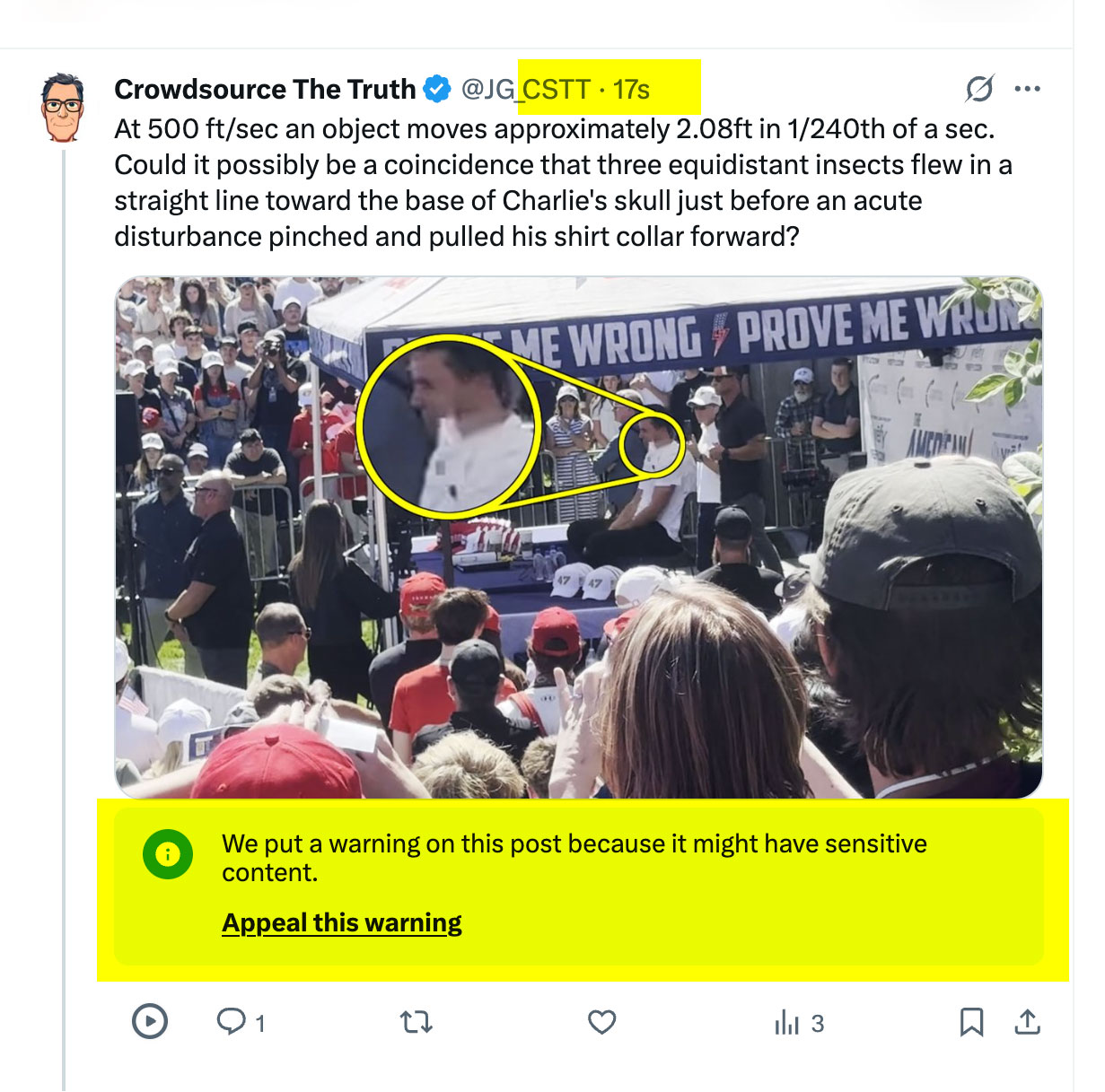
The third problem is the method. A high-energy projectile striking a human neck imparts violent, chaotic motion to loose clothing, and shirts pinch, ride, and fall in ways no one can predict from first principles. Reading a directional narrative out of a handful of frames of a compressed, upscaled zoom is exactly the situation in which people reliably see structure in noise. "Watch the object move" is an instruction to a viewer already told what to look for.
What would settle it
- Run the test. A demonstration of the proposed micro-charge in a lapel transmitter, filmed at the same distance and frame rate, would settle the smoke-signature dispute in an afternoon.
- Obtain the original, uncompressed camera file rather than a re-encoded social-media copy, and have a video forensics examiner analyze it.
- Produce the RØDE transmitter and battery pack from evidence and have them examined for explosive residue and modification.
- Ask @cletus_jethro directly whether he considers the shirt-pull reading compatible with his own stated objection. His posted position is that it is not.
Interesting In This Area
- The mic was reportedly worn under the shirt, against the torso.
- The shirt reportedly moves before blood appears in the same 4K sequence.
- Witnesses described a chest wound the charging document places at the neck.
- A burnt object with transmitter parts reportedly appears in SUV photographs.
Interesting In Other Areas
- Mic explosion video analysis is where the frame-by-frame reading is set out.
- Early witnesses reversed the wound to the chest, then the record corrected it.
- A .30-06 carries roughly 3,950 joules, which commentators say the wound does not match.
- PETN is the explosive named in rigged-device theories, without any recovered residue.
Images





Videos
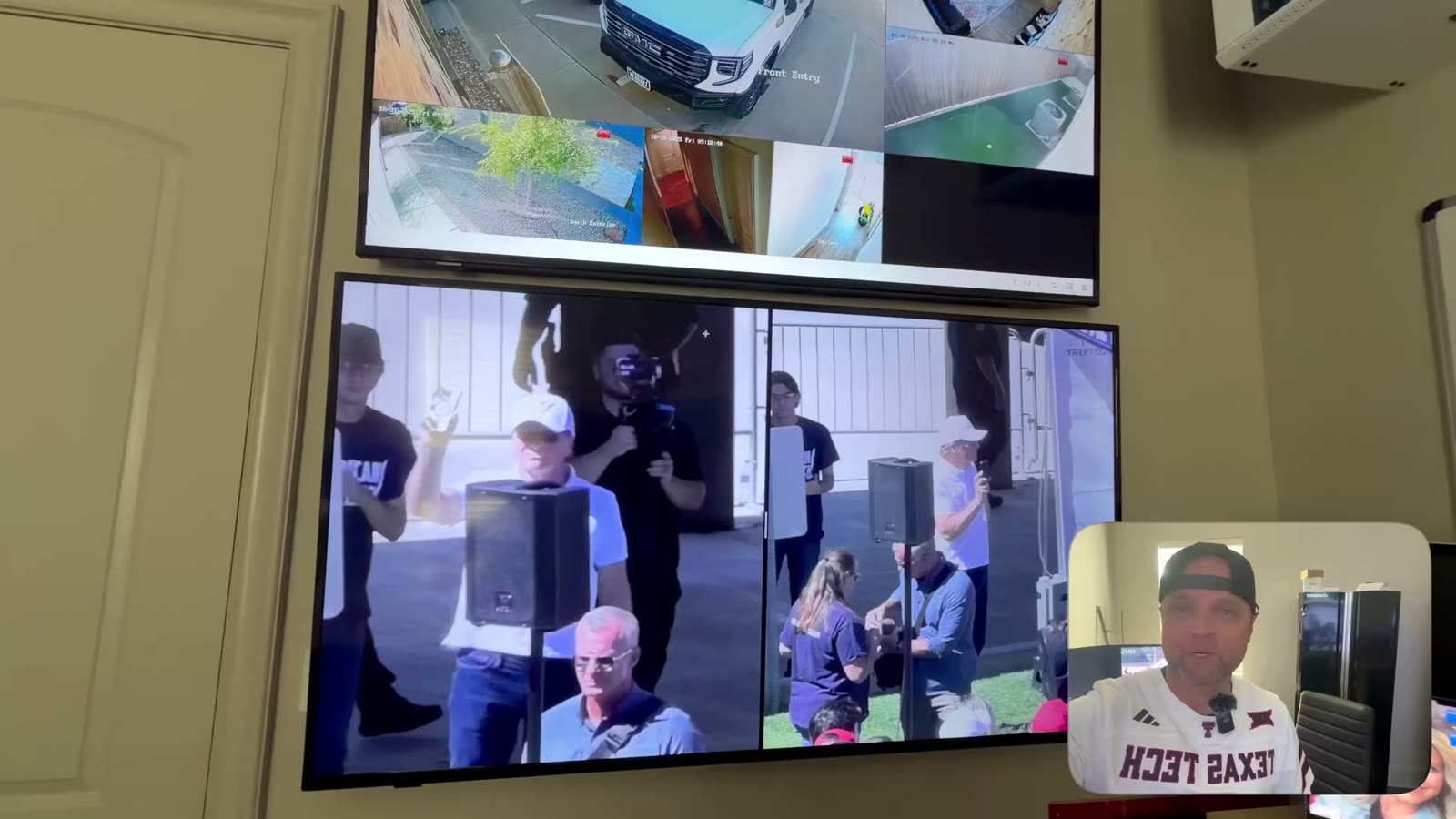
Footage related to this page. Each card opens that clip's own page, with the video, the full write-up, and its source.
Other Pages In This Section
The Shot Time: 12:23 or 12:27? (Claims)
The investigation file records two shot times, 12:23 and 12:27, and asks itself which is right. The 12:27 figure is never sourced, and every other reconstruction in the file settles on 12:23:30.
Read this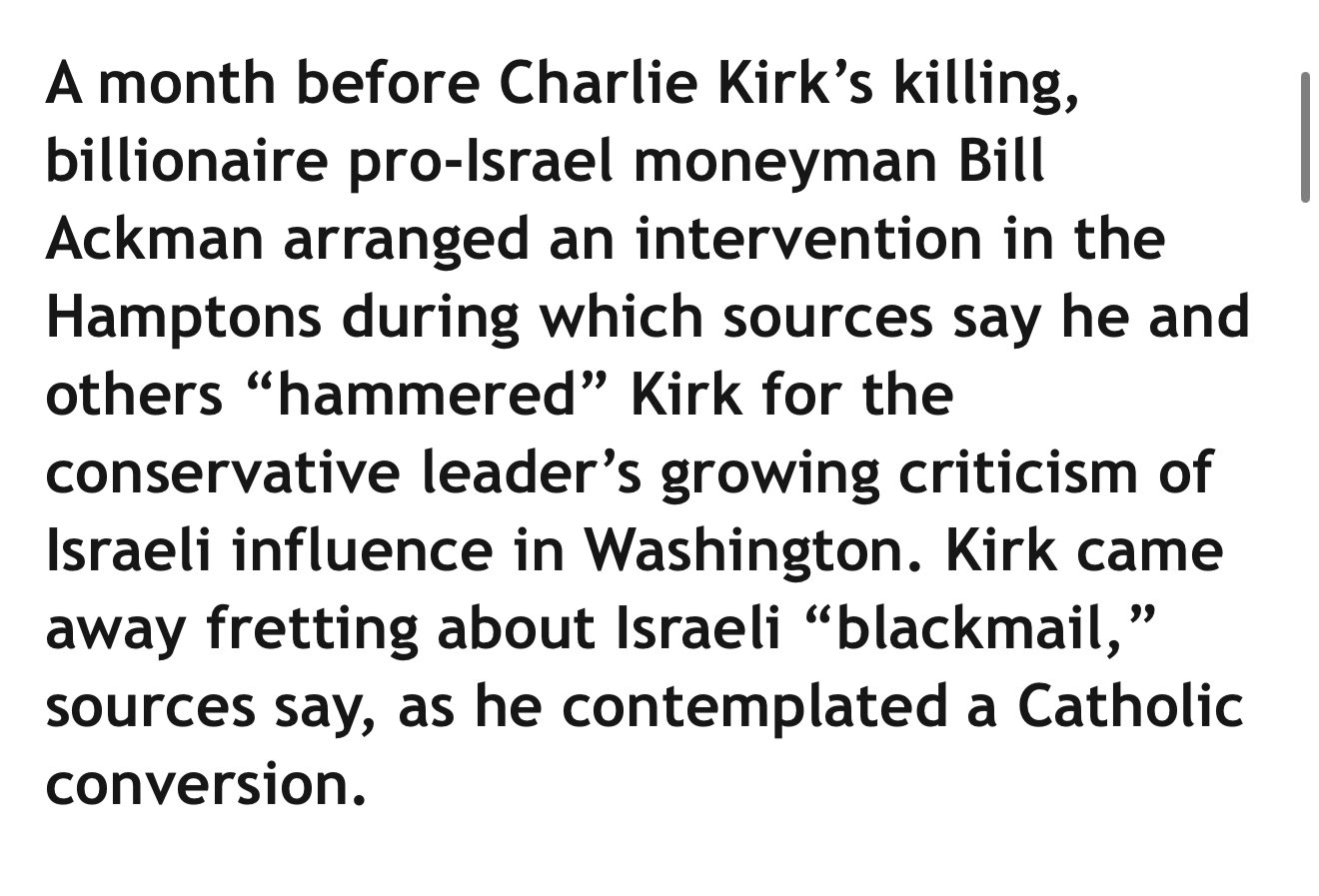
The Hamptons Intervention and the Death Question (Claims)
Charlie Kirk reportedly described an August 2025 Hamptons gathering as an intervention. Seth Dillon denied any angry confrontation, and Erika Kirk reportedly recalled a donor asking what would happen if he died.
Read this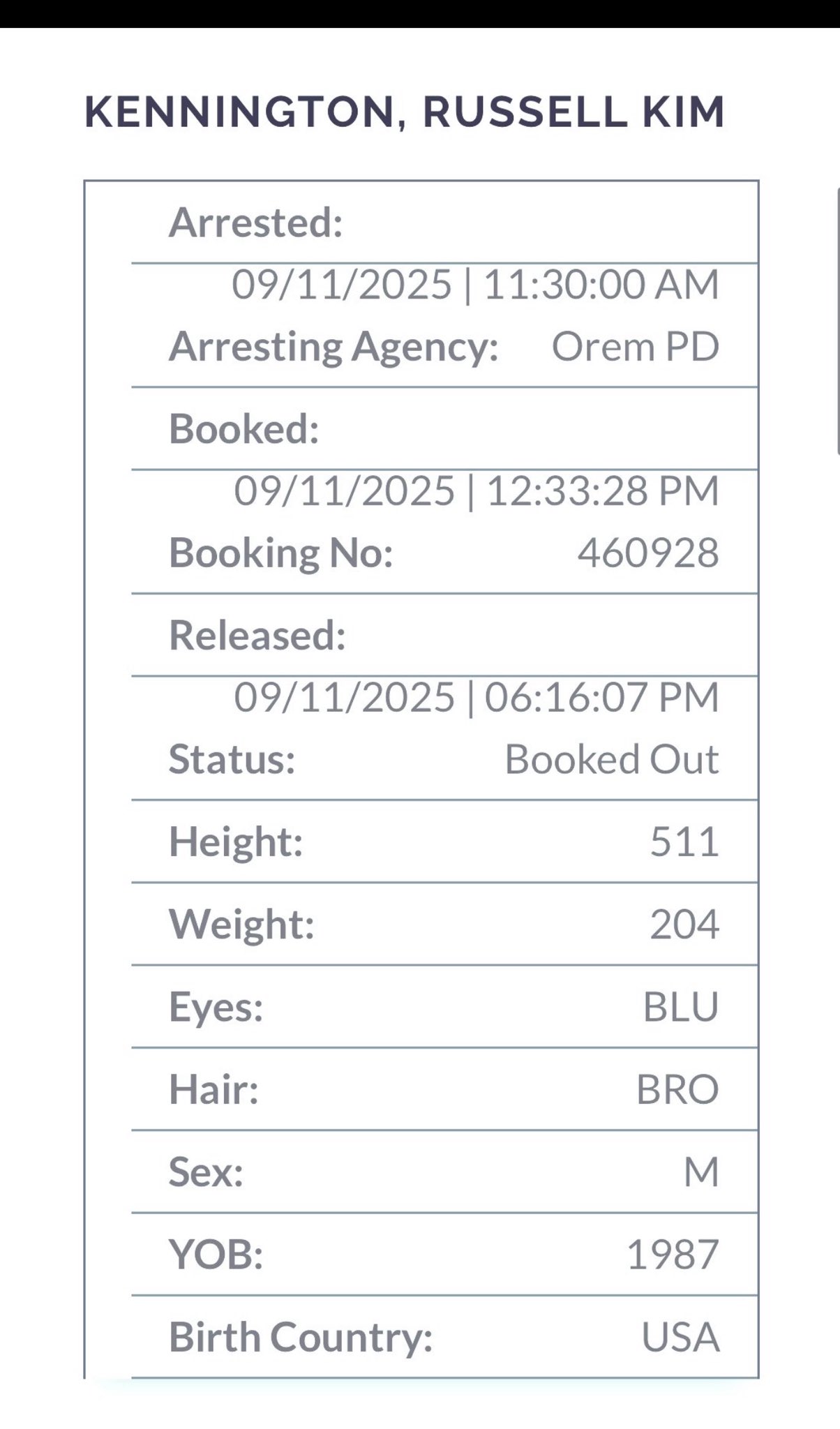
Booking Sheet Arrest Time Contradicts the Affidavit (Claims)
Two official records reportedly give arrest times six hours apart, and the earlier one predates the affidavit's own arrival time. The page notes that one custody event routinely generates several timestamps.
Read thisMissing Surrender CCTV and Bodycam Footage (Claims)
Washington County reportedly told a records appeal there was no bodycam footage of the surrender, and the lobby CCTV had already purged at thirty days. Two independent systems, one empty moment. Both halves have mundane answers that required nobody to decide anything.
Read thisElsewhere In The Investigation
Mic Explosion — Video Frame Analysis
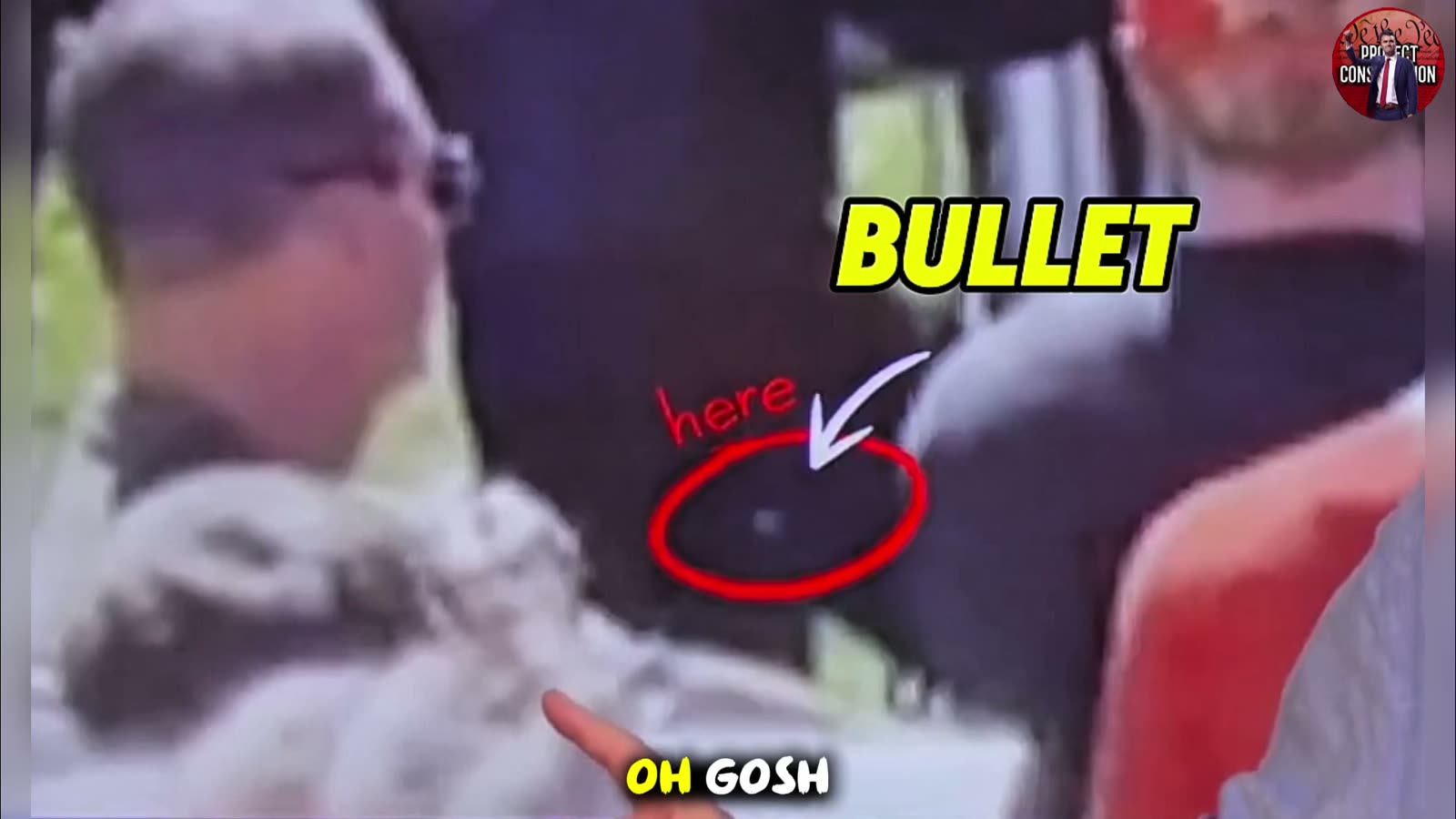
Two independent cameras, one running 60 frames a second, are read as showing shirt fabric expanding outward before any wound appears. Analysts also track a small black object leaving the neck area.
Read this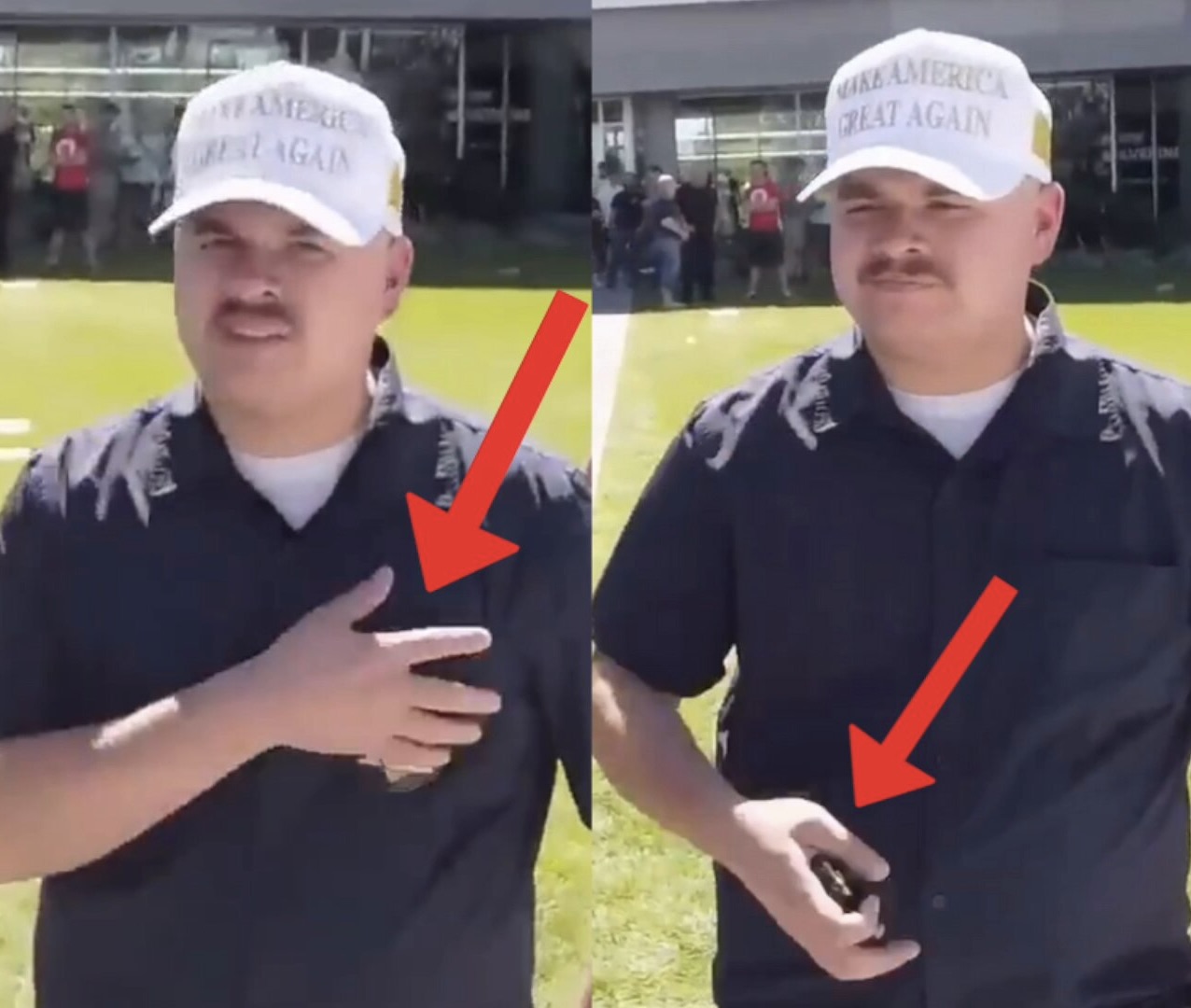
Shot in the Chest, Then the Neck — One Witness, Two Accounts
One witness, two accounts: chest first, then neck. The page tracks when the account changed, and what else changed around it.
Read this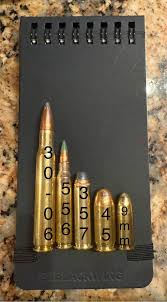
A .30-06 round carries roughly 3,950 joules against a 9mm's 482. Commentators argue the wound described publicly does not match that energy — the arithmetic is not disputed, the inference is.
Read this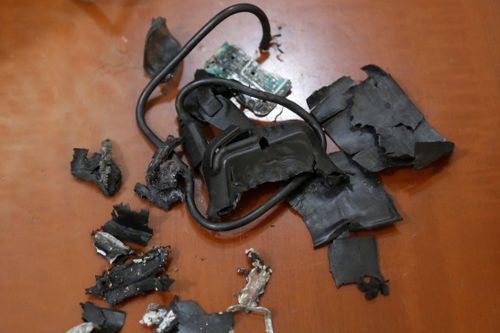
PETN — The Explosive in the Devices (Claims)
PETN is destructive far out of proportion to its size and can be molded into thin sheets or slivers. Reporting on the 2024 pager operation is why capability arguments keep circling back to it.
Read thisSources
- @matt82704417 (Matthew St Baker), crediting Jon Bray, 2026-06-21 — https://x.com/matt82704417/status/2068506485420892470
- @realhonestash (Honest Ash), 2026-06-22, amplifying a Candace Owens segment — https://x.com/realhonestash/status/2069185145555255370
- @DiligentDenizen, 2026-06-26, on reported SUV-floor debris — https://x.com/DiligentDenizen/status/2070615710003589174
- @Trillion0x, shaped-charge smoke-signature counterargument — https://x.com/Trillion0x/status/2070699686961520802
- @troofevades, 2026-06-28, quote-tweeting the above — https://x.com/troofevades/status/2071072788132118610
- @cletus_jethro's anchoring objection is reproduced in the investigation file from screenshots of his thread; no direct URL is cited in the file.
This website's author is @HolonCitizen on X and YouTube/@HolonCitizen. Follow me there.
Interesting
- A 112-page GRAMA production reportedly holds warnings about 'a plan' 14 hours earlier.
- A cease-and-desist letter reportedly admitted a TPUSA media drone flew for B-roll while security was denied overwatch.
- UVU runs a campus drone program yet reportedly flew none that day.