No Autopsy and the Death-Certificate Questions (Claims)
:::caution This claim is largely answered by ordinary procedure Read the counterargument first, because on this item the investigation file itself carries the rebuttal. Utah seals medical examiner records during an active criminal case as a matter of routine. "No public autopsy report" and "no autopsy" are not the same statement, and the claim below repeatedly treats them as though they were. Dr. Deirdre Amaro is a living professional who has not been charged with or found to have committed any wrongdoing. :::
What the sealed file would settle is the central question of the case — how Charlie Kirk was killed on September 10, 2025 — and the independent conclusion on that point is set out under Cause of Death.
Claim snapshot
| Field | Value |
|---|---|
| The claim | No autopsy was performed on Charlie Kirk despite Utah law reportedly requiring one, and no death certificate exists |
| Raised by | @ProjectConstitu; Steven D. Noon |
| First surfaced | Undated in source |
| Rests on | Anonymous post plus an unverified account of police audio |
| Evidence rating | THIN — largely resolved by published procedure |
What is alleged
The investigation file's compiled list of open items includes, flatly, "14) No death certificate." A more developed version circulates from @ProjectConstitu and Steven D. Noon, asserting that no autopsy was performed, that Utah law requires one for gun violence (a statute cited in the post as "268-8-205"), and that — based on police audio the poster says he uncovered — the death certificate was signed by a hospital doctor while the body was moved quickly away.
The argument for why it would matter is the strongest part of the claim. Proponents say an autopsy could establish the bullet angle, the round type, and the presence of other injuries. The specific stake they identify: if the front neck wound turned out to be an exit wound rather than an entrance wound, it would undercut the rooftop-shooter theory entirely and, on their reading, clear the man charged. Utah's medical examiner is reportedly Dr. Deirdre Amaro, and one circulating post questions why she would have skipped an autopsy in a case of this profile.
The ordinary explanation
The investigation file answers this item against itself, and the answer is worth stating plainly rather than burying:
- Utah does not use a coroner. It uses a state medical examiner — so the procedural assumptions imported from coroner jurisdictions do not apply.
- Medical examiner reports are withheld from the public during criminal cases, and especially during an active capital homicide investigation. That is standard practice, not an exception carved out for this case.
- Death certificates are issued. Certified copies are restricted, and they do not become public for decades. That is normal, and it is true of every death in the state.
- Ballistics are non-public during an active investigation under Utah's GRAMA. Anyone surprised by this has not encountered a live prosecution before.
Put together: "no released autopsy" is not "no autopsy," and "no public death certificate" is not "no death certificate." The claim is built on inferring absence from non-disclosure, and non-disclosure is the default in a death-penalty prosecution — the state would be behaving strangely if the report were public. The "signed by a hospital doctor" detail also describes something ordinary: a treating physician pronouncing death and certifying the immediate fact of it is routine and does not displace or preclude a medical examiner's examination. The underlying sourcing is weak besides — an anonymous account of audio the poster says he personally uncovered, with no document produced.
This is a question with a published answer that the questioner did not look for. It belongs on the list only so that readers encountering it elsewhere can see it addressed.
What would settle it
- Request the Utah Office of the Medical Examiner case index entry — not the report, which is sealed, but confirmation that a case was opened and an examination performed.
- Obtain the autopsy report through the criminal proceeding, where the defense is entitled to it in discovery and where it will surface if the wound trajectory is contested.
- Cite the actual Utah statute governing medical examiner jurisdiction and compare it against the "268-8-205" reference in the circulating post, which does not correspond to a known citation.
- Watch for the wound trajectory testimony at trial, which is where the entrance-versus-exit question will be settled on the record by people who examined the body.
Interesting In This Area
- The examiner signature claim is the other autopsy item, and it is anonymous.
- The entrance-or-exit question is what a released report would settle.
- The wound dispute has three theories arguing from the same footage.
- Denied access to testing is the defence-side version of the same sealing.
Interesting In Other Areas
- The autopsy report is not public, and Utah seals such records routinely.
- Sealed examiner records are read as concealment in the cover-up section.
- Wound trajectory angle is the ballistic question the report would answer.
- The autopsy and forensic timeline tracks what has been released and when.
Other Pages In This Section
Sheriff Brooksby's Resignation (Claims)
The sheriff who facilitated the surrender resigned, and so did UVU's president — offered as a pattern. No document links either departure to anything. Running the agency at the centre of the state's most scrutinized homicide ends careers by exhaustion too.
Read thisEleven things citizen investigators flag about state and local agencies — the booking paperwork, the missing surrender footage, the paved-over courtyard, the GRAMA warnings. The list is ordered roughly by strength, and it thins out fast. Start at item one and watch the burden shift back onto the claim.
Read this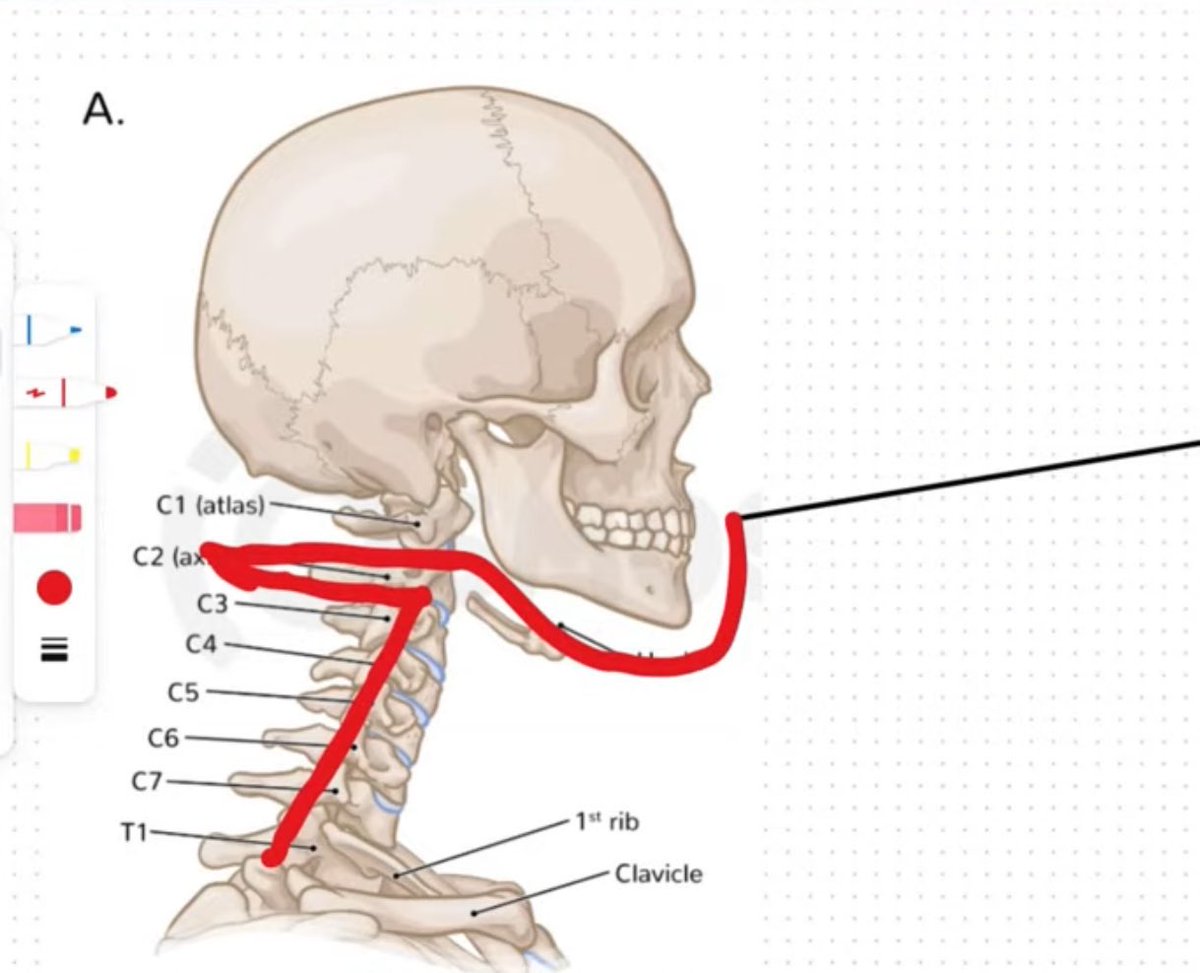
Chest Wound Accounts Versus the Neck Wound (Claims)
The earliest witnesses on camera all described a wound to the heart. The charging document describes blood from the left side of the neck. Eyewitness memory of sudden violence is famously wrong about wound location — which points the opposite way from coordination.
Read thisThe Timpanogos Surgeon Search-Trends Frenzy (Claims)
A recirculated thread says Israeli IPs searched seven Timpanogos doctors weeks before the shooting. Google Trends reports normalized regional interest on a 0-to-100 scale and cannot report an IP address at all. Seven living physicians are named by a chart that cannot say this.
Read thisElsewhere In The Investigation
Two different claims get blurred together: that no autopsy happened, and that one happened and the report was never released. The second is the accurate one, and it is why almost nothing here is settled.
Read this
Autopsy Sealed and the Performing Examiner Kept Out of View (Claims)
Reported claims that the report stays sealed, that the pathologist who did the work has never been publicly named, and that an outside examiner became the public face of the wound explanation.
Read this
A 5 to 9 degree downward shot from the Losee roof should meet face or jaw first. The reported entry sits between larynx and trachea, left of the spine — a far more straight-on path. The geometry is the argument.
Read this
Autopsy, Forensic & Medical Examiner Timeline
The forensic chronology: a May 2025 autopsy-photo law, a July 2025 medical examiner change, the operating-room and pronouncement times, and a report almost nobody has read. Dates first, conclusions never.
Read thisSources
- @ProjectConstitu: https://x.com/ProjectConstitu/status/1973304018572071043
- Steven D. Noon: https://www.youtube.com/watch?v=zeioeWdmSIw
- Investigation file section setting out Utah's medical examiner practice, record sealing, and GRAMA ballistics restrictions — the rebuttal quoted above
This website's author is @HolonCitizen on X and YouTube/@HolonCitizen. Follow me there.
Interesting
- Counter-drone equipment was reportedly tested at Provo Airport September 4-10.
- Preliminary-hearing video was shown to the family but never released to the public.
- Citizen accounts say there were no bomb dogs and no roof protection despite prior warnings.