The Gun Drop Location and the Search Sequence (Claims)
:::caution Attributed claims only Investigators do not publish complete case files during an active prosecution, and a gap in the public record is not a gap in the evidence. What follows are open questions raised by citizen researchers, not findings. Tyler Robinson is charged, not convicted. :::
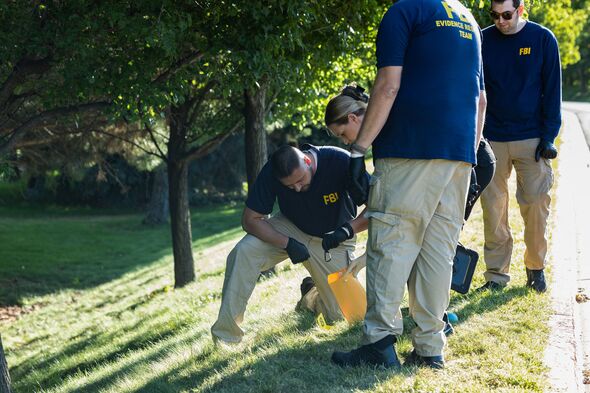
Claim snapshot
| Field | Value |
|---|---|
| The claim | The published account of the rifle drop and the surrounding search is incomplete in ways researchers call convenient |
| Raised by | @MuppetMasher; Candace Owens |
| First surfaced | June 25, 2026 |
| Rests on | Anonymous social-media analysis of published official statements |
| Evidence rating | EMERGING |
What is alleged
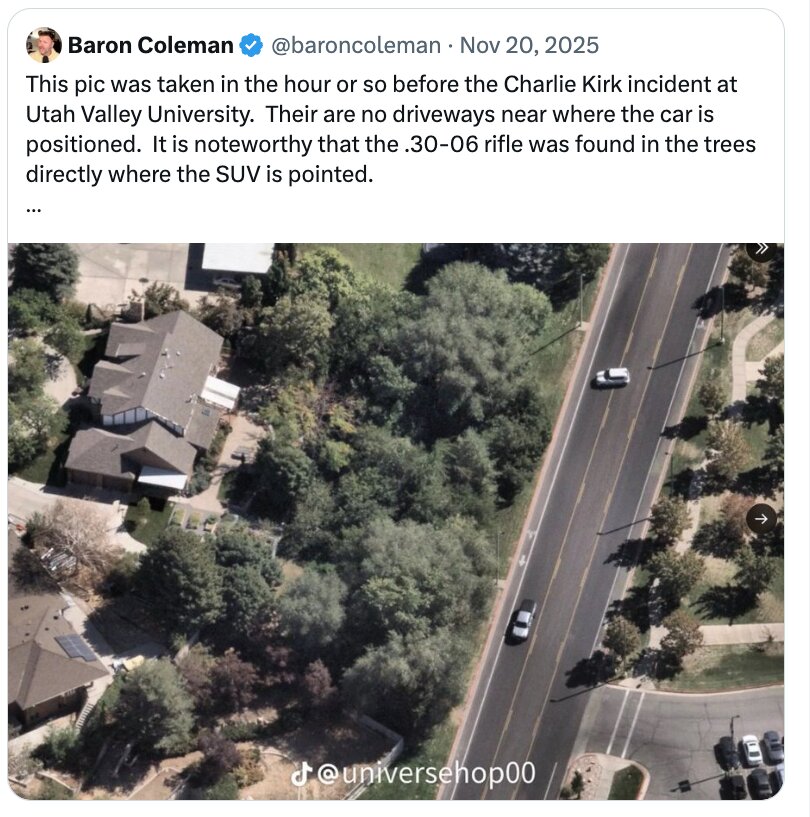
@MuppetMasher asks two questions about the rifle drop site. First: "Has anyone ever noticed the buildings on either side of where they believe the suspect in Charlie's murder dropped his gun?" — the point being that structures flanking the drop location were, he suggests, never publicly accounted for. Second, and more pointedly: the official statement reportedly places the suspect's car at UVU at 8:29am but, he says, never states when he was seen leaving that parking lot. "Guess that's convenient," he writes, arguing that with cell-tower data available the timeline should not be sketchy at all.
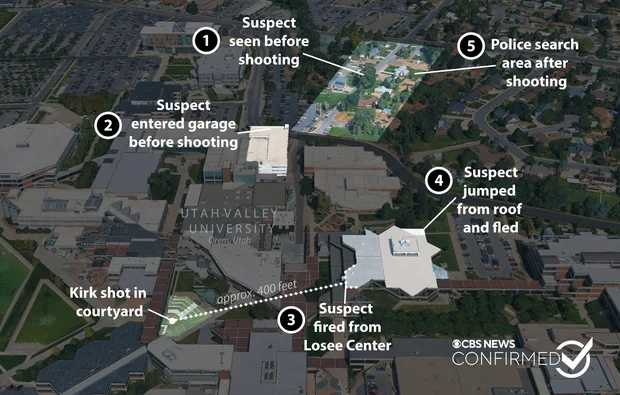
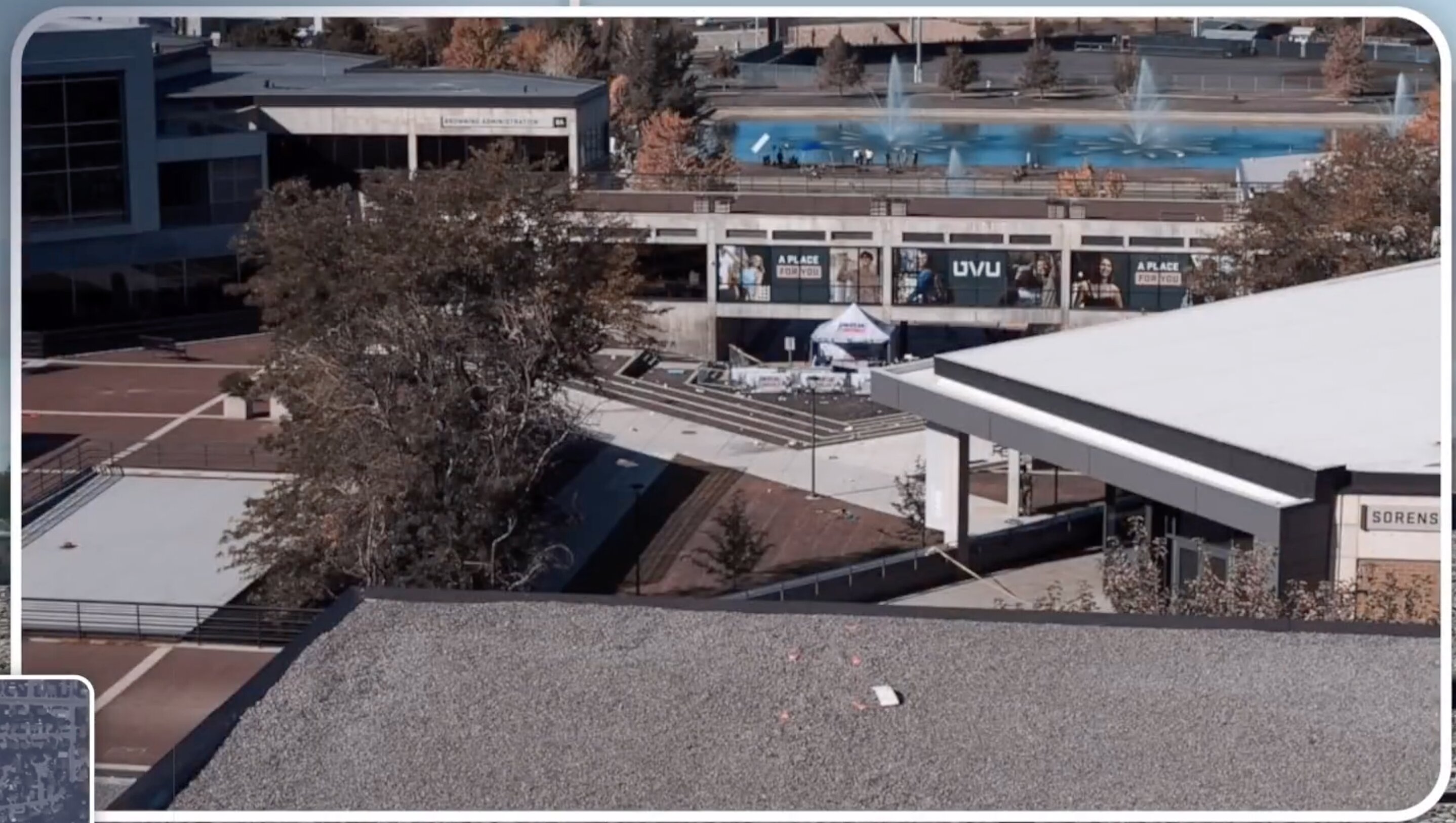
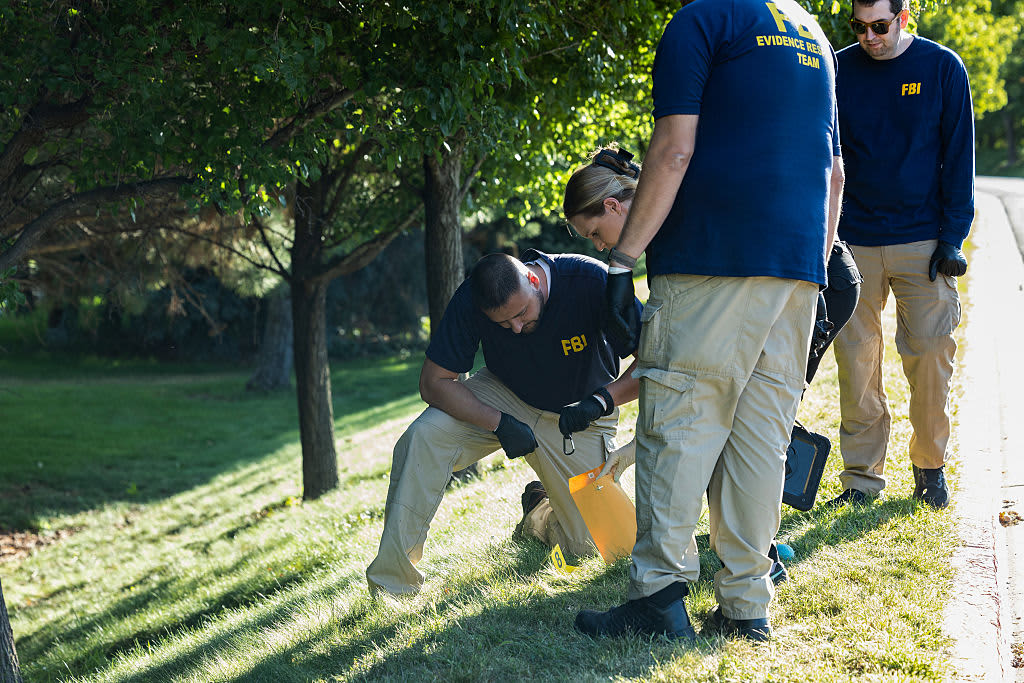
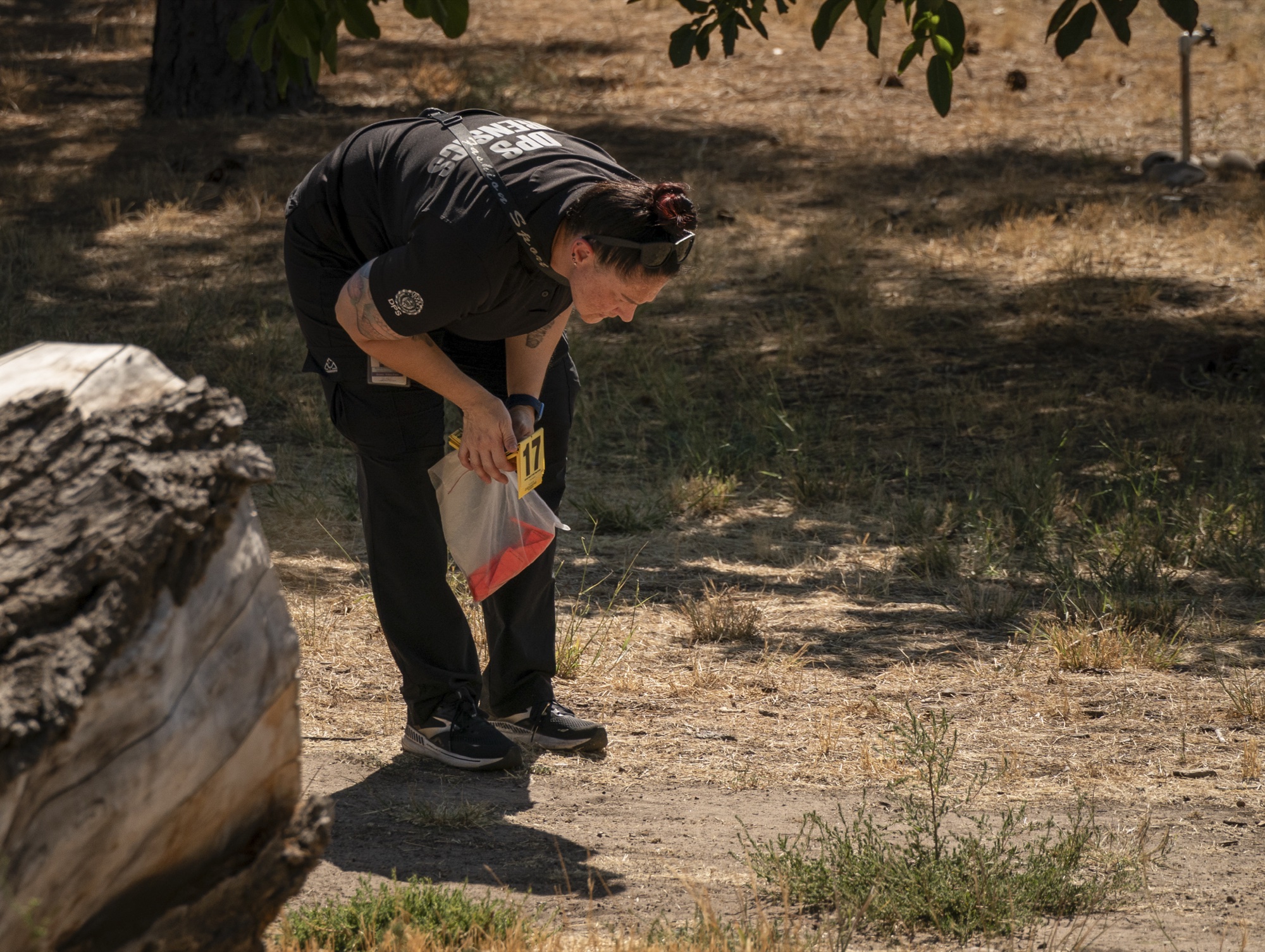
The affidavit reportedly describes the recovered weapon as a Mauser Model 98 .30-06, found wrapped in a dark towel in a grassy, treed area north of Campus Drive. Around that core, the investigation file collects several related and largely separate threads: competing and unresolved claims about who owns the property where the rifle was left; a report that the ATF could not match the bullet to the rifle; an allegation, attributed to Candace Owens, that bomb-sniffing dogs were kept away from specific areas; and the observation that neither the charging documents nor the affidavit reportedly mention the screwdriver that CNN initially reported near the rifle and that FBI Director Kash Patel later described as having been on the roof bearing Robinson's DNA.
The unifying complaint is not that any single item is damning. It is that the public account has holes at exactly the points where a complete account would be most testable — the departure time, the canvass, the inventory of what was found and where.
The ordinary explanation
Nearly all of this is what an active capital prosecution looks like from the outside. A probable-cause affidavit is a minimum-threshold document: its job is to establish that there is enough to hold and charge someone, using the fewest necessary facts. It is not a case file, not a canvass inventory, and not a surveillance log. Prosecutors deliberately keep the published narrative thin — partly to avoid tainting a jury pool, partly to avoid giving the defense a roadmap, and partly because anything they publish they must then defend. Evidence omitted from an affidavit is routinely still in discovery, which is exactly where the screwdriver discrepancy would surface if it matters. The apparent contradiction between CNN's early reporting and Patel's later description is also the ordinary texture of a breaking story: first-day reporting is frequently wrong about placement, and being corrected later is the system working.
The unstated departure time falls into the same category. Investigators do not owe the public a complete movement timeline mid-prosecution, and "they didn't say" is not "they don't know." As for the drop itself — a rifle wrapped in a towel and abandoned in a treed area along a tracked flight path is coherent and commonplace. It is what people fleeing on foot do with something they cannot carry through a public space. The buildings flanking the site are a fair question, but the absence of a public statement about them is not evidence that nobody searched them.
What would settle it
- Obtain the crime-scene canvass log for the area around the drop site, which would show what was searched, by whom, and when.
- Obtain the complete surveillance timeline — including the parking-lot departure — in discovery or at the probable-cause hearing.
- Obtain the ATF firearms examination report to establish what the comparison actually concluded and why.
- Establish the provenance and chain of custody of the screwdriver, and reconcile the CNN report against the Patel description with a documented location.
Interesting In This Area
- The rifle was reportedly found after a federal redirect, not by the first canvass.
- The ATF reportedly matched to class only, never to that rifle.
- CBLA bullet-lead testing was discredited and abandoned years ago.
- A rifle on a towel is the roof half of this sequence.
Interesting In Other Areas
- Gun dropped location maps the site and the buildings beside it.
- The wooded recovery area sits north of Campus Drive, off the flight path.
- Gun discovery sequence is the defence reading of the same search.
- Ballistics and forensics covers what the comparison actually concluded.
Images
Videos
Footage related to this page. Each card opens that clip's own page, with the video, the full write-up, and its source.
Other Pages In This Section
Miranda at 6:25 PM Versus Sheriff Brooksby's Account (Claims)
Court material reportedly puts Tyler Robinson Mirandized at 6:25pm on September 11 — before the 8:04pm tip call, and ninety minutes before the Discord messages said to have caused it. Warning someone early is lawful and common. The surrender video would settle it in a minute.
Read thisUVU GRAMA Records Show Pre-Shooting Warnings (Claims)
A 112-page records production reportedly carries an internal message fourteen hours before the shooting: two men had turned up asking to talk to police about "a plan." Forty-four minutes later someone replied they were overstating their access. Nobody in the chat asked what the plan was.
Read this
No On-Site Ambulance and the Scoop-and-Run SUV (Claims)
Kirk was carried into an SUV roughly thirty-one seconds after the shot — no ambulance, no sirens. An anonymous caller adds that "a 911 call never came through" at the hospital. Hospitals do not receive 911 calls at all.
Read this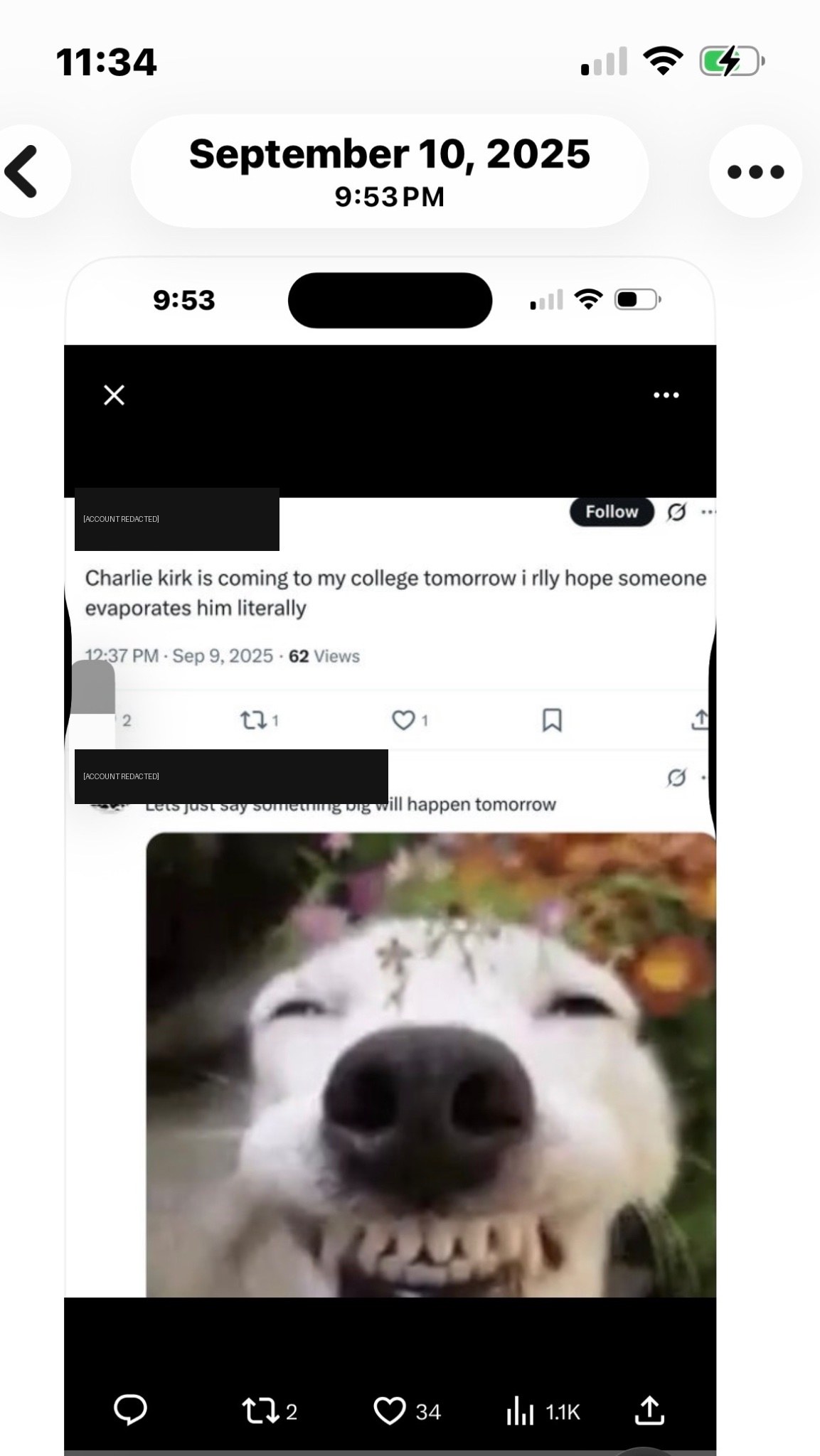
Suspicious Posts Before the Event
Social media posted before the shooting that reads, in hindsight, like anticipation — and the open question of whether anyone who wrote it was ever interviewed. Hindsight makes ordinary posts look prophetic, which is exactly why these are handled carefully.
Read thisElsewhere In The Investigation
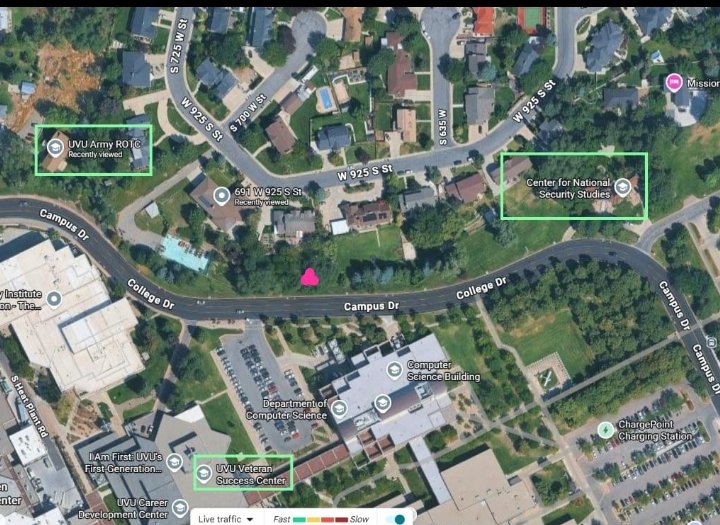
The rifle was reportedly dropped in a wooded strip with buildings on either side. The official account puts a car in a UVU lot at 8:29 AM and never says when it left — and no cell-tower record filling that gap has been released.
Read this
Wooded Area — Gun Recovery (North of UVU)
A scoped Mauser .30-06, reportedly wrapped in a dark towel, found in trees north of campus after earlier sweeps and a K-9 pass reportedly found nothing. The state's whole theory rests on that recovery.
Read thisArm-to-arm sweeps found nothing. A K-9 pass found nothing. Then federal agents reportedly sent three junior local officers back over the same ground, and the rifle appeared.
Read this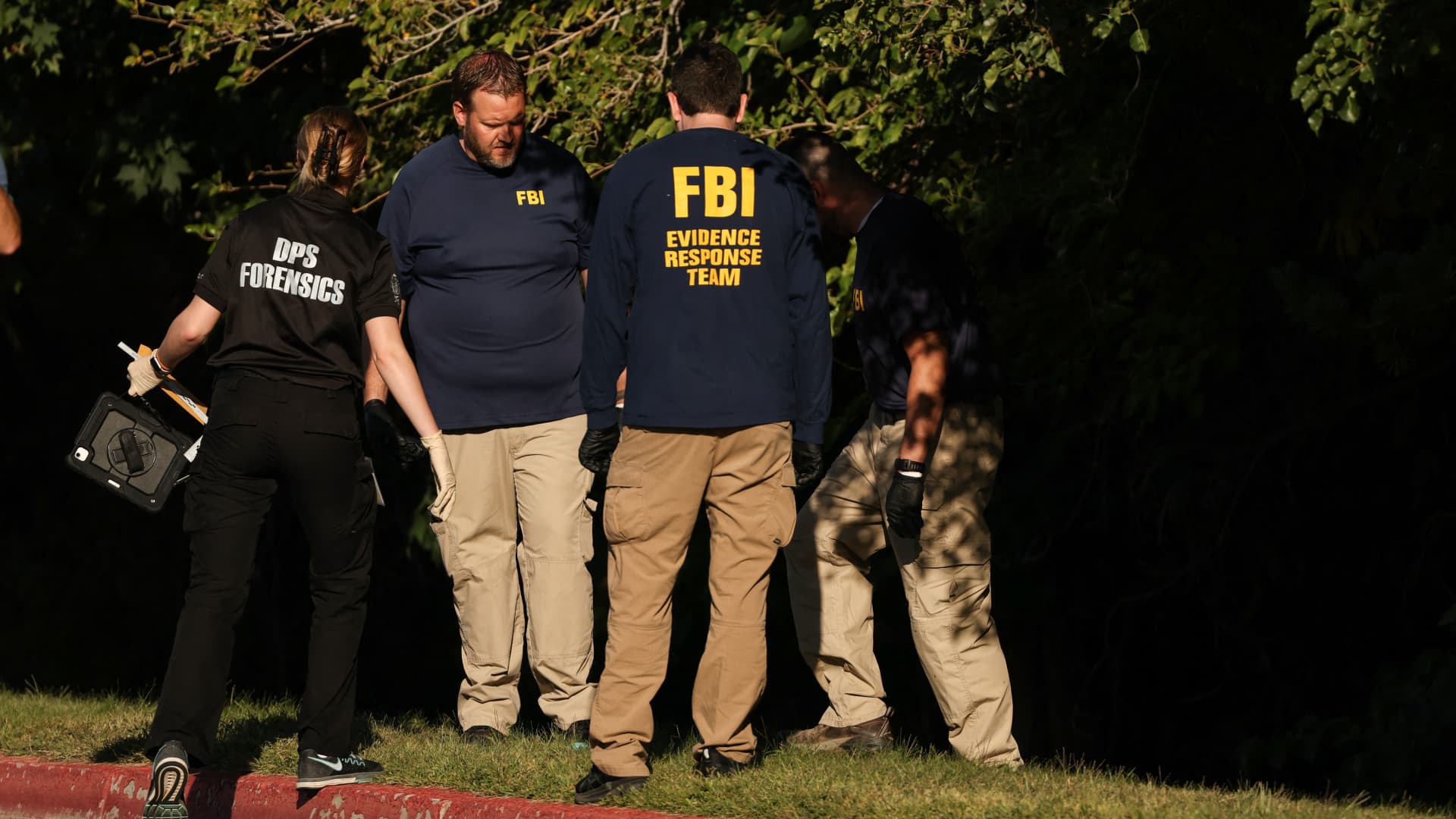
The ATF reportedly found the jacket fragment shared class characteristics with the Mauser — numerous makes and models, no individual match. The defense was then reportedly refused permission to photograph it or attend the destructive testing.
Read thisSources
- @MuppetMasher: https://x.com/MuppetMasher/status/2070163736858694089
- Investigation file notes on the Mauser Model 98 .30-06 recovery, the disputed property ownership, the ATF comparison, and the screwdriver reporting
This website's author is @HolonCitizen on X and YouTube/@HolonCitizen. Follow me there.
Interesting
- Photographs of the SUV reportedly show a burnt mass containing RODE transmitter parts.
- A witness reportedly says the FBI asked him to erase his footage and called back to check.
- Manifests, cargo logs, and visas remain undisclosed, so foreign leads can be neither confirmed nor killed.