Missing Surrender CCTV and Bodycam Footage (Claims)
:::caution Attributed claims only Routine retention purges and inapplicable camera policies destroy ordinary footage every day without anyone deciding anything. What follows are reported claims and open questions about a public-records proceeding. No deputy or county official named or implied here has been charged with or found to have committed any wrongdoing. :::
Claim snapshot
| Field | Value |
|---|---|
| The claim | Two separate video systems that should have captured Robinson's surrender reportedly produced nothing |
| Raised by | Scripps News (via a GRAMA appeal); Baron Coleman; @aggelos_syr |
| First surfaced | Undated in source |
| Rests on | On-record statement in a public-records appeal, as described by commentators |
| Evidence rating | MODERATE |
What is alleged
Scripps News reportedly sought, through a GRAMA public-records appeal against Washington County, the body-worn camera footage showing Tyler Robinson walking into the Sheriff's Office to surrender on the evening of September 11, 2025. According to the account circulating among investigators, when the hearing director asked the county's representative — identified as Mr. Snow — to address the request, he stated on the record: "There was a search made for body cam footage and there was none."
Investigators pair that with a separate reported outcome: that lobby CCTV of Robinson walking in with his parents was said to be unavailable because a 30-day retention policy had already purged it. They call the combination a "double deletion" — two independent systems, both empty, covering the single moment most central to the disputed timeline.
The legal argument advanced against the bodycam answer rests on Utah Code § 77-7a-104, which those raising it read as requiring an officer to activate a body-worn camera prior to any law-enforcement encounter or as soon as reasonably possible, and to document in writing any failure to activate. They also cite the Washington County Field Operations Policy Manual, Section 225.2, which they say requires BWCs to be in active mode during encounters for accountability and transparency. Their position is that taking a high-profile suspect into custody is the textbook definition of an encounter, and that a total absence of footage would mean every deputy involved departed from both policy and statute on the same evening.
Baron Coleman adds a further wrinkle: he says pleadings have reportedly suggested that footage does exist and is in law-enforcement hands, with a live dispute over access. He argues the video would be dispositive — if it shows Robinson arriving in the mid-afternoon, the published timeline collapses; if it shows a 10:26pm arrival, the case simply proceeds.
The ordinary explanation
The two halves of the "double deletion" have separate, mundane answers, and neither requires a decision by anyone. Automatic 30-day purges of non-evidentiary lobby CCTV are standard and are executed by software on a schedule; a request that arrives after the window returns nothing because there is nothing left to return. That is the system working as designed, not a choice to destroy anything — and a lobby camera is not usually flagged as case evidence in the first place.
The bodycam answer is less remarkable than it sounds, too. BWC policies are written for patrol — traffic stops, calls for service, enforcement actions, uses of force. Deputies staffing a station lobby or an intake desk very frequently are not wearing or activating body cameras at all, so "no BWC footage of a walk-in" is a common and unsurprising result rather than a coordinated failure. Utah's BWC statute also contains exceptions, and its remedy for non-activation is documentation, not a presumption of concealment. Most importantly: an agency's inability to locate footage in a records search is not evidence that the footage ever existed. A county representative saying a search found none is reporting a search result, and the honest reading is that this item raises a good question rather than answers one.
What would settle it
- Obtain the written non-activation reports that Utah Code § 77-7a-104 would require if deputies present at the intake did not activate cameras — their existence or absence tests the claim directly.
- Obtain the county's CCTV retention schedule and the audit log showing the automated purge of the lobby camera, with its date.
- Identify the specific pleading Coleman references that reportedly suggests footage exists, and put the question to the court.
- Subpoena the Axon or equivalent evidence-management audit trail for all Washington County BWCs assigned on September 11, which logs activations, uploads, and deletions independently of any human account.
Interesting In This Area
- A 6:25pm Miranda warning is exactly what this footage would confirm.
- The booking sheet gap would close if arrival were on video.
- Simmons video deletion is the other missing-recording claim in this area.
- Withheld rooftop video is the third recording dispute in the case.
Interesting In Other Areas
- Sheriff video withheld frames the same records appeal as concealment.
- Surrendering versus turning himself in turns on wording no video can check.
- The Mirandizing timeline shows what a recording would have to match.
- Washington County Sheriff is the lobby whose camera purged at thirty days.
Other Pages In This Section
The Unknown Woman Who Reportedly Signed the Medical Examiner Report (Claims)
An anonymous direct message says Kirk's autopsy was signed by a young woman the medical examiner had never met. No name, no document, no second witness. It is recorded here only so it can be checked or retired rather than circulating forever.
Read this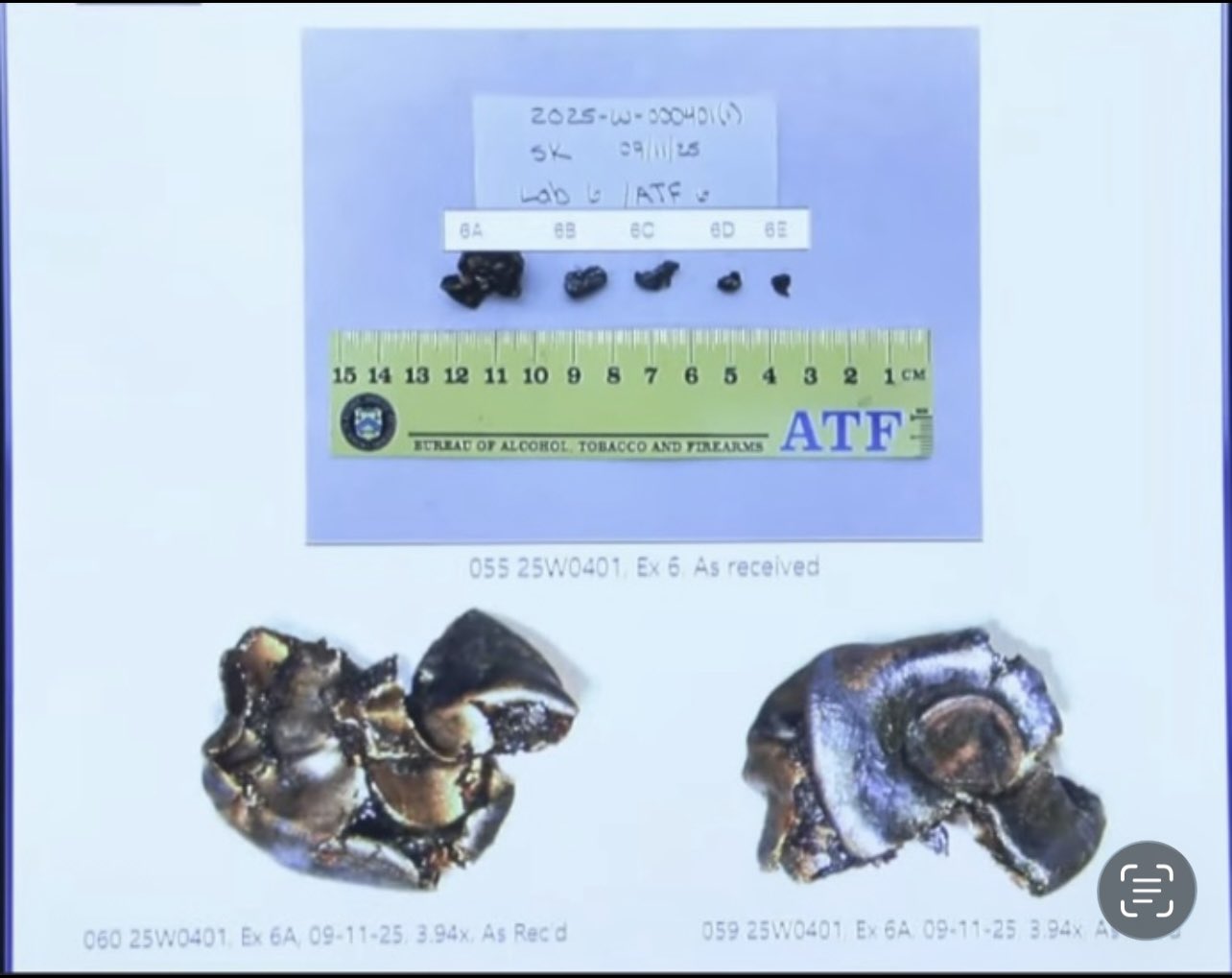
Charred Material and Fragments in the SUV (Claims)
A broadcast screenshot shows a pale fragment whose edges look scorched, and one question: why is there burned material in the SUV? Nothing has been recovered, identified or lab-tested. What is being analyzed is a photograph of a photograph.
Read thisSuspicious Hospital, Autopsy and Medical
Ten things citizen investigators flag about the hospital, the transport, the medical examiner and the autopsy. Several of these items are contradicted by the investigation file's own text, and these pages say so rather than tidying it away.
Read this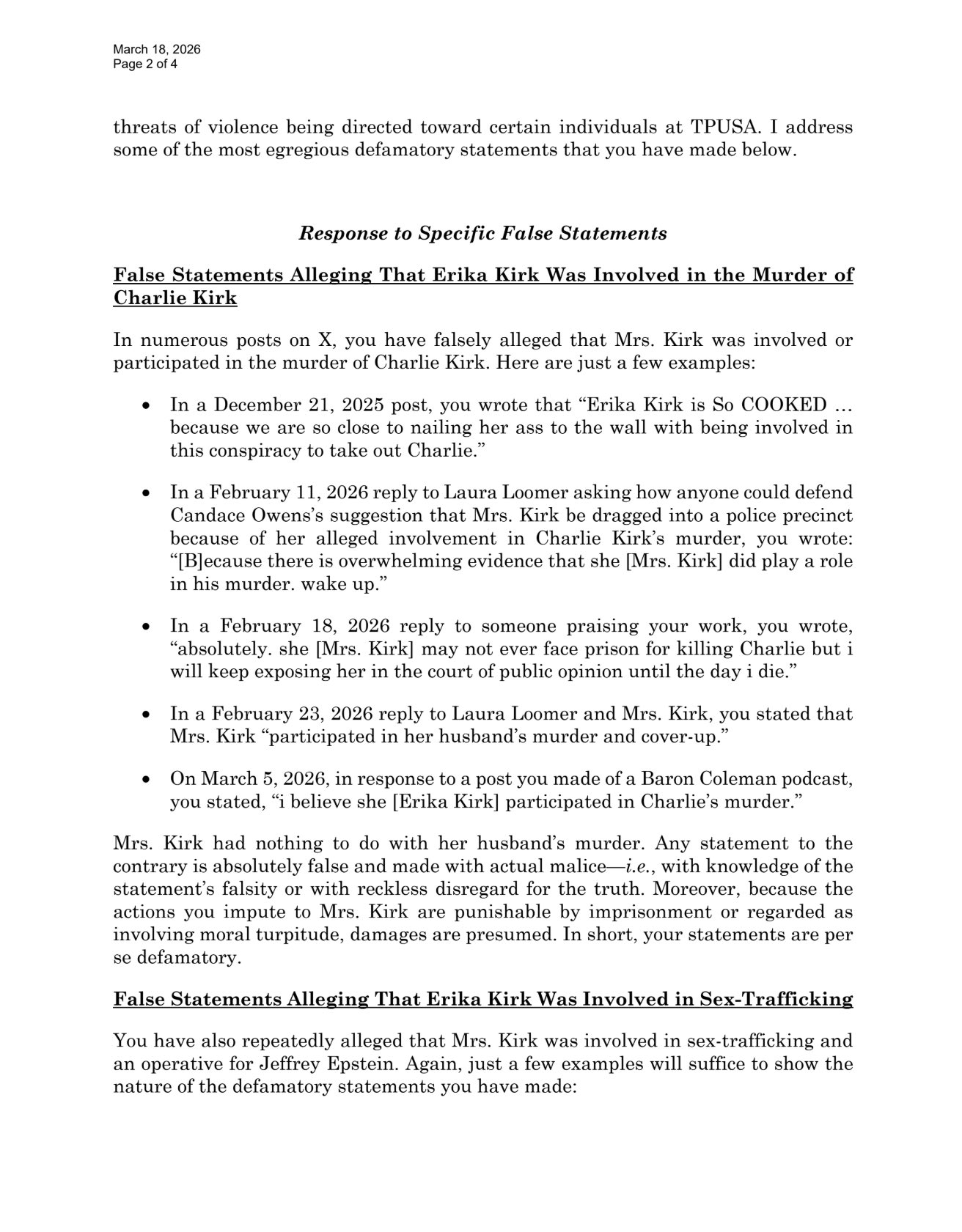
The Cease-and-Desist and the Drone Contradiction (Claims)
Candace Owens says a TPUSA cease-and-desist letter conceded a media drone flew for B-roll before the event while security drones were denied. She calls that a contradiction. Two different aircraft and two different approvals — a letter saying both is drawing a distinction.
Read thisElsewhere In The Investigation
Tyler Robinson Surrender Video Not Publicly Released (Claims)
The Washington County Sheriff's Office reportedly returned "no records" for video of the surrender and booking. A 33-hour manhunt ended, and the ending was apparently not recorded.
Read this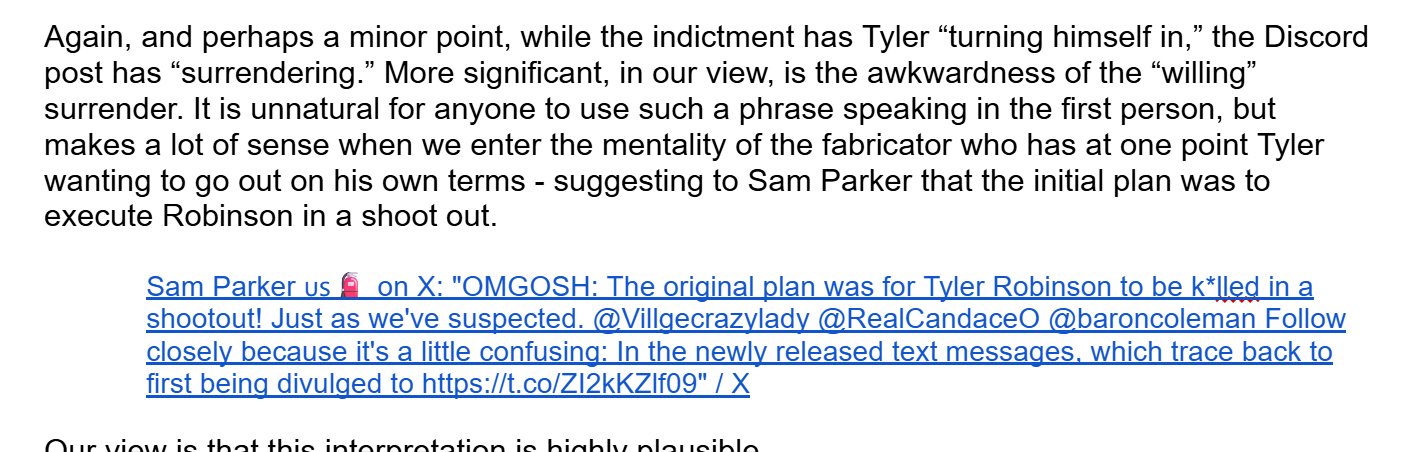
Surrendering vs. Turning Himself In
The Discord post says surrendering. The indictment says turning himself in willingly. That one word reads as written by somebody other than the person surrendering.
Read thisCustody, Surrender & Mirandizing Timeline (September 11–12)
The September 11–12 custody chain minute by minute — the family call, the sheriff's 8:02 PM account, a 6:25 PM Miranda timestamp, and a booking sheet reading 10:00 PM. Set side by side, some of those entries cannot all be true.
Read this
Washington County Sheriff's Office (Surrender Site)
The Hurricane office where the accused arrived with his parents, sat unrestrained with water, and was never questioned by the county. Federal and state investigators took custody around 2 AM and drove north.
Read thisSources
- @Partisangirl (Dr. Maram Susli): https://x.com/Partisangirl/status/2068463186668605858
- Baron Coleman interview clip (WDYFW podcast), on the pleadings and the retention-policy answer
- Investigation file notes citing Utah Code § 77-7a-104 and Washington County Field Operations Policy Manual § 225.2
This website's author is @HolonCitizen on X and YouTube/@HolonCitizen. Follow me there.
Interesting
- The State reportedly dumped 600,000 documents while opposing any delay to read them.
- The show's own RSS feed still lists episodes the public catalogs no longer surface.
- 752 Charlie Kirk Show episodes visible in a 2025 capture have vanished from Apple Podcasts.