Suspicious by Law Enforcement
Things citizen investigators flag as suspicious about state and local agencies — Orem PD, the Utah County and Washington County Sheriff's Offices, UVU police, Utah DPS, the Governor's office, and the Office of the Medical Examiner. Federal conduct is tracked separately under Suspicious by the FBI. Every item is an attributed claim or open question; no official named here has been charged with or found to have committed any wrongdoing.
The numbered list
- Booking sheet arrest time contradicts affidavit — 10:00pm 9/11 on the booking sheet vs 04:00 9/12 on the submission record
- Miranda at 6:25 PM versus Brooksby's account — a Mirandized suspect 90 minutes before the Discord confession was posted
- Missing surrender CCTV and bodycam footage — no body cam found, lobby CCTV purged at 30 days
- Courtyard paved over days after the shooting — a contractor's "the governor and the FBI want this done by Monday"
- UVU GRAMA records show pre-shooting warnings — two men asking about "a plan" 14 hours before, six officers for 3,000 people
- Claim Robinson did not surrender voluntarily — Candace Owens on the missing written confession
- Gun drop location and the search sequence — nothing found by hand, nothing found by dogs, then found
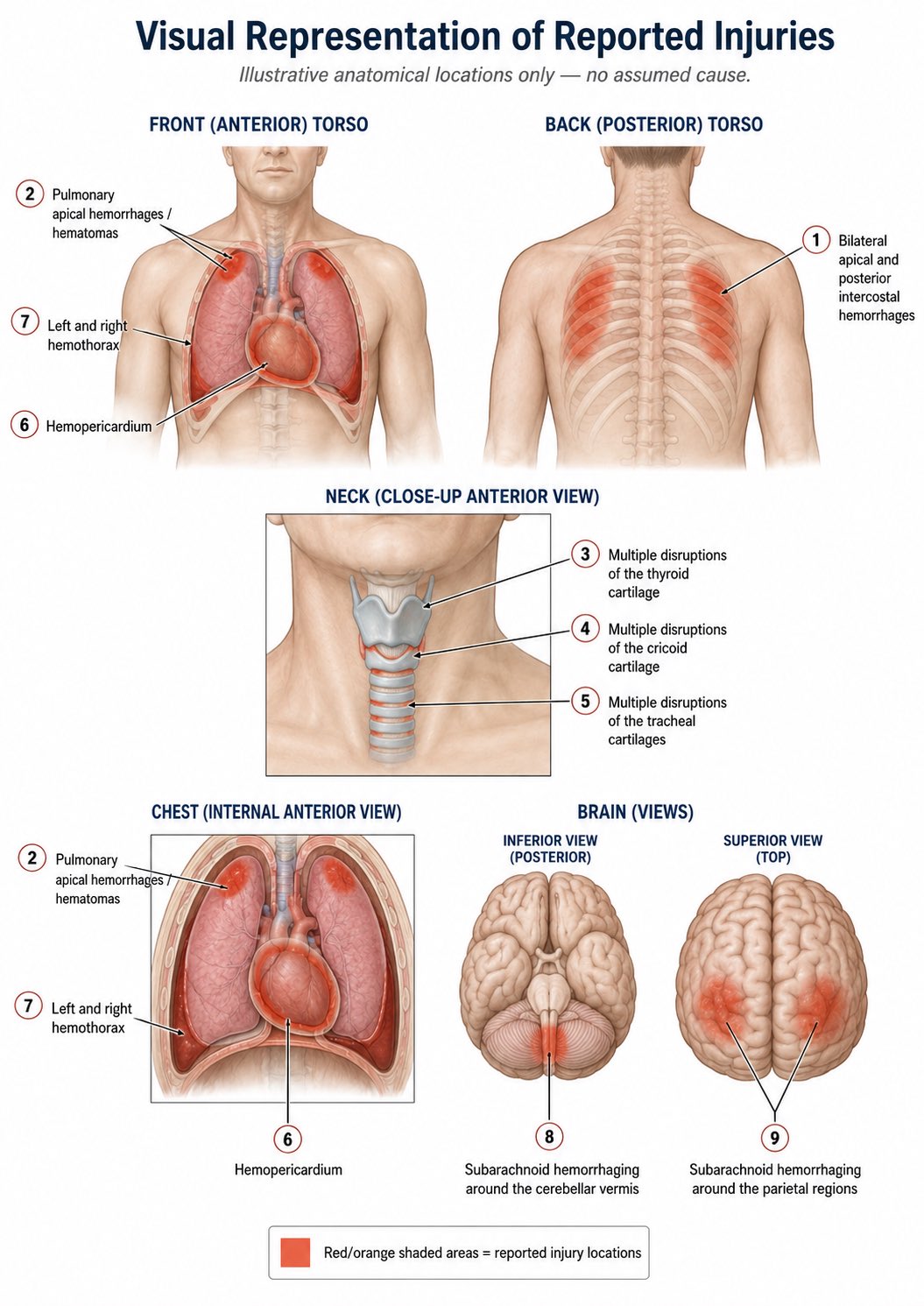
- No autopsy and death-certificate questions — the claim that Utah law required one and none was done
- SUV interior photos with blurred windows — fragments on the seat rail, a blurred pane, no ambulance on site
- Sheriff Brooksby's resignation — the sheriff at the center of the surrender timeline steps down
- Unknown woman signed the medical examiner report — an anonymous DM claim, included so it can be checked
How to weigh these
The eleven items above are not equal, and the numbering is roughly by strength rather than by chronology. Items 1 through 5 rest on documents that exist: booking paperwork with two different arrest times on it, a defense motion quoting a Bates-stamped video exhibit, a county's on-the-record statement in a public-records appeal, a contractor speaking on camera under his own name, and a 112-page GRAMA production obtained by the Daily Caller News Foundation. Whatever they ultimately mean, there is something there to argue about.
Items 6 through 11 thin out quickly. Some are questions that have a published answer the questioner did not look for — the autopsy item, for instance, is largely resolved by the fact that Utah seals medical examiner reports during an active capital prosecution, so "no public autopsy" and "no autopsy" are being treated as the same thing when they are not. Item 11 is a secondhand direct message with no name, no document, and no corroboration; it is listed only so that it can be either substantiated or retired rather than circulating forever unchecked. A claim that cannot be checked is not evidence of anything, and the honest thing to do with one is say so.
The through-line worth your attention is the paperwork, not the atmospherics. Resignations happen, reports get signed by deputies, and campus offices field cranks before every political event — none of that is remarkable. But an arrest time that appears twice in one file with a six-hour gap, a Miranda warning that predates the confession it supposedly followed, and surrender footage that two separate systems failed to preserve are the kind of specific, falsifiable problems that either have a boring answer on the record or do not. Start at item 1 and work down; the further you go, the more the burden shifts back onto the person making the claim.
Interesting In This Area
- The booking sheet carries two arrest times six hours apart.
- A 6:25pm Miranda warning would predate the confession it supposedly followed.
- GRAMA records reportedly show a warning fourteen hours before the shooting.
- The courtyard was paved four days later, over the ground itself.
Interesting In Other Areas
- Federal conduct is tracked separately from state and local agencies.
- The court section follows the same documents into the prosecution.
- Cover-up collects the strongest form of every claim here.
- After reconstructs the days that followed, agency by agency.
Other Pages In This Section
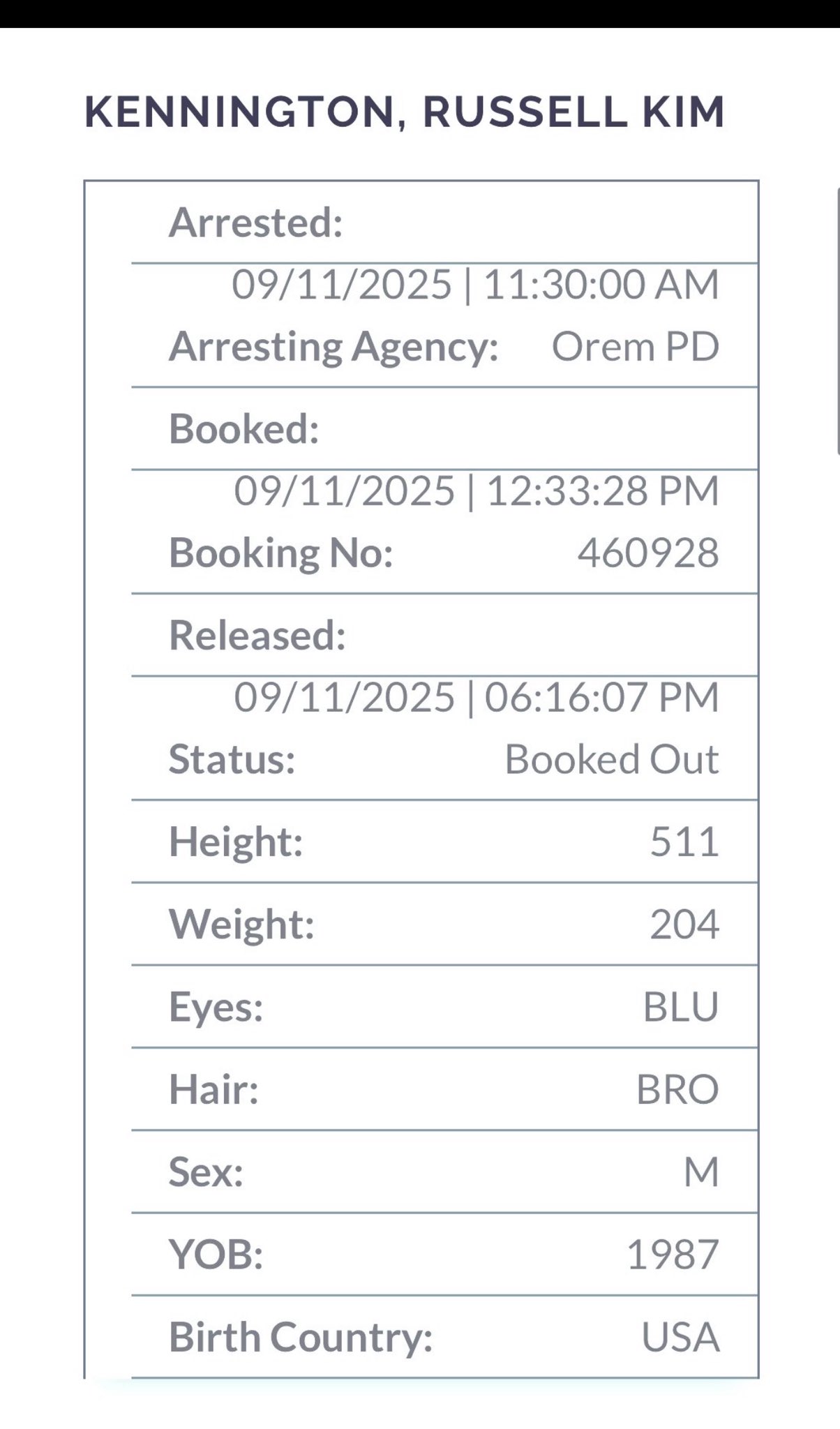
Booking Sheet Arrest Time Contradicts the Affidavit (Claims)
Two official records reportedly give arrest times six hours apart, and the earlier one predates the affidavit's own arrival time. The page notes that one custody event routinely generates several timestamps.
Read thisMiranda at 6:25 PM Versus Sheriff Brooksby's Account (Claims)
Court material reportedly puts Tyler Robinson Mirandized at 6:25pm on September 11 — before the 8:04pm tip call, and ninety minutes before the Discord messages said to have caused it. Warning someone early is lawful and common. The surrender video would settle it in a minute.
Read thisUVU GRAMA Records Show Pre-Shooting Warnings (Claims)
A 112-page records production reportedly carries an internal message fourteen hours before the shooting: two men had turned up asking to talk to police about "a plan." Forty-four minutes later someone replied they were overstating their access. Nobody in the chat asked what the plan was.
Read this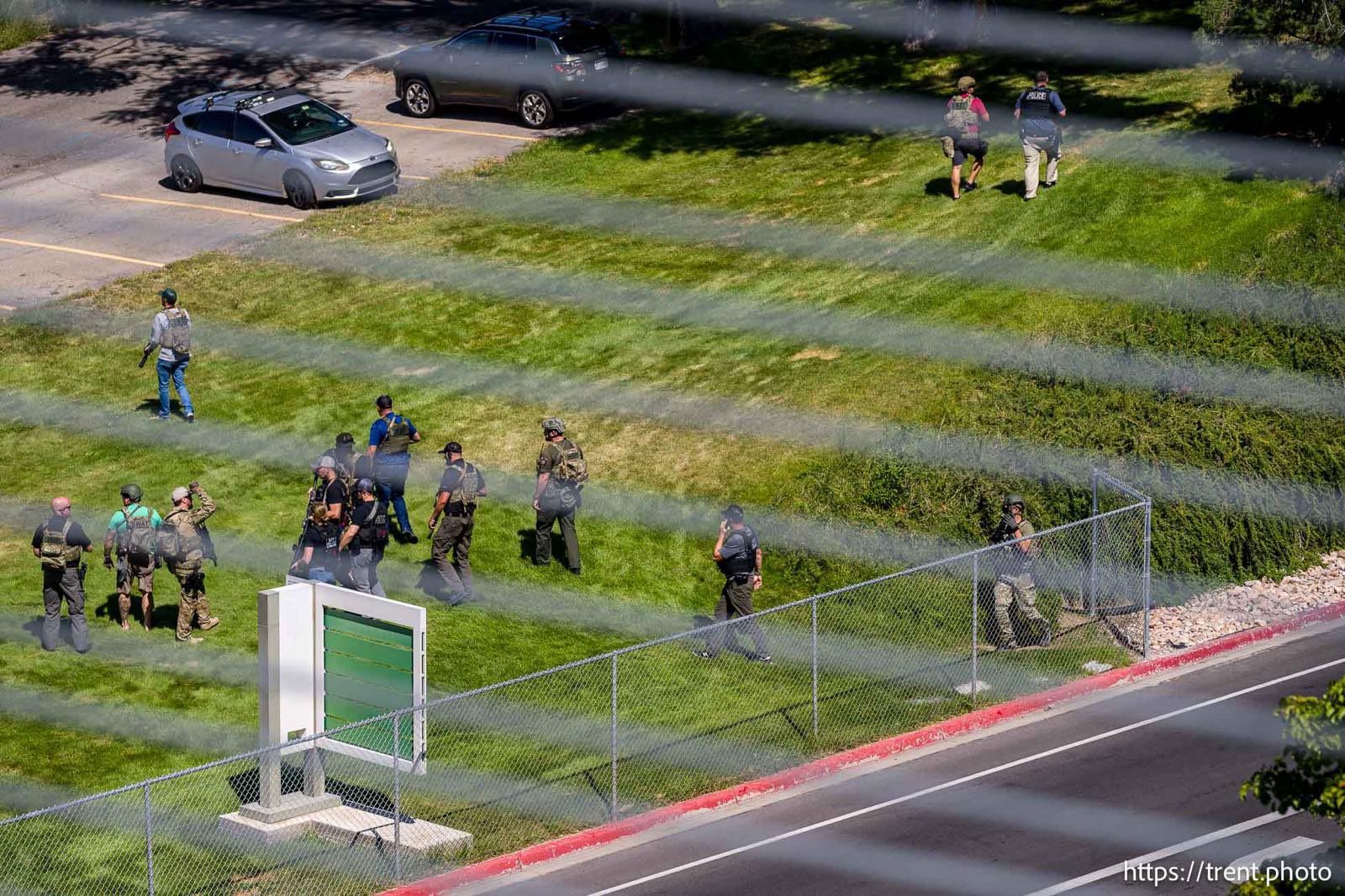
The Courtyard Paved Over Days After the Shooting (Claims)
A contractor says on camera he was told "the governor and the FBI... want this done by Monday." Pavers went in four days after the shooting, over the ground that would carry any residue. The instruction is secondhand from an unnamed on-site coordinator.
Read thisElsewhere In The Investigation
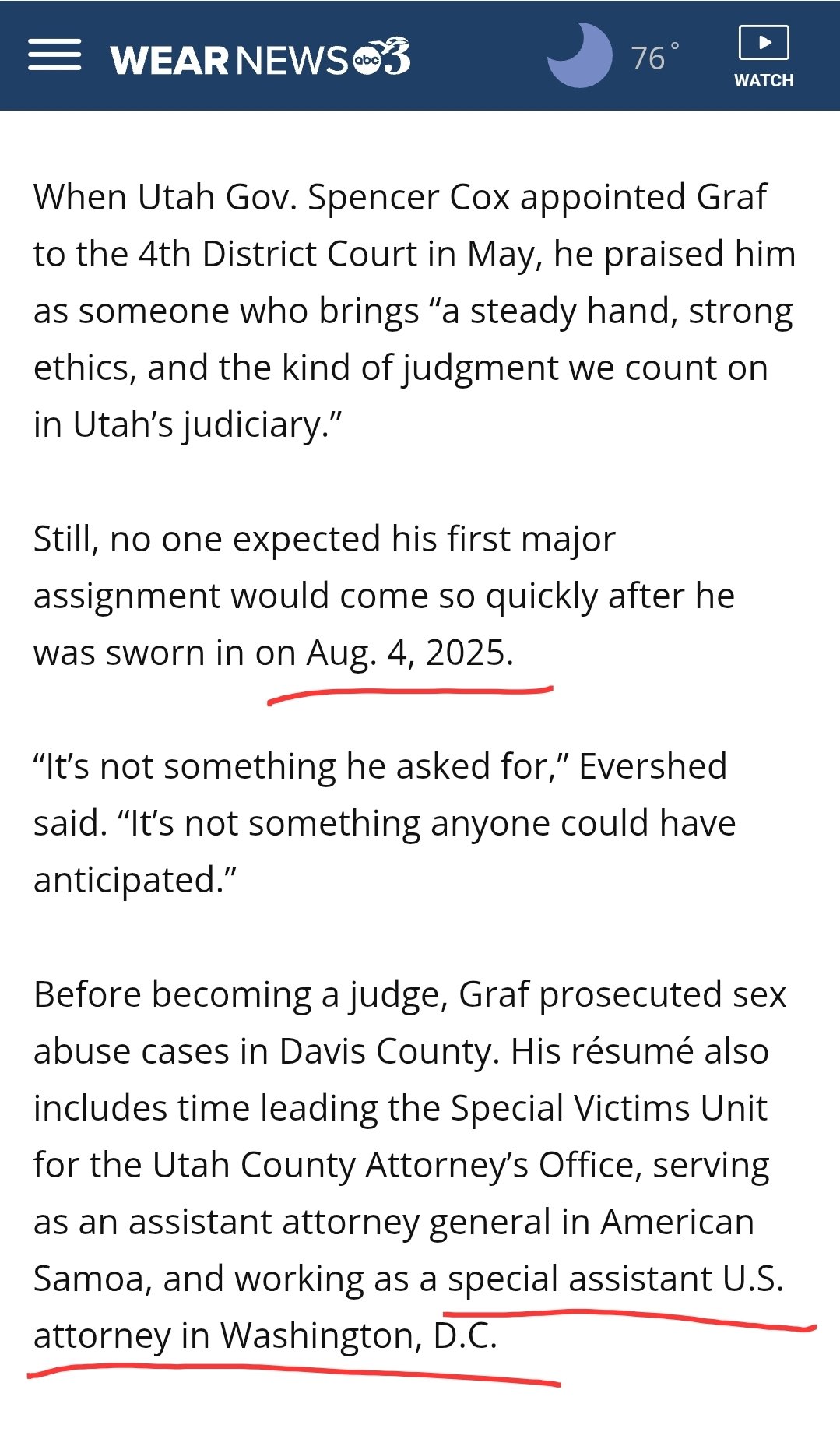
State of Utah v. Tyler Robinson, case 251403576, is where the government's narrative meets adversarial testing — every court date, the day-by-day preliminary hearing transcripts, and the inconclusive ATF ballistics.
Read thisDirt removed, a transport SUV released, cameras and SD cards gone, a body camera that stopped on the roof, a foreign inquiry halted. Each is a reported allegation, and the page groups them by the kind of cover-up alleged.
Read this
Everything downstream of 12:23 PM on September 10 — surrender, paving, gag orders, resignations, visa enforcement, and the residential block north of campus. Start here to read the aftermath as one connected thread rather than seven separate fights.
Read thisThis website's author is @HolonCitizen on X and YouTube/@HolonCitizen. Follow me there.
Interesting
- Kirk's transmitter was reportedly worn under his shirt, against his torso.
- An early draft law demanded all autopsy photos and video, plus Treasury and IRS records.
- Draft Law 2 reaches anything showing government foreknowledge, including foreign intelligence activity in Utah.