SUV Interior Photos With Blurred Windows (Claims)
:::caution Attributed claims only Redaction blurring and post-trauma debris are both entirely ordinary, and none of the images discussed here have been independently authenticated or forensically examined. Everything below is a reported interpretation from social-media analysts, not an official finding. :::
Claim snapshot
| Field | Value |
|---|---|
| The claim | The SUV interior photos show unexplained fragments, possible charring, and a deliberately blurred window |
| Raised by | Candace Owens (released the photos); @alleytopfiles; @iluminomoly; @KaySu00 |
| First surfaced | June 26, 2026 |
| Rests on | Anonymous post — interpretation of unauthenticated photographs |
| Evidence rating | EMERGING / THIN |
What is alleged
Four photographs watermarked "CANDACE", released by Candace Owens and circulated by @alleytopfiles and @iluminomoly, show the interior of the black GMC Yukon Denali that transported Charlie Kirk to Timpanogos Regional Hospital. As described in the investigation file: a rear passenger cabin with a dark stain on the folded-down rear seat; a floor sill showing a pale fragment some commentators describe as possible bone or tissue, with a small black object nearby that some describe as a microphone-style windscreen or transmitter with a blue label; a seat rail/track area with a small fragment and scattered debris; and a floor area with scattered debris and a capped water bottle.
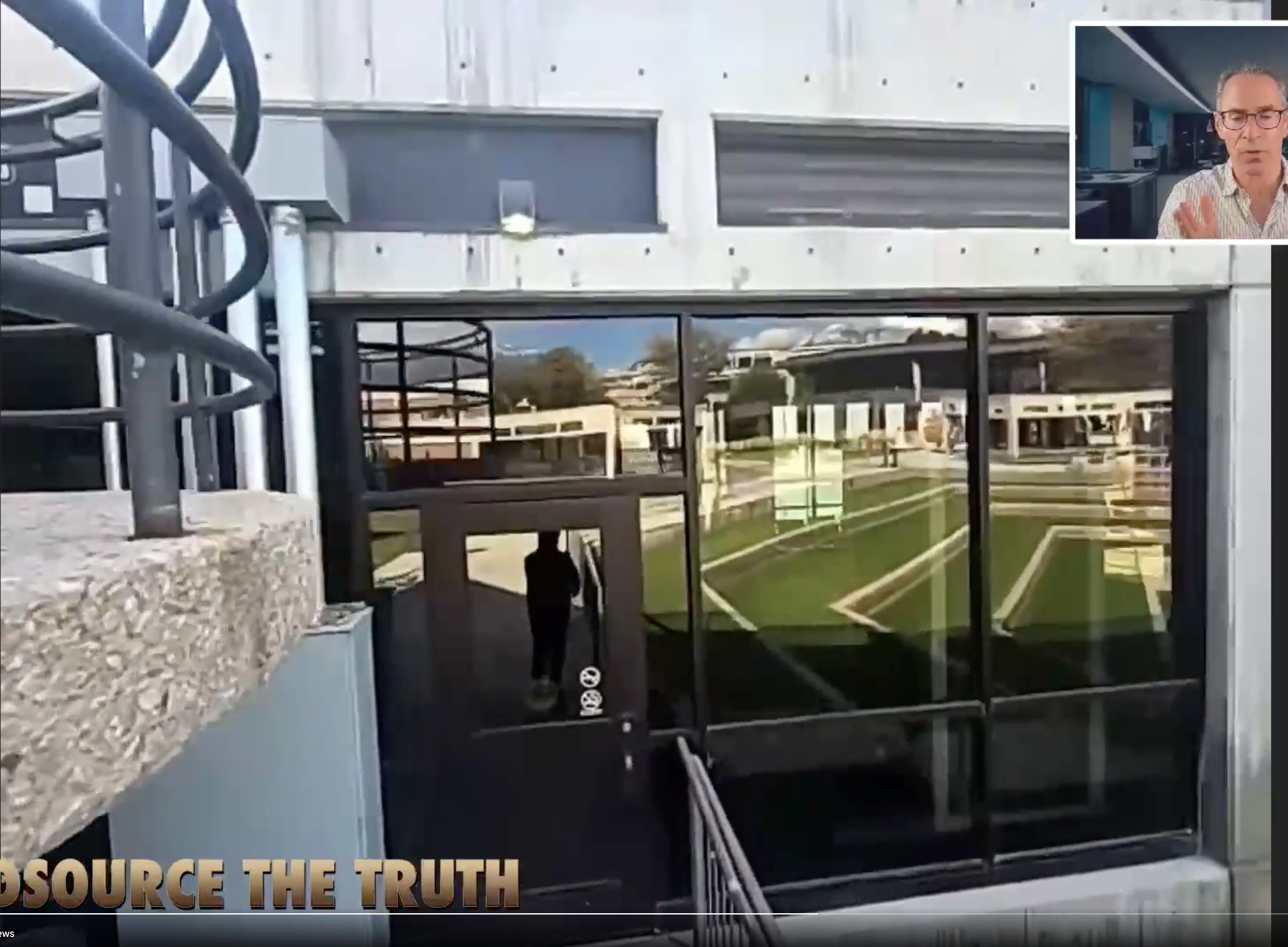
The questions raised are: was there a struggle in the SUV? Was a window broken? Are the fragments from that? Is that why the window is blurred? One poster writes that Kirk's head and hand are visible in the window and that he would have had to lift his head for that to be so, noting that Rick Cutler is not yet in the vehicle. Separately, @KaySu00 posts a screenshot from an Owens broadcast showing an inset close-up of a pale, irregular fragment whose edges appear scorched dark brown and black, asking "Why is there burned/charred material in the SUV?" Proponents of the exploding-microphone theory argue that scorching would fit a device detonating near Kirk's chest rather than a single rifle round, which would not typically char surrounding tissue or fabric. A broader complaint runs alongside: no ambulance was on site, and Kirk was loaded into an SUV by roughly six people.
The ordinary explanation
Blurring is routine redaction. It is applied before release to photos containing identifiable people, reflections, or graphic content, and it is applied by whoever prepares an image for publication — which here was not law enforcement. Tinted automotive glass also produces reflections that read convincingly as figures; seeing a head and a hand in a window is exactly the kind of pattern the eye supplies. In a chaotic penetrating-neck-trauma transport, debris, tissue fragments, bandage packaging, and a dropped water bottle on the floor are precisely what you would expect to find afterward — their presence needs no special explanation.
The charring claim is the weakest thread, and the investigation file concedes as much: the fragment was never independently identified or tested, ordinary explanations including lighting, shadow, and image compression were not ruled out, and the image in question is a screenshot of a broadcast, not a forensic photograph. Dark edges in a compressed screenshot are a rendering artifact long before they are evidence of combustion.
As for the SUV itself: a security detail choosing a waiting vehicle over waiting for an ambulance is the standard "scoop and run" decision for penetrating trauma when the hospital is minutes away. It is not a lapse — it is taught as best practice, because for this injury the only intervention that helps is a surgeon, and the fastest route to one wins. Six people loading a wounded man quickly is what that looks like.
What would settle it
- Establish the provenance and chain of custody of the four photographs — who took them, when, and whether they are evidence photos or something else.
- Obtain the unblurred originals, which would resolve the window question in a single step.
- Obtain the forensic inventory of the vehicle, which would identify the fragments by laboratory analysis rather than by inspection of a JPEG.
- Obtain the transport decision record from the security detail and the receiving hospital's intake documentation.
Interesting In This Area
- A burnt object with transmitter parts reportedly appears in the same photograph set.
- Charred material is the same fragment argument, at higher magnification.
- The SUV was destroyed before any independent examination happened.
- There was no ambulance, which is why this vehicle matters at all.
Interesting In Other Areas
- The SUV that carried Charlie is documented in the mic section.
- SUV destroyed is the cover-up reading of the vehicle's disposal.
- Charlie's trip to hospital reconstructs the drive minute by minute.
- The chest-wound reversal explains what witnesses expected to see inside.
Images


Other Pages In This Section
UVU GRAMA Records Show Pre-Shooting Warnings (Claims)
A 112-page records production reportedly carries an internal message fourteen hours before the shooting: two men had turned up asking to talk to police about "a plan." Forty-four minutes later someone replied they were overstating their access. Nobody in the chat asked what the plan was.
Read this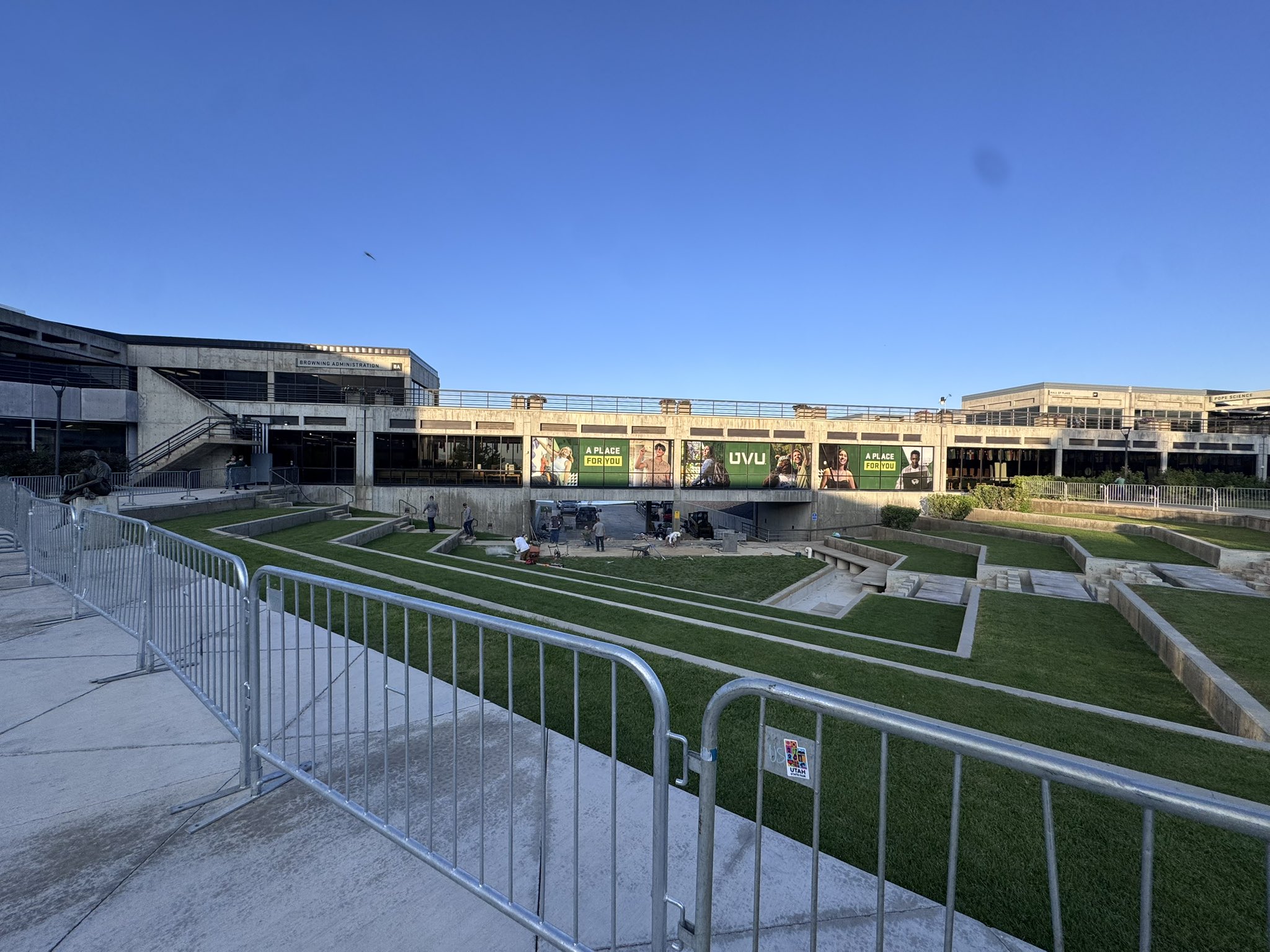
No On-Site Ambulance and the Scoop-and-Run SUV (Claims)
Kirk was carried into an SUV roughly thirty-one seconds after the shot — no ambulance, no sirens. An anonymous caller adds that "a 911 call never came through" at the hospital. Hospitals do not receive 911 calls at all.
Read this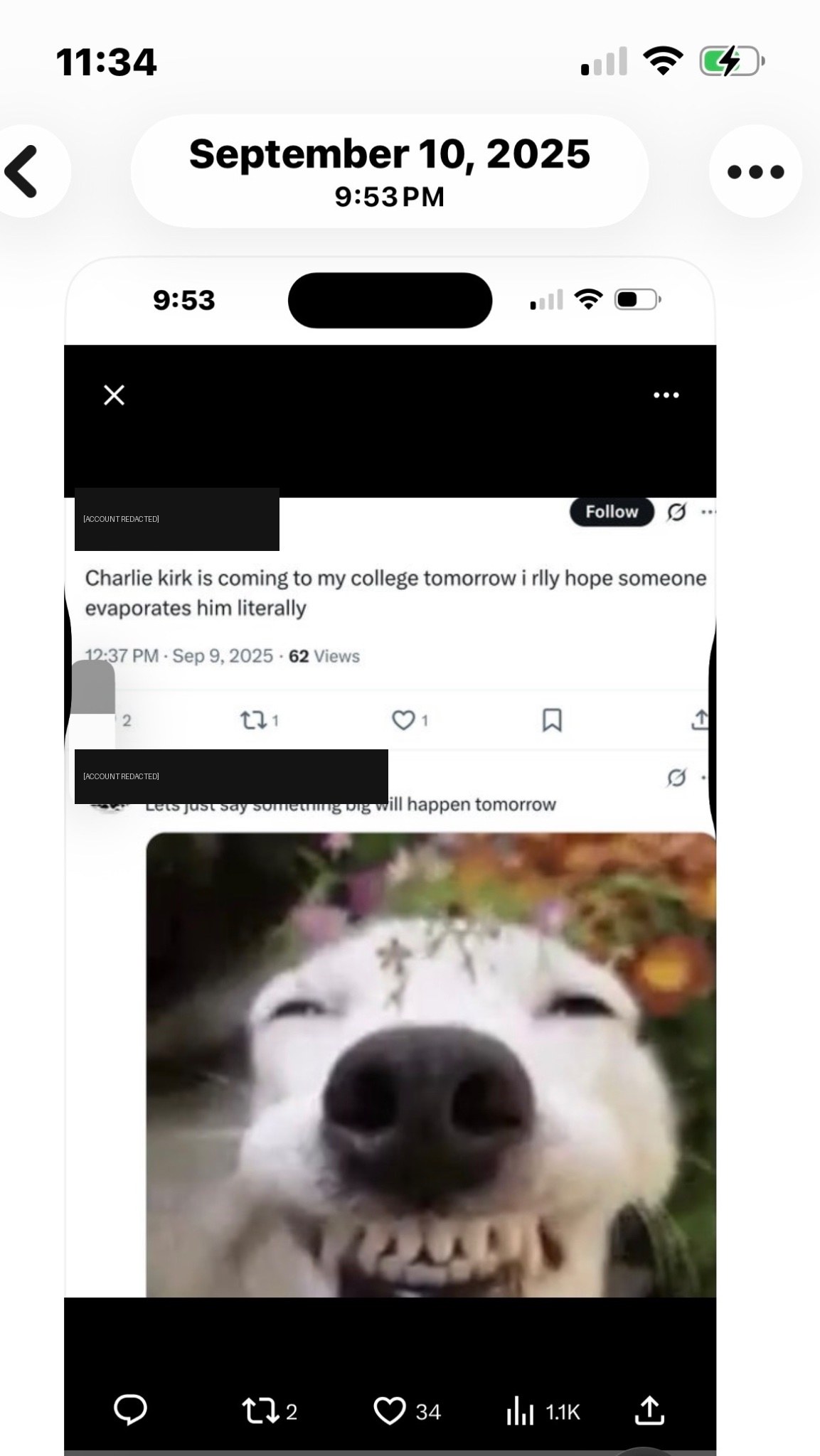
Suspicious Posts Before the Event
Social media posted before the shooting that reads, in hindsight, like anticipation — and the open question of whether anyone who wrote it was ever interviewed. Hindsight makes ordinary posts look prophetic, which is exactly why these are handled carefully.
Read this
The Senior Executive Who Collected the SD Cards (Claims)
A senior TPUSA executive who reportedly never works campus stops was at UVU on September 10 and took the camera SD cards. UVU was reportedly the opening night of a new national tour — exactly where a national events executive would be.
Read thisElsewhere In The Investigation
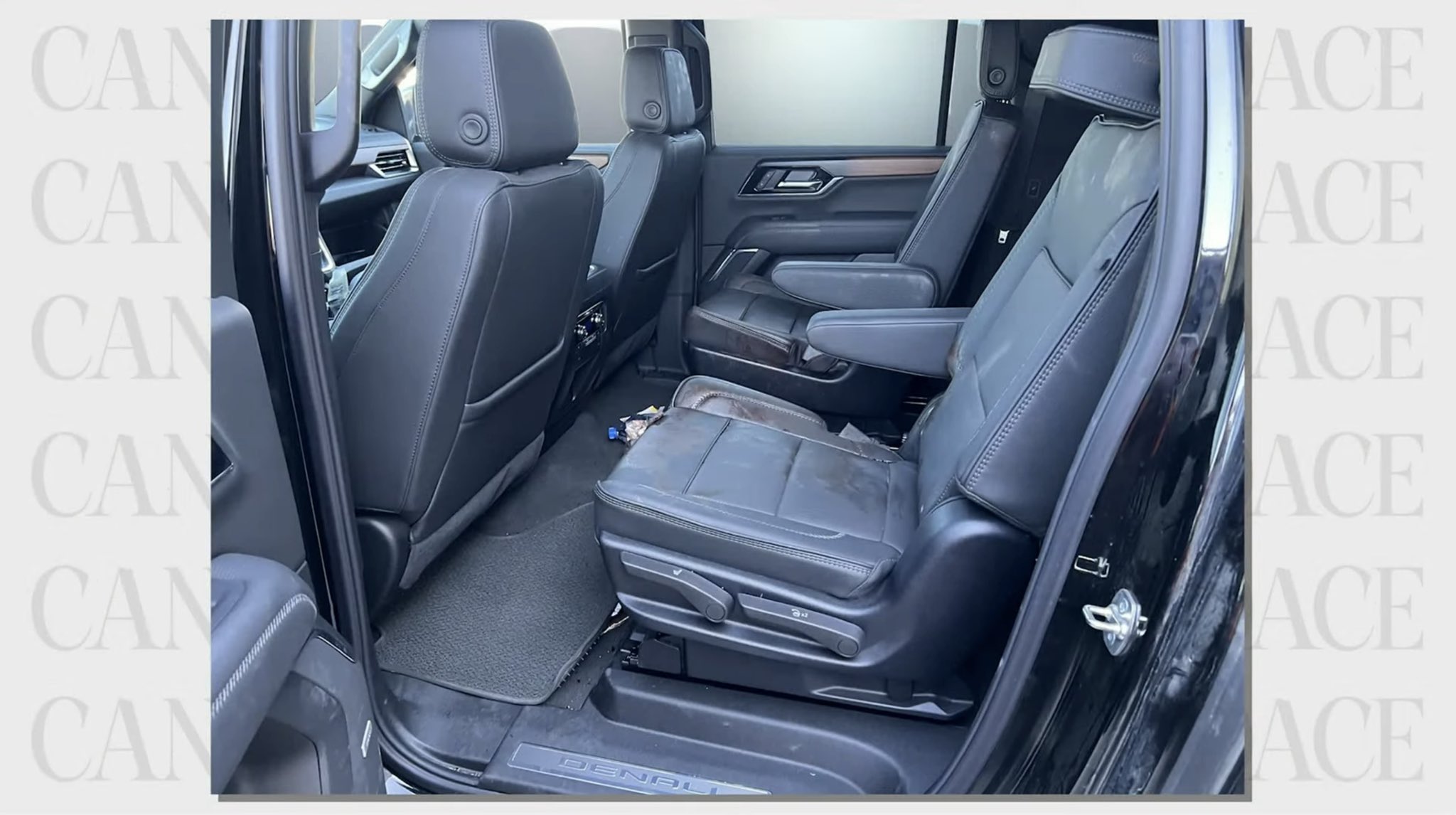
SUV Transporting Charlie — Candace Owens Photos
Photographs reportedly released by Candace Owens show the inside of the vehicle that carried Charlie to hospital. Analysts point at the glass on the seat and ask what tempered glass was doing anywhere near a rifle wound.
Read this
Transport SUV Destroyed and Melted Down (Claims)
The vehicle that carried Charlie Kirk to the hospital is, to skeptics, a primary forensic surface. Commentary alleges it was scrapped and disposed of before any independent testing — reported, not confirmed.
Read this
No ambulance, no sirens — carried into a private vehicle by his own detail. Using the car already on hand in a chaotic scene is not evidence of wrongdoing, which is why the page is about who controlled the evidence, not about rescue.
Read this
Shot in the Chest, Then the Neck — One Witness, Two Accounts
One witness, two accounts: chest first, then neck. The page tracks when the account changed, and what else changed around it.
Read thisSources
- @alleytopfiles: https://x.com/alleytopfiles/status/2070606777691816338
- @iluminomoly: https://x.com/iluminomoly/status/2070601845697888339
- @KaySu00: https://x.com/KaySu00/status/2070601198848049263
- Investigation file description of the four photographs and the charring screenshot, including its own caveats that the images are unauthenticated and the fragments untested
This website's author is @HolonCitizen on X and YouTube/@HolonCitizen. Follow me there.
Interesting
- The defense was reportedly barred from the destructive testing of the only ballistic fragment.
- Investigators say the entity holding the movement's investments has 990 filings that cannot be located.
- Every one of 1,793 podcast episodes recorded while Kirk lived is now absent from Apple's catalog.