Charred Material and Fragments in the SUV (Claims)
:::caution Attributed claims only No one is accused of anything on this page. Debris in a vehicle that carried a catastrophically wounded man is expected regardless of what caused the wound. The images below are social-media interpretations of photographs that have not been independently authenticated, and no fragment has been recovered, identified, or tested by any laboratory. :::
Claim snapshot
| Field | Value |
|---|---|
| The claim | Photos of the SUV interior show charred/burned material and fragments argued to be more consistent with a detonating device than a rifle round |
| Raised by | @KaySu00; @DiligentDenizen; @alleytopfiles; @iluminomoly; the investigation file's own compiler |
| First surfaced | June 26, 2026 (the photo release); the "fragments in the car" note is undated |
| Rests on | Anonymous and attributed social-media posts interpreting screenshots — no recovered object, no lab result |
| Evidence rating | EMERGING — an observational hook that has never been converted into physical evidence |
What is alleged
The investigation file's "SUPER Strange events" list carries this as item 3, phrased plainly: "Glass or plastic fragments on the ground in the car Charlie was taken to the hospital." In June 2026, photographs said to show the interior of the black GMC Yukon Denali were released by Candace Owens and recirculated widely, and the question sharpened.
@KaySu00 asks: "Why is there burned/charred material in the SUV…..? Cmon now…" The image is a broadcast screenshot showing an inset close-up of a pale, irregular fragment whose edges appear scorched dark brown and black, resting on a dark seat surface. @DiligentDenizen reports the same photo set reveals "apparent shattered tempered glass (like from a RODE microphone) all over the floor of the SUV," and asks "How'd that glass get there?" Captions on the other frames describe a pale fragment on the floor sill that some commentators call possible bone or tissue, with a small black object nearby that some describe as a microphone-style windscreen or transmitter.
The asserted medical significance is specific: a rifle round does not typically char tissue or fabric, whereas a device detonating against the chest would produce heat and combustion. The file's compiler rates this "the exploding-mic theory's strongest observational hook" — on the reasoning that, unlike the disputed arguments over what a given part is, this one does not depend on identifying anything.
The ordinary explanation
That reasoning is where the item breaks. Nothing has been physically recovered, identified, or lab-tested, and the file itself concedes the images are not independently authenticated. What is being analyzed is not a fragment. It is a photograph of a photograph.
"Charred" appearance in a re-compressed screenshot of a dark vehicle interior is exactly what lighting, shadow, JPEG artifacting, and dried blood produce. This last point does most of the work: dried, clotted blood on fabric reads dark brown to black to the eye and to the camera. An edge that "appears scorched" in a low-bitrate inset is the single least reliable observation one can make from consumer video.
More fundamentally, debris is expected regardless of mechanism. An SUV that carried a bleeding man, a CPR attempt, and several people scrambling in and out under extreme time pressure will contain tissue, blood, and scattered objects. Pale fragments on a floor sill in that vehicle are unremarkable. And a wireless transmitter's presence in the vehicle is consistent with Kirk having worn one — which he did — not with it detonating.
The one procedure that would settle the question — explosive-residue testing with a documented chain of custody — has not been done, or at least has not been reported. Until it is, this remains an argument about compressed pixels.
What would settle it
- Establish whether any physical fragment was recovered from the SUV and logged into evidence, and by whom.
- Run explosive-residue testing (PETN and related compounds) on the vehicle interior and on any recovered fragment, with chain of custody documented.
- Authenticate the photographs: who took them, on what device, on what date, and are the originals with intact EXIF available?
- Obtain the crime-scene processing record for the vehicle before it was disposed of.
Interesting In This Area
- A burnt object with transmitter parts is the same fragment, named.
- The SUV was destroyed, so nothing can now be recovered from it.
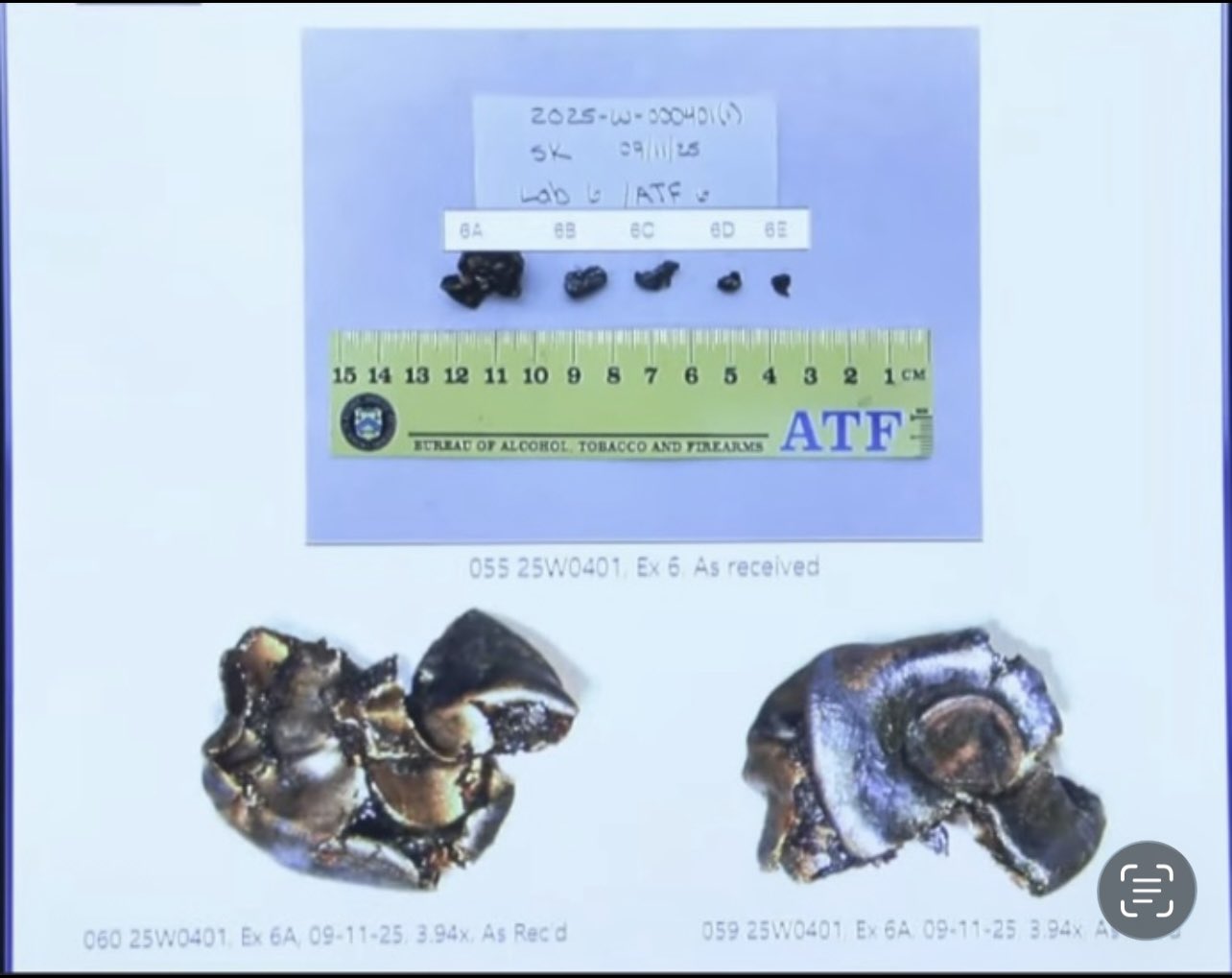
- The ATF reportedly matched only to class, never to an individual weapon.
- Blurred SUV windows come from the same released photograph set.
Interesting In Other Areas
- The burnt RODE transmitter is where the hardware claim is set out.
- SUV destroyed records the vehicle's disposal and what it foreclosed.
- ATF fragment inconclusive is the only lab result actually reported.
- Shaped charge versus bullet is the mechanism this fragment is meant to decide.
Images
Other Pages In This Section
Chest Wound Accounts Versus the Neck Wound (Claims)
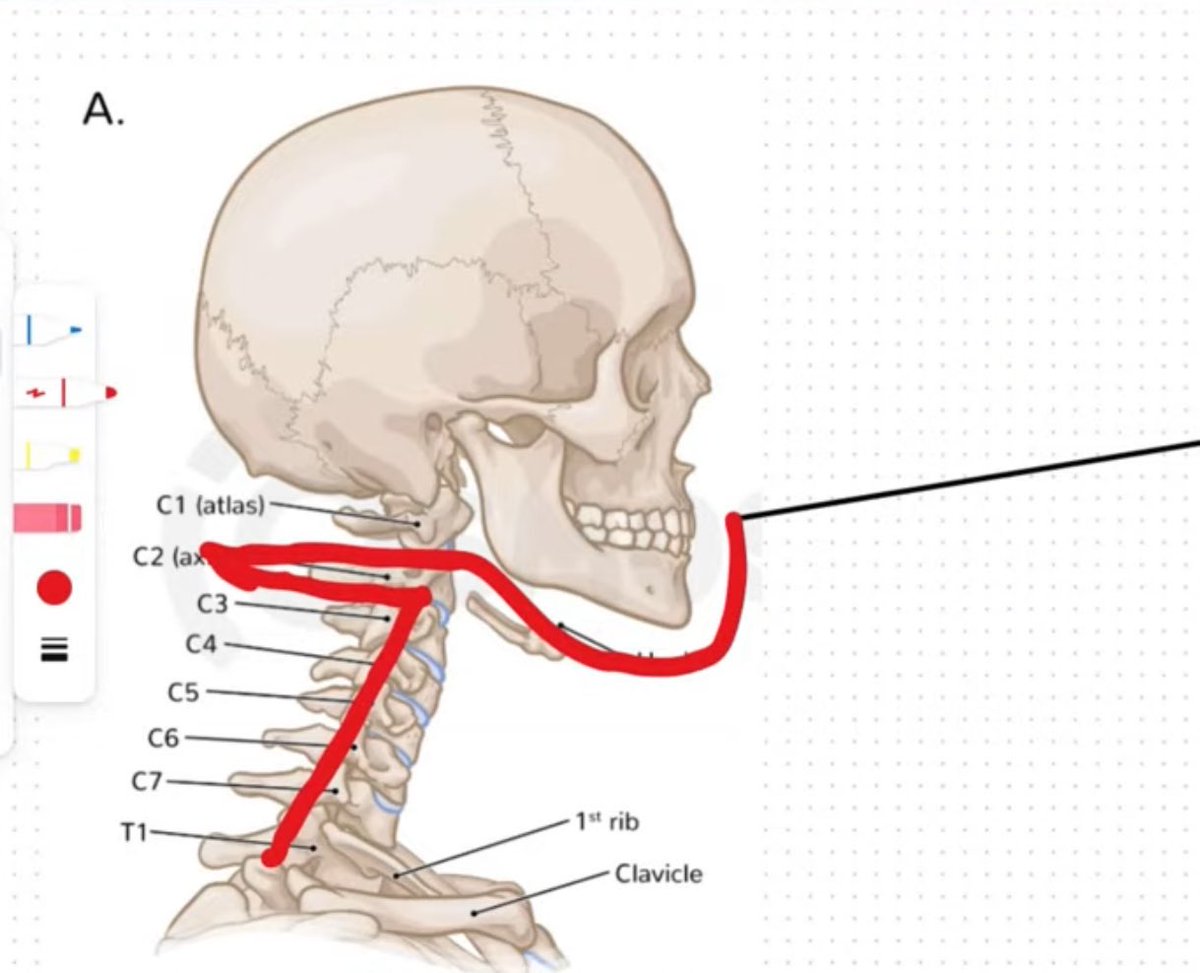
The earliest witnesses on camera all described a wound to the heart. The charging document describes blood from the left side of the neck. Eyewitness memory of sudden violence is famously wrong about wound location — which points the opposite way from coordination.
Read thisThe Timpanogos Surgeon Search-Trends Frenzy (Claims)
A recirculated thread says Israeli IPs searched seven Timpanogos doctors weeks before the shooting. Google Trends reports normalized regional interest on a 0-to-100 scale and cannot report an IP address at all. Seven living physicians are named by a chart that cannot say this.
Read this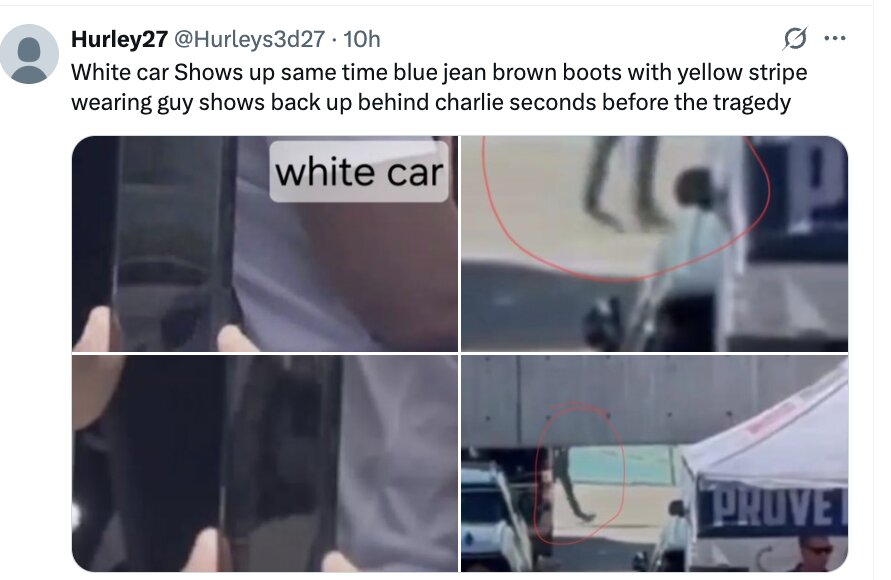
Cooper Brown and the Silenced Witness (Claims)
One name, three incompatible roles: the man who silenced a witness, the witness who was silenced, and a bystander volunteer. The investigation file assigns all three to Cooper Brown in three separate passages. That is noise being mistaken for a signal.
Read thisSuspicious Peripheral to TPUSA
Twelve things citizen investigators flag around Turning Point USA — the audit, the succession, the money, the SD cards. Most of the money items turn out to be lawful and disclosed on the very filings being cited as proof.
Read thisElsewhere In The Investigation
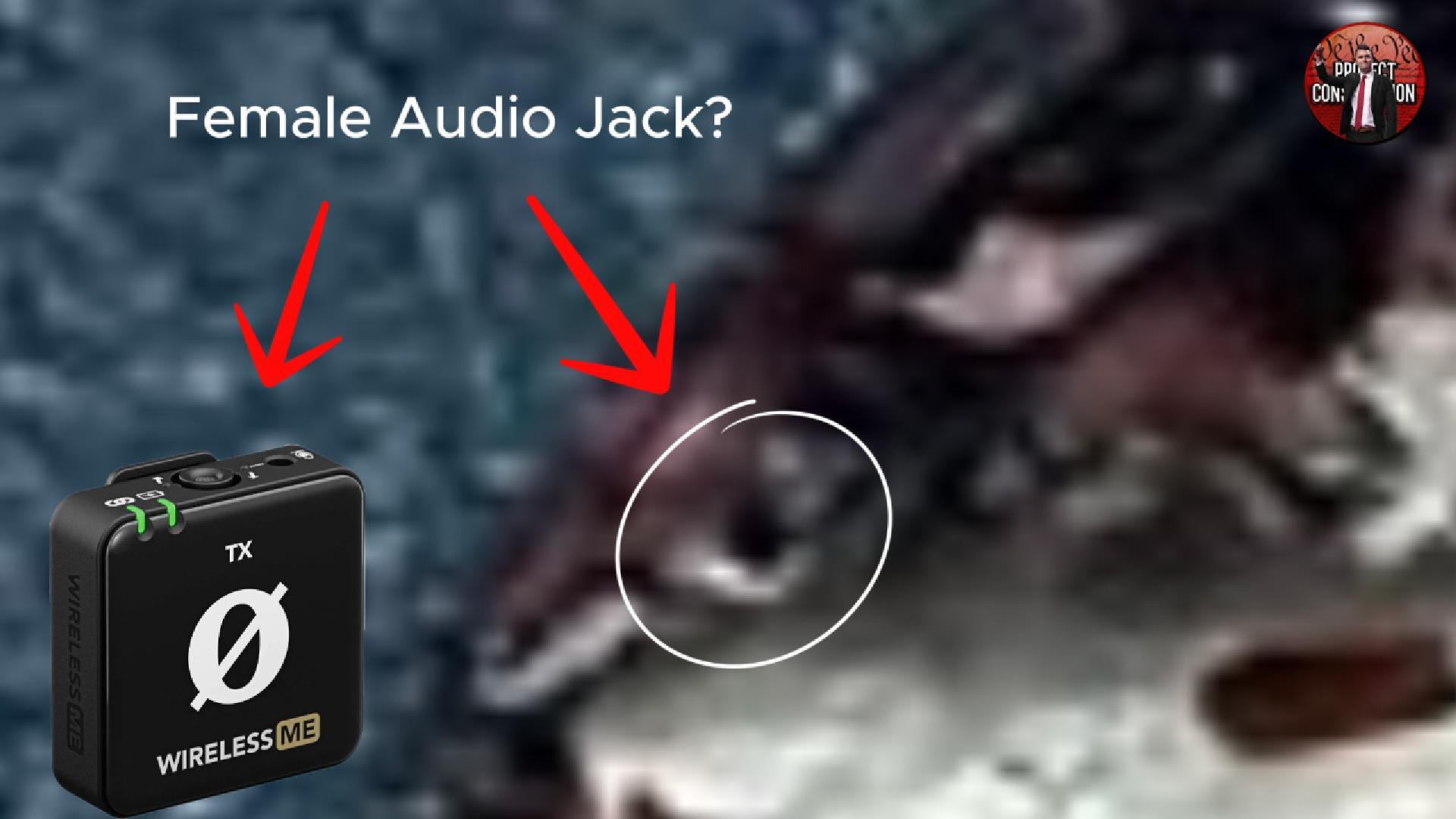
Burnt Object in the SUV — RØDE Transmitter Claim
Project Constitution argues the burnt object in the SUV holds a melted audio jack and a battery-label fragment from the RØDE transmitter. The images, the reasoning and the problems with all of it, set out together.
Read this
Transport SUV Destroyed and Melted Down (Claims)
The vehicle that carried Charlie Kirk to the hospital is, to skeptics, a primary forensic surface. Commentary alleges it was scrapped and disposed of before any independent testing — reported, not confirmed.
Read thisATF Fragment — Inconclusive Match
The state's own September 17, 2025 ATF report could neither identify nor exclude the seized Mauser as the source of the autopsy jacket fragment. The rifling matched "numerous makes and models" — a class, not a weapon. The defense reportedly calls that exculpatory, and it is a large part of why independent work has moved toward a device at the podium.
Read this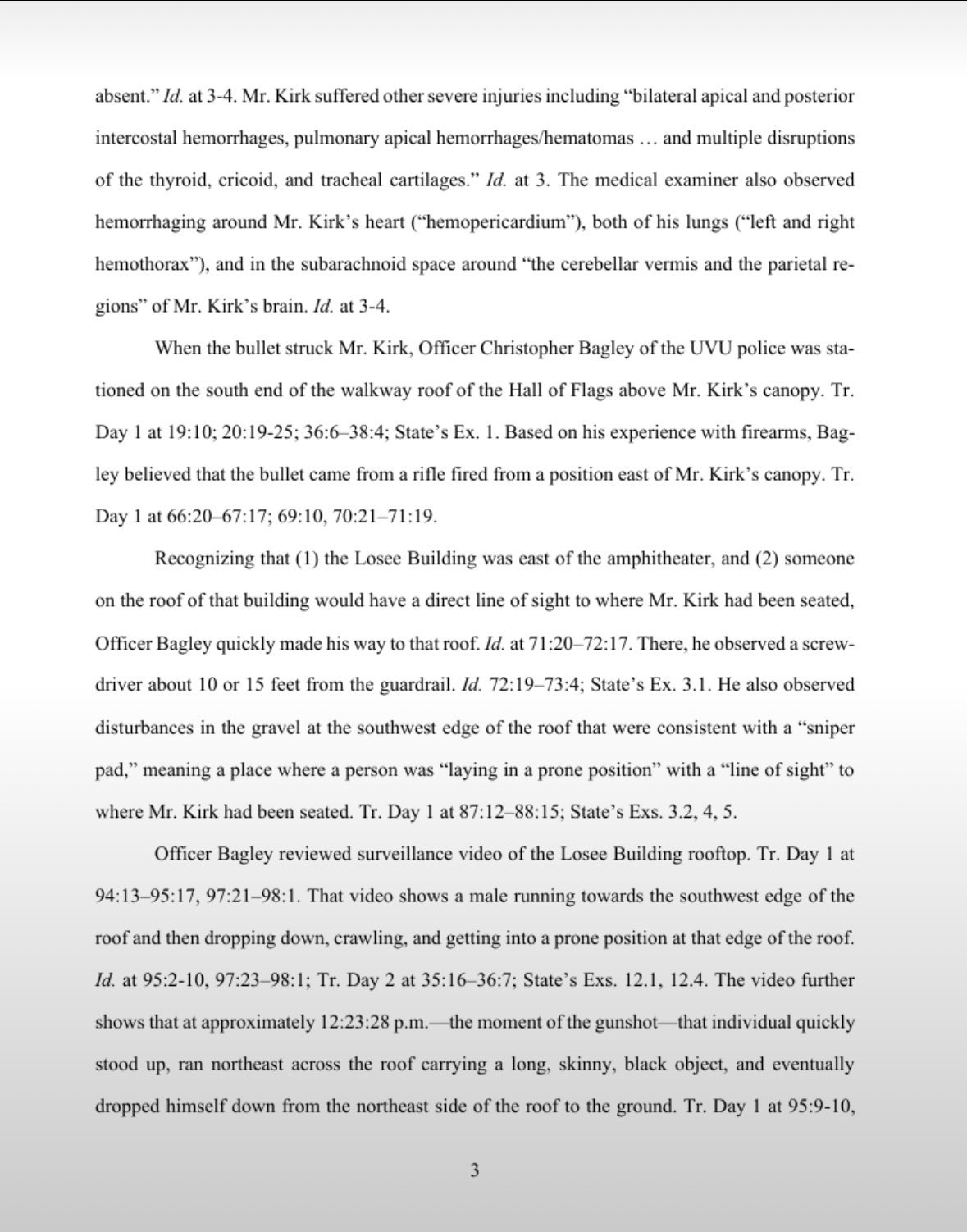
Shape Charge vs Bullet: from Medical Examiner results
The medical examiner findings quoted in the court filing — hemopericardium, bilateral hemothorax, subarachnoid hemorrhage — scored against two hypotheses side by side. The clearest place to see which mechanism the injuries actually fit.
Read thisSources
- @KaySu00, "Why is there burned/charred material in the SUV": https://x.com/KaySu00/status/2070601198848049263
- @DiligentDenizen on the apparent shattered glass: https://x.com/DiligentDenizen/status/2070615710003589174
- @alleytopfiles, "New released Candace pics from SUV": https://x.com/alleytopfiles/status/2070606777691816338
- Originally posted by @iluminomoly: https://x.com/iluminomoly/status/2070601845697888339
- "Glass or plastic fragments" — investigation file, "SUPER Strange events," item 3. No source is cited in the file for this item.
- Related: the SUV's blurred windows · the necklace and residue question · the burnt object as a RODE transmitter
This website's author is @HolonCitizen on X and YouTube/@HolonCitizen. Follow me there.
Interesting
- Anonymous claims put counter-drone gear under test at Provo Airport during the exact week Kirk died.
- A 2.5 gram shaped charge, small enough for a microphone clasp, is detonated on camera.
- A man shouts "shoot me, kill me" as he is detained.