N1098L: The HADES Aircraft's Low Passes (Claims)
:::caution Attributed claims only The numbers in this claim contradict each other inside the investigation file itself, and a published innocent explanation exists. Nothing below is a finding that this aircraft, its crew, or its operator did anything wrong. Bill Ackman is a private citizen accused of nothing. :::
Claim snapshot
| Field | Value |
|---|---|
| The claim | An Army-linked ISR jet reportedly made two abnormally low, slow passes near UVU on the day of the killing |
| Raised by | @JG_CSTT; MonkeyWerx-style OSINT trackers; @BlakeBednarz — disputed by @TJPHager |
| First surfaced | September 2025 |
| Rests on | Public ADS-B data, read inconsistently across accounts |
| Evidence rating | EMERGING |
The numbers do not agree with each other
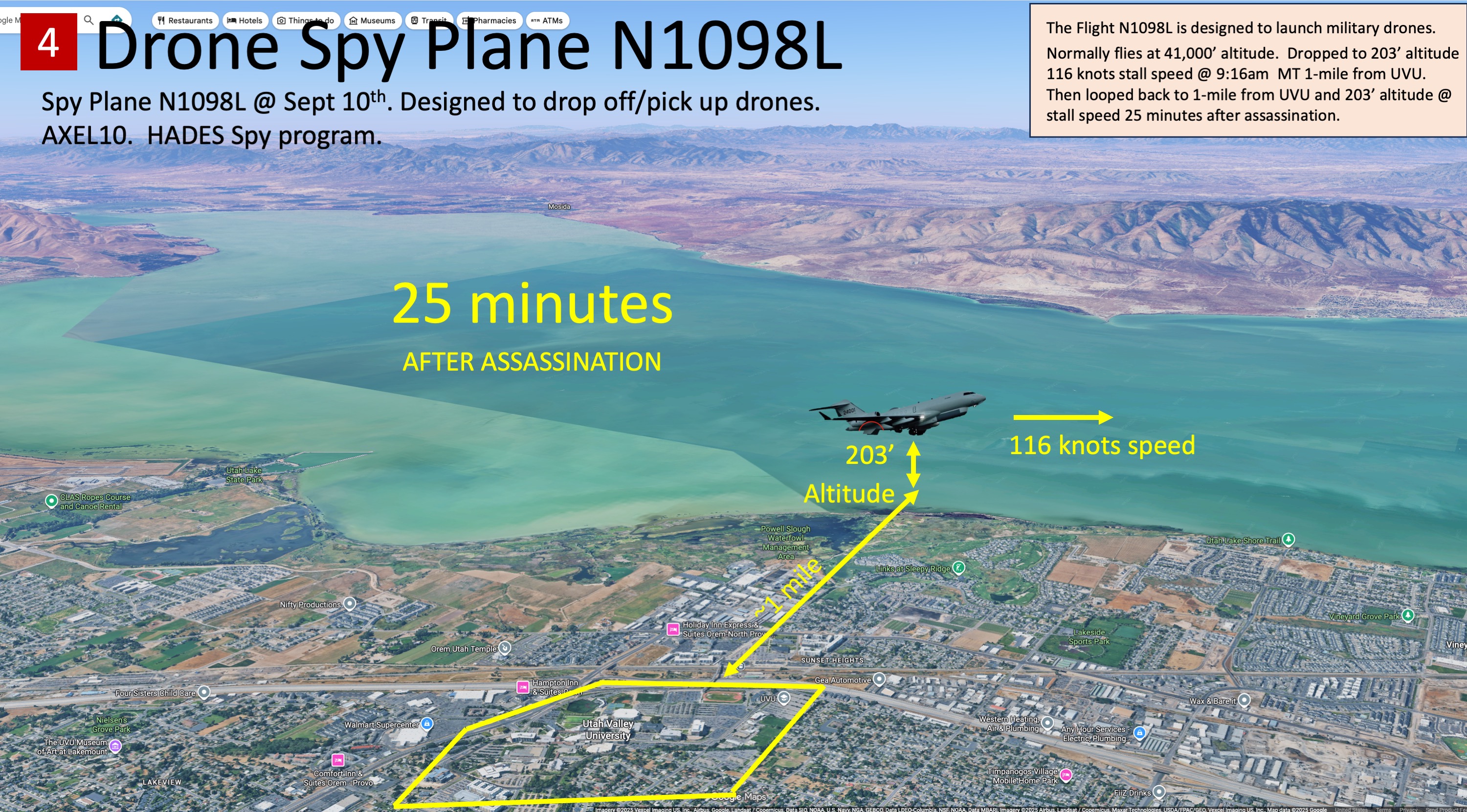
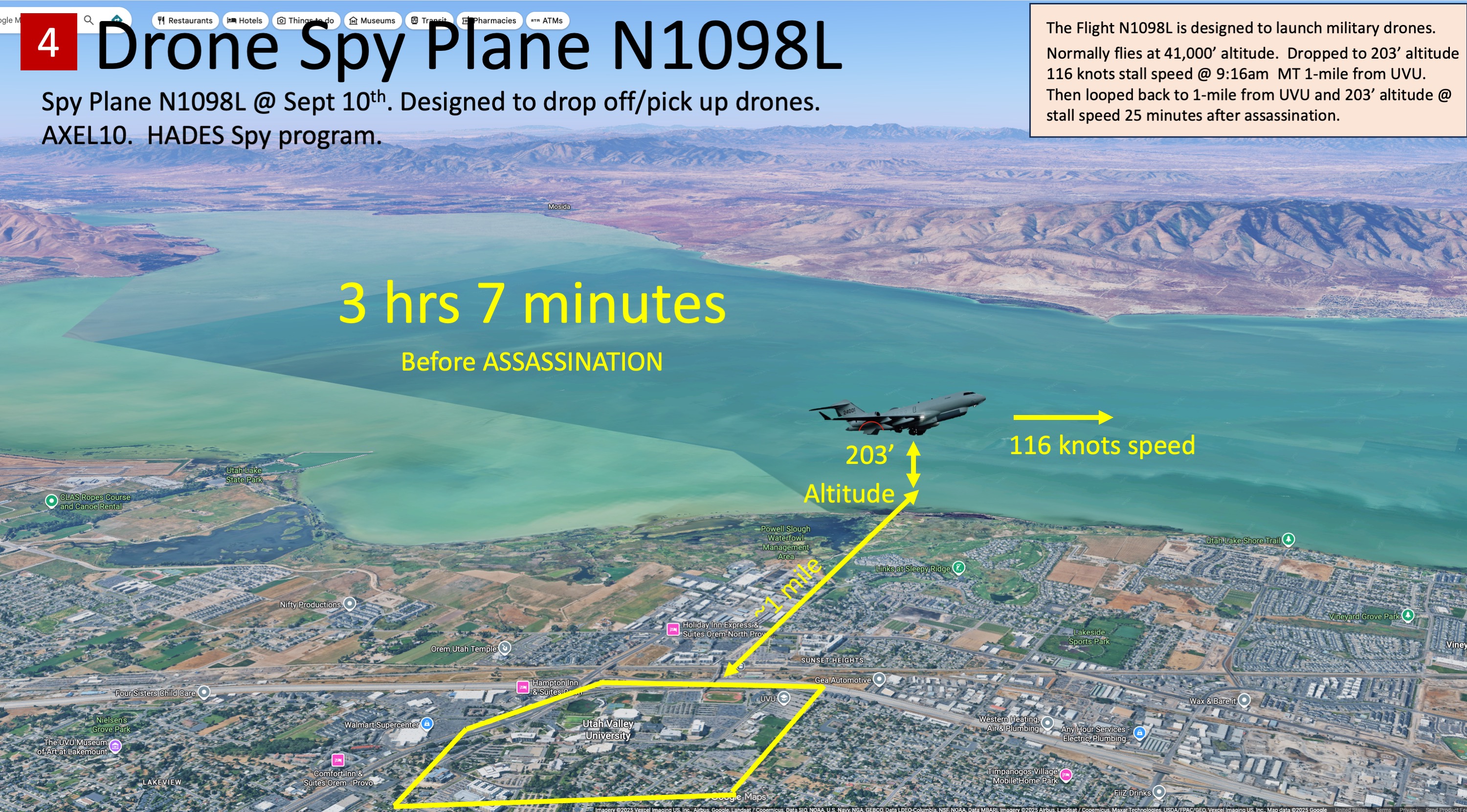
Start with the problem, because it is fatal to the strong version of this claim. The investigation file gives the same two maneuvers two incompatible ways. One telling has the first pass at 600 ft AGL at 11:47 am MDT and the second at 335 ft AGL at 12:24 pm — speeds near 118 and 129 knots. Another telling in the same file has the aircraft dropping to 203–204 ft at 116 knots, described as "stall speed," and drops the times to 9:16 am and 12:48 pm. A third describes 650 ft and "3 seconds after the incident." These are not small discrepancies. They are the same raw ADS-B feed being read three different ways by three people, which means at least two of them are wrong and none of them has shown their work.
The "stall speed" framing is also aerodynamically incorrect. A Bombardier Global 6500's stall speed at approach weights is comfortably above 116 knots — an aircraft actually at its stall speed is not making a controlled photographic pass, it is falling. Describing 116 knots as stall speed makes the maneuver sound desperate and exotic when the figure describes a routine slow-flight profile.
What is alleged
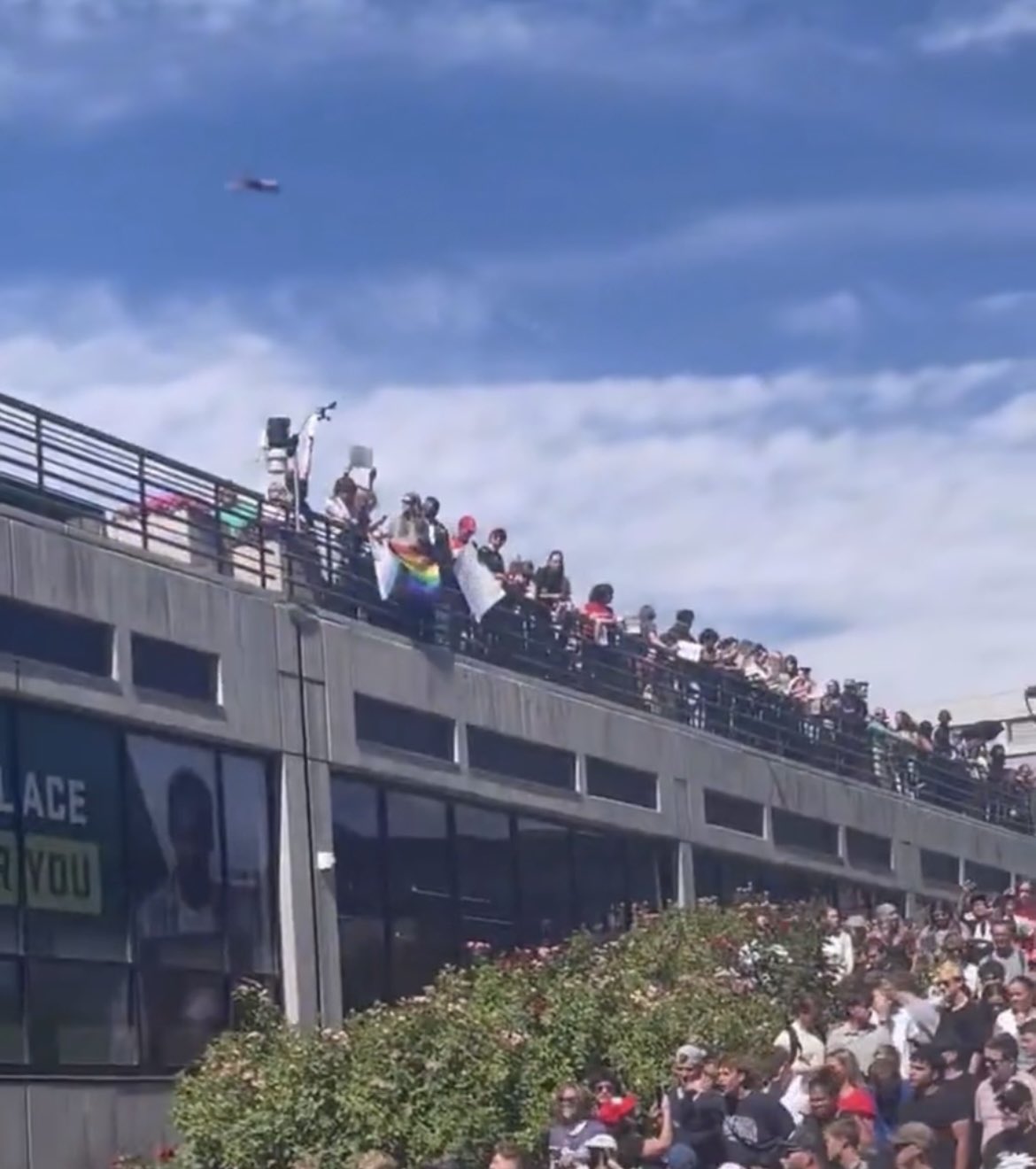
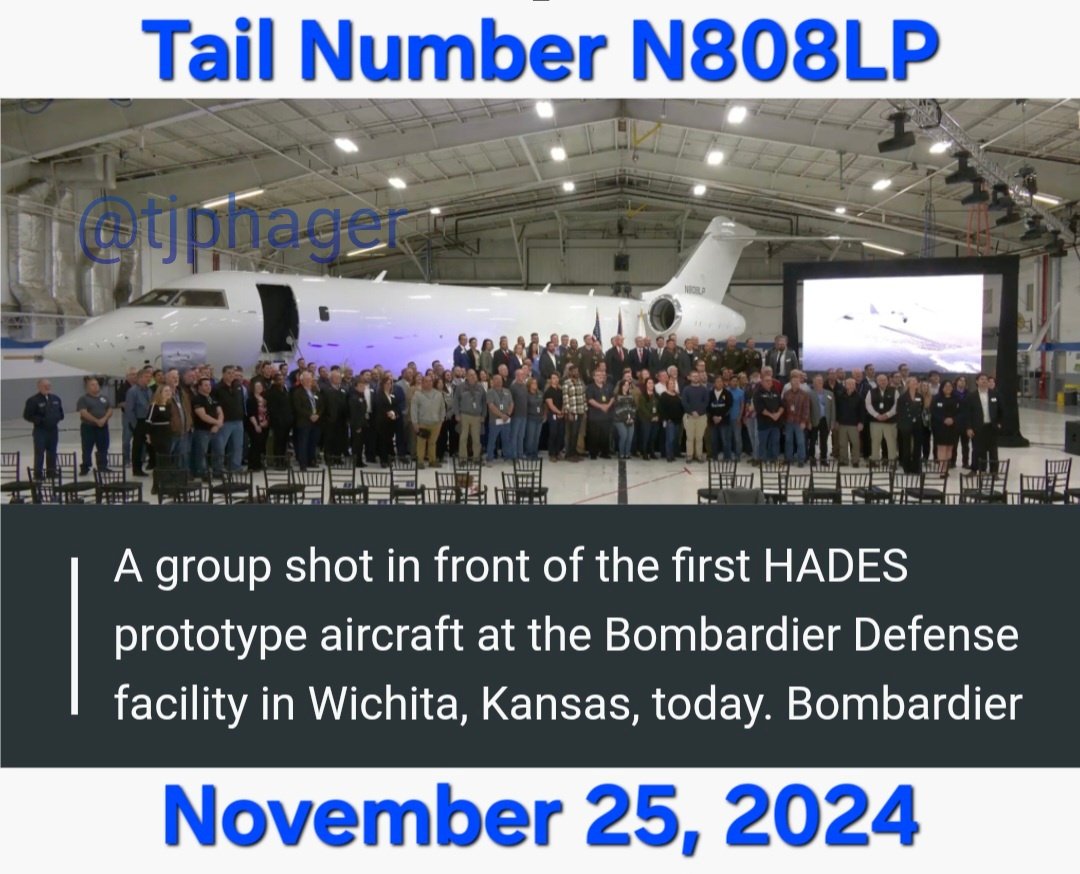
N1098L (ICAO A0299E, callsign reported as AXEL10/AXLE10) is a Bombardier Global 6500 registered to LASAI Aviation II LLC and associated in reporting with Leidos and the US Army's HADES program — High Accuracy Detection and Exploitation System. Citizen flight trackers say ADS-B data shows it making two unusually low, slow passes near Orem and Utah Lake on September 10, 2025, within roughly two miles of UVU: one hours before the shooting, one some twenty-odd minutes after. Some accounts escalate this into an allegation of drone drop-off and recovery.
The file records the supporting and contradicting threads honestly. The Defense Post and TWZ have publicly documented Army interest in trialing air-launched drones from a Global Express-type jet, which is the background that makes the theory conceivable. Bradley Hansell is described in the file as overseeing HADES, and LASAI-linked aircraft were reportedly aloft over Washington DC around January 6, 2021. Against that, researcher @TJPHager reportedly disputes that this airframe is configured to launch drones at all, and a competing explanation in the same file states plainly that scheduled drone-retrieval training was the flight's purpose. A further claim circulates that LASAI Aviation II LLC shares a New York address with Bill Ackman's Pershing Square — this is offered here strictly as an unverified question, not as an established fact, and no link between Mr. Ackman and any event at UVU has been shown.
The ordinary explanation
600 ft AGL at roughly 120 knots over open water is an ordinary sensor-calibration, pattern or training profile for a large-cabin test aircraft — it is not a stall, and it is not rare. A published drone-retrieval training explanation exists and is consistent with the recorded flight legs, which the file gives as a Biggs Army Airfield departure at approximately 07:48 MDT and a Kalispell, Montana arrival at approximately 10:38 MDT. Utah Lake sits directly beneath normal arrival and training corridors for Provo and Salt Lake, so "within two miles of UVU" describes a two-mile radius drawn around a busy campus in a busy valley — geography, not a targeting decision.
The strongest point against the sinister reading is the one investigators skip: the aircraft's association with a publicly announced Army program is an argument that its behavior was disclosed, not hidden. It flew with its transponder on, broadcasting its position to every hobbyist tracker in the country. That is not how a covert drone strike is conducted.
What would settle it
- The raw ADS-B track for A0299E on September 10, 2025, published in full so the altitude figures can be reconciled once.
- The Army's mission tasking for the flight and whether drone-retrieval training was scheduled in advance.
- Whether this airframe is physically configured with a launch or recovery aperture — a maintenance-record question.
- The actual crew manifest, given that two competing crew lists appear in the file.
- The FAA registration address for LASAI Aviation II LLC, which either matches Pershing Square's or does not.
Interesting In This Area
- The N1098L low pass at 12:24 is the minute-level version.
- Drones over the venue is the claim these passes are paired with.
- Counter-UAS gear reportedly tested at Provo that same week.
- N560TW's turnaround is the other aircraft on the morning list.
Interesting In Other Areas
- N1098L spy plane is the aircraft profile with its full record.
- US Army HADES explains what the program actually does.
- N1098L HADES over UVU gathers the flight-data argument.
- The N1098L plane activity timeline dates each pass.
Images
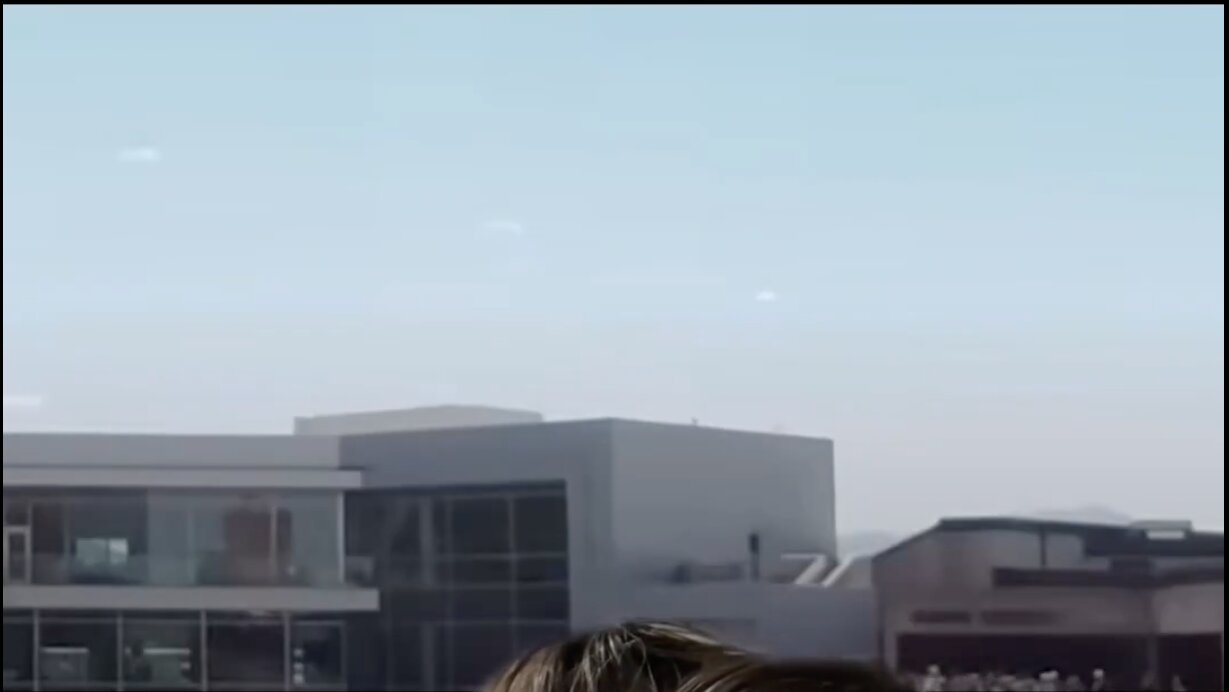
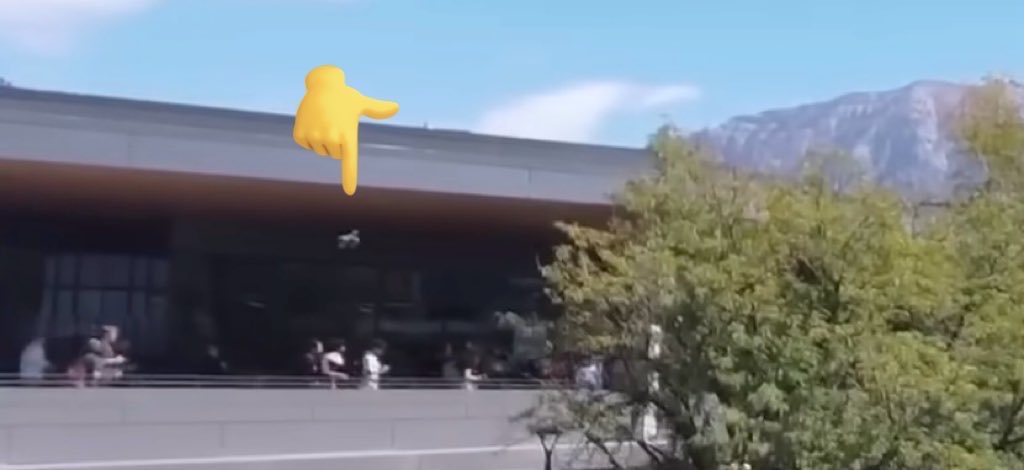
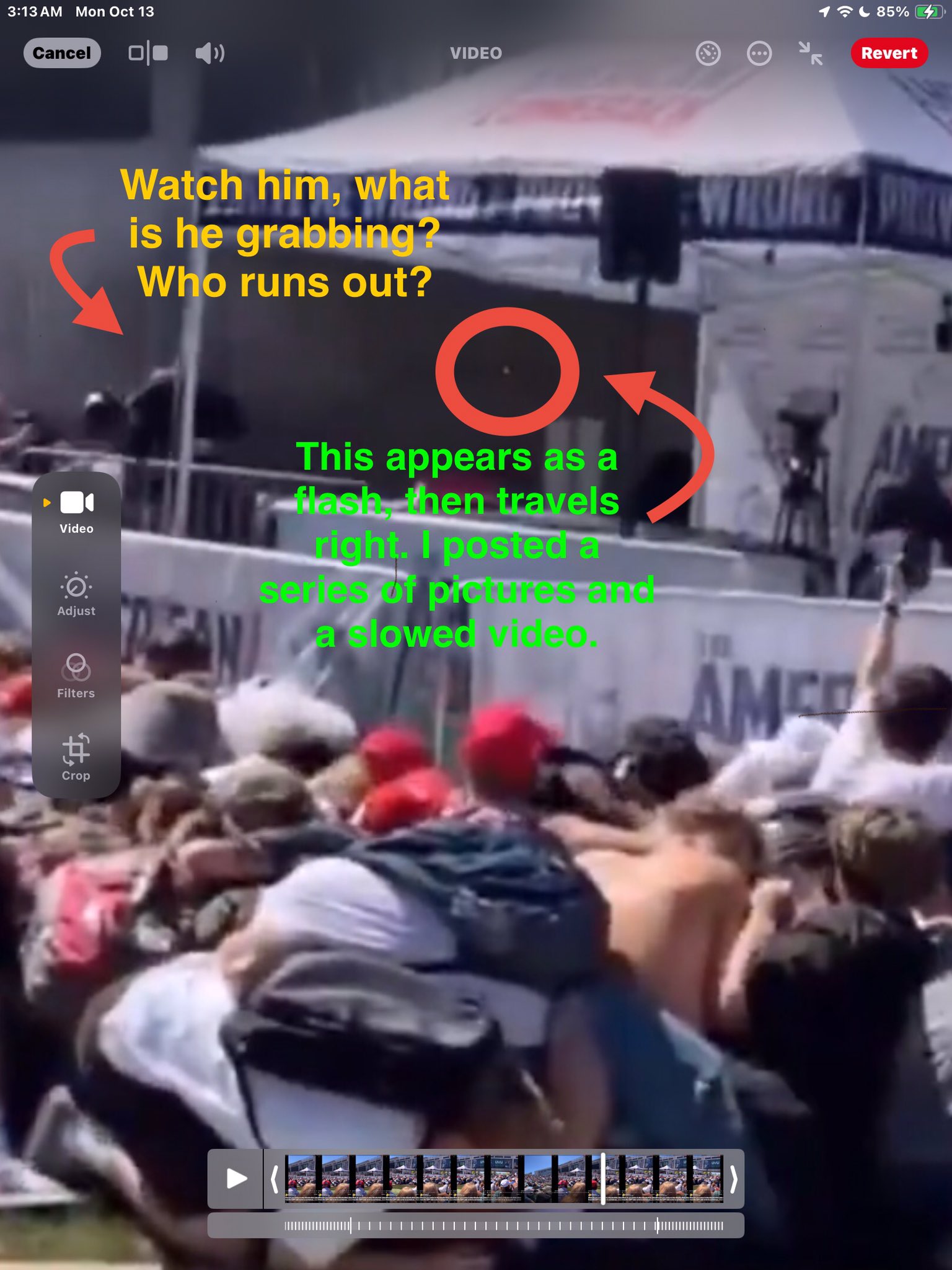


Videos
Footage related to this page. Each card opens that clip's own page, with the video, the full write-up, and its source.
Other Pages In This Section
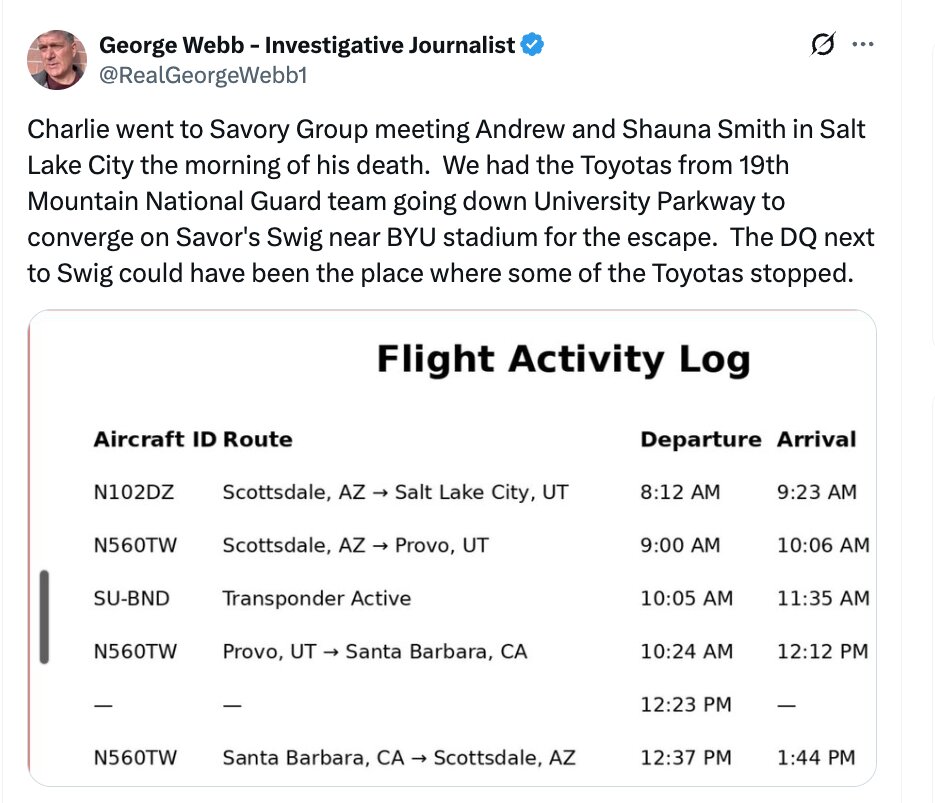
N560TW's Sept 10 Scottsdale-Provo Turnaround (Claims)
A donor-linked Citation landed at Provo at 10:06 AM on September 10 and turned straight around — land, sit, leave. Candace Owens is asking ground crews who was aboard, which is a request for tips, not a finding.
Read this
The Acoustics Claim: Shot Came From the South (Claims)
An unnamed engineer reportedly walks a 3D model to a shot origin south of the roof narrative. The whole entry is four lines with no name, no method and no error bars — and the file asserts two other origins simultaneously.
Read this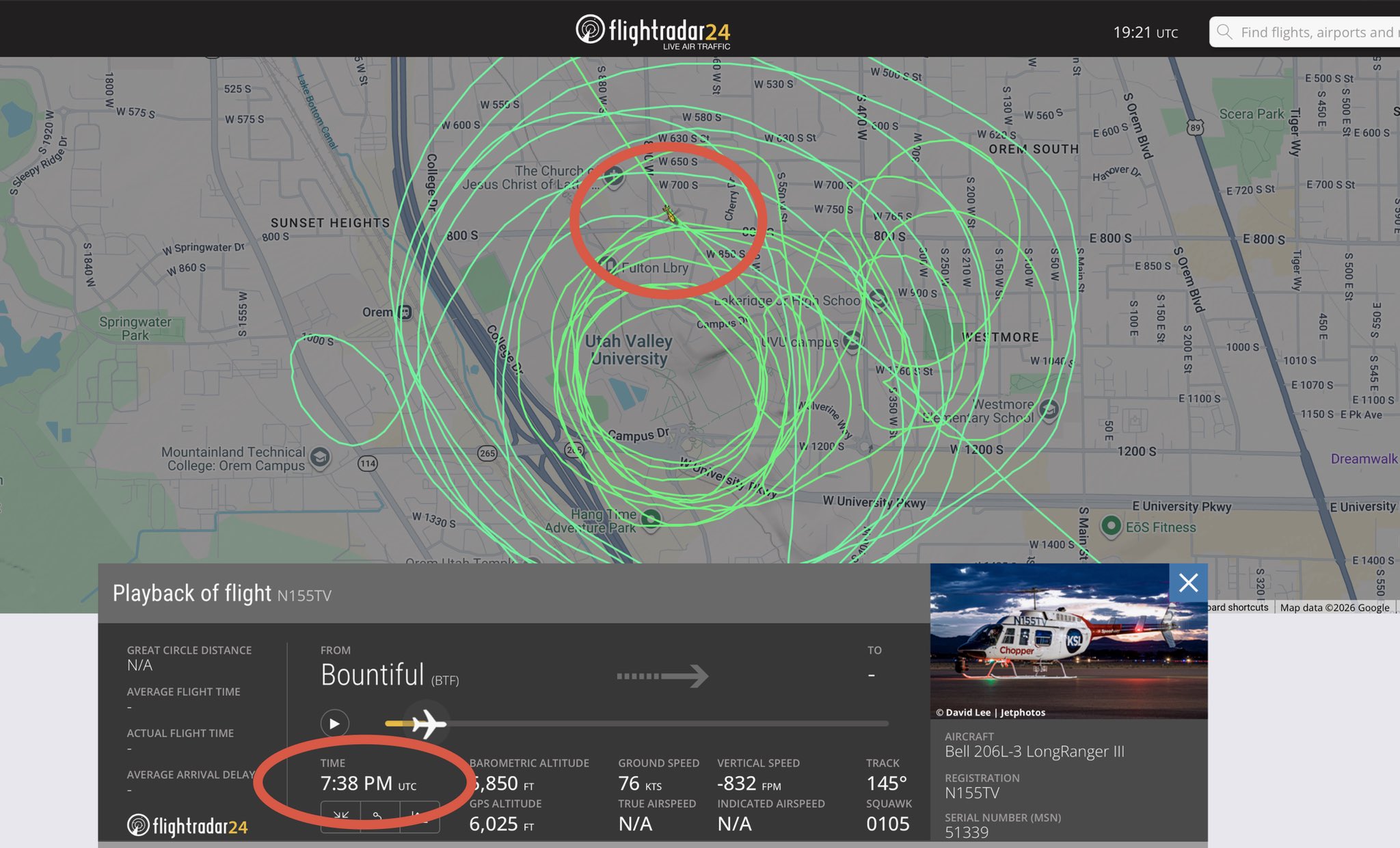
KSL's Chopper 5 and the Screwdriver That Isn't There (Claims)
A news helicopter is put over the Losee Center roof from about 1:38 pm, and citizen reviewers argue its footage shows no screwdriver where an officer reportedly found one. The argument turns entirely on timing and on what that camera could resolve.
Read this
Six Campus Officers and No Ambulance Staged (Claims)
Six campus officers, no ambulance staged, no outside law enforcement coordinated, and faculty never trained on active-shooter protocol — for a crowd the chief later put at 3,000. UVU has acknowledged more documents exist and reportedly refused to release them.
Read thisElsewhere In The Investigation
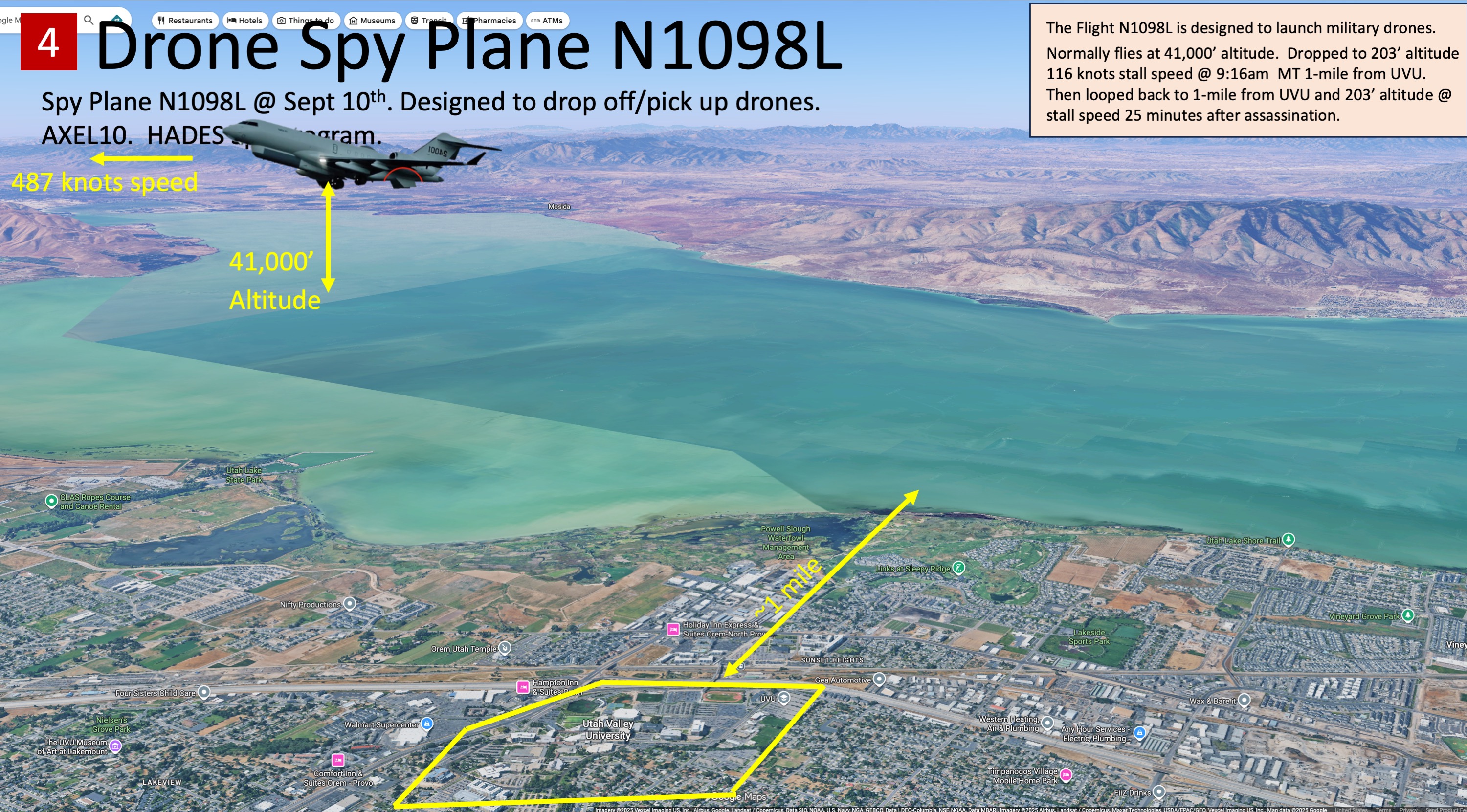
A Bombardier Global 6500 flown by an Army ISR contractor, callsign AXLE10, ran an unusual low and slow profile near Orem on September 10. No track, tasking order, or sensor product from it has appeared in the prosecution.
Read this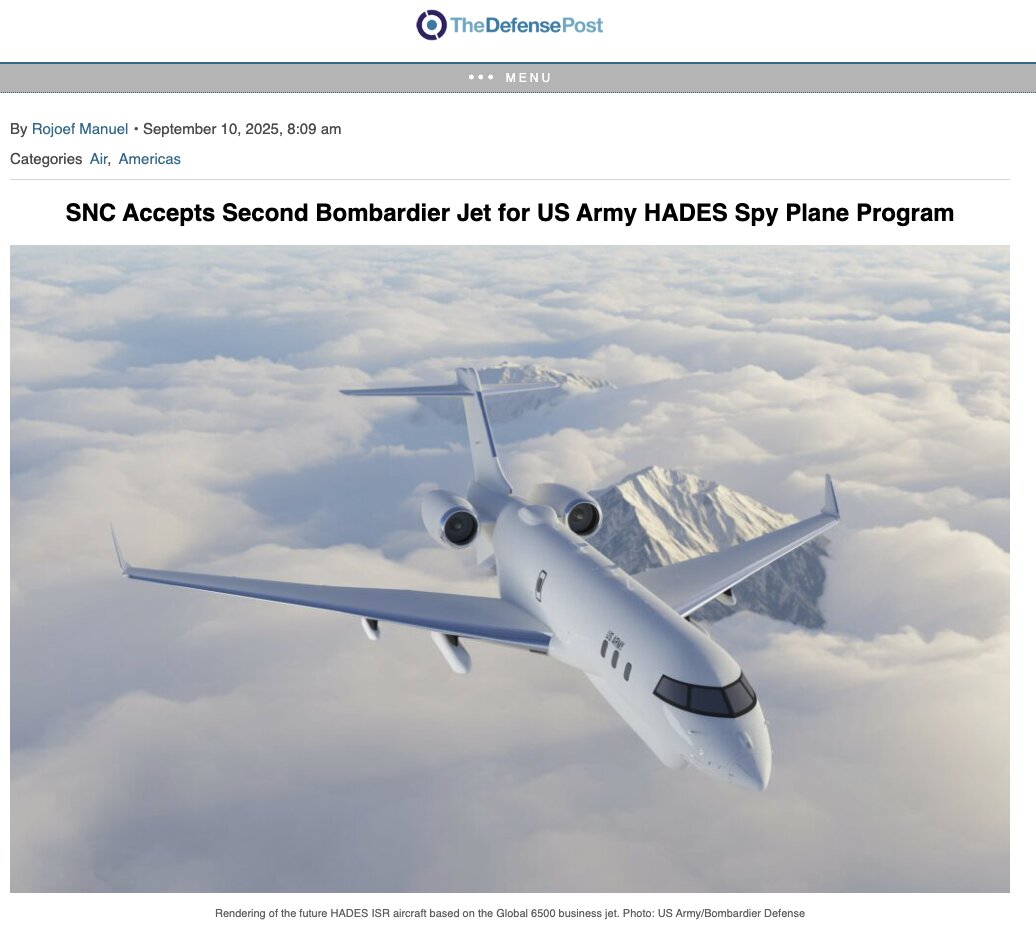
US Army HADES (Drone Launching Planes)
HADES is a real, publicly contracted Army ISR program built on the same Global 6500 airframe as N1098L. Defense-trade reporting separately describes Army interest in launching drones from that airframe.
Read this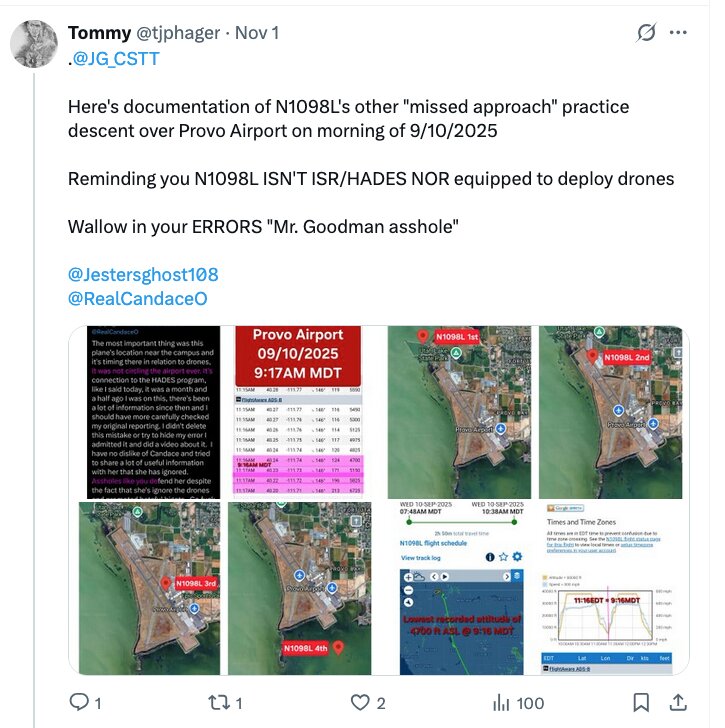
Public ADS-B puts an Army HADES jet in extremely low, slow passes near UVU before and after 12:23 PM. The master file's summary of it runs to four words: it was ours.
Read this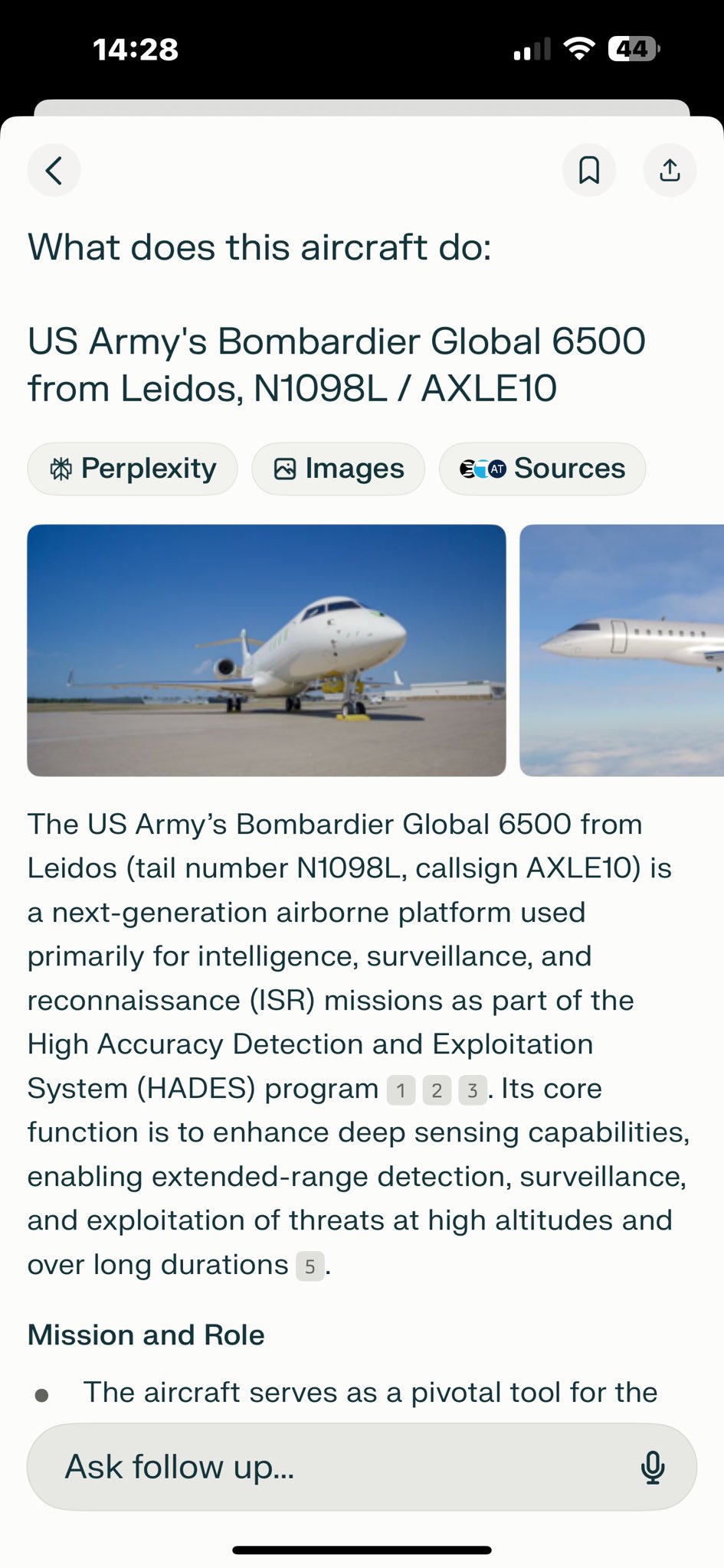
N1098L (HADES) Plane Activity Timeline — Pre & Post Shot
One aircraft, one day. An Army-contracted HADES jet reportedly made two low, slow passes near UVU, and the tracking accounts disagree about both the clock and the altitude by hundreds of feet.
Read thisSources
- The Defense Post — US HADES spy plane
- TWZ — Army wants to test air-launched drones from a Global Express business jet
- Blake Bednarz on X
- YouTube — flight-tracking presentation
- @TJPHager, dissenting — no direct URL is cited in the investigation file.
This website's author is @HolonCitizen on X and YouTube/@HolonCitizen. Follow me there.
Interesting
- Reporting alleges the FBI director shut down the foreign-nexus review.
- Rarely reported vendors and contractors sit behind the SD card and paving timing.
- Loose threads include Egyptian-registered aircraft at Provo and removed courtyard dirt.