The Canon XA55 Audio and a Third Boom (Claims)
:::caution Attributed claims only No analyst is named for this analysis, no raw audio is published, and no methodology is documented well enough to re-run. No independent acoustician has reviewed it. Nothing below establishes that any device detonated or that any person did anything wrong. It is an unsourced claim, recorded and examined, not a finding. :::
A third boom at the tent would put the loudest energy of the day exactly where Charlie Kirk was assassinated, which is why this recording sits near the center of the site's cause-of-death analysis.
Claim snapshot
| Field | Value |
|---|---|
| The claim | A Canon XA55 broadcast camera about 46 m from the tent reportedly recorded uncompressed 48 kHz audio on four channels, and an analysis claims it resolves three low-frequency events: Mach-cone energy at +114 ms, a muzzle blast at +202 ms placing a rifle ~120 m away, and a third, loudest event at +321 ms originating ~46 m from the camera — that is, at the tent |
| Raised by | Unattributed in the investigation file; associated with the Project Constitution and exploding-mic circle |
| First surfaced | Undated in source |
| Rests on | Anonymous post — no named analyst, no link, no raw audio, no re-runnable methodology |
| Evidence rating | SPECULATIVE |
What is alleged
The analysis argues that phone recordings smear the event into one noise because their audio is compressed, while the Canon's uncompressed four-channel capture separates it. It claims the high frequencies arrived first, spread over 100-plus milliseconds, followed by a muzzle blast and then a detonation originating from the stage. The three events are given precisely: +114 ms Mach cone, +202 ms muzzle blast from ~120 m, and +321 ms a detonation at the stage which the analysis calls "the LOUDEST of the three" and "the strongest low-frequency peak in the entire recording," located approximately 46 m from the camera — "Right at the tent. Right were Charlie was seated."
Supporting numbers offered: the camera's shotgun microphone reportedly captured 733 supersonic N-wave signatures against 123 on the best phone recording, and reportedly clipped 122,844 audio samples because "the sound source was directly in its line of fire," while the built-in mics captured clean audio with almost zero clipping.
None of this is sourced. The file names no analyst, links no post, publishes no audio file, and describes no method another person could execute.
The ordinary explanation
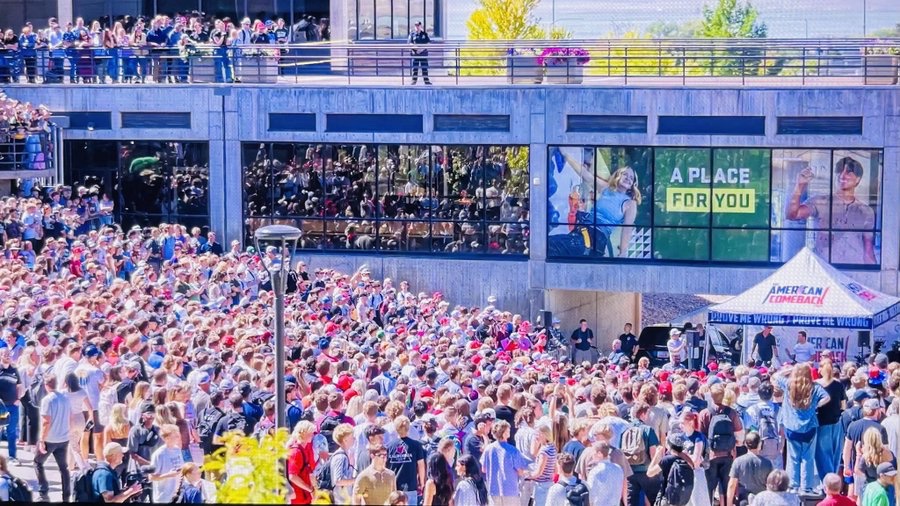
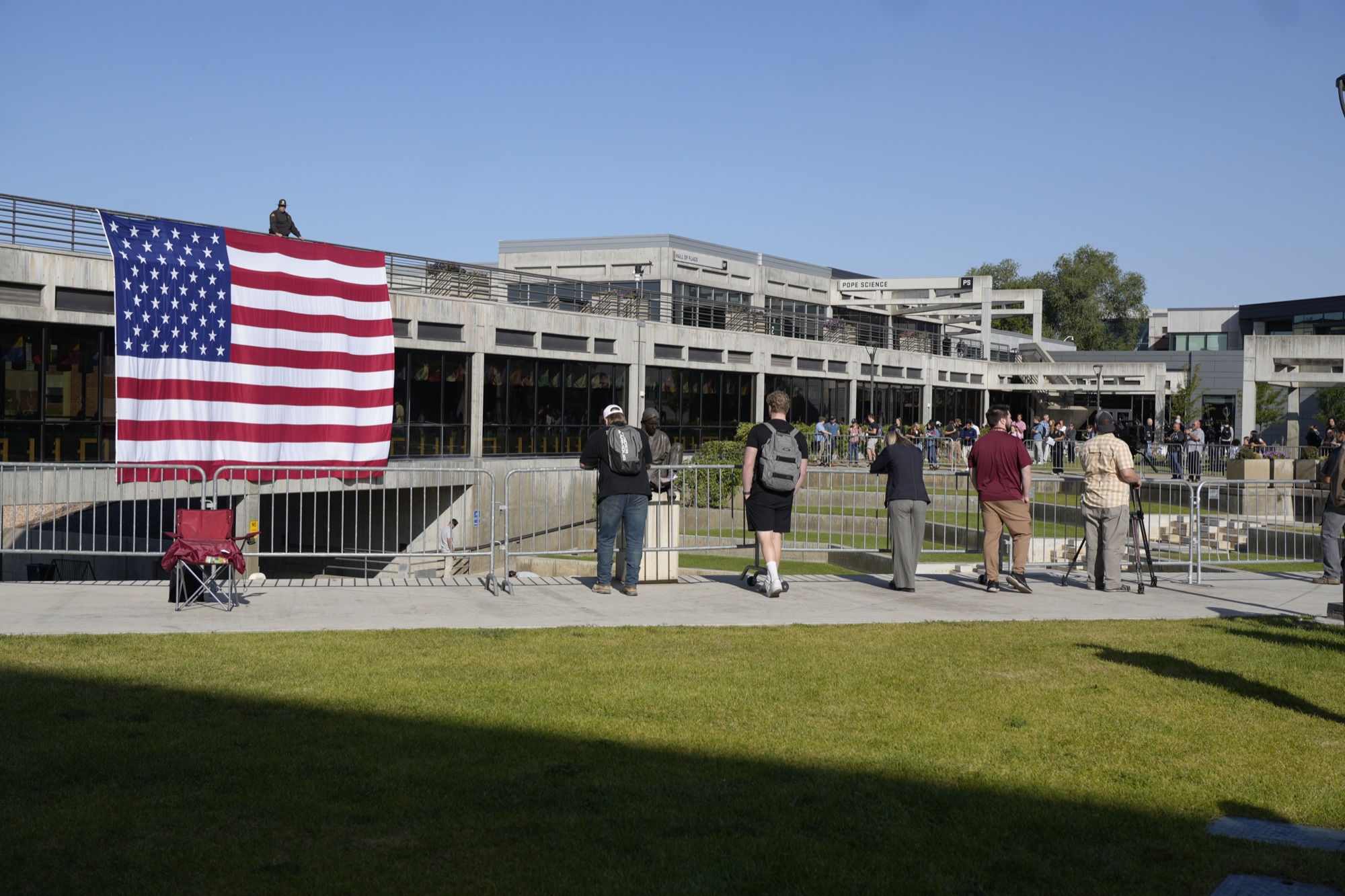
The explanation is acoustics, and it is not exotic. The UVU courtyard is ringed by hard-faced buildings. A single supersonic rifle shot in that geometry produces a ballistic crack, a muzzle blast, and then multiple strong reflections arriving over hundreds of milliseconds. Three low-frequency events at +114, +202 and +321 ms is exactly what one shot in a reverberant courtyard sounds like.
An echo off the building behind the tent would, to a naive time-of-arrival calculation, appear to "originate" near the tent — because the calculation assumes a direct path and there isn't one. And a focused reflection off a flat façade can be louder at a given microphone than the direct blast, so "the loudest event must be the real event" is precisely the inference that reverberation defeats. "Uncompressed" does not equal "correctly analyzed." N-wave counting is not a standard forensic method with a published error model, and counting more of them on a better microphone is what a better microphone does.
And here is the irony this analysis cannot escape. Its own muzzle-blast figure puts the rifle at ~120 m, and it volunteers that an independent ten-camera analysis put it at 127 m — "within 6%." That distance is consistent with the Losee Center rooftop, which is where the state says the shot came from. The analysis being used to prove a bomb at the tent simultaneously corroborates a rifle exactly where the official account places it. You cannot bank the half you like and discard the half you don't.
What would settle it
- Publish the raw, unedited Canon XA55 audio files with their original timecode and channel assignments.
- Name the analyst and publish the methodology — window sizes, correlation method, assumed speed of sound, and how direct arrivals were separated from reflections.
- Have an independent forensic acoustician with no stake in the case re-run the analysis blind.
- Model the courtyard's reflective geometry and predict the reflection arrival times; if they land near +321 ms, the claim is answered.
- Establish the camera's exact surveyed position, because every distance here depends on it.
Interesting In This Area
- The south-origin claim contradicts this page's own 120-metre rifle estimate.
- The under-shirt mic is what a tent-side detonation theory needs physically.
- Cause of Death notes campus reflections produce the same three-arrival pattern.
- The burnt object is the physical claim this audio argument is paired with.
Interesting In Other Areas
- The Canon XA55 stood about forty-six metres from the tent.
- Mic researchers read the same file as two sounds in two places.
- The two-event split is the strongest argument the roof was not the mechanism.
- The audio timeline tracks when each acoustic claim first appeared publicly.
Images

Videos
Footage related to this page. Each card opens that clip's own page, with the video, the full write-up, and its source.

Other Pages In This Section
The Claim a Group Blocked University Security (Claims)
One numbered bullet, with the file's own author writing "Is that true" into the record as he wrote the claim down. No name, no footage, no date, and no description of what blocking would have meant.
Read this
The Executive Who Removed the Camera SD Card (Claims)
The file carries this claim twice and never reconciles the two versions: an unnamed executive in a bare numbered item, and a named allegation by Candace Owens. TPUSA has reportedly said police instructed the removal.
Read this
The Burnt Object as a RODE Transmitter (Claims)
Proponents zoom into a charred mass photographed in the SUV and read a melted audio jack and a warning symbol into it. The imagery cannot carry that weight, and the theory's own advocates cannot agree which RØDE model it was.
Read this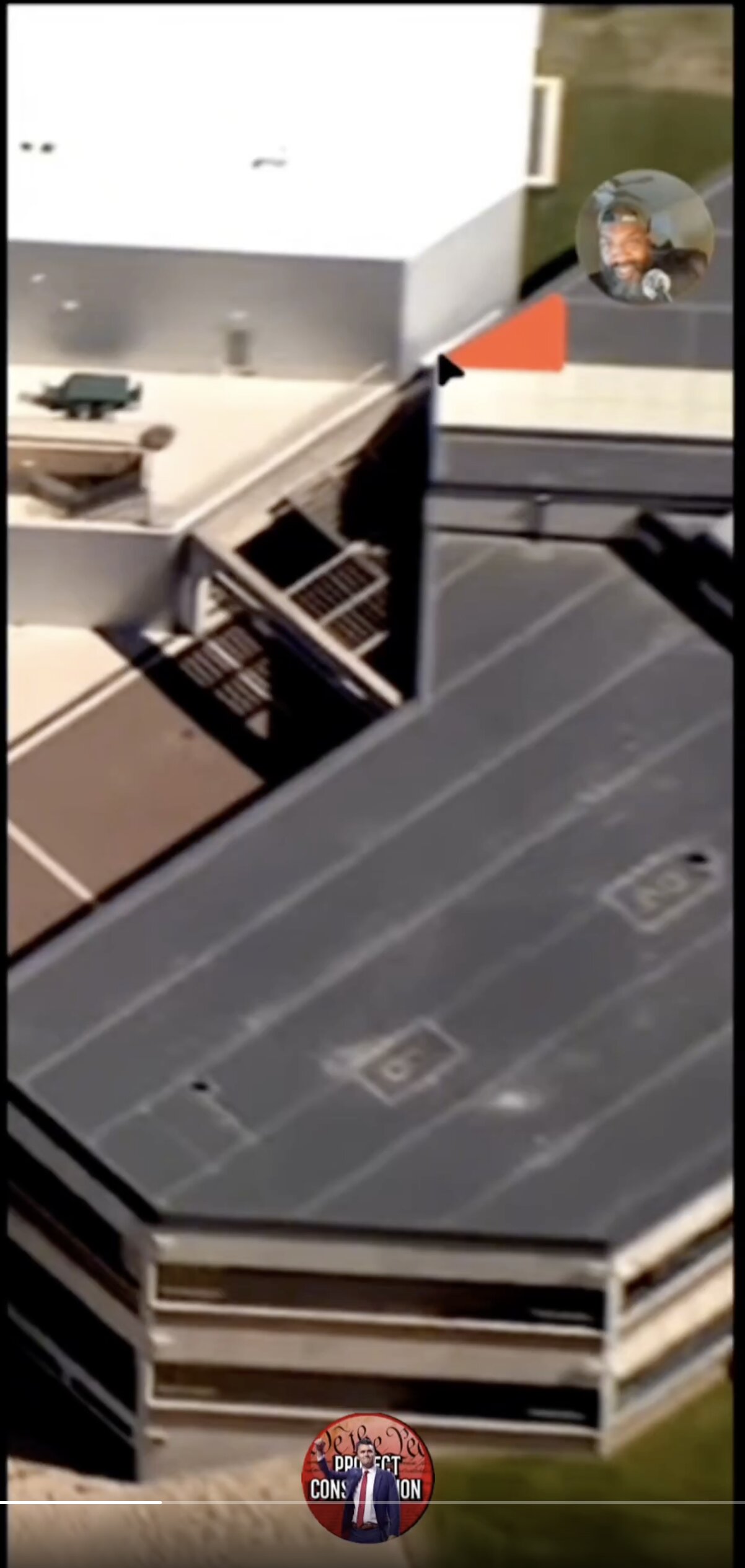
The Mic Placed Under, Not Over, the Shirt (Claims)
The RØDE transmitter was reportedly worn under Kirk's shirt, magnetically clasped through the fabric. That one detail is the precondition every contact-device theory needs — and it is also routine professional audio practice.
Read thisElsewhere In The Investigation
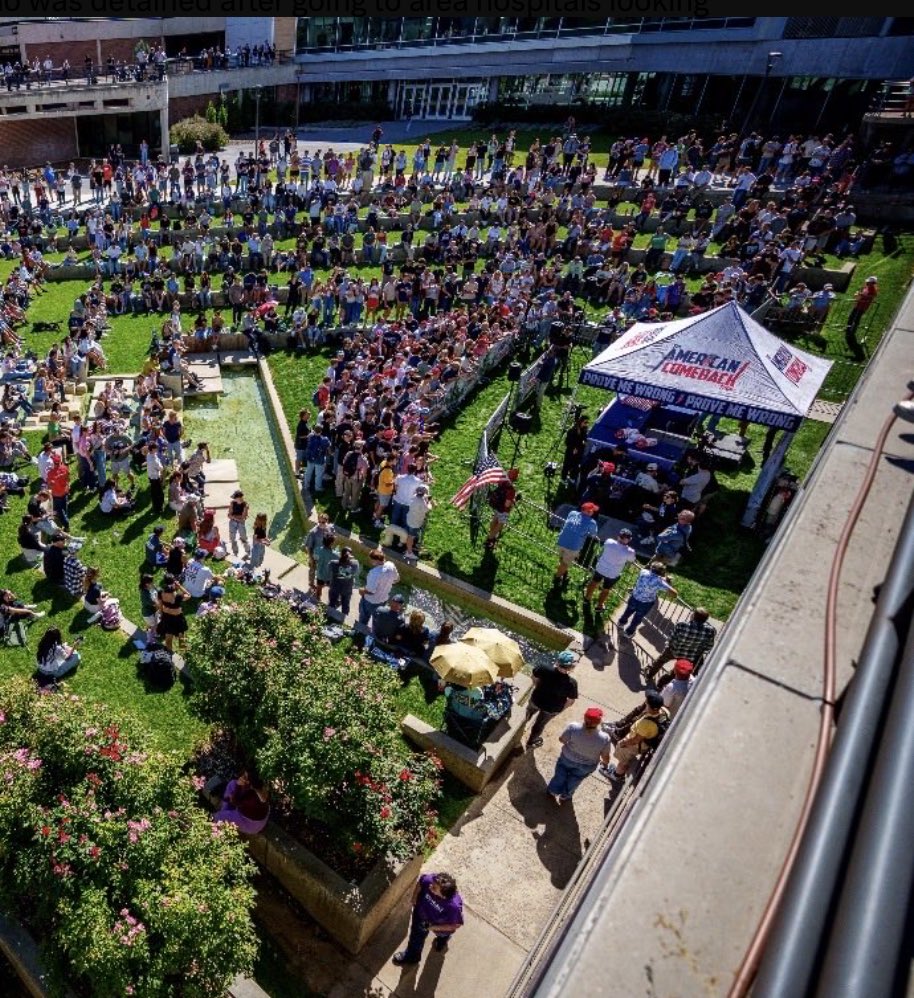
The machine behind the audio — what it was, where it stood, and why uncompressed 48kHz capture resolves timing that phone codecs smear together. Read it before trusting or dismissing the acoustic analysis.
Read this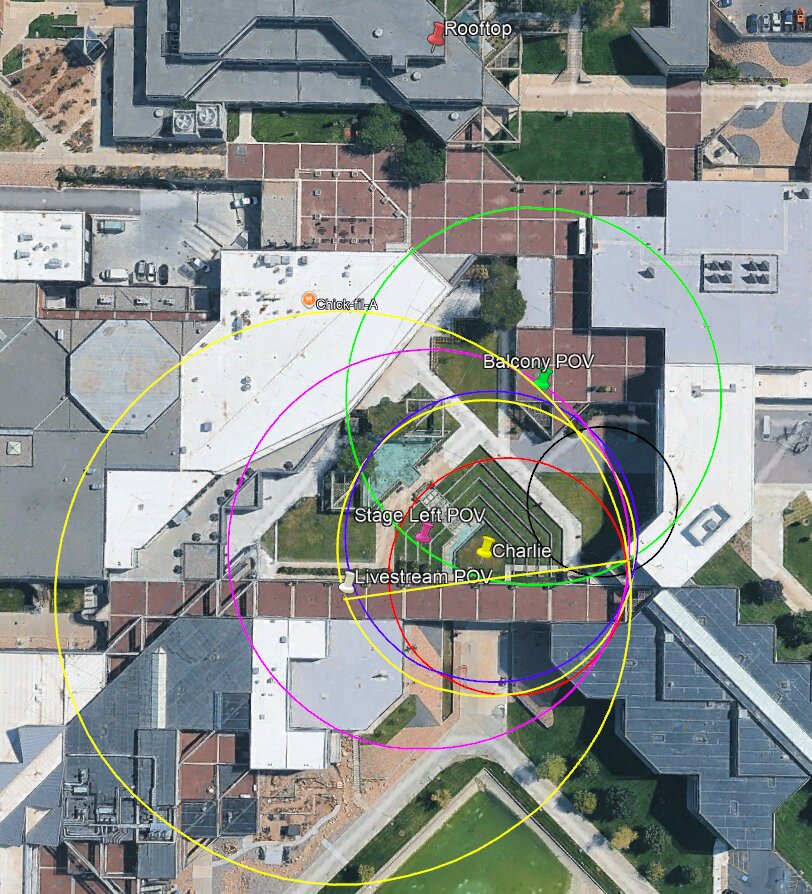
Canon XA55 Audio — Three Booms and Stage Detonation
Professional four-channel audio recorded about forty-six meters from the tent. Researchers say it separates a distant blast from a much louder event at the stage — two sounds, two places.
Read this
Broadcast audio at 48 kHz reportedly separates a distant muzzle blast from a louder event about 46 meters away at the stage. Two sounds, two distances — and the fatal mechanism may not be the rooftop rifle.
Read this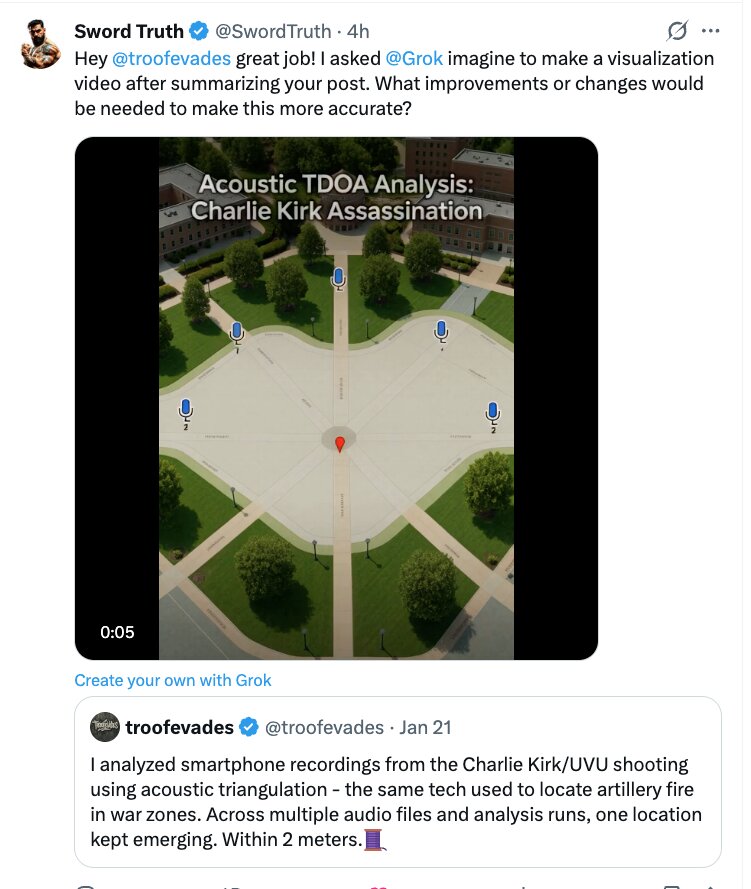
Audio, Acoustic & Mic Timeline (Shot Timing & Analysis)
Two clocks in one page — the millisecond acoustic sequence at 12:23:30 captured on the Canon XA55, and the month-by-month emergence of the transmitter, shirt-pull and burnt-object claims.
Read thisSources
- Investigation file, section "Mic and Camera Canon XA55": the three-event breakdown, the 733 versus 123 N-wave figures, the 122,844 clipped samples, and the ~120 m versus 127 m comparison.
- No primary source, named analyst, URL, or audio file is cited in the investigation file for this analysis.
This website's author is @HolonCitizen on X and YouTube/@HolonCitizen. Follow me there.
Interesting
- A contractor says he was told the governor and FBI wanted the paving done by Monday.
- His own mentor says Kirk wrote "I know they want me dead".
- The fear predated 2025: he reportedly wrote he could be wiped out at any time.