10 Inches of Dirt Removed Before the Pavers
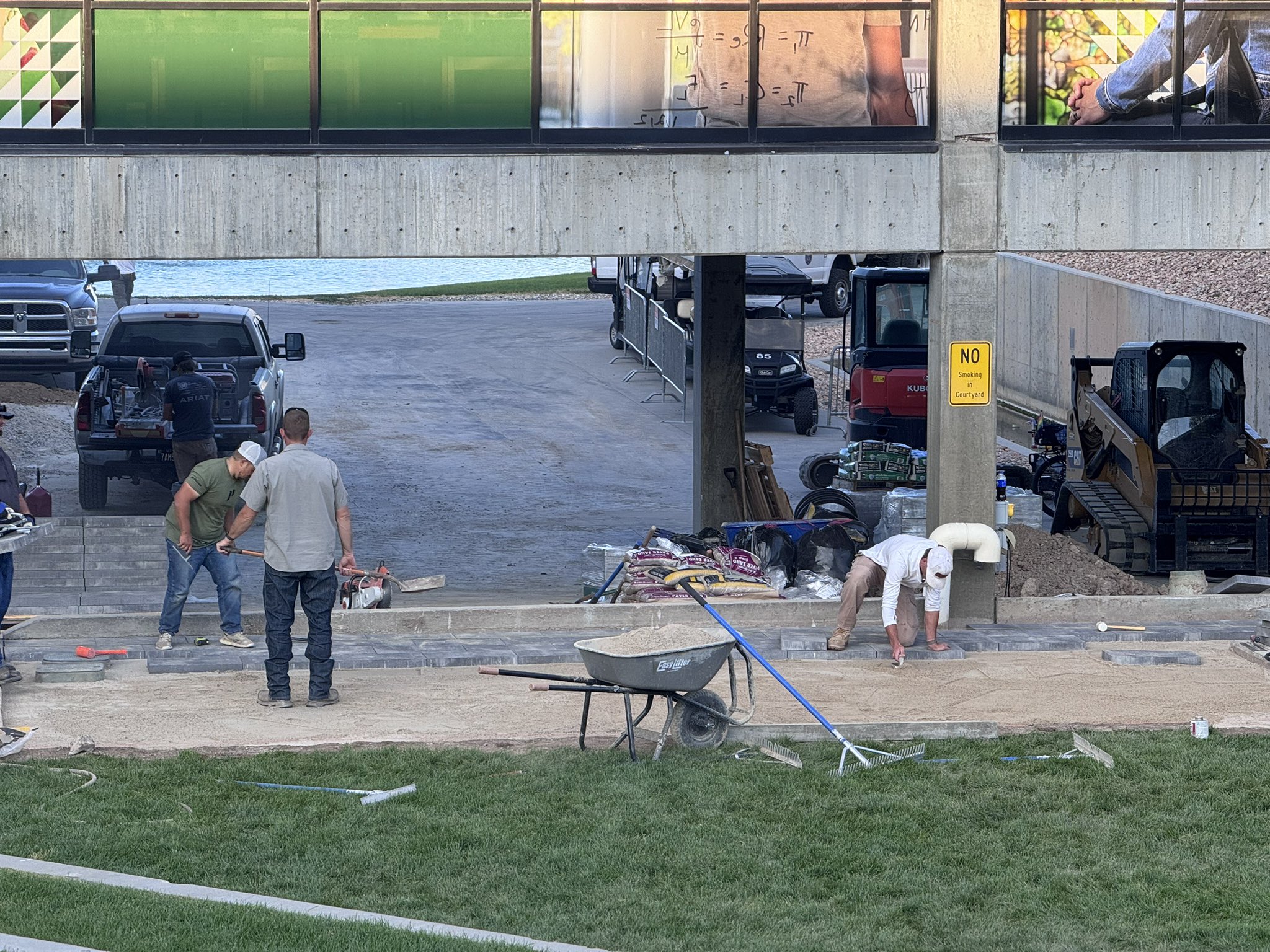
This page is about what happened to the ground before the landscaping contractor arrived. It is a separate event from the paver installation covered on the Daniel Merrell — Hardscape Utah and Hardscape Specialties LLC pages. By the time that hardscape crew reached the Charlie Kirk tent courtyard at Utah Valley University on Sunday, September 14, 2025, roughly ten inches of soil was already gone — excavated and hauled away by a different, still-unidentified crew described in the public record only as men working for the state of Utah.
Who that first crew was, which agency directed it, when exactly it dug, and where the soil went are all unresolved. That is the subject of this page.
The anchor claim
The most reliable public marker for when the dirt was already gone is the contractor's own arrival:
First report that the dirt had been removed: Dan Merrell's arrival and observations on Sunday, September 14, 2025 — he found roughly ten inches already gone and photographed the excavated state.
In his circulating on-camera account (amplified by @ShadowofEzra, May 21, 2026, and by @MJTruthUltra, May 2026), Merrell is quoted as saying:
"When I showed up I took pictures of what it looked like, they had taken out about ten [inches] of it. It didn't cross my mind."
Secondary accounts repeating the figure — Stew Peters, Candace Owens discussing a longer Merrell interview with Jimmy Rex, and numerous X threads — describe 8 to 10 inches or more of earth already stripped and hauled off by a prior team. Everything on this page therefore rests on one contractor's account of what he saw and was told, plus what public records do and do not corroborate.
Who the first crew reportedly was
Merrell's description of the people already on site when he arrived:
- He was called by "men who work for the state of Utah."
- One managed a state-owned facility in American Fork.
- The other was a maintenance groundskeeper at a facility in Provo.
- On arrival he found a "ragtag crew" with those two men in charge — not a named landscaping or excavation company.
- One coordinator told him: "We're not talking to anybody. We're not saying anything to the media." and "This is above our pay grade. The governor and the FBI said they want this done by Monday."
Those quotes are Merrell's memory of a conversation. Neither the office of Governor Spencer Cox nor Kash Patel's FBI has publicly confirmed issuing any such directive in the materials reviewed here. The two coordinators have never been publicly named, and no company, agency, or crew roster has been identified for the excavation itself. See State Workers & Groundskeepers for the fuller record on those two men.
The identity of the crew that removed the dirt remains one of the hardest open questions in this investigation. It has resisted identification for the simple reason that no invoice, work order, crew list, or disposal manifest naming them has entered the public record.
Timing window — as tight as the record allows
| Marker | Date | What it establishes |
|---|---|---|
| Shooting | Wed, Sept 10, 2025 | Courtyard becomes homicide scene |
| Emergency payment request to a redacted vendor, $6,090.52, "Clean up for shooting incident" | Thu, Sept 11 | Judicial Watch GRAMA release — cleanup money moving one day after |
| UVU text messages: "We're not gonna need to cut out any sod… I bet we can just wash it all down"; "There's still a[n] eight inch puddle ish"; "The FBI is still there. I guess." | Fri, Sept 12 | Ground still intact; plan at this point is hosing, not digging |
| Scene reportedly released back to the university | Sat, Sept 13 | Per accounts relayed by Gary Melton and amplified by Liz Wheeler |
| Merrell arrives — ~10 inches already excavated, photographs it, installs pavers | Sun, Sept 14 | First observation that the dirt is gone |
| Reuters (Jim Urquhart) photos of paver installation; KUTV's Jim Spiewak reports crews removing the ground area; campus staff return to a paved courtyard | Mon, Sept 15 | Alteration becomes publicly visible and photographed |
Best available window for the excavation: after the scene release on September 13 and before Merrell's Sunday arrival on September 14. No source in the public record gives an hour. No timestamped video, security log, or work ticket for the dig itself has been released. Overnight or early-morning work on the 13th–14th is consistent with the "emergency" framing Merrell describes but is not confirmed by any document.
What the Judicial Watch records show — and don't
Judicial Watch filed a GRAMA request with UVU on November 20, 2025; the records were released publicly around July 2026. What they contain:
- The September 11 emergency payment request form to a redacted vendor for $6,090.52, described as "Clean up for shooting incident."
- The September 12 text thread about washing blood down with irrigation and hoses — "The solution to pollution is dilution" — explicitly saying sod would not need to be cut out.
- Follow-on texts into September 13 about scheduling the cleanup and needing gloves.
What they do not contain:
- Any description of a ten-inch excavation.
- Any name for the crew, company, or agency that dug and hauled.
- Any soil-disposal manifest or record of where the material went.
- Any contract, change order, or authorization for earth removal.
UVU Police indicated they did not control the scene or participate in evidence or materials removal, so their records were not searched on that point. The gap between the September 12 plan (wash it down, don't cut sod) and the September 14 reality (ten inches gone) is the exact interval no public document currently covers.
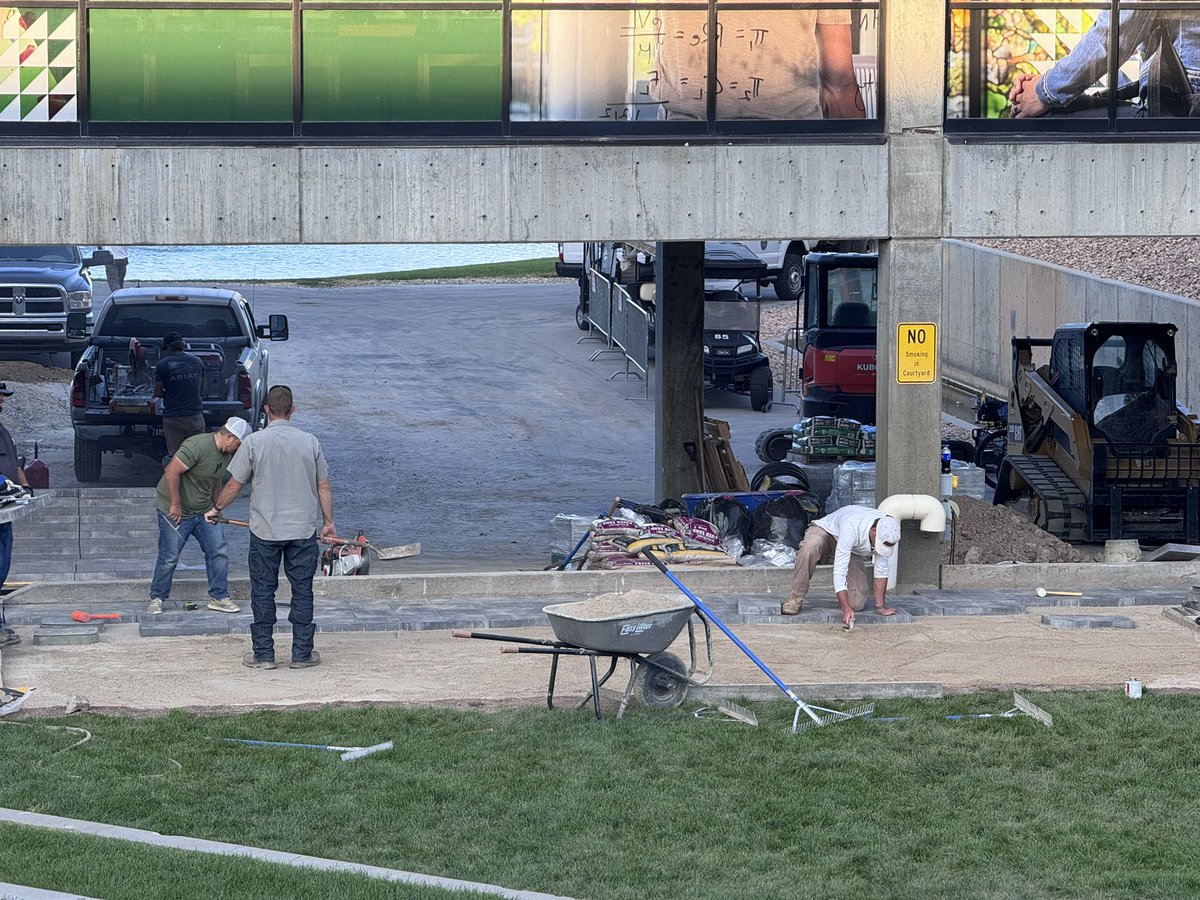
Photographs of the excavated state
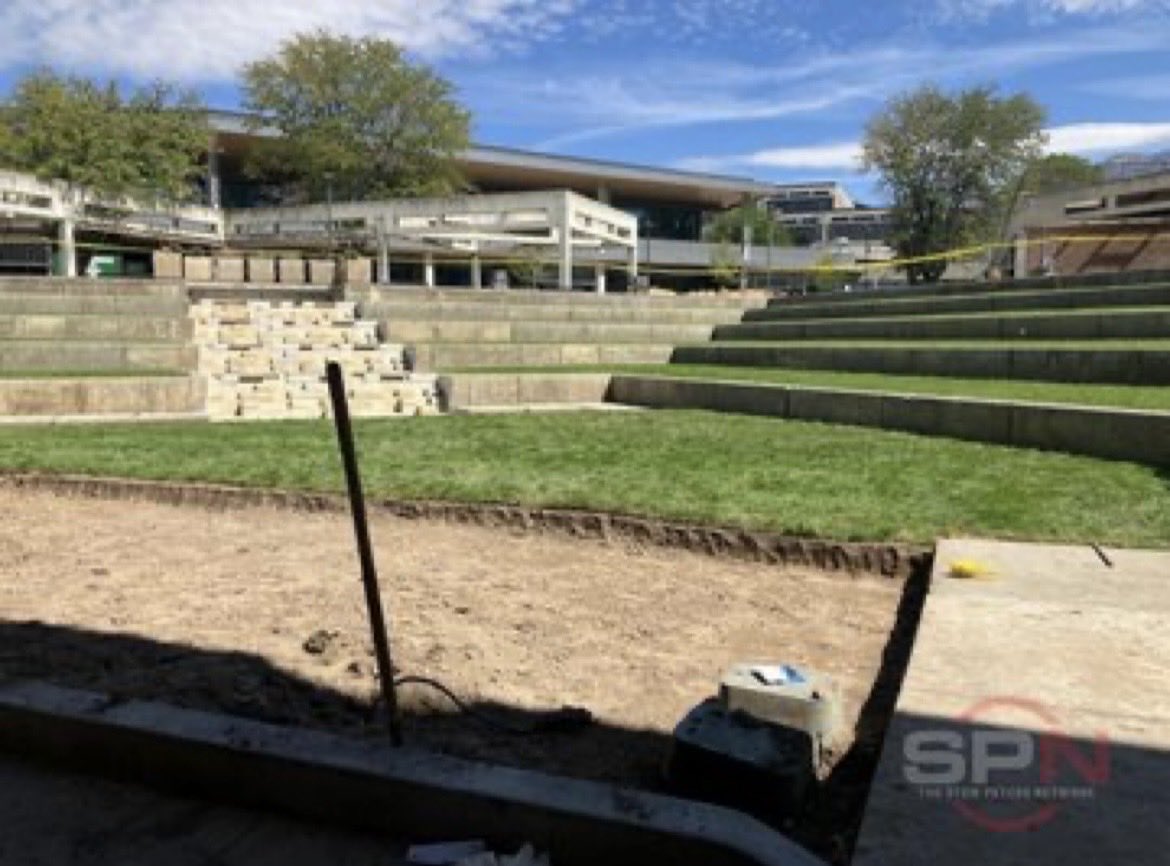
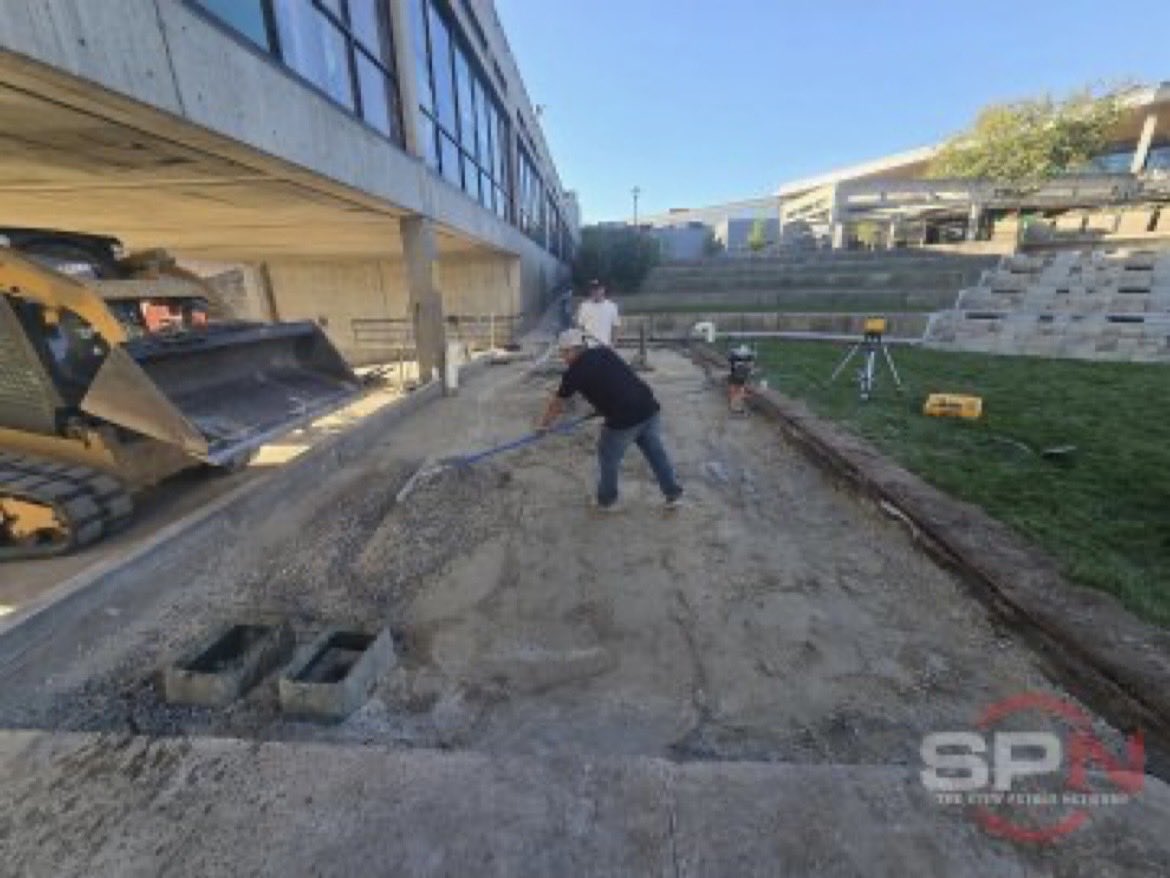
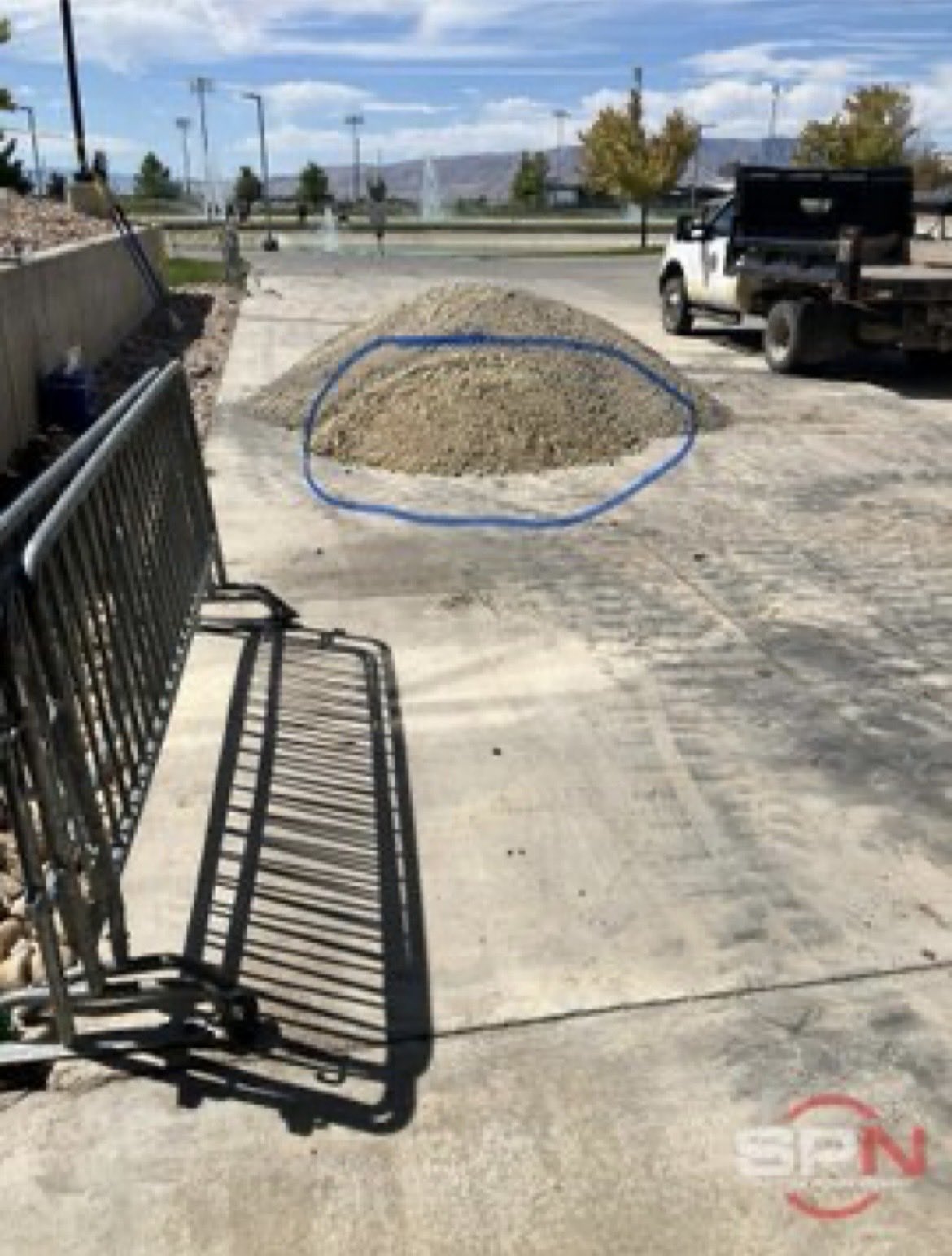
Three SPN-watermarked frames of the UVU courtyard between the excavation and the pavers. Recirculated by @tricia_dejong on X, July 31, 2026, with the caption "Why pave over a crime scene?" Click any frame for the full write-up. Not timestamped.
Question 6 in the open-questions list below asks whether photographs of the pre-paver excavated state exist. Photographs of that state do circulate — the set at right is the most widely shared. They were recirculated on July 31, 2026 by @tricia_dejong under the caption "Why pave over a crime scene?", and all three carry an SPN (Stew Peters Network) watermark, so they reached that post through that outlet rather than from the account that posted them. None of them has been confirmed as one of Merrell's own photographs, and none carries a visible timestamp.
What the frames actually show:
- The stripped soil strip — a wide band of bare earth across the courtyard meeting the surviving amphitheater lawn along a clean, straight cut line. The sod was cut and lifted along an edge. Yellow tape is still strung across the terrace behind, though whether it is scene tape or ordinary construction barrier tape is not resolvable at this resolution.
- The base preparation — a tracked skid-steer loader, a worker screeding gravel, a plate compactor, and a surveyor laser level on a tripod. That last item is the detail researchers press on: laser grade control is equipment for a surveyed, engineered base, which is a different order of work from the hose-it-down plan described in the September 12 UVU texts. The counter-reading is equally visible in the frame and belongs here — this is also simply what a competent paver installation looks like, and Merrell has described over-excavation as standard practice.
- The circled aggregate mound — a pile of loose rock on the plaza beside a white flatbed dump truck, ringed by hand in blue marker by whoever annotated it. It is the only circulating frame showing both material and a vehicle able to move it, which is why it attaches to the missing-disposal-manifest question. But the mound is light-coloured, clean and uniformly graded — far more consistent with imported road base delivered for the job than with dark, blood-soaked topsoil taken from under the tent, and the truck bed is empty. Treat "this is the removed soil" as unsupported by the image.
What this set does and does not do for the ten-inch claim. It does establish that the courtyard was opened along a deliberate cut boundary and rebuilt on an engineered base, photographed by someone before the pavers went down. It does not establish a depth, a date, an hour, or an identity for either crew — no scale, no ruler, no timestamp, no plate, no company marking. The ten-inch figure still rests on Merrell's verbal account, exactly as described above. These photographs corroborate that an excavation happened; they do not measure it.
Why the depth matters
The courtyard under the tent is the primary blood and trace surface of the homicide. Removing the top ten inches of it removes, at minimum:
- Blood-soaked soil usable for spatter-pattern and volume analysis.
- Bullet or fragment media — anything that passed through and buried itself.
- Residue relevant to the shaped-charge and exploding-mic hypotheses. Candace Owens commentary specifically raises PETN, arguing that an explosive residue absorbing into soil "would have to be dug out." That is an allegation, not a lab finding — no public soil test result exists either way.
- Small debris — casings, housing fragments, plastic, glass.
Ten inches is also deeper than blood soaks. That is the observation citizen investigators keep returning to: an eight-inch surface puddle described on September 12 does not, on its face, require a ten-inch dig two days later.
Competing explanations
| Framing | Argument |
|---|---|
| Routine biohazard remediation | Blood-contaminated sod and soil are removed and disposed of under standard regulations after a scene is released |
| Standard paver prep | Merrell himself describes over-excavation as normal: "To do pavers correctly you over-excavate, you get rid of the top… you want to get a good base" — though he attributes the ten inches to the crew before him |
| Restoration and reopening | UVU framed courtyard work as restoration ahead of the campus reopening |
| Citizen-investigator concern | The dig went deeper and faster than remediation requires, under stated urgency, by a crew nobody can name, with no disposal record |
Lead investigator David Hull later testified during Tyler Robinson preliminary-hearing proceedings that he had no role in removing the tent or paving the area, was not consulted, and learned of the paving from the news. That testimony does not identify the excavation crew, but it does mean the case's lead investigator was not directing the site work.
Open questions
- Which agency employed the American Fork facility manager and the Provo groundskeeper?
- Who signed the authorization for earth removal, as distinct from the paving contract?
- What equipment was used, and where did the excavated soil go — landfill, storage, or testing?
- Was any of the removed material retained for forensic examination?
- Were ballistics, blood-pattern, and explosive-residue collection completed and documented before the topsoil left the site?
- Do Merrell's photographs of the pre-paver excavated state exist with intact timestamps, and will he release them? (Photographs of that state circulate — see Photographs of the excavated state above — but none is timestamped and none has been confirmed as his.)
- Does any UVU or state security camera cover the courtyard between the evening of September 12 and the morning of September 14?
Defamation note
The coordinators, groundskeepers, and crew described here are unnamed living persons. This page records Merrell's reported account and the documented gaps in the public record. It does not state that any state employee, official, or agency destroyed evidence, obstructed justice, or had foreknowledge of the killing. No court has made a spoliation finding in this matter.
Laws (Charlie Kirk)
Earth-removal authorizations, soil-disposal manifests, crew rosters and timecards for September 13–14, 2025, and pre-excavation forensic clearance records are exactly the category of document the Charlie Kirk Investigation Laws are written to compel.
What happened next — the landscaping contractor
Once the ground was stripped, the hardscape phase began. That is a separate crew, a separate set of records, and a separate page:
- Daniel Merrell — Hardscape Utah — the contractor who arrived Sunday September 14 to a courtyard already excavated, installed the pavers, and later described on camera what he found and what the coordinators told him.
- Hardscape Specialties LLC — the separate corporate entity flagged in research as a possible authorizing or contracting party for the hardscape work.
- Paving Timeline — September 14 — how the excavation and the paver install fit into the day-by-day chronology.
- Site Alteration Evidence — the full catalog of physical changes to the tent zone and the forensic categories each one affects.
Keep the two phases distinct. The soil was removed by one crew; the pavers were laid by another. Conflating them is how the "next day" and "four days later" narratives ended up contradicting each other.
Interesting In This Area
- Merrell's crew was the second phase, and the first crew has never been named.
- Two men described as state facility workers ran the site, not a company.
- The dig falls in a September 13 to 14 window with no hour recorded.
- Where the soil went appears in no record — see site alteration.
Interesting In Other Areas
- Soil is where residue would sit, which is why cause of death turns on it.
- Ten inches of dirt removed is the cover-up entry for the same event.
- Crime scene paving notes that doing pavers correctly means over-excavating.
- Construction and site changes treats it as a wound-reconstruction problem.
Images
Videos
Footage related to this page. Each card opens that clip's own page, with the video, the full write-up, and its source.

Other Pages In This Section
A company reportedly dormant for two decades and revived in February 2025, named in citizen research as the corporate thread behind the courtyard work. Ownership claims tie it to state law enforcement and former campus operations, and no released contract confirms any of it. Business filings would settle the relationship in an afternoon.
Read this
State Workers & Groundskeepers
A contractor says the courtyard pave-over was run by two men who work for the state of Utah, not by campus facilities. He did not name them publicly, and this page does not either.
Read thisSix questions in order: who dug, who paved, who authorized it, when, what was destroyed, and whether the mechanism came from inside the canopy. The routing memo for the ground Charlie Kirk died on. Nothing on it is treated as proven.
Read this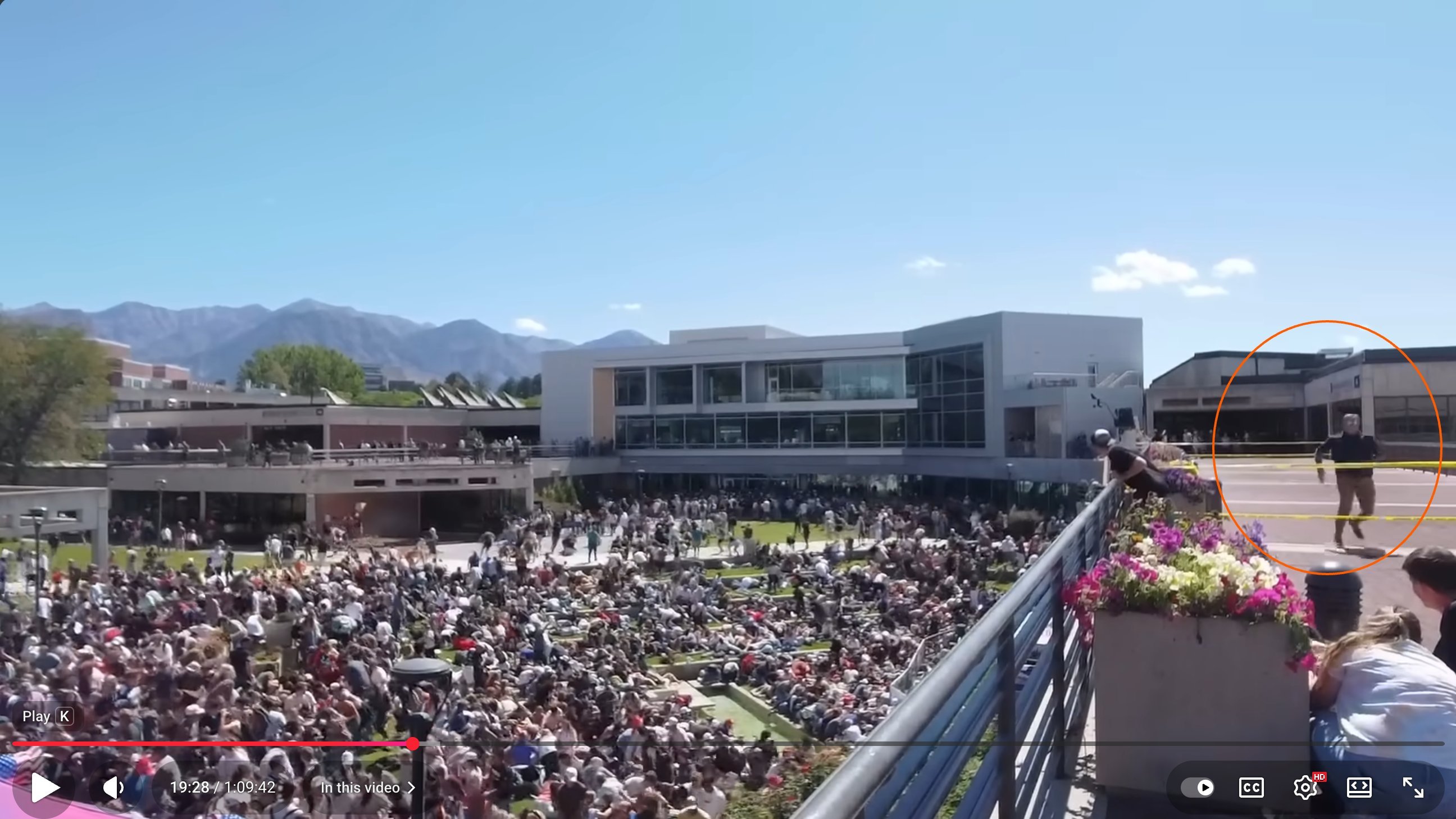
The case that the killing mechanism originated inside or just behind the canopy rather than on a rooftop — a casing said to roll down the tarp, a camera operator turning the wrong way, and a two-location acoustic split. These are contested citizen hypotheses, and the majority reading on X points at a device rather than a distant rifle.
Read thisElsewhere In The Investigation
Ten inches of dirt reportedly taken out of the courtyard, and pavers laid over the ground where he fell. Whatever residue that soil held is gone.
Read this
The contractor says he was told "the governor and the FBI said they want this by Monday" and laid pavers four days after the killing. Doing pavers correctly means over-excavating — stripping the exact soil layer residue clings to.
Read this
One page stating what most independent investigators had concluded by July 2026 about what killed Charlie Kirk and what did not. The official account is a single .30-06 round; this is where the reasons for rejecting it are gathered.
Read this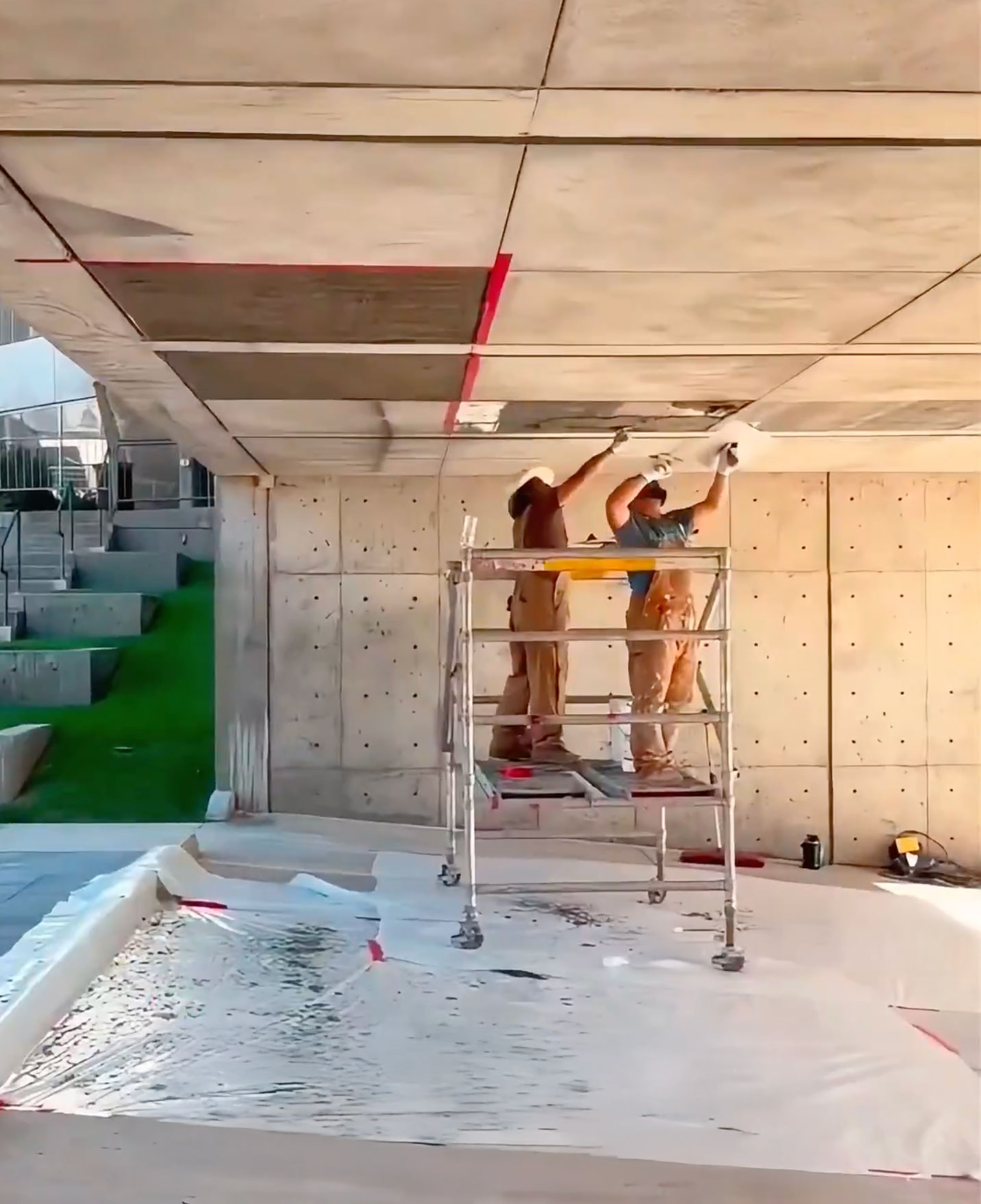
Forensics does not stop at the body. The tent ground was reportedly paved or hardscaped within days, which is a problem for wound-origin reconstruction and trace recovery either way.
Read thisThis website's author is @HolonCitizen on X and YouTube/@HolonCitizen. Follow me there.
X.com posts:
Interesting
- Merrell's on-camera account cites a governor-and-FBI Monday deadline to pave the courtyard.
- Research notes allege memorial domain searches from Israel and Arizona before the killing.
- One continuously edited encyclopedia page became the world's default account of the case.