Autopsy, Forensic & Medical Examiner Timeline
This timeline follows the physical evidence and the paperwork about the body — the Utah statute governing autopsy photographs that took effect four months before the shooting, the July 2025 change of chief medical examiner, the pronouncement, the death certificate, the disputed signature on the examiner's report, and the movement of the recovered bullet fragments from the autopsy table through ATF and FBI hands. It stops where the courtroom argument begins; the litigation is on the court section. The clinical minutes from the shot to the pronouncement are on the medical and death timeline.
The Timeline
Before September 10, 2025
-
Jan 9, 2025 — Utah's SB0082, the Autopsy Photo Amendments bill, is introduced in the legislature — Utah Autopsy Law Changes.
-
May 7, 2025 — SB0082 takes effect. It makes knowingly sharing, publishing, or distributing autopsy photographs that are part of a medical examiner's record a class B misdemeanor unless the photograph is already in the public domain, and it restricts release of medical examiner records to immediate relatives, legal representatives, physicians, law enforcement, and researchers under specific conditions — Autopsy Law SB0082 and Utah Autopsy Law. Four months later, this statute governs what the public can see about Kirk's autopsy.
-
Aug 2024 and May 2025 (claim) — Citizen researchers report that the bill's drafting attorney, Greg Gunn, drew unusual Google search interest from Israeli IP addresses — once months before the bill was introduced and again the week it took effect. Google Trends data does not identify individual searchers and this correlation proves nothing on its own; it is logged on Israel IP Search Patterns.
-
July 1, 2025 — Dr. Deirdre Amaro begins full-time as Utah's chief medical examiner, about ten weeks before the shooting — Medical Examiner and Medical Staff Changes.
-
Mid-July 2025 (claim) — Researchers report Israeli-IP search interest in Amaro, in Timpanogos Regional Hospital, and in seven named Timpanogos surgeons across a roughly two-week window around July 20 — Israel Google Searches on Medical People and The Timpanogos Surgeon Search-Trends Frenzy. Naming these physicians records search-trend timing only and alleges nothing about any of them.
-
Aug 19 / Aug 25, 2025 — Andrew Zenger is reported appointed and then installed as CEO of Timpanogos Regional Hospital — Hospital Leader. A separate claim that a person named Angela Hammond was newly appointed Utah medical examiner in September 2025 appears only in unverified social-media posts; no official record confirms such an appointment or any role in this case.
September 10, 2025
-
12:23:30 PM MDT — The shot at UVU. Everything downstream in this timeline derives from what happened to the body in the next forty minutes.
-
~12:33–12:43 PM MDT — Arrival at Timpanogos Regional — a Level IV center, when a nearer Level II trauma center was reportedly bypassed — and movement to an operating room, per the reconstruction on the Medical section's death timeline.
-
1:03:30 PM MDT — Reported pronouncement of death by the surgeon who emerged from the OR. This is the reference time for every forensic document that follows.
-
Same afternoon — The treating surgeon is publicly quoted describing the wound as an "absolute miracle" in that the bullet did not exit. That description is in direct tension with the front-neck-exit reading advanced by some analysts — Wound Analysis Theories, Trajectory Wound Mismatch, Is the Front Neck Wound an Entrance or an Exit?, and The Wound Trajectory Entrance-Exit Dispute.
-
Same day (disputed) — Some commentators claim police audio indicates the death certificate was signed by a hospital physician and the body moved quickly, and argue that Utah law requires a medical examiner autopsy in a firearm death. Others note Utah uses a state medical examiner rather than a coroner, that examiner reports are routinely withheld during an active capital homicide case, and that death certificates are issued but certified copies stay restricted for decades. Both readings are preserved on No Autopsy Claims, No Autopsy and the Death-Certificate Questions, and Death Certificate.
-
Same afternoon (reported) — The FBI seizes interior hospital footage — Hospital Footage Seizure. Any imagery of the body's arrival and handling would sit inside that seizure.
Days after — the autopsy and its paperwork
-
On or shortly after Sept 10–11 — An autopsy is performed; the recovered material later described in filings is one bullet jacket fragment and four lead fragments — ATF Fragment Inconclusive.
-
On or about Sept 10–11, 2025 (hearing-testimony claim, July 2026) — According to SBI Agent David Hull's testimony as later summarized online (@stratagemmer and others), the body arrived at the Utah Medical Examiner's Office by roughly 10:00 PM on September 10, and a pathologist identified in posts as Dr. Andrew Guajardo documented a gunshot wound to the neck. Posts further claim an overnight exam and transfer toward a mortuary before 5:00 AM. The named pathologist reportedly did not testify live at the preliminary hearing. Treat the name, overnight logistics, and later career moves discussed online as testimony- and report-dependent until the full transcript and signature page are public — no wrongdoing by any living physician is asserted here.
-
The mystery-signatory claim — A private account relayed in the master investigation file states that the autopsy was "signed off" by a young woman the medical examiner had never met before. The significance asserted is procedural: a report is a draft until signed, and changes can be made in that interval. This is a second-hand claim from a personal message, unverified, and it names no one; it is recorded on Medical Examiner and Surgeons and Autopsy Sealed Examiner. The Guajardo-performing-pathologist claim above and this mystery-signatory claim are not yet reconciled on the public record.
-
Ongoing (pre-July 2026) — The autopsy report is not available to the general public. Under SB0082 and standard Utah practice during an active capital case, full photo release would not be expected — which is precisely why researchers argue the statute's May 2025 timing deserves scrutiny rather than assuming it caused anything — Autopsy Report Not Public.
-
Sept 11, 2025 — CNN reporting places a screwdriver near the rifle.
-
Sept 15, 2025 — Director Kash Patel states on Fox News that DNA on a towel around the rifle and on a screwdriver on the rooftop matched Robinson — Kash Patel Briefings. The weapon's handling chain is at Mauser Rifle Chain of Custody.
-
Sept 16, 2025 — The charging documents and probable-cause affidavit reportedly omit the screwdriver entirely, despite it being described days earlier as a linking piece of evidence — Gun Discovery Sequence and the probable cause affidavit.
-
Ongoing (allegation) — Researchers argue that standard forensic steps, including gunshot-residue testing, were skipped, and that bomb dogs were kept from parts of the scene — Forensic Tests Skipped, No GSR and Physical Tests, and Bomb Dogs. No agency response to these specific points is public.
-
July 2026 (hearing-era claim) — Posts allege that SBI Agent Amanda Baker testified certain items were not tested because they "belonged to Charlie Kirk's security." Attribute strictly as alleged testimony as reported online pending a full public transcript; living agent; process claim only — see Forensic Tests Skipped.
-
Weeks after — The tent site is excavated and paved, removing soil that could have been tested for residue — Crime Scene Paving, Dirt Removed, Paving Timeline — September 14, The Courtyard Paved Over, and the scene changes and paving timeline.
-
Ongoing 2026 (claim) — Citizen posts continue to assert that Charlie's shirt/clothing was not accounted for in the public forensic inventory and that the transport SUV was sold or auctioned quickly. Clothing and vehicle interiors remain high-value residue-test targets still without public lab results — see SUV Transporting Charlie, Charred Material and Fragments in the SUV, and Candace Owens' own timeline of releases for the June 2026 interior photos.
Ballistics — the fragment's journey
-
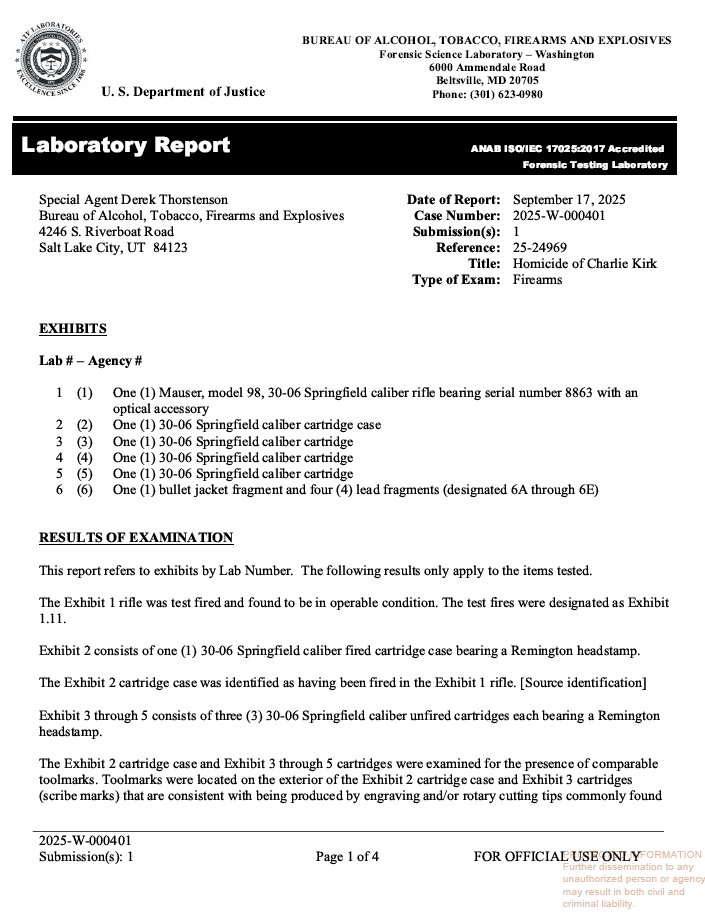
ATF examination — The recovered jacket is identified as coming from a .30 caliber class bullet. It shares class characteristics with the Mauser 98 attributed to Robinson, so that rifle cannot be excluded, but the fragment lacks individual characteristics permitting identification of one rifle to the exclusion of all others. The ATF's own conclusion is inconclusive — ATF Inconclusive Ballistics and FBI Ballistics Forensics. Court and media summaries later describe a roughly four-page ATF report on that comparison; do not overstate "inconclusive" as a positive exclusion of the rifle.
-
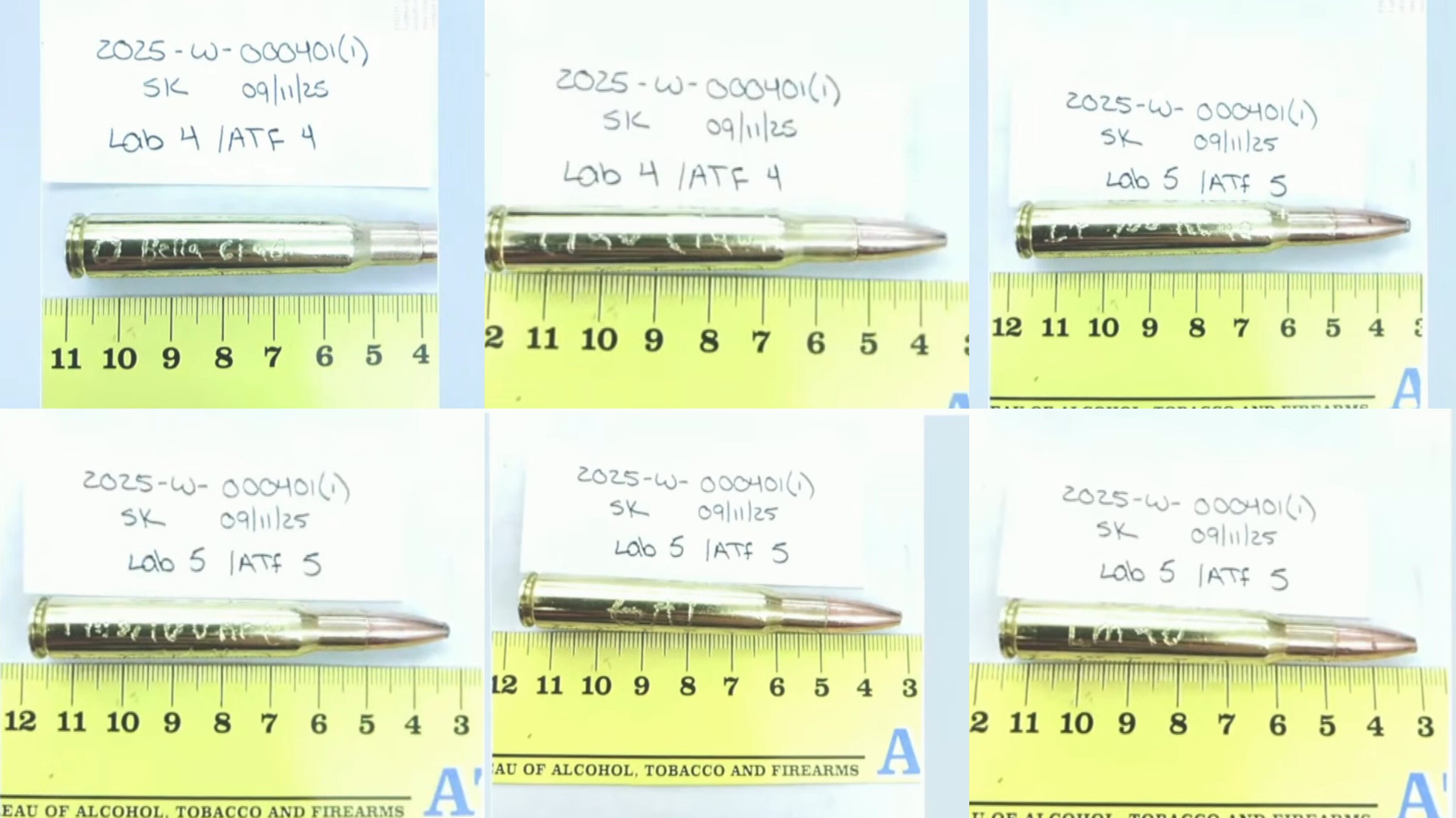
Cartridge casings — Engravings on the casings are described in the ATF summary as consistent with a rotary tool such as a Dremel — Mauser .30-06 Rifle. Commentators reading the same report (including @OwenBenjamin, April 18, 2026) emphasize that casing comparisons support Remington branding and that function-testing showed the recovered rifle can fire — narrowing, in their view, "frangible-round" explanations for the lack of an exit wound. That is commentary on a public lab document, not a court finding of alternative ammunition.
-
Fragment condition — An FBI analyst who received the jacket fragment from the ATF noted that part of it had become detached in the packaging. Any degradation between custodians matters to every later test.
-
Mar–Apr 2026 filings era — Pre-trial coverage (e.g. WITN / AA-style reporting around late March 2026) restates that toolmark/striation matching on the body-recovered jacket versus the Mauser remains inconclusive, and that the prosecution's public theory leans on DNA and scene consistency rather than a definitive ballistic ID of the fragment to one rifle.
-
Jan 9, 2026 — The defense files a motion after being denied permission to photograph the fragment in its current state and to attend or photograph future testing. The State reportedly seeks Virtual Comparison Microscopy — a 3D-scan-and-compare method that may require an analyst to unfold deformed portions of the jacket, potentially leaving tool marks and affecting the fragment's structural integrity — plus unspecified metallurgical testing of a lead fragment — Ballistics ATF/CBLA and Preliminary Hearing Motions.
-
The CBLA dispute — Citizen researchers reading those filings allege the metallurgical work is or could become Comparative Bullet Lead Analysis, a technique the FBI abandoned in 2005 after concluding it had "flawed scientific, statistical, and interpretive validity" and which figured in the wrongful conviction of Jimmy Yates. Whether CBLA is actually being applied here is contested, not established — Ballistics Sealed CBLA and the discovery and Brady evidence timeline.
-
Trial posture — The defense has signalled it intends to use the State's own ATF report as exculpatory evidence — Trial and Autopsy Report.
July 2026 preliminary hearing — autopsy admitted, ATF on the stand
-
On or about July 6, 2026 — Per KSL reporting and other hearing takeaways, prosecutors introduced the Utah Medical Examiner's autopsy report at the Robinson preliminary hearing over defense hearsay objections that it was "an expert report without an expert present." Public summaries say the report concluded a single gunshot wound to the neck, manner homicide, with a jacket fragment recovered from the body. The report is now in the court record even if full public release of autopsy photographs remains restricted under SB0082. Robinson remains charged, not convicted.
-
July 2026 (prelim) — Defense called ATF examiner Samantha Karner, author of the ballistics comparison. She reportedly testified she was unable to identify or exclude the recovered Mauser as the source of the jacket fragment due to insufficient microscopic marks, and that the four minor lead fragments likewise could not identify a specific firearm — matching the ATF report already summarized above, now with a hearing date and examiner name. The precise lab language is "unable to identify or exclude" rather than "did not match" — either way, the government's narrative is left with no forensic link between the seized rifle and the wound.
-
July 2026 (contested reading of the same testimony) — Online discussion claims the ME documented seven bullet fragments while only four reached the ATF lab (one jacket + lead), leaving three without a clear lab chain-of-custody path in the public testimony so far. Unverified without the full transcript — logged here as a discovery gap beyond packaging detachment, not as proven spoliation.
-
July 2026 (claim, contested) — Some posts allege DNA from multiple donors on the recovered rifle beyond Robinson, and that officials described the projectile class as FMJ (which by design often exits soft tissue — a tension already used in energy-mismatch arguments). Treat multi-donor DNA as an unproven / under-reported forensic claim until lab reports are public; do not convert it into named third-party guilt. See also the discovery and Brady evidence timeline.
Competing wound theories the forensics would settle
-
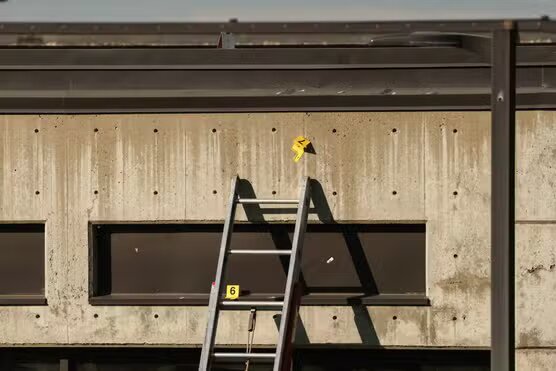
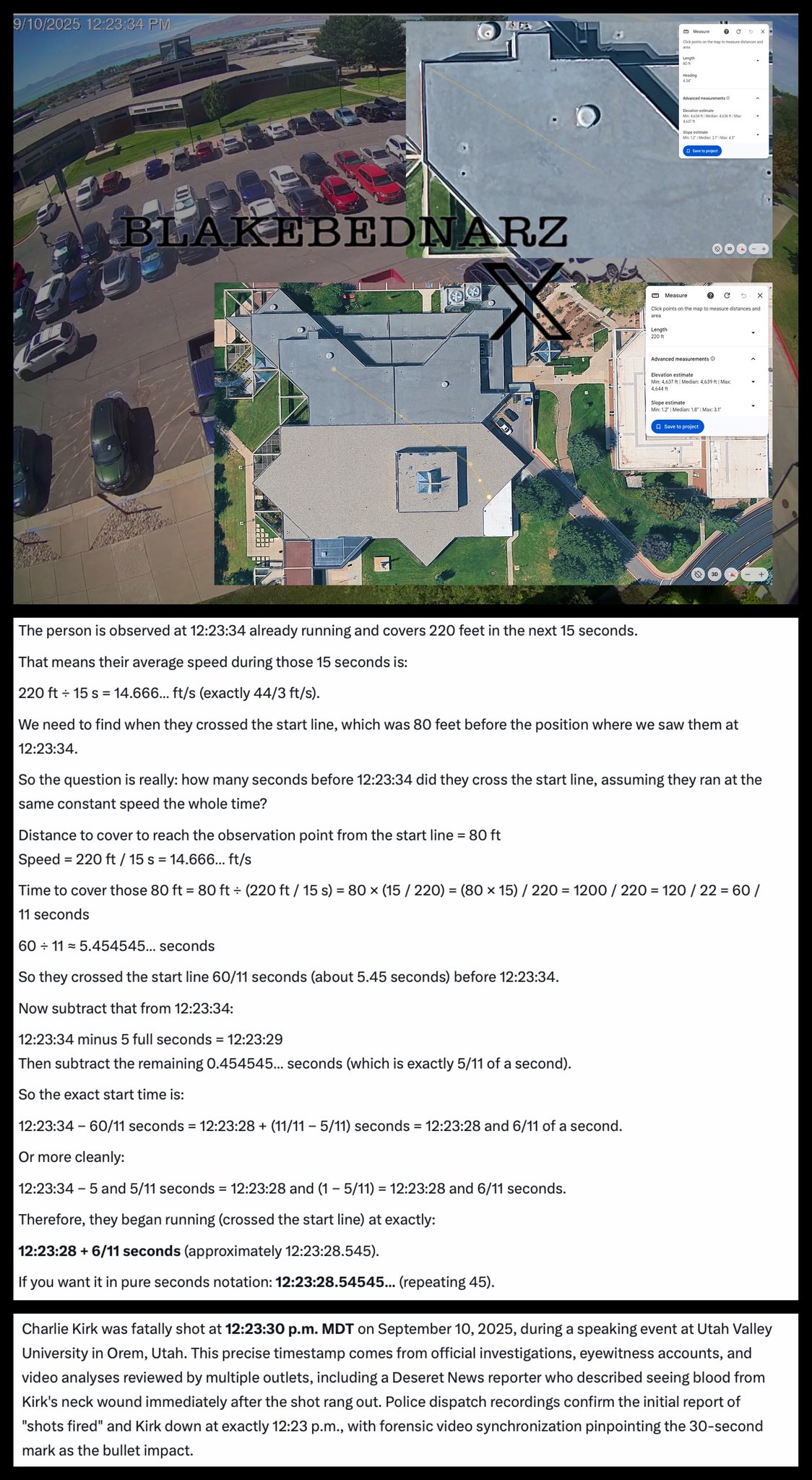
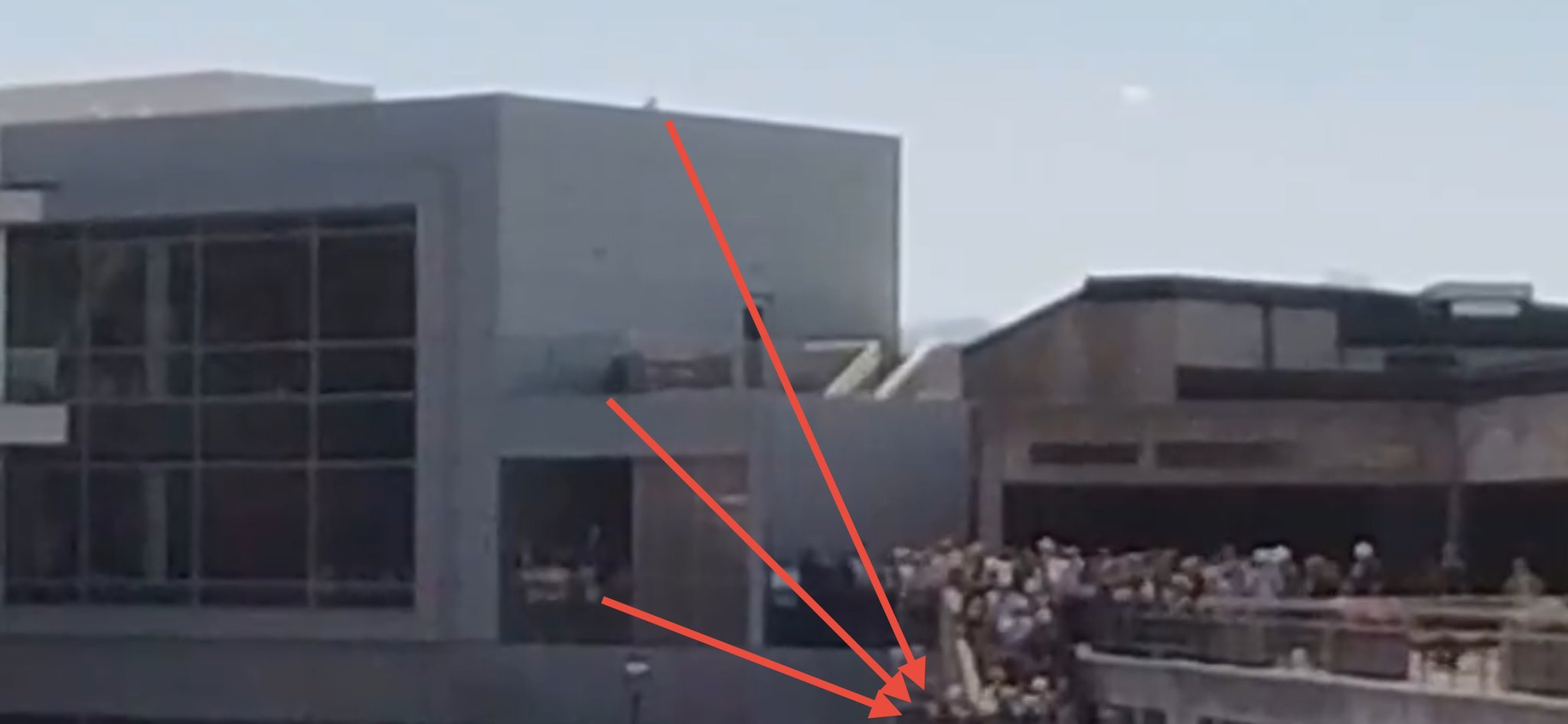
The government's narrative — A single .30-06 round from the Losee Center roof — Losee Center.
-
The energy-mismatch objection — Analysts argue the observed effects do not match a .30-06 round at that range — .30-06 Energy Mismatch and Alternative Calibers and Weapons.
-
The exploding mic (majority investigator conclusion) — Most citizen investigators have concluded Charlie was killed by a shaped charge in or near the lapel microphone or pendant, pointing to charred material and the necklace's motion — Exploding Pendant Shaped Charge, Rode Wireless Mic, the RØDE mic itself, The Snapped Necklace and the Residue Search, and Mic Explosive. No residue lab result is public, and the soil, SUV and clothing that could have produced one were removed or seized. The acoustic and hardware chronology is on the audio, acoustic and mic timeline.
-
What one test would resolve — An explosive-residue result on the recovered clothing, the necklace, or the transmitter would settle it — which is why investigators treat the absence of any such test as part of the cover-up — Rigged Mic Explains Anomalies and Ballistics and Wound Analysis.
Why Investigators Conclude It Was the Exploding Mic
Citizen investigators have largely concluded that Charlie Kirk was killed by an explosive at his microphone, not by the government's .30-06 rifle narrative. The main reasons:
- The shirt and fabric move first — video frame analysis shows the shirt expanding outward, spherically, before the neck wound appears.
- The audio separates two blasts — the Canon XA55 recording reportedly shows a louder detonation at the tent distinct from a distant muzzle report.
- Eyewitness veterans called it an explosion — Rob O'Neill and Gen. Blaine Holt said it looked like an explosion, not a rifle wound.
- No exit wound, and an energy mismatch — a .30-06 at that range would be expected to exit and destroy tissue; see six forensic physics phenomena.
- The mic was routed under the shirt — unlike prior events, placing the transmitter against his chest and neck.
- Physical debris — a burnt object in the SUV and a neck fragment that may be charred plastic.
- The residue evidence was removed, not tested — dirt, clothing, the SUV and the necklace were hauled, cleaned or seized with no public residue test.
- Means existed — an AES contract for miniaturized anti-personnel charges sits on the same timeline.
Full evidence hub: Microphone — The Exploding Mic Theory.
Conflicts and Disputed Points
| Point | Version A | Version B | Who asserts |
|---|---|---|---|
| Was there an autopsy | Yes — fragments were "recovered during Charlie's autopsy" per ATF filings; July 2026 prelim admitted the ME report (single GSW neck / homicide) | "No autopsy," death certificate signed by a hospital physician | Court filings and prelim admission support A; the "no autopsy" claim circulates on X and in police-audio interpretations |
| Who performed / signed | Chief ME office; hearing claims name Dr. Andrew Guajardo as performing pathologist (testimony-dependent) | A young woman the examiner had reportedly never met ("mystery signatory") | Hull-testimony posts vs second-hand private account; neither fully public |
| Wound description | Neck wound, bullet did not exit | Front-neck wound read as an exit; chest or heart in early witness accounts | Surgeon quote vs Shot in Chest Reversal |
| Cause mechanism | Single rifle round (the government's narrative) | Shaped charge at or near the microphone or pendant (the majority investigator conclusion) | Official filings vs citizen investigators — see Mic |
| Ballistics result | Rifle cannot be excluded (class characteristics) | Inconclusive, lacking individual characteristics; Karner: "unable to say one way or another" | Both are in the same ATF summary / prelim testimony; emphasis differs by side |
| Fragment count / chain | One jacket + four lead to ATF lab | Claim of seven ME-recovered fragments vs four sent to ATF | Online reading of July 2026 testimony; needs full transcript |
| Additional testing | Standard forensic follow-up | Potentially destructive, and possibly a discredited method | State position vs the Jan 9, 2026 defense motion |
| Screwdriver | Rooftop, DNA match (Sept 15) | Near the rifle (Sept 11); omitted from Sept 16 filings | Compare the three accounts directly |
| SB0082 timing | Routine legislation | Close proximity to the shooting, with no public record explaining the timing | No causal link has been shown either way |
Open Questions
- Who performed the autopsy, who signed the report, and on what date was the draft finalized — and does the July 2026 admitted report name Guajardo (or another pathologist) on the signature page?
- Which physician signed the death certificate, and what cause and manner of death does it state — and do they match the prelim summaries (single GSW neck / homicide)?
- Was gunshot-residue testing performed on Kirk's clothing, hands, or the recovered microphone hardware, and if not, why not — including any "security property" rationale attributed to Agent Baker?
- Was any explosive-residue analysis run on the shirt, the necklace, or the transmitter?
- What is the complete chain of custody for the bullet jacket fragment, and when did part of it detach? If the ME recovered seven fragments, where are the other three?
- Is Comparative Bullet Lead Analysis, or any successor lead-composition method, being applied to the four recovered lead fragments?
- Where is Charlie's shirt/clothing in the forensic inventory, and was the transport SUV sold or auctioned before residue testing?
Laws (Charlie Kirk)
The complete autopsy report with its signature page and revision history, the death certificate and the identity of the certifying physician, any gunshot-residue and explosive-residue lab results, the full ATF-to-FBI chain of custody for the bullet jacket and lead fragments, the soil and debris removed from the tent site before paving, and the medical examiner's case file are things that the Charlie Kirk Investigation Laws may result in powerful truths coming out that aren't out yet.
Interesting In This Area
- Utah's autopsy-photo statute took effect four months before the shooting.
- Patel said screwdriver DNA matched; the charging documents omit the screwdriver entirely.
- The medical window ends at a reported 1:03:30 pronouncement nobody has documented.
- Soil was hauled away before anything could be tested for residue.
Images
Other Pages In This Section
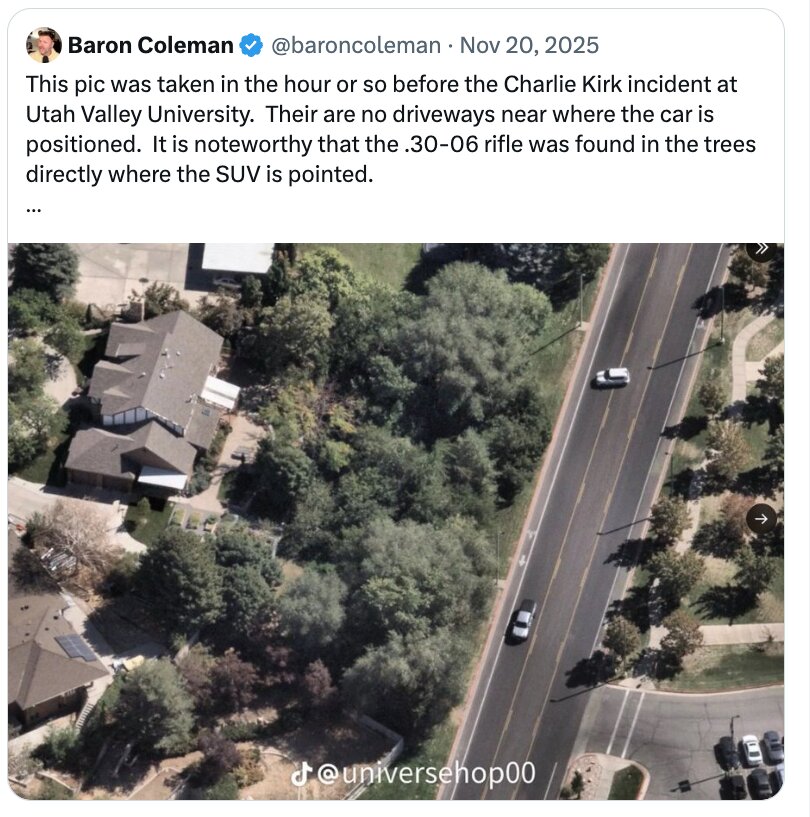
Baron Coleman Allegations & Timeline
Every Coleman claim in date order — the custody-versus-Discord argument, the Bates 003996-R2 Miranda reading, the grave-danger clip. Laid out chronologically you can see which claims he built on which.
Read this6:25 PM Custody vs Discord Confession Timeline Conflict
The 6:25 PM Miranda against the 7:57 PM Discord stamp, laid out as a timeline rather than an argument. Read it beside the surrender narrative and decide which entries cannot both be true.
Read thisForeign Leaders Meeting on U.S. Soil (July 20, 2025, Claims)
One line in the file says foreign leaders met on U.S. soil that day. No roster, no agenda and no host unit has ever been produced — and the same date carries SU-BTT's claimed first American landing.
Read this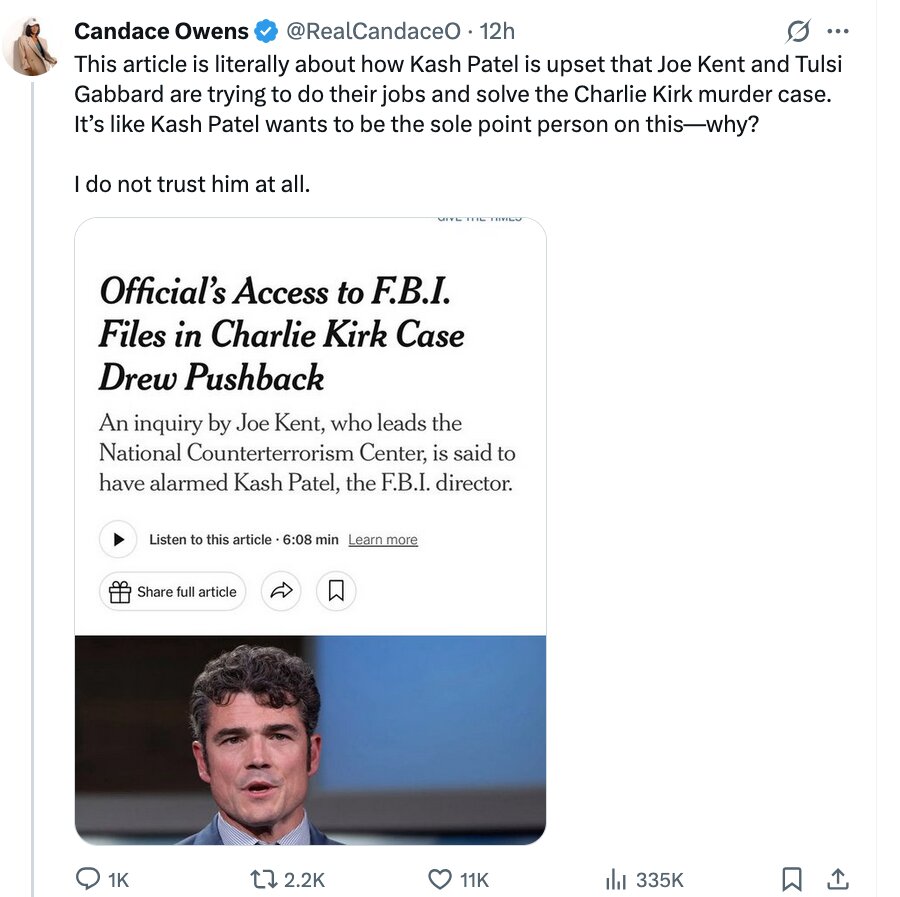
Kash Patel Announcements & Manhunt Narrative Timeline
Fifty hours of one official's public statements, each set against what the rest of the file shows was happening at that moment. A suspect was announced, then quietly un-announced.
Read thisElsewhere In The Investigation
Ballistics — ATF Inconclusive & CBLA
The ATF could not match the recovered jacket fragment to the seized Mauser. This page separates a casing from a fragment and explains why that distinction decides a great deal.
Read thisThis website's author is @HolonCitizen on X and YouTube/@HolonCitizen. Follow me there.
Interesting
- Three official documents give three different arrest pictures.
- The county valued the house at $755,000 while UVU paid $900,000, then the tax roll goes quiet.
- The sheriff and UVU's president both resigned in 2026.
Related Areas
- Utah's SB0082 autopsy photo law
- The death certificate question
- Standard forensic tests said to be skipped
- Why a .30-06 does not match the observed energy
- The banned CBLA bullet-lead test
- Soil removed from the tent site
- Medical transparency law proposal