The Handwritten Note — Stored Under a Keyboard
One message in this case was not stored on any server. According to the charging materials, a handwritten note was left under a keyboard at the apartment Tyler Robinson shared with Lance Twiggs. It is the earliest piece of alleged confession material in the case and the one furthest from being tested.
Where It Was Stored
A sheet of lined notebook paper, under a keyboard, in a private apartment. No server logs, no account, no message ID, no timestamp, no metadata of any kind. Everything that makes the Discord set checkable in principle is absent here, and so is everything that makes it disputable. There is no 7:57 PM to argue about, because paper does not record when it was written.
How It Entered The Record
The note surfaced through the text thread rather than through a search of the apartment alone. The exchange recovered from Twiggs' phone contains the instruction to look under the keyboard and the roommate's reply as he read it — which is why the text messages and this note have to be read together. The reaction quoted in the message record is what dates the note in practice: it places the reading of it inside the Sept 10–11 window covered by the extraction that Agent Davis testified about.
The note itself has been shown publicly as an enhanced photograph on lined paper, addressed to a nickname and containing a statement about an intention to take out Charlie Kirk. The image is catalogued in the Letter photo cluster.
Filed As State's Exhibit 16.3
The State's memorandum supporting bindover, published July 29, 2026 by @aburkhartlaw, numbers the note State's Ex. 16.3. Unlike the text exhibit (16.1) and the Discord exhibit (16.2), it is cited without page numbers — consistent with a single sheet.
It is also the exhibit the memorandum reaches for first when it argues identity. The lead quotation under Element 1 is drawn from it:
"I had the opportunity to take out Charlie Kirk, and I took it." — State's Ex. 16.3
The same exhibit is cited again on mental state, and once more for a line about the expected outcome of the act — that he would be "likely dead, or facing a lengthy prison sentence."
There is a wrinkle worth noting in how the memorandum describes it. In places the filing frames Ex. 16.3 as something Robinson "wrote to Mr. Twiggs," which reads more like a message than like a note left under a keyboard. Whether that is loose drafting, or whether Ex. 16.3 is a photograph of the note as it appeared in the message thread rather than the physical paper itself, is not resolved by the document. It is the kind of distinction that matters for authentication, because a photograph of a note and the note are not the same exhibit.
What Researchers Have Pressed On
The objections here are about form, not content. Commentators quoted in the investigation record note that the public has been shown photographs of the note and of the messages rather than the note, the devices, or the full extraction, and that this material was released in stages, months apart. They also point to the state filing reportedly stating that the state did not intend to offer material obtained through forensic extractions of the seized electronics, which sits awkwardly beside a public case built substantially on that material.
Against that: the defense holds the underlying data and is not publicly alleging fabrication, and no examiner and no court has found the note to be anything other than what the state says it is. Both of those things are true at once and should be held together rather than traded off.
What Would Settle It
Authentication of the note is a physical-evidence question, not a digital one: ink analysis, paper analysis, and a handwriting examiner comparing it against known exemplars. None of that has been presented publicly. Until it is, the note's date and authorship rest on the surrounding testimony and on the text thread that points to it.
When you look at the published image, it is worth separating three things deliberately: what is actually legible on the paper, what is the product of enhancement, and what is inference layered on top by whoever posted it.
Interesting In This Area
- The Discord set is Exhibit 16.2 and only two pages long.
- The texts carry the instruction to look under the keyboard.
- Steam material never enters the exhibit series at all.
- Coleman says the family denies any confession was made to them.
Interesting In Other Areas
- Cellebrite tooling recovered the thread that dates this note in practice.
- Agent David Hull gave the preliminary-hearing testimony investigators keep returning to.
- Proof Not Tyler argues the standard physical tests were never run.
- Citizen analysis points at a device rather than a rifle round.
Other Pages In This Section
The Messages Attributed to Tyler Robinson
Where every message set attributed to the accused was stored and how each one reached investigators — Discord posts, texts off a roommate's phone, a handwritten note. Provenance first, content second.
Read this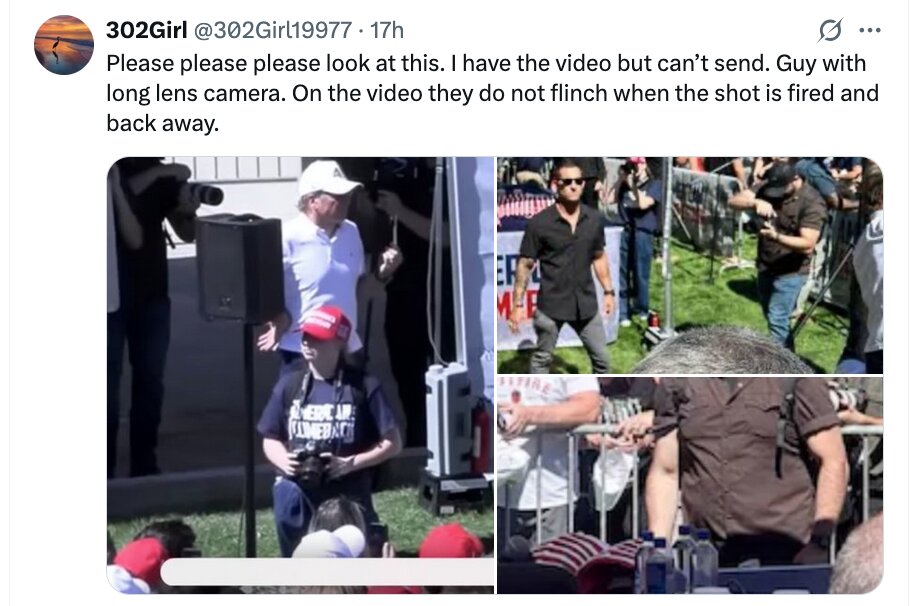
The stairwell figure and the camera-tracked Tyler wear different clothes and carry different packs — one roughly half full, the other nearly full. The official reading needs the pack to get fuller after an outfit change.
Read thisBaron Coleman — Family Denies the Confession
Coleman says on the Julian Dorey podcast that Robinson's family does not believe he did it and denies he confessed to them, and notes the parents were absent from the preliminary-hearing witness list.
Read this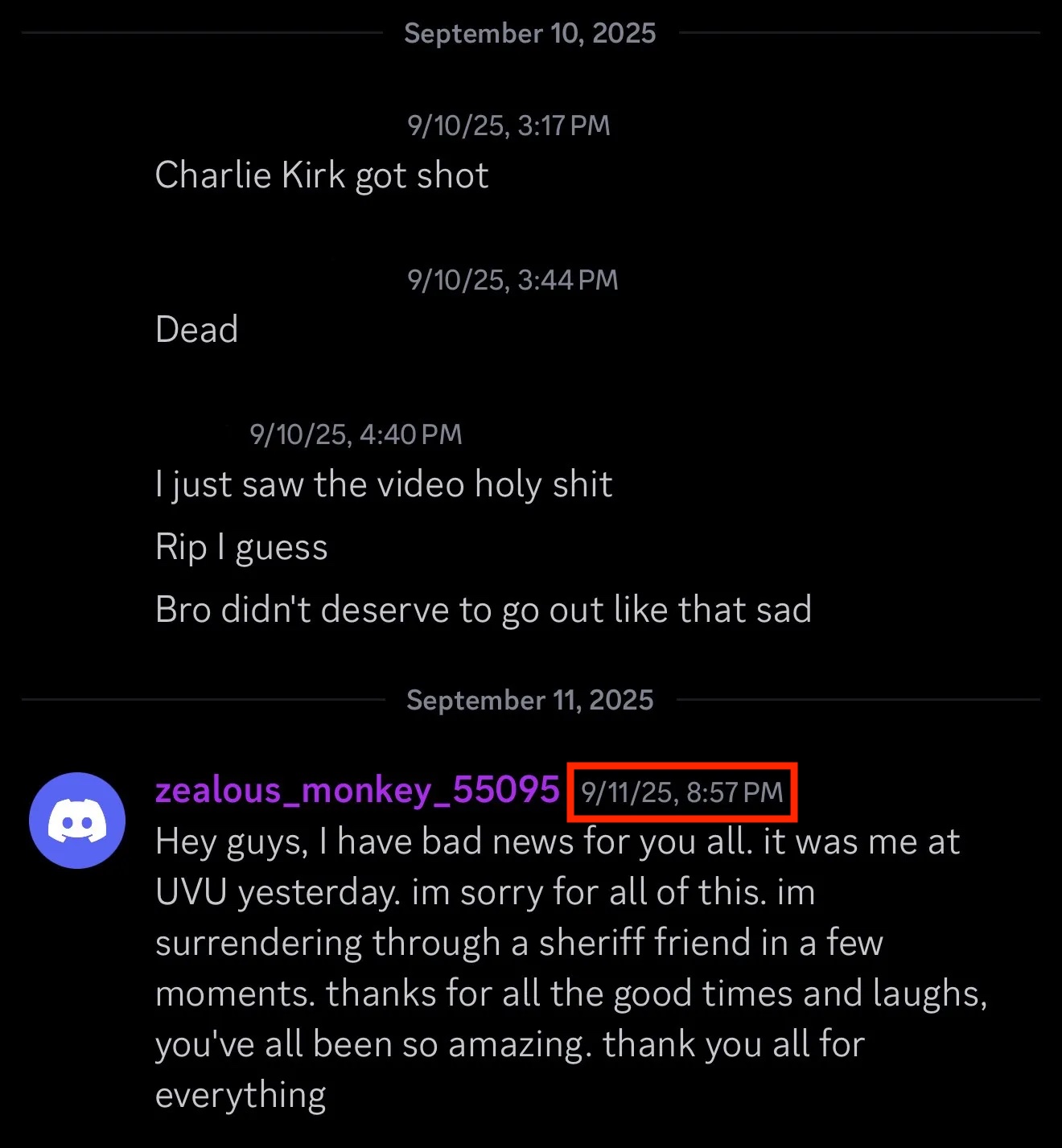
The zealous_monkey_55095 Discord Confession Screenshot
Three September 10 messages, then the confession posted under one username. Transcribed line by line, with the timestamps that collide with the 6:25 PM Miranda warning.
Read thisElsewhere In The Investigation
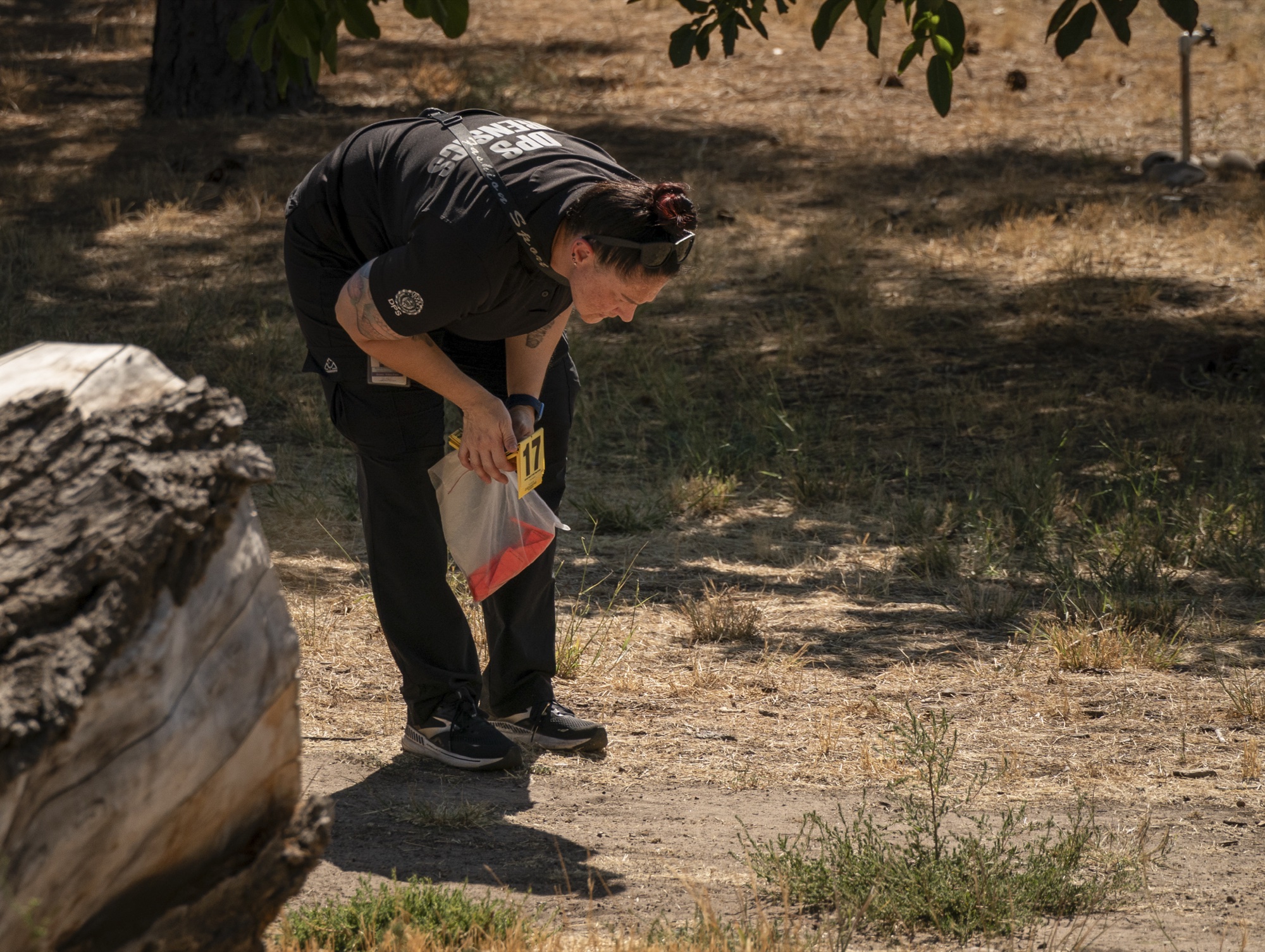
Cellebrite — Israeli Forensics Firm
The Israeli forensics firm whose tooling extracted the phones at the centre of the case. Who built the extraction is not a neutral detail when foreign leads are part of the argument.
Read this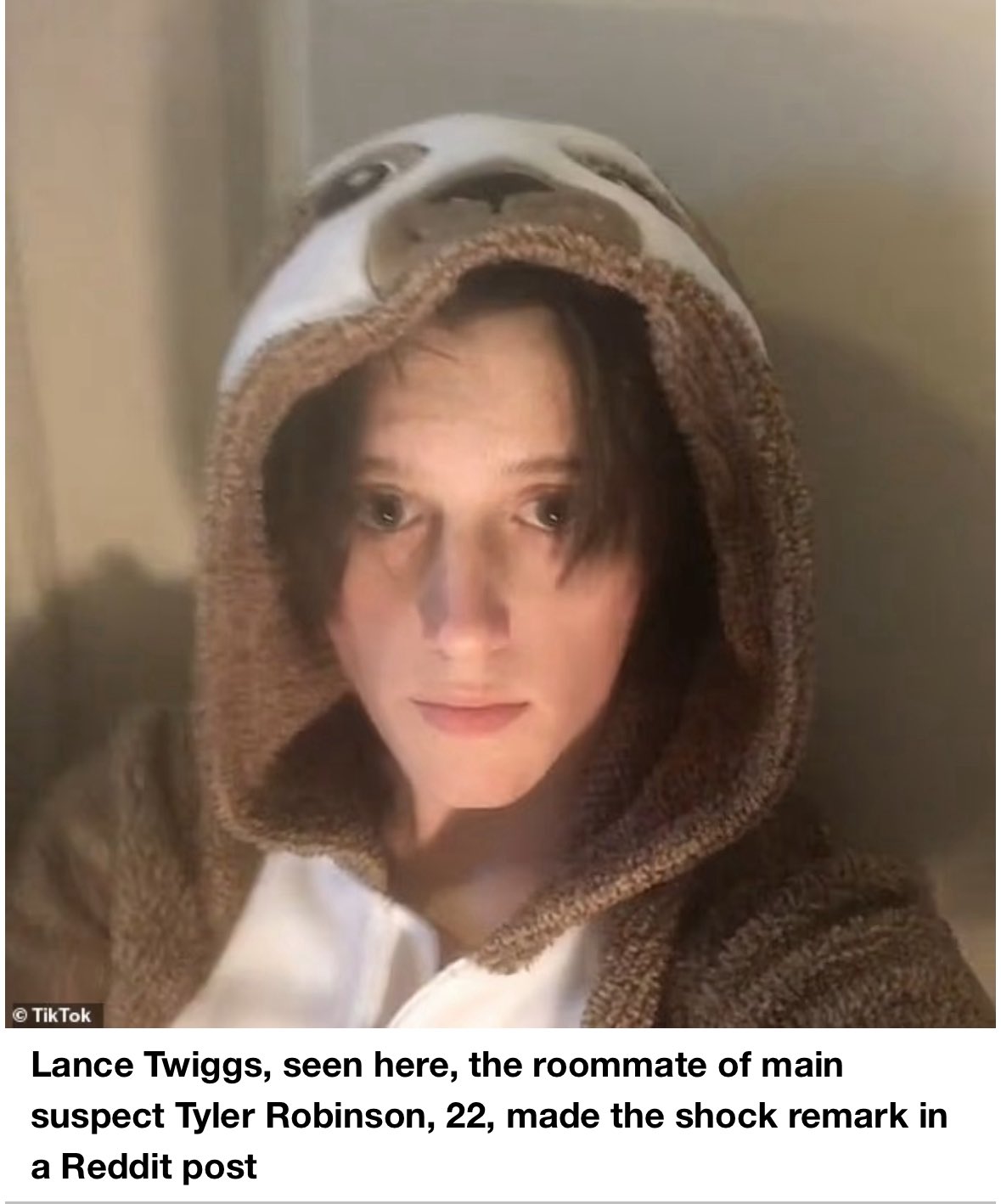
Tyler Robinson's partner and roommate, charged with nothing, pulled into the record by the state's own investigation. Her messages and her phone became evidence in a case where she is not a defendant.
Read this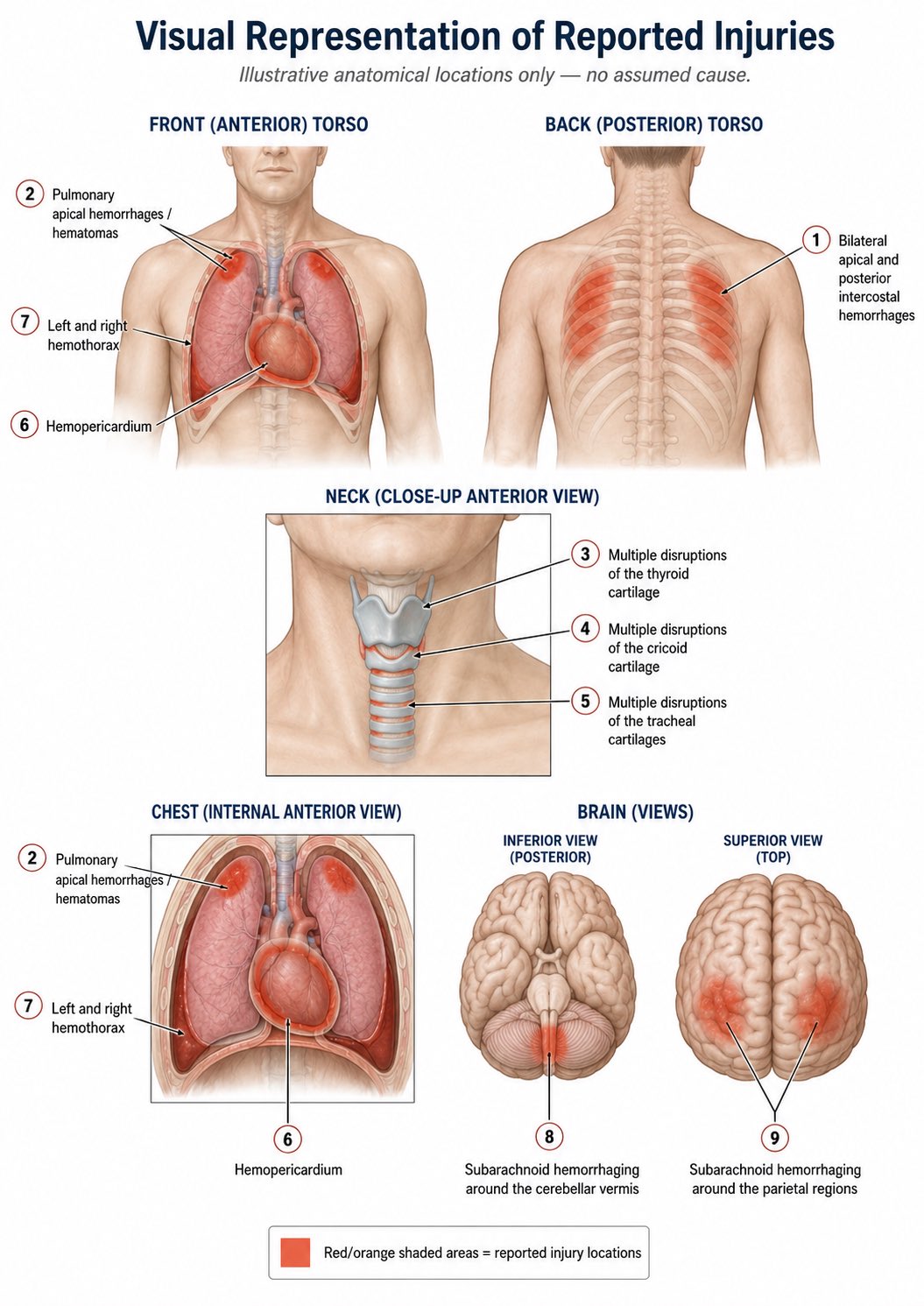
The hub for every argument that Tyler Robinson did not cause Charlie Kirk's death — ballistics, acoustics, identity gaps, and the standard physical tests that were reportedly never run.
Read this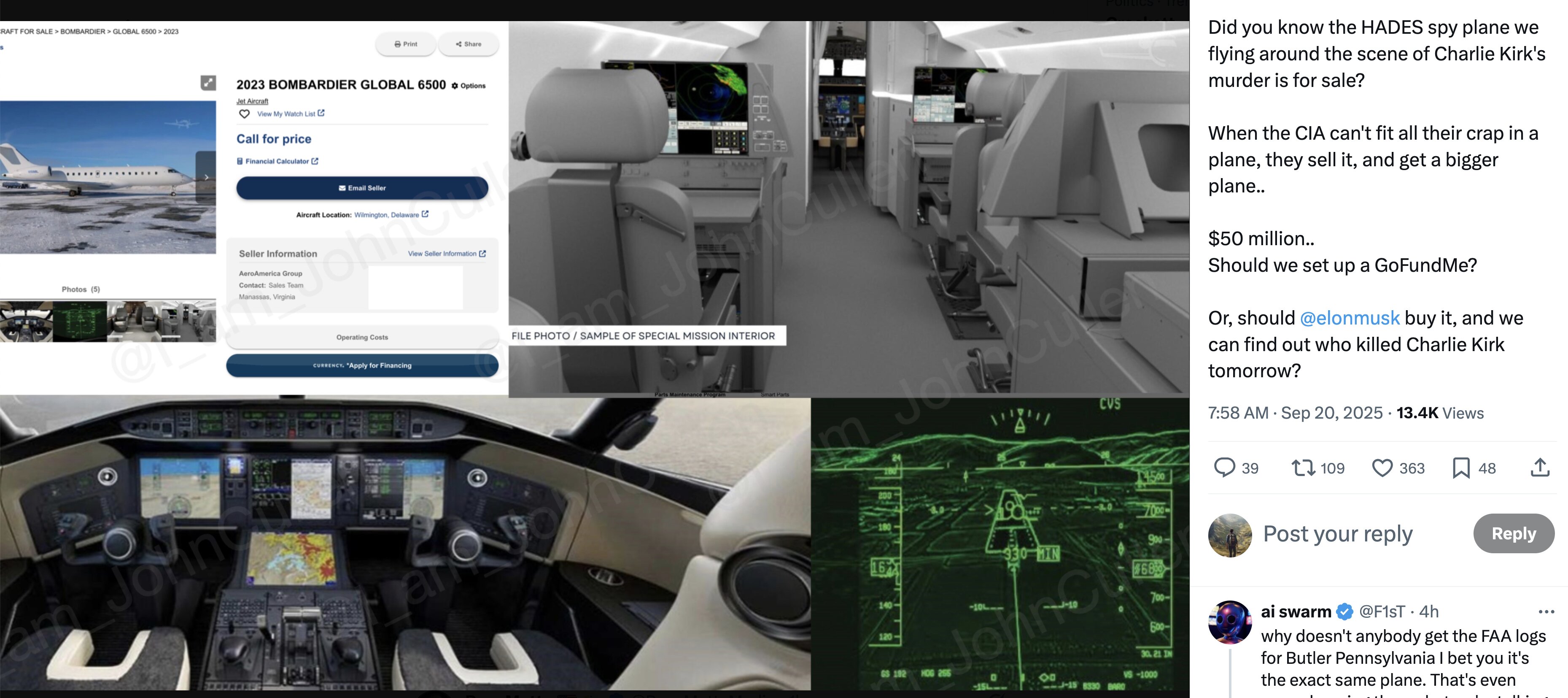
Explosive in Mic Likely Killed Charlie
The finding citizen investigators on X have converged on: a device at the microphone, not a round from a roof. It is the single largest divergence between the public record and the government's account.
Read thisThis website's author is @HolonCitizen on X and YouTube/@HolonCitizen. Follow me there.
Interesting
- A change of clothes nobody filmed is detailed in the rooftop clothing testimony.
- CIA agents were reportedly turned around at an airport, per Mike Glover's account.
- The state reportedly disclaimed forensic extractions — see the phone-extraction contradiction.