The State Says It Will Not Offer Forensic Extractions
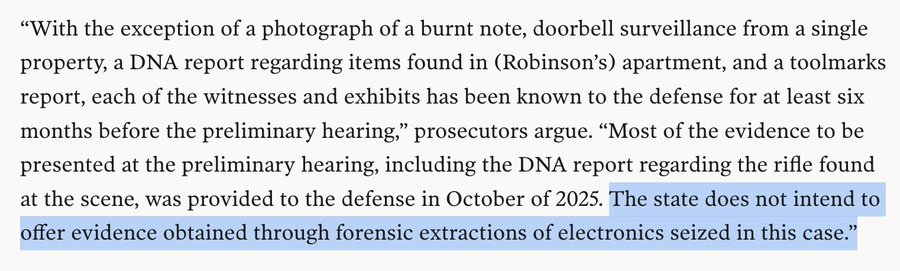
Excerpt from reporting on the prosecution's filing opposing a defense continuance. Full write-up →
One sentence in a filing about scheduling, and it changes what the message evidence can be.
The quote
"With the exception of a photograph of a burnt note, doorbell surveillance from a single property, a DNA report regarding items found in (Robinson's) apartment, and a toolmarks report, each of the witnesses and exhibits has been known to the defense for at least six months before the preliminary hearing," prosecutors argue. "Most of the evidence to be presented at the preliminary hearing, including the DNA report regarding the rifle found at the scene, was provided to the defense in October of 2025. The state does not intend to offer evidence obtained through forensic extractions of electronics seized in this case."
Why that last sentence matters
A forensic extraction — a Cellebrite-style image of a phone — is the only thing that can turn a photograph of a screen into authenticated data. It produces message IDs, database timestamps, deletion records, and a hash that proves the file was not altered afterwards.
Without it, the message evidence at the preliminary hearing rests on:
- photographs taken of a roommate's screen,
- a screenshot republished from a Substack post, and
- Lance Twiggs' testimony about what he was shown.
That is witness recollection and pictures, not device data.
Read it alongside Discord's position
Discord says the planning messages were not Discord messages — which pushes authentication onto the phones. The state then says it will not offer the phone extractions.
The two statements together close both doors:
| Authentication route | Status |
|---|---|
| Discord server-side logs | Company says the content was not on its platform; account removed |
| Forensic phone extraction | State says it does not intend to offer it |
| Photograph of a witness's screen | This is what remains |
The careful caveat
This is a filing about a preliminary hearing, which has a low evidentiary bar and is not the trial. The state is entitled to hold evidence back at that stage and produce it later. Nothing here proves extractions do not exist.
But the preliminary hearing is where probable cause is tested, and the state has said the device data will not be there. Readers should verify the current docket, since positions in an active case change.
The filing sits against the bindover memorandum
There is a direct tension here that has not been publicly reconciled, and it is worth stating plainly because it cuts both ways.
The State's memorandum supporting bindover cites the message exhibits — 16.1 (texts), 16.2 (Discord), 16.3 (the note) — on nearly every page of its identity and mental-state arguments. Its central summary sentence is built on them: "Defendant also admitted to Mr. Twiggs and other friends that he had shot Mr. Kirk. State's Exs. 16.1 at 1-2, 16.2 at 1-2, 16.3."
A prosecution that says it will not offer forensic extractions, while resting a bindover memorandum on message exhibits, is only consistent if those exhibits are authenticated some other way. Three routes are available in principle:
- through the Twiggs police interview transcript (State's Ex. 16), where a participant in the conversations describes them under questioning;
- through Twiggs' own device rather than Robinson's, which is where the texts were recovered and which is the message set with the best chain of custody;
- through testimony rather than extraction — a witness saying these are the messages.
The memorandum does not say which. And each of those routes authenticates the texts far better than it authenticates the Discord posts, because Twiggs was the other party to the texts and was not the other party to a group post. The Discord exhibit is the one that most needs a platform-side record, and it is the one furthest from having one.
The Location Field Is Typed In. The IP Address Is Not.
On Discord, on Steam, and on every platform in this section, the country shown on a profile is a text box the user filled in. Anyone can type Utah, or Egypt, or nothing at all, and change it again in seconds. Whether it is shown publicly is a setting. It is not evidence of where a person was sitting when they typed a message.
What is not typed in is the IP address. Every session, every login, every message send is written to the platform's own logs with the address it arrived from, alongside device fingerprints and session timing. Discord holds that record for the servers named in the Utah State Bureau of Investigation's warrant — Craftopia, Gamin and The Corruption — and for the account that posted the confession.
That is the question this section keeps returning to: is it known where the people in these servers actually were? The FBI reportedly examined twenty or more people in Robinson's Discord circle and charged none of them, and nothing in the public record states where any of them were. To be explicit, because it matters: being in another country is not wrongdoing, no one in those servers has been accused by any authority of anything, and nothing on this site suggests any of them did anything improper. The point is narrower — that a location nobody has verified should not be treated as if it were verified, in either direction. Self-reported locations circulated widely — see the Egypt claim on a Steam profile — and self-reported locations are worthless.
The answer exists. It is in Discord's subpoena return and in the login-IP history for September 10–12 — records that investigators can obtain through lawful process and the public cannot. What we are asking for is that the record for the account that posted the confession be established through that process and, so far as the law allows, made public. Until it is, every claim of foreign involvement in these chats — and every denial — rests on a field somebody typed.
We are not asking anyone to identify, locate, contact or expose any private individual, and readers should not attempt it. We name no one and we accuse no one. This is a request for a record, not an allegation against a person.
Other Parts of the Discord Messages
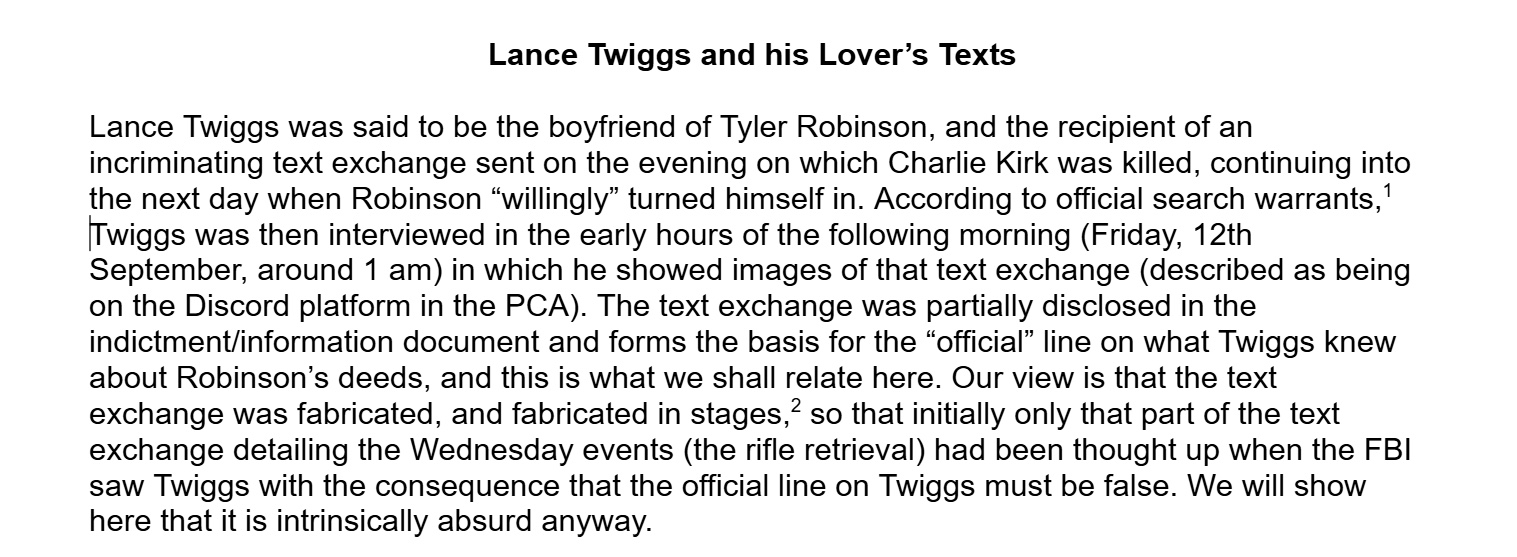
The Twiggs Exchange and Friel's Sequencing Argument
Chris Friel argues the exchange was assembled in stages, and that the affidavit called a text thread a Discord thread. A contested reading, set out in full.
Read this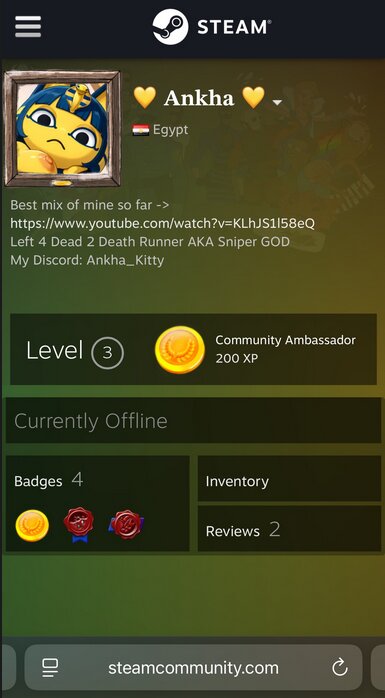
The Ankha Profile and the Egypt Claim
A profile in the same circle lists Egypt as its location and a Discord handle in its bio. Location fields are typed in; only the server knows the truth.
Read this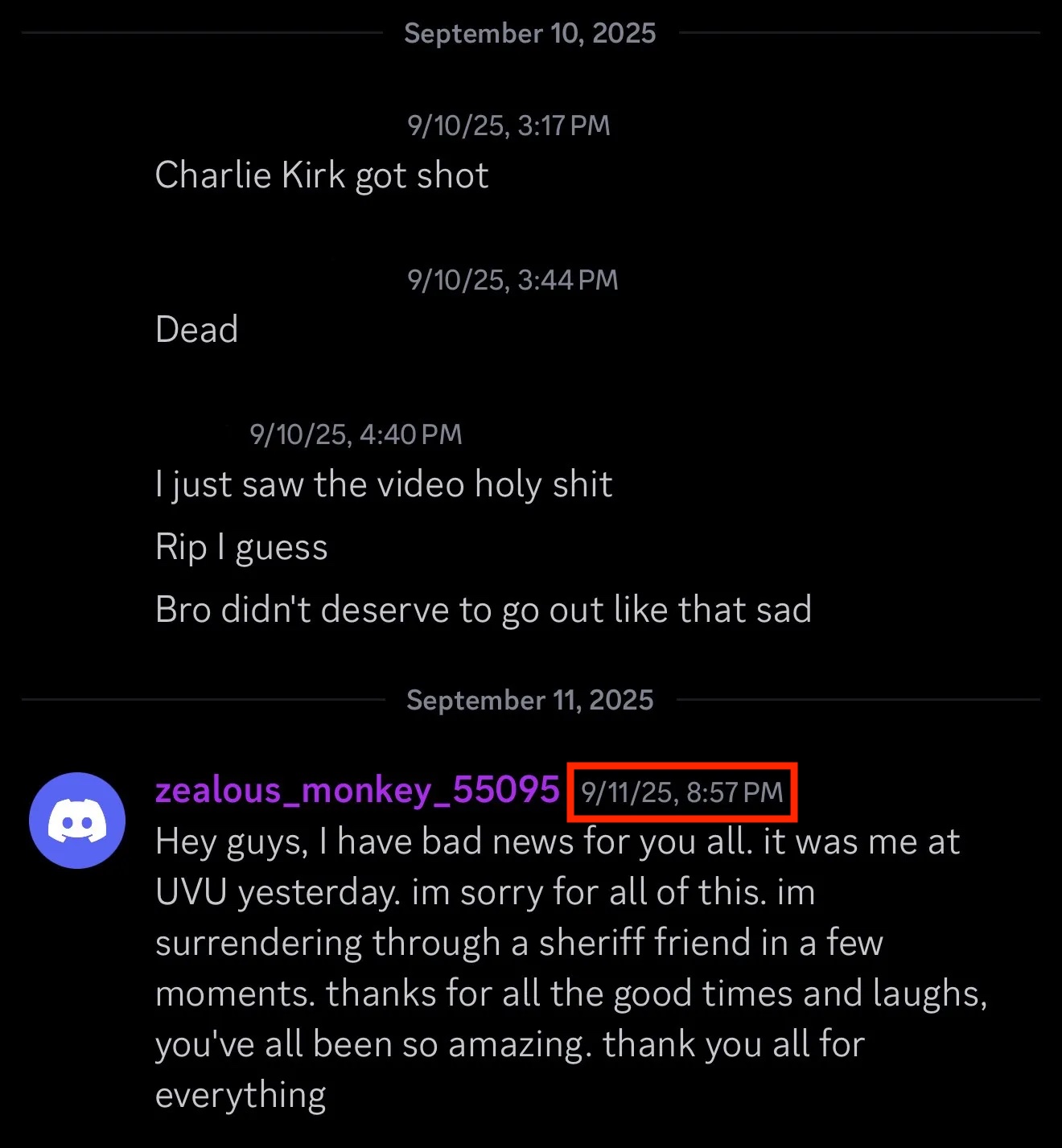
The zealous_monkey_55095 Confession Screenshot
Three September 10 messages, then the confession posted under one username. Transcribed line by line, with the timestamps that collide with the 6:25 PM Miranda warning.
Read this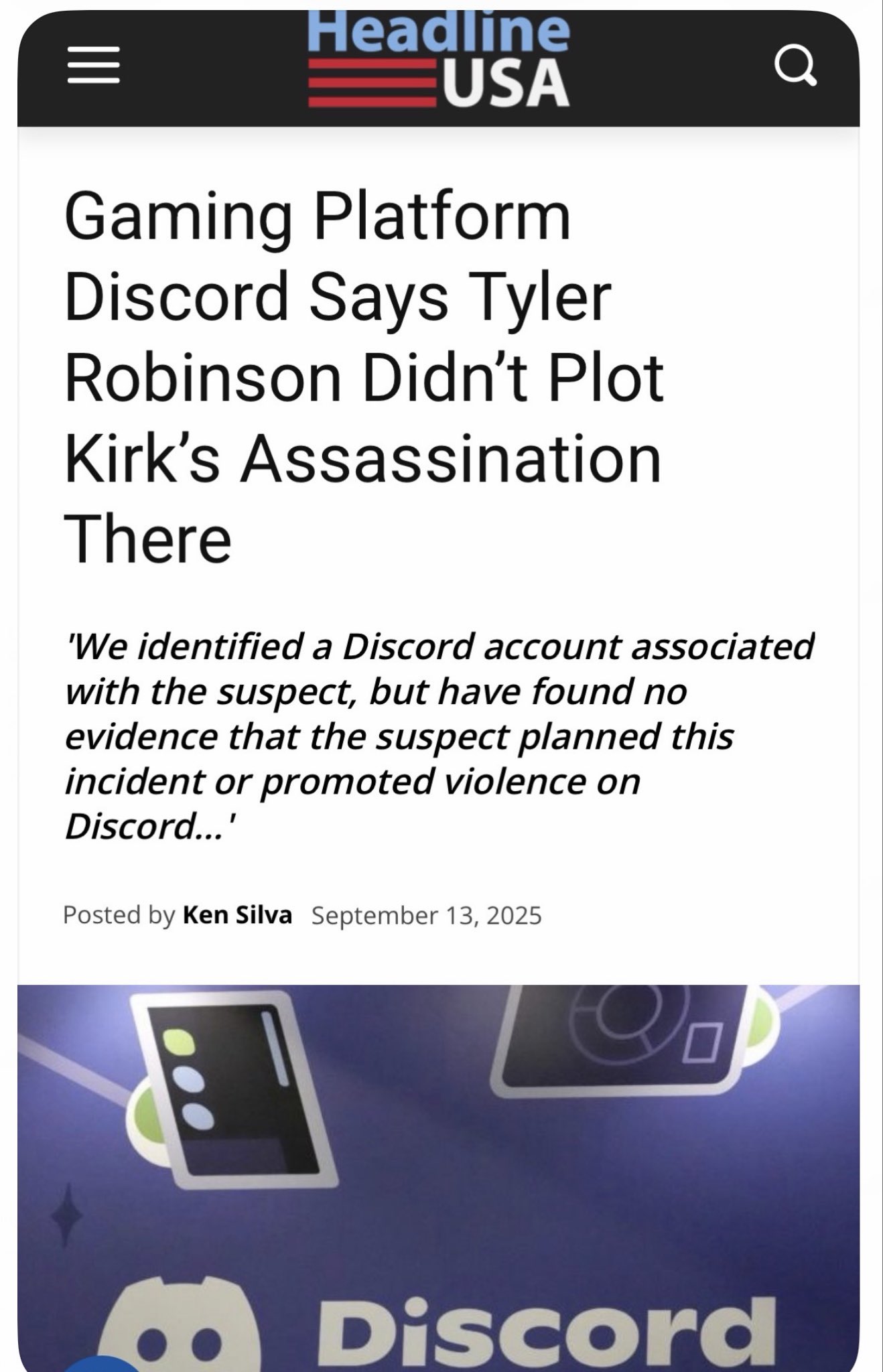
Discord Says It Found No Plotting
Discord reviewed its own servers and reported no evidence the attack was planned there. The platform holds the logs, and is the only party that has actually read them.
Read thisThe Steam Friend List May Matter More
Discord is where the confession appeared. Steam is where the friendships actually lived. A server can hold hundreds of people who have never spoken to each other; a friend list is chosen one person at a time, and the people on it are the ones you spend hundreds of hours in voice chat with, night after night, for years. If anyone in Robinson's online life knew him well enough to matter, they are likelier to be on that list than on a server roster.
The two circles overlap directly: visitors to the Steam profile posted their Discord handles on its public comment wall. And Steam stores exactly what Discord stores — the IP address each session came from — no matter what country a profile claims.
This website's author is @HolonCitizen on X and YouTube/@HolonCitizen. Follow me there.