.30-06 Bullet Did Not Kill Charlie
The official case holds that Charlie Kirk was killed by a single .30-06 round fired from a Mauser Model 98 bolt-action rifle recovered in woods north of the Losee Center rooftop. Citizen investigators and outside commentators argue the wound morphology, trajectory, and energy do not fit a distant high-power rifle kill — and that the state's own ballistics report cannot tie the recovered fragment to that rifle. The items below are reported allegations and analysis, not established fact. Tyler Robinson is charged, not convicted, and is presumed innocent.
The official .30-06 claim
The charging record describes a specific weapon and round:
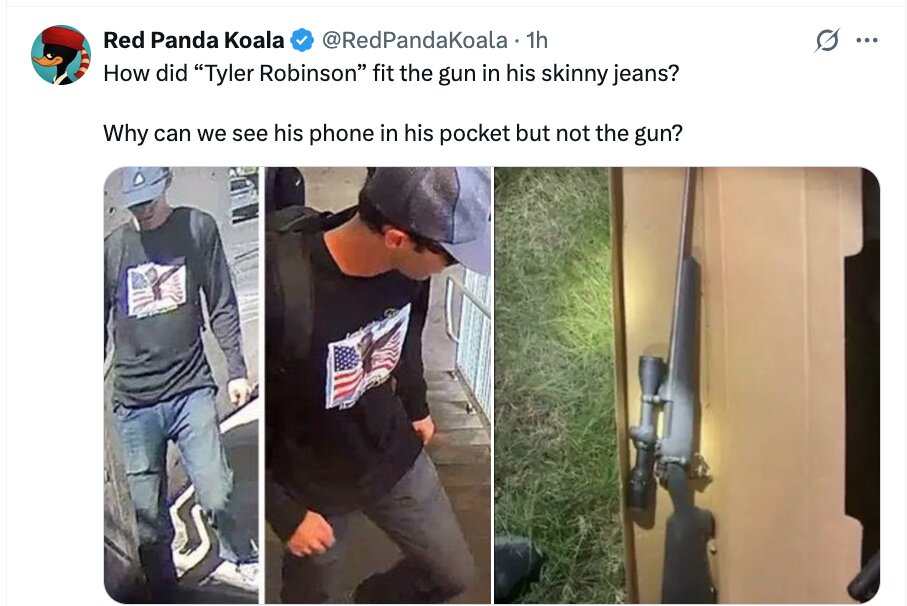
- A Mauser Model 98, .30-06 Springfield, bolt-action rifle with a mounted scope, reportedly found wrapped in a dark towel in a wooded area north of campus (CK investigation notes).
- Police narrative places the shooter on the Losee Center rooftop, roughly 120 meters east of the tent, with a downward firing angle.
- A witness statement in the record says Kirk was speaking into the microphone when "a loud gunshot was heard at approximately 1223 hours."
Skeptics note the same file records doubts about the weapon story itself — commentary that a Mauser 98 is not a simple takedown rifle, yet the suspect allegedly disassembled it for concealment and reassembled it without the screwdriver reportedly left on the roof (per Rob O'Neill remarks logged in CK notes).
Logistics that undercut a lone rooftop shooter carrying that rifle in a half-full pack are developed on More Reasons and Backpack & Rifle Impossibility. This page stays on terminal ballistics and fragment science — whether the charged cartridge class even matches the wound and recovered metal.
The ATF report cannot match the fragment
The strongest documentary problem for the rifle theory, according to defense reporting summarized in the investigation file, is the ATF lab report dated September 17, 2025:
- One bullet jacket fragment (Exhibit 6A) plus four lead fragments were recovered during the autopsy.
- The ATF classified the jacket as ".30-caliber class," which the file notes is generic — the ATF reportedly wrote that firearms producing similar rifling "include numerous makes and models."
- The official conclusion was inconclusive: the fragment "could not be identified or excluded as having been fired from the Exhibit 1 Mauser rifle," with "neither sufficient agreement nor sufficient disagreement" to link it to the weapon.
Commentators cited in the file argue this makes the fragment forensically useless as proof, and note the case was subsequently moved to the FBI lab for Virtual Comparison Microscopy — a process the defense reportedly objected to because examiners said the fragile fragment might need pliers to unfold, potentially altering it, with no defense expert allowed present. See ATF Inconclusive Ballistics.
Reporting amplified on X by @ThrillaRilla369 (March 31, 2026) and @DailyMail (March 30, 2026) framed the court filings as: the bullet used to kill Kirk did not forensically match the rifle allegedly used by the suspect. @ShekandaPeoples summarized the ATF work as examining a damaged .30-caliber jacket fragment plus lead pieces — lead unsuitable for comparison; jacket inconclusive — neither identifying nor excluding the Mauser.
It is important not to over-read headlines. "Did not match" in tabloid shorthand often means could not be matched (inconclusive), not affirmatively excluded. Citizen investigators still treat that as catastrophic for a capital narrative built around a specific Mauser; prosecutors treat it as a fragmentation artifact to be patched with DNA, casing marks, and admissions. This page keeps both readings available.
The energy mismatch
Ballistics commentary circulated by @HolonCitizen (April 17, 2026) and others argues the energy of a real .30-06 is incompatible with the described wound:
| Round | Load | Approx. muzzle energy |
|---|---|---|
| .30-06 | 180 gr @ 2,700 fps | ~2,914 ft-lbs / ~3,950 J |
| 9mm | 115 gr @ 1,180 fps | ~356 ft-lbs / ~482 J |
The argument, per these posts, is that a .30-06 carries roughly 8× the energy of a 9mm and "won't stop until it is blasting through" tissue and bone. Dr. Chris Martenson (@peakprosperity) is quoted in the file arguing a true .30-06 strike would have "knocked him flying" — inconsistent with the observed rapid snap and internal-cavitation pattern. This energy argument is developed on the sibling page .30-06 Energy Mismatch.
@bodiestapha (July 10, 2026) put the citizen view bluntly: anyone serious, in that framing, knows Kirk was not shot with a .30-06; the murder weapon has not been recovered; Robinson at most "contributed the sound effect." That is an attributed social-media claim, not a court finding.
Trajectory and the missing exit wound
Citizen analysts argue the geometry also fails:
- A rooftop position ~120 m east with a 5–9 degree downward angle would, they contend, tend to strike face or jaw first, not produce a straight-on neck wound.
- The reported entry sits between larynx and trachea, left of the cervical spine — described as more head-on than a shallow rifle path from the east.
- The treating surgeon reportedly called it an "absolute miracle" that the bullet "did not exit" (CK notes). Skeptics argue a genuine rooftop .30-06 would have produced catastrophic through-and-through destruction — one blunt version in the file says such a round "would have decapitated Charlie."
- Candace Owens is quoted stating there was no pooling of blood near the heart, that blood "came out sideways," and that the shirt was clean — contradicting early NBC descriptions of chest pooling.
Because a high-power rifle round should leave a large exit and heavy blood on the white stage, the absence of that signature is treated as evidence against the rifle story. See Trajectory & Wound Mismatch. @robertcalliste1 has circulated posts claiming autopsy / Valhalla VFT trajectory material "destroys" the FBI narrative — again, attributed commentary pending full public autopsy disclosure.
Fragment diameter and the "did the bullet shrink?" question
A separate measurement dispute circulates among citizen investigators. @ron56_ron (July 12, 2026) asked publicly how a bullet removed from Kirk could measure between .286 and .301 when a standard .30-06 projects at roughly .308 — "Did the bullet shrink?" If those measurements are accurate as reported on social media (they are not independently verified here), commentators argue the recovered metal is the wrong size class for the charged cartridge, compounding the ATF "inconclusive" problem.
@Veritas4477 (July 12, 2026) similarly argued that videos of .30-06 terminal effects do not match the wound seen on Kirk and likened the autopsy bullet-path description to a "Magic Bullet." These are open measurement and interpretation disputes, not settled metrology.
Missing GSR and physical tests
The file raises the question of why a standard gunshot-residue (GSR) test was reportedly not conducted when Robinson was brought in after the manhunt, "especially when they say he was wearing the same outfit." Commentary frames a failed or skipped GSR test — alongside the reported removal of a rear-camera SD card by a scene figure — as consistent with an effort to avoid documenting that the rifle account does not hold. These are commentator inferences, not confirmed findings; see No GSR & Physical Tests.
The CBLA pivot after ATF failed
According to investigation-file notes, after the ATF comparison came back inconclusive, attention shifted toward Comparative Bullet Lead Analysis (CBLA) — a technique the FBI itself largely abandoned around 2005 after courts and the National Academy of Sciences criticized it as unreliable (Jimmy Yates and related precedents are cited in the file). Citizen investigators frame any revival of CBLA as an attempt to manufacture a chemical "match" when classical toolmark comparison could not link Exhibit 6A to the Mauser. No living examiner is accused of a crime as site fact; the point is that the state's forensic path appears to have moved goalposts after the first lab result did not close the case.
The practical concern, as logged in the master investigation file under the CBLA section, is simple: if the ATF's own firearms examiners — the people who actually compare rifling and jacket marks — cannot identify or exclude the Mauser, then a lead-chemistry comparison does not magically restore a toolmark link. Lead composition can, at best, speak to batch similarity of metal, not to which barrel left which lands-and-grooves signature. Defense-side commentators therefore treat any CBLA pivot as a red flag that the prosecution is shopping for a friendlier forensic story after the first lab failed to deliver one.
Casing toolmarks versus body fragments
A recurring confusion in public argument is the difference between spent casing toolmarks and bullet-fragment comparison. Even if one accepts — as @Bananimal_X and others assert — that a recovered .30-06 casing bears firing-pin, extractor, and ejector marks consistent with the Exhibit 1 Mauser, that still does not prove that the metal recovered from Kirk's neck left that barrel. Casing evidence, if authentic, places a particular rifle at a particular place and time of firing some round. Fragment evidence is what ties a particular projectile to a particular body. Citizen investigators stress that the state's public weakness is on the body fragment, not merely on whether a Mauser ever cycled a cartridge.
That distinction matters for trial framing. Association evidence (DNA on a rifle, a casing in the woods, video of a figure on a roof) can satisfy probable cause at a preliminary hearing without closing the causation gap LionelMedia-style defense posts keep highlighting: the state still must prove Robinson fired the projectile that killed Charlie Kirk. The ATF's inconclusive reading of Exhibit 6A is, in that view, the missing bridge — not a minor technicality.
How preliminary-hearing coverage is being used
July 2026 preliminary-hearing coverage is being mined by both sides. Prosecution-leaning summaries emphasize DNA on the rifle, towel, and casing; roommate texts; and surveillance of campus and roof movement. Skepticism-leaning summaries emphasize that ballistics on fragments remain inconclusive, that GSR was not put on, and that identity in video is contested. @grok public recaps (July 2026) have stated both that prosecutors have association evidence and that fragment ballistics remain inconclusive — a combination citizen investigators read as confirmation that the hearing was about probable cause, not a finished forensic case.
Readers should not confuse a preliminary finding of probable cause with a jury verdict. Robinson remains presumed innocent. Nothing on this page converts hearing exhibits into a conviction or an acquittal.
Preliminary hearing: Karner on the stand
In the July 2026 preliminary hearing in Provo, the defense called Samantha Karner, an ATF firearm and toolmark examiner and author of the inconclusive fragment report, onto the stand. According to contemporaneous reporting (including the New York Post and AP-wire recaps), Karner testified that her conclusion was inconclusive — she was "unable to say one way or another" whether the recovered jacket fragment had been fired from the Mauser tied to Robinson — and that "saying anything but inconclusive was inappropriate." That live testimony matters because it is not a blog paraphrase of a sealed PDF; it is an examiner under oath declining to identify or exclude the charged rifle from the body fragment.
Reporting also highlighted a chain-of-custody-style complaint that citizen investigators immediately elevated: Karner was reportedly given only four bullet fragments to study even though seven fragments were recovered in connection with the crime scene / autopsy package. If that count is accurate as reported, skeptics ask which three pieces never reached the toolmark bench, who decided the subsample, and whether the missing pieces could have changed the comparison quality. None of that is proven misconduct as site fact; it is a documented public dispute about what the examiner was allowed to work with.
Defense attorney Michael Burt used the exchange to challenge the reliability of ballistics as a bridge from rifle to body. Prosecution-leaning coverage (e.g. Fox News summaries of the hearing) answered that the caliber class remained consistent with a spent casing attributed to the same weapon and that DNA/surveillance filled the association gap. Citizen investigators reply that caliber class plus casing still does not equal a body-fragment-to-barrel match — the same casing-versus-fragment distinction developed above.
Soft-point ammunition fight on X
July 2026 social traffic shifted from generic "energy" arguments to a sharper fight over soft-point hunting loads allegedly consistent with the recovered rifle:
- @StanFalk (July 12, 2026) argued that a .30-06 soft point that can defeat heavy steel plate should not "miraculously" stop in a human neck, and that without a plausible murder weapon the case against Robinson collapses toward co-conspirator or plea pressure — an attributed opinion, not a legal conclusion.
- @Tony_C_FJB (same day) claimed soft points "do not fragment in 4 inches of human flesh," that labs could not even confirm the metal pieces as bullet fragments in the way headlines imply, and that "all tests were inconclusive."
- @shadowban_d framed a 150-grain soft point as having enough power to punch through a neck and treated a non-exit as another "magic bullet."
- @AlKrueger6 wrote that a soft-point hit at the observed location "would have blown out the back of his neck," and treated the absence of an exit plus rushed video control as evidence the rifle story is wrong.
- @jjsquintz (July 8, 2026), identifying as a former Blackwater weapons specialist, posted comparative wound photos and claimed a real fragmented .30-06 produces shattered structures (collarbones and massive soft-tissue destruction) inconsistent with what the public saw of Kirk.
Counters are active in the same feed. @IkeWingate amplified Matt Tardio (@angertab) ammunition testimony from the hearing week arguing that a .30-06 can fail to leave an exit under the facts presented. @HoLeeKow2 and @rushrevolt2 invoked deer-hunting experience and visible "energy transfer" on video. @GigiGreene63 noted the wound is described as neck, not head, at roughly 160 yards, so "head explode" rhetoric misstates the official geometry. This page records the soft-point debate because it is now the main vernacular form of the energy mismatch — not because either camp has closed the forensic file.
Citizen investigator claims on X
Recent posts (July 2026 sample) that keep the ballistics gap alive:
- @CatQuestionsAll (July 12, 2026): no positive identification of Robinson in the videos, no ballistics match, vehicles and metadata problems — "uncontested unverified hearsay is a far cry from proof of guilt."
- @HotSpotHotSpot (July 12, 2026): prosecutors unable to conclusively match autopsy bullet fragments to the suspected murder weapon.
- @KellyOMeara5556 (July 12, 2026): fragment "is not that of a 30-06 according to the ATF expert" and could not be matched to the alleged weapon (attributed claim about expert characterization).
- Defense-side framing amplified via @LionelMedia (July 2026): the state has an inventory of association evidence (DNA, presence video, vehicle, shoe, engraving tools) but still lacks the causal bridge — conclusive proof that Robinson fired the projectile that killed Kirk.
- @MamaCrazee (July 12, 2026): Robinson is "innocent until proven guilty"; only circumstantial evidence of the shot; a .30-06 "would have blown CK's head off" and there was no exit wound; frames Robinson as a patsy (attributed social claim).
- @bgilberg79 (July 12, 2026): frame-by-frame analysis allegedly shows shirt motion from something internal before the wound appears — a claim that overlaps the exploding-mic page rather than pure external ballistics.
- @themarketswork (September 16, 2025, still recirculated): cited a USMC sniper analysis arguing the shot came from slightly behind Kirk's right side, was not a .30-06, and that an exit was visible — contradicting both the Losee-east geometry and the "no exit" strand; treated here as competing citizen analysis, not settled metrology.
Official narrative vs competing claims
| Topic | Official / prosecution-leaning framing | Competing citizen framing |
|---|---|---|
| Cause of death | Single gunshot wound from rooftop rifle | Energy/trajectory wrong for .30-06; possible alternate mechanism |
| Fragment vs rifle | .30-caliber class consistent with Mauser; fragmentation explains weak marks | ATF inconclusive = no match; cannot exclude other weapons |
| Spent casing | Toolmarks (firing pin / extractor / ejector) match Mauser | Casing match is not a body-fragment match; does not prove that rifle fired the kill shot |
| DNA / presence | DNA on rifle, towel, casing; rooftop surveillance | Association ≠ causation; mixed DNA; identity gaps elsewhere |
| Terminal effects | High-power round can fragment, stay in body | Would have knocked him flying / produced catastrophic exit |
@Bananimal_X (July 12, 2026) represents the casing-match counter: the spent .30-06 casing recovered at the scene was, in that account, positively matched to Robinson's Mauser via firing-pin, extractor, and ejector marks, and fragmentation of the bullet is "common." @TokennTweets (same day) cited a firearms expert who told Candace Owens that a .30-06 can behave as observed. @Badger360 called for controlled terminal-ballistics videos at the same distance and trajectory, arguing critics misunderstand a downward path into the spine. Those counters belong on the record.
What alternative mechanisms are proposed
If the neck wound is an exit from a close or internal device rather than an entry from a distant rifle, the rooftop shooter becomes, in these arguments, physically unnecessary. Proponents point to:
- A 9mm +P-class round that fragments and dumps energy internally (Martenson / @ProjectConstitu). Martenson's commentary, as summarized in the file, pairs the energy-dump argument with observations about necklace motion and body posture that he says look more like close-range cavitation than a distant high-power through-shot.
- A concealed miniaturized EFP / shaped charge emulating rifle terminal ballistics at contact range (see the companion page Explosive in Mic Likely Killed Charlie). That page also records the detailed @alexboge debunk and the official autopsy COD of gunshot wound — so the device hypothesis is not presented here as settled.
A third, less-developed strand in social traffic simply says the recovered rifle is a prop and the real weapon was never found (@bodiestapha, July 10, 2026, and similar). That claim is the strongest form of the "wrong gun" argument and the hardest to prove without the missing weapon. This page keeps it labeled as opinion.
Counter-claims that support a .30-06 rifle kill
For balance, the main counters currently in circulation are:
- Casing toolmarks — if authenticated, they link a fired .30-06 casing to the recovered Mauser (see above).
- Fragmentation on bone — some firearms commentators argue an inconclusive jacket mark is expected when a high-power round hits dense structure and breaks up; "inconclusive" is not the same as "excluded."
- Terminal-behavior expertise — @TokennTweets and similar posts cite experts who told Candace Owens a .30-06 can produce a non-decapitating neck path depending on angle, yaw, and intermediate barriers.
- Downward path into spine — @Badger360 argues critics ignore a downward entry into the cervical structures that can dump energy without a clean exit.
- Hearing exhibits — prosecutors read roommate admissions and DNA into the record; supporters treat that package as enough even without a perfect fragment match.
None of those counters is ignored here. The page's thesis is narrower: the public forensic link from body fragment to charged rifle is incomplete, and the energy/trajectory arguments remain live citizen objections that demand full autopsy and lab disclosure.
Open questions
- Will the full autopsy with entry/exit determination, trajectory rods, and high-resolution wound photography be released without redaction that hides terminal path?
- What is the measured diameter and weight of Exhibit 6A, and who verified the .286–.301 figures circulating on X?
- Will independent examiners re-test the fragment before any destructive FBI handling or CBLA-style chemistry?
- Why was GSR reportedly omitted if the same clothes were worn through the manhunt?
- Does a casing toolmark match, even if accepted, prove the same rifle launched the metal recovered from Kirk's body?
What would settle it
Investigators say the dispute is resolvable with disclosure the public does not yet have:
- A full autopsy with entry/exit determination and trajectory rods.
- High-resolution wound photography.
- Independent examination of the fragment before any destructive FBI handling.
- Transparent release of the ATF comparison report that news coalitions have fought to unseal.
- Side-by-side terminal ballistics tests: same class of Mauser, same approximate range and angle, instrumented gel or appropriate tissue simulant, filmed at high frame rate — the experiment @Badger360 and energy-skeptics both say they want, for opposite rhetorical reasons.
Reader guide: how to use this page without overclaiming
- Treat every energy or diameter number as provisional until the lab pages are public.
- Separate casing match claims from body-fragment match claims — they answer different questions.
- Do not convert "ATF inconclusive" into "ATF proved another caliber"; inconclusive means the examiner could neither identify nor exclude.
- Keep Robinson's legal status clear: charged, not convicted, presumed innocent.
- Cross-check medical claims on Medical & Wound Analysis and logistics holes on More Reasons.
- For confession-timeline independence from ballistics, see Faked Confession; for aftermath evidence handling, see Signs of Cover-Up.
- Remember preliminary hearing ≠ trial: association evidence can clear probable cause without a fragment-to-rifle match.
Until disclosure improves, the mismatch between a .30-06 rooftop shot and the reported wound remains a central citizen-investigator argument that the rifle round did not kill Charlie Kirk. The official narrative remains a lone-suspect rifle shooting, and no living examiner is accused here of any crime. For the broader innocence stack, see Proof Not Tyler and the Medical & Wound Analysis hub.
Commentator coverage: Citizen journalist Ian Carroll has been one of the most prominent voices for the "wrong rifle" argument — according to his posts he contends a .30-06/Mauser round would not stop in a neck, cites the ATF's inconclusive fragment analysis, and has demanded filmed terminal-ballistics tests at the charged range and angle.
Interesting In This Area
- If the round did not do it, a device becomes the leading alternative.
- No gunshot-residue test was reportedly performed on the accused.
- The confession never describes the shot in any technical detail.
- Scene handling removed the surfaces a residue test would need.
Interesting In Other Areas
- A .30-06 carries roughly 3,950 joules against about 482 for 9mm.
- The ATF fragment showed class characteristics only, and a banned test followed.
- Trajectory and wound angle are disputed against the rooftop position.
- Commentators note no blood spray and no exit wound.
Other Pages In This Section
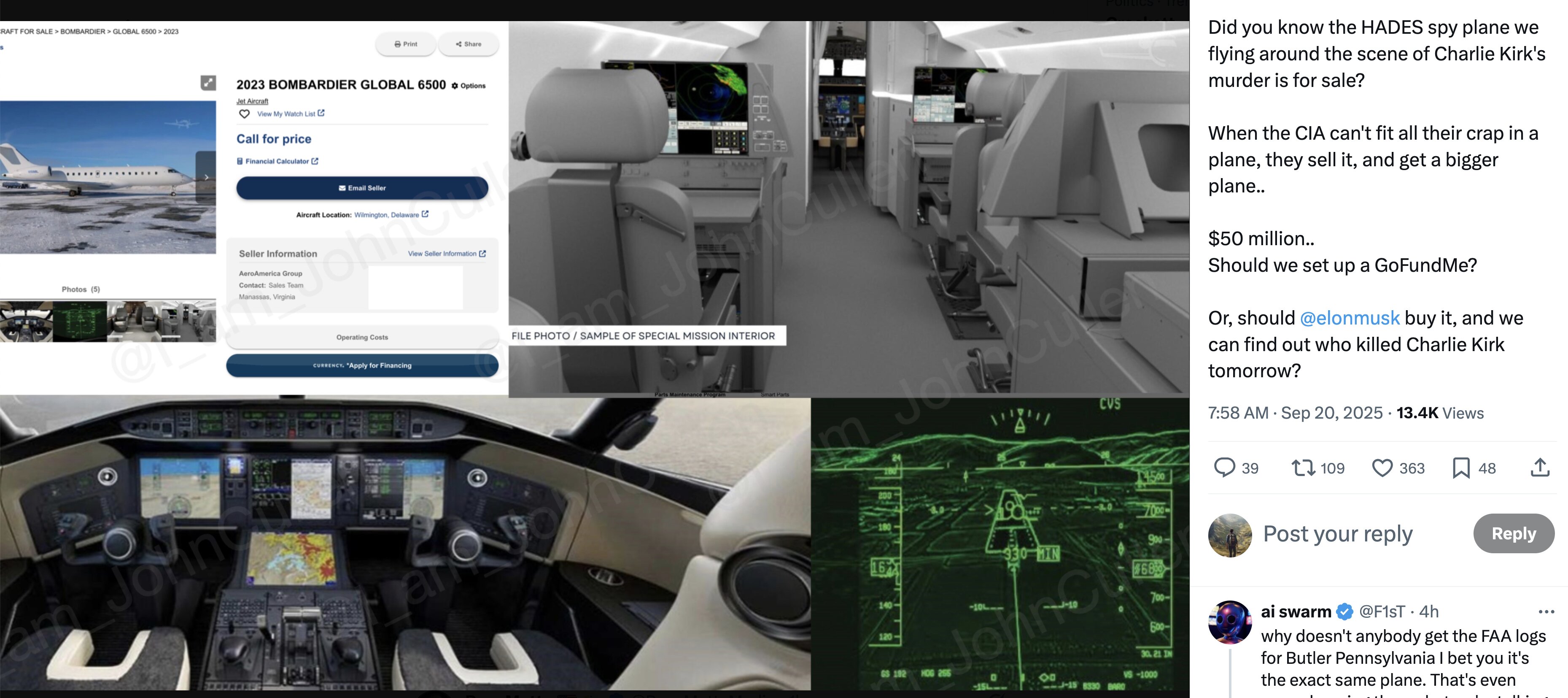
Explosive in Mic Likely Killed Charlie
The finding citizen investigators on X have converged on: a device at the microphone, not a round from a roof. It is the single largest divergence between the public record and the government's account.
Read thisFaked Confession (by Powerful People)
The public confession is described as photographs of a roommate's screen, released in stages months apart, rather than original logs or seized devices. Discord itself later told reporters the planning messages do not appear on its platform.
Read this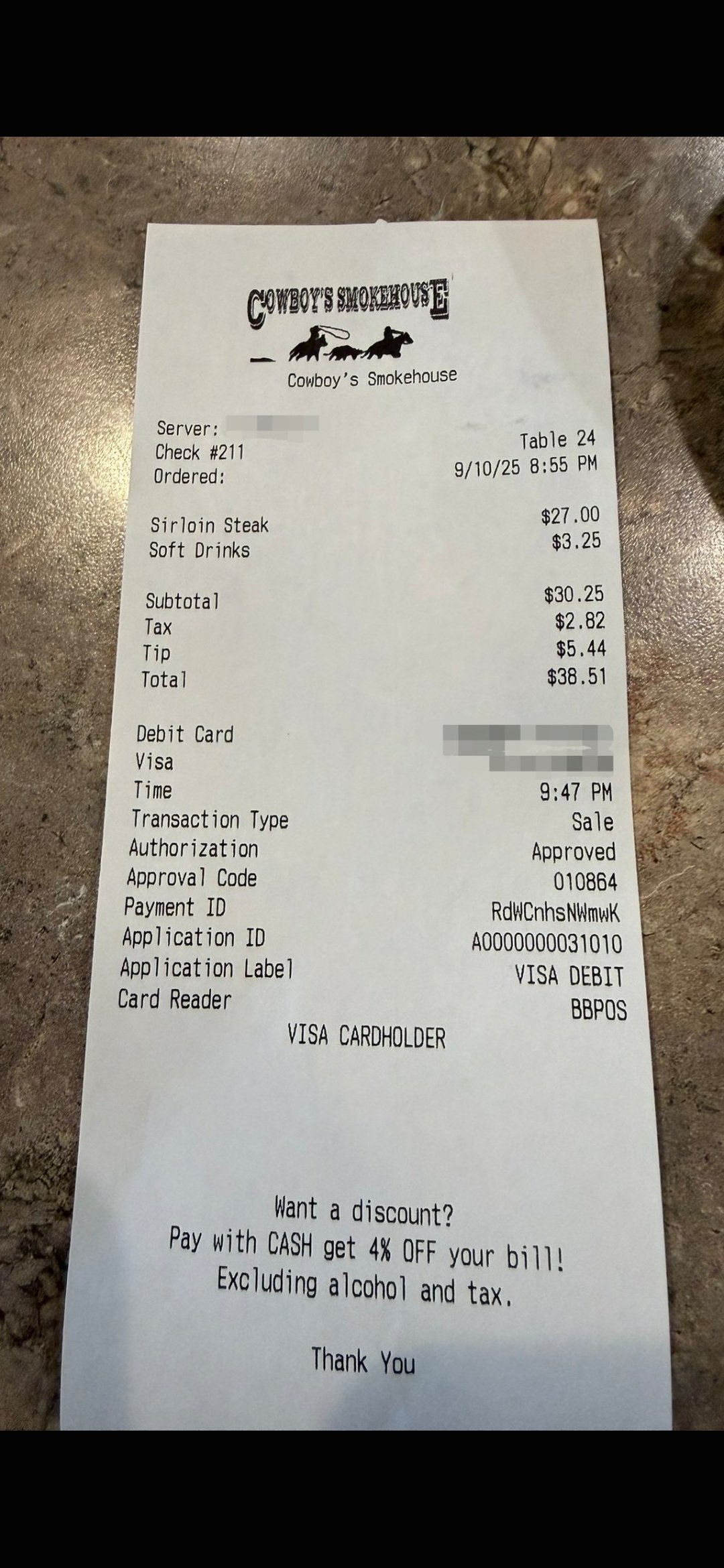
Panguitch — The Town That Breaks the Timeline
Restaurant staff 209 miles south of Orem say they served the accused dinner from 8:55 to 9:47 PM that night, and gave the FBI the last four digits of the card. The server says nobody ever came back.
Read this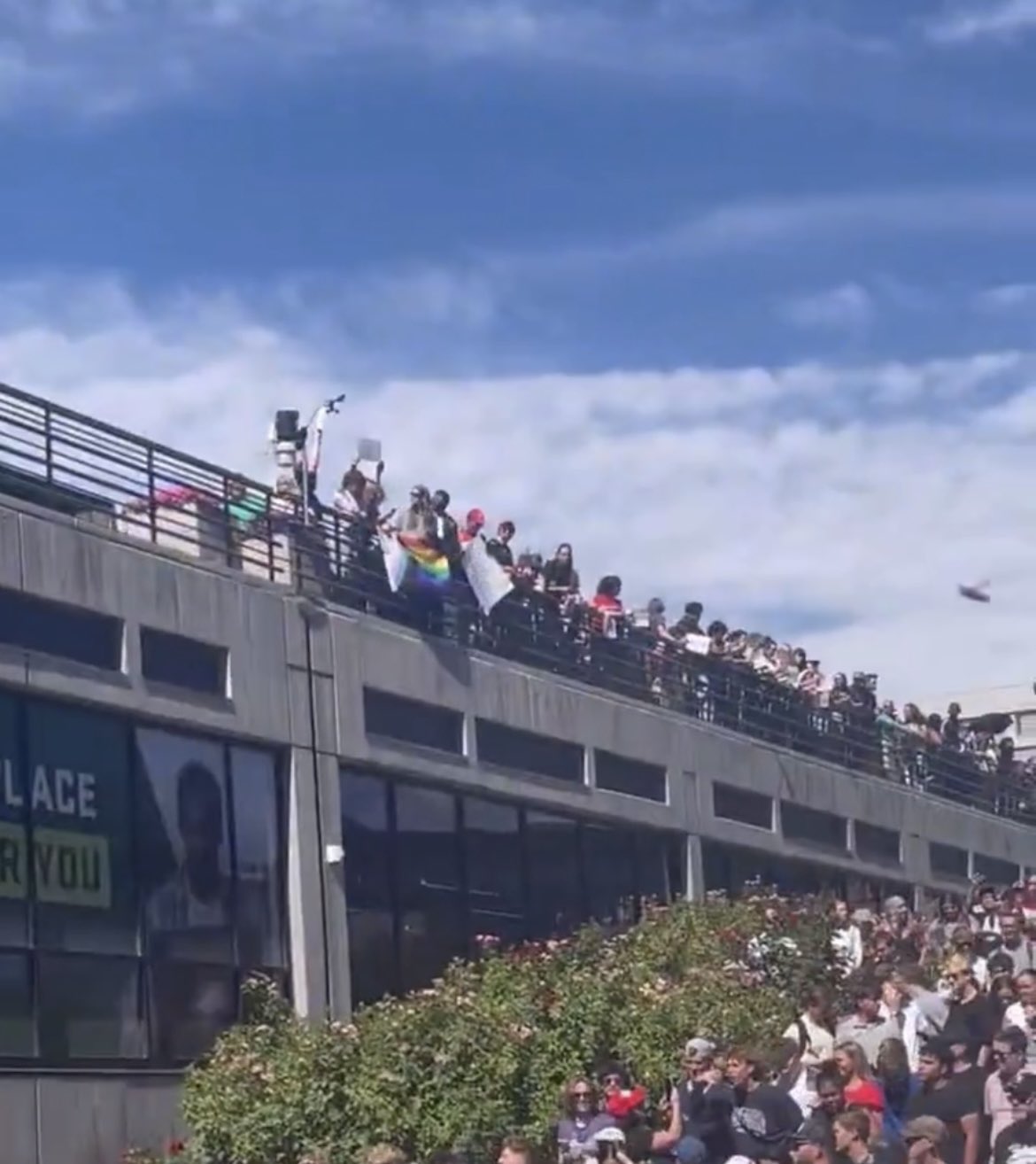
Soil hauled out, pavers down, a camera chip gone within minutes, a transport vehicle destroyed, footage deleted. Singly each has an ordinary explanation; the page argues the pattern is the point, and marks every item as a claim.
Read thisElsewhere In The Investigation
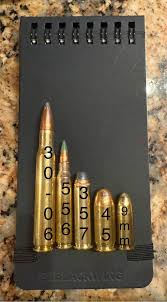
A .30-06 round carries roughly 3,950 joules against a 9mm's 482. Commentators argue the wound described publicly does not match that energy — the arithmetic is not disputed, the inference is.
Read thisBallistics — ATF Inconclusive & CBLA
The ATF could not match the recovered jacket fragment to the seized Mauser. This page separates a casing from a fragment and explains why that distinction decides a great deal.
Read this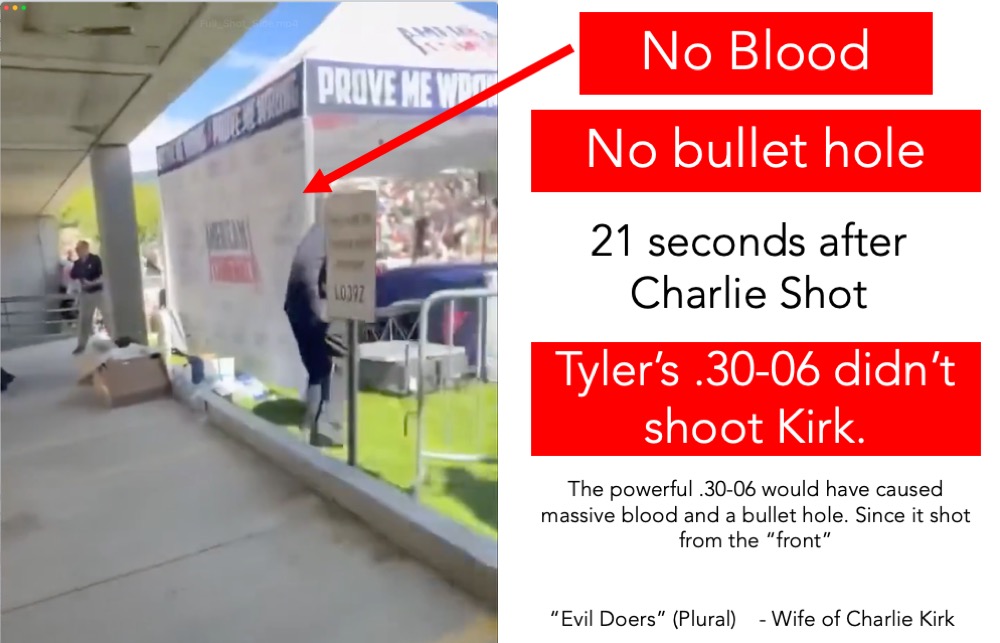
No Blood Spray, No Exit Wound (Claims)
The most-repeated suspicion in the case: a .30-06 carrying roughly 3,950 joules should have blown through the neck and sprayed the tent. The counterargument is strong — and the physics error inside the claim undercuts the analysts making it.
Read thisWound Analysis & Competing Theories
Every competing account of the wound argued side by side — entry versus exit, the rifle round, a device at the microphone, decorticate posturing. With no published report the argument runs on video and physics rather than pathology.
Read thisThis website's author is @HolonCitizen on X and YouTube/@HolonCitizen. Follow me there.
Interesting
- An explosive in the microphone is the mechanism most citizen investigators now favor.
- A text exchange with Seth Dillon reportedly hints TPUSA "would be done" over Bibi.
- Warnings reportedly went over Signal and Telegram, not iMessage, self-destructing beyond subpoena.
Related Areas
Images


Videos
Footage related to this page. Each card opens that clip's own page, with the video, the full write-up, and its source.