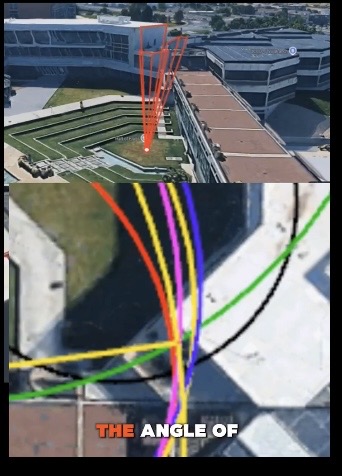
Narrative Control (Intelligence Service)
This page documents a reported allegation, not an established finding. Citizen investigators and several on-record commentators claim that intelligence-linked channels — centering on a reported shutdown of a National Counterterrorism Center (NCTC) foreign-involvement inquiry — worked to steer the public story of Charlie Kirk's death toward a lone domestic suspect. Tyler Robinson is charged, not convicted, and the official case is a domestic single-suspect prosecution. Every accusatory claim below is attributed to the source that made it, and living officials are presumed innocent of wrongdoing.
The Lone-Suspect Frame
Within hours and days of the September 10, 2025 shooting, the public account settled into a familiar shape: one shooter, a rifle, a domestic motive, and an early arrest. Investigators who dispute that frame argue it was reached and reinforced unusually fast, and that lanes of inquiry pointing away from a lone gunman — foreign involvement, possible accomplices — were reportedly closed rather than followed.
The claim on this page is narrow and specific: that the speed and firmness of the lone-domestic-suspect story reflect narrative management, allegedly involving intelligence equities, rather than the natural conclusion of an open investigation. That is an argument, not a proven fact. Readers should compare this page with the custody/confession timeline on Faked Confession and the broader Proof Not Tyler cluster.
Speed alone is not proof of malice — modern media and federal task forces can move quickly for good reasons. The allegation here is that speed came with closed doors: foreign collection, accomplice search, and multi-agency dissent reportedly narrowed at the same time the public was told the case was simple.
The NCTC Inquiry and Its Reported Shutdown
The central item is drawn from reporting summarized in Charlie_Kirk.txt and attributed there to a DailyMail UK account (Ruiters). According to those notes:
- Joe Kent, tied to the intelligence chain under Tulsi Gabbard's ODNI, had the National Counterterrorism Center looking into whether foreign governments were behind Kirk's killing.
- Kash Patel's FBI reportedly "snuffed out efforts by the Counterterrorism Center to see if foreign powers were involved," and Patel was reportedly "very mad" that Kent "went through FBI material" on the case.
- The notes quote a framing that administration officials worried Kent's foreign-interference probe "could provide ammunition to Robinson's defense lawyers, who could then argue more than one suspect was involved."
The reported org chart is: Joe Kent (Director) → NCTC → ODNI → the President. These are reported allegations about living officials. No court has found that anyone obstructed the case; this page documents what sources and commentators have stated. See the NCTC page for the fuller record.
Joe Kent's Own Words (Attributed)
Investigation notes preserve quotations attributed to Kent that citizen researchers treat as primary narrative-control evidence:
- That "multiple people had pre-knowledge" of Kirk's assassination and that "the FBI shut down my investigation before I was able to run down all of my leads."
- That the investigation "may be incomplete" and that "there are more leads that we need to run down, to include the foreign nexus."
- Public commentary summarized on X (including a July 2026 Grok-authored summary post) places Kent on Tucker Carlson describing blocked foreign leads, the case being directed toward Utah state authorities around the lone-gunman package, and friction with Kash Patel over access to FBI material. The same summary notes Kent himself has been described as under FBI scrutiny for alleged leaks — a separate allegation that, if true, would itself shape who can speak about the case.
Living persons named above are not found guilty of anything here. The quotes and friction reports are the public record citizen investigators cite when they argue the lone-domestic frame was enforced, not merely concluded.
Why "Narrative Control" Rather Than Ordinary Charging
Proponents argue the significance is not that one suspect was charged, but that the foreign and accomplice lanes were reportedly walled off at the same time. The concern they raise is a classic narrative-control pattern: a domestic-terrorism label used, they allege, to keep foreign-intelligence collection out of the case, so the public story could not widen beyond a single domestic actor.
This is the same worry the counterterrorism apparatus was built to guard against in reverse — and it is why the topic sits in the US Intelligence Assisted section. The allegation is that intelligence-adjacent decisions shaped what the public was told, whether or not a foreign nexus actually existed. Adjacent motive and foreign-angle pages include Israel Main Suspect framing and the wider U.S. Intelligence hub.
Multiple Lanes Reportedly Closed at Once
Charlie_Kirk.txt records related claims that the same period saw more than one investigative track shut:
- The FBI allegedly told local law enforcement they could not investigate the case.
- The NCTC foreign-involvement inquiry was reportedly halted.
- On the influencer side, Benny Johnson — describing himself as close to Kirk's team — stated on camera that there is "considerable evidence that there were state actors involved," while declining to say more.
- Candace Owens and others allege procedural barriers (for example bomb-dog restrictions) that they read as protecting a narrow story rather than maximizing evidence.
Presented together by proponents, these form the alleged picture of centralized message control. Each item is individually attributed and, for the living officials named, remains an unproven allegation. Pattern reading of aftermath handling continues on Signs of Cover-Up and Cover-Up.
The Russell Brand Cabinet-Source Claim
Commentator Russell Brand stated that roughly six days after Kirk's death, two cabinet-meeting sources told him that Kash Patel entered a meeting with Tulsi Gabbard, the Vice President, and others and said they were "not looking at foreign involvement" and "not looking at any accomplices domestically." Brand offered this as bare-minimum evidence of a cover-up.
This is Brand's account of anonymous sources — it is not independently confirmed, and the officials named have not been shown to have said any such thing. It is documented here because, if accurate, it would describe exactly the top-down narrowing of the story this page examines. See the Russell Brand cabinet claims page.
Stew Peters Sequence Claim
Stew Peters (@realstewpeters) has repeatedly framed a harder version of the narrative-control story: that immediately after Joe Kent began asking about planes, military involvement, and foreign ties, senior defense travel went to Fort Huachuca, an entire JTF division was described as fired or gutted, and the AES explosives plant later blew up. Peters presents the arc as "probably nothing" sarcasm — i.e., too many consequences clustering after the wrong questions.
That sequence mixes narrative control with Fort Huachuca and AES factory claims. Each leg is independently unverified. It is included because it is one of the most circulated intelligence-assisted narrative-enforcement stories on X in 2026.
Citizen Investigator Claims on X
- @CatQuestionsAll (June 2026): "Remember our government stopped Joe Kent from investigating foreign involvement."
- @ShellCoach77, @RobinPh62851936, @LukeSlywaker (July 2026 samples): restate that Kent saw reasons for a foreign inquiry and was blocked; ask which agency or official actually issued the stop.
- @thegrimrepairer (July 2026): "Joe Kent… said there was evidence of foreign involvement… Anyone acting like there wasn't is clearly pushing an agenda."
- Stew Peters (April 2026): Kent asked about planes/military/foreign → Patel shut it down → Huachuca / JTF / AES sequence.
- Circulating summaries of Tucker Carlson interview material attribute incomplete-leads language to Kent and FBI friction over file access.
These posts are citizen speech, not court findings. They show how widely the "foreign lane closed" story has propagated.
July 2026 Amplification: Optics, Double Standards, and “33 Hours”
Citizen traffic in mid-2026 keeps the narrative-control claim alive with several new or newly viral attributions. Record them as claims, not findings; living officials are not found guilty of obstruction here.
- “Twitter strategy” over killer hunt. @ProjectConstitu (January 23, 2026; citing @AdameMedia) claimed an “FBI whistleblower” showed that immediately after UVU, leadership figures including Kash Patel and Dan Bongino “huddled to script their Twitter strategy” rather than prioritize hunting “the real killers.” That post frames the assassination response as “about CONTROL,” not justice. Whistleblower status and contents are unverified on this page.
- Prior-knowledge / damage-control framing. @RedactedNews (Clayton & Natali Morris, September 16, 2025 broadcast promo) headlined that “they knew about Charlie Kirk’s shooting BEFOREHAND” and cast early FBI messaging as “Kash” damage control. That is a media allegation requiring primary sourcing; it is listed because it is an early, high-visibility prior-knowledge narrative.
- Lindsey Graham contrast (July 12, 2026 cluster). After posts that Patel said the FBI would assist looking into Lindsey Graham’s sudden death, multiple accounts argued a double standard: Patel would open a lane for Graham while “didn’t let Joe Kent investigate Charlie Kirk death for foreign assassination” (@MaryAlv67558984); “homicide of Charlie Kirk is a case closed” while Graham gets attention (@ntheedrk); “they refused to investigate for foreign involvement” and Kent “said we had reasons to further investigate” (@ShellCoach77); “cover up just like the kirk assassination” if Patel leads a Graham probe (@drSharonRabb). These are opinion posts using contemporaneous news as a foil for the Kent/NCTC foreign-lane story already documented above.
- “33 hours” investigation claim. @AnnieAlicanti89 (July 12, 2026) wrote that “Charlie Kirk’s death was investigated for 33 hours according to Ka$h App Patel.” If that figure is accurate, citizen investigators treat it as the extreme of speed-as-control; the quote is not independently authenticated here and should be checked against primary Patel statements.
- Who stopped Kent still disputed. @LukeSlywaker asks whether “the ones who called off Joe Kent’s request to explore possible foreign involvement” were FBI leadership, “Trump…or one of the other: letter agencies?” — showing the stop-order attribution remains unsettled in public discourse (see Open Questions).
- TPUSA + FBI narrative lock / Candace as target. @TruthSoulJah333 alleges “TPUSA & FBI push the official narrative that Tyler Robinson killed Charlie Kirk with a 30.06 hunting rifle,” while podcasters and ballistics voices “repeat the lies” and attack Candace Owens as a grifter for investigating. That is an attributed media-pressure claim, not a finding that TPUSA or the FBI conspired. Robinson is charged, not convicted.
- Autopsy-destroys-narrative traffic. YouTube titles such as “New Charlie Kirk ‘Autopsy’ Results DESTROY FBI Narrative…” circulate via shares (e.g. @CathyMcMahan2). Titles are not peer-reviewed autopsy reports; treat them as information-environment noise until primary medical examiner documents are public.
Timeline Claims
| Timing | Narrative-control claim |
|---|---|
| Sep 10, 2025 | Assassination; multi-angle video; early chaos |
| Hours–days after | Public lone-domestic-suspect frame solidifies; early arrest package |
| ~6 days after | Russell Brand's anonymous cabinet sources: not looking foreign / not looking accomplices |
| Weeks after | NCTC foreign inquiry under Kent reportedly underway then halted; Patel–Kent friction stories |
| Concurrent period | Local LE allegedly told not to investigate; influencer "state actor" hints (Benny Johnson) |
| 2026 | Kent public comments on incomplete foreign nexus; X re-amplification; case remains Utah-focused lone suspect |
Exact calendar dates for internal NCTC stop orders are not public here — that is itself part of the open-questions list.
Defense discovery stakes
One of the DailyMail-attributed notes is especially important for narrative-control analysis: officials allegedly worried that a foreign-interference probe "could provide ammunition to Robinson's defense lawyers, who could then argue more than one suspect was involved." If that framing is accurate, the stop was not only about public messaging — it was about keeping the charging theory clean for trial.
From a defense perspective, any live foreign or multi-actor lead is Brady-adjacent gold: it undercuts the lone-wolf mental-state and opportunity story, supports alternate-perpetrator arguments, and forces the state to explain investigative dead-ends. From a prosecution or FBI case-ownership perspective, the same leads are chaos. Citizen investigators read the rapid narrowing as choosing prosecutorial convenience over complete truth. Courts will eventually test pieces of that fight through discovery motions; the public should not wait silently for that alone. See court overview and Fix.
Link to Israel and foreign-angle pages
This page does not adjudicate whether any foreign state was involved. It records that the foreign lane was reportedly closed while citizen researchers were simultaneously assembling Israel-related motive timelines (donor fights, Hamptons intervention claims, Netanyahu outreach claims, cell-phone claims, and related items catalogued elsewhere). If those motive threads are empty, closing the foreign lane early is harmless. If any of them had substance, early closure is the definition of narrative control.
Readers should hold both possibilities: use Israel Main Suspect and related Israel section pages for motive claims, and use this page for the process claim that intelligence-adjacent decisions prevented those motives from being stress-tested inside government.
How narrative control differs from ordinary PR
Every high-profile case has press officers and talking points. Citizen investigators use "narrative control" here to mean something stronger: that intelligence equities — NCTC collection authority, ODNI oversight, FBI case ownership, and possibly defense intelligence sensitivities around planes and military activity — shaped which hypotheses the public was allowed to treat as live.
The distinction matters for citizens who hear "conspiracy theory" whenever foreign involvement is mentioned. Asking whether NCTC was allowed to finish its work is not the same as claiming a specific foreign capital ordered a hit. It is a process audit question that any transparent democracy should answer with documents rather than scorn.
Ordinary PR says "we have a suspect." Intelligence-assisted narrative control, in the investigators' model, says "we are not looking at foreign involvement" as policy, then produces a Discord "alone" confession and a domestic charging package that make that policy look like science. The Faked Confession page develops the artifact side; this page develops the policy and message side.
Whether that model is accurate is unproven. The reason it matters is institutional: if foreign or multi-actor leads were live, then sealing them is not a media preference — it is a counterterrorism and national-security decision with discovery consequences for Robinson's defense and for public trust. That is why Fix-the-Laws disclosure proposals target exactly these stop orders and briefing trails.
Media and influencer reinforcement
Narrative control does not require every journalist to be witting. Investigators argue a smaller set of early official frames — lone gunman, domestic motive, confession — was repeated by mainstream and some alternative outlets until it became the default map. Influencers who questioned foreign angles (Owens, Peters, Brand, and others) were painted as conspiratorial; influencers who reinforced the domestic package were treated as sober.
Benny Johnson's on-camera remark about "considerable evidence" of state actors, while declining detail, is cited as a crack in that map from someone close to Kirk's circle. Hostile threads that accuse other conservative media figures of covering for the official story are documented only as attributed accusations, not as findings of this site.
Readers should also use Media and Censorship for the broader information-environment half of the same problem.
Counter-Claims
The official and skeptical positions include:
- A state murder case with one charged suspect, physical evidence package, and venue in Utah is a normal prosecutorial path; charging one person does not prove other lanes were "censored."
- Foreign-nexus collection can end for lack of actionable intelligence without criminal obstruction.
- @GBNT1952 and similar accounts stress that Kent's NCTC role was analysis and coordination, not military command — so some public rhetoric overstates what he could operationally "run" even if unblocked.
- Anonymous cabinet sources (Brand) are weak primary evidence until named and documented.
- Defense-friendly multi-suspect arguments create a structural incentive for prosecutors to resist expanding the actor set — that incentive can look like "narrative control" while remaining ordinary adversarial practice.
- Living officials (Patel, Kent, Gabbard, and others) are entitled to the presumption of innocence; friction between agencies is not proof of assassination assistance.
What "intelligence-assisted" means on this page
"Assisted" does not mean this site has found that an intelligence agency ordered Kirk's death. On this page it means: after the death, intelligence-adjacent institutions allegedly shaped the allowed story — which leads were live, which were dead, and which phrases cabinet and FBI leadership used when asked about foreign or multi-actor possibilities. That is a claim about aftermath management, consistent with the Level 2 US Intelligence Assisted theme and distinct from a courtroom finding of conspiracy to murder.
Readers should keep three layers separate:
- Who fired / what device (ballistics, mic, video) — other pages.
- Who benefits from a lone domestic frame (this page and Faked Confession).
- What records would falsify the management claim (stop orders, briefings, NCTC work product).
Layer 3 is the only layer that converts narrative-control from podcast argument into audit.
Open Questions
The verifiable core of this topic is a set of records requests, not conclusions:
- What did NCTC analysts document before the inquiry reportedly halted, and who issued any stop order in writing?
- Was a domestic-terrorism designation used in a way that limited foreign-intelligence collection or sharing?
- Did any NSA or allied foreign-phone reporting reach the case, and was it acted on or shelved?
- Which media briefings shaped the earliest lone-suspect framing, and from which agency desks did they originate?
- Can the DailyMail / Ruiters sourcing chain for Patel–Kent friction be independently corroborated with documents?
- What is the status of any leak investigation involving Kent, and does it chill further foreign-nexus disclosure?
- Were state prosecutors informed of closed federal foreign leads, and did that affect discovery decisions?
These are the disclosures the Fix the Laws proposals aim to compel. Until then, the narrative-control claim remains an argued interpretation supported by attributed reporting, not an established fact. See also Proof Intel Services.
For the confession artifact that seals the lone-wolf story, continue to Faked Confession. For physical and records-disposal indicators, continue to Signs of Cover-Up. For foreign-motive claims the closed lane might have touched, see Israel Main Suspect.
A final practical test: if full NCTC work product and any stop-order memos were released tomorrow and showed a thorough foreign-lane search that simply found nothing, this page's core allegation would shrink to ordinary case management. Until that release, the closed-lane story remains live for citizen audit.
Reading order for this cluster
- This page — who closed which investigative lanes.
- Faked Confession — the digital artifact that seals the lone-wolf story.
- Signs of Cover-Up — physical and records-disposal indicators.
- NCTC and Proof Intel Services — institutional context.
Taken together, these pages argue that "lone domestic suspect" was not only a charging decision but a managed public map. Whether that map is true remains the open question the Fix laws are meant to force into documents.
Interesting In This Area
- The confession artifact is what a quickly closed case would need most.
- Cover-up indicators are read as sequence: lanes closing before the forensic work was done.
- The mic contract and the AES explosion form the capability half of this section.
- The Fort Huachuca attendance claim is held back precisely because it lacks a measurement.
Interesting In Other Areas
- Joe Kent says the FBI shut his leads down before the foreign nexus was exhausted.
- Kash Patel's briefings are the public side of the reported friction over that inquiry.
- Russell Brand attributes a cabinet-meeting account to two anonymous sources, six days after.
- Benny Johnson said on camera there is considerable evidence that state actors were involved.
Other Pages In This Section
The domestic-assistance layer of the case: the microphone and its defense contract, the explosives plant destroyed a month later, and the reported closing of the foreign-nexus inquiry. Capability, presence and control, read in that order.
Read thisA Discord message saying "it was me, all by myself" that reportedly appeared about ninety minutes after custody — and reached the public as photographs of a roommate's phone screen, not an authenticated account export. No signed, sworn confession exists.
Read thisFort Huachuca Attendance at UVU
A placeholder, and honest about being one. The claim is that an unusual share of the people in the UVU courtyard had Army Military Intelligence ties; until a denominator, a numerator and a baseline exist, a high ratio is an impression rather than a measurement.
Read thisElsewhere In The Investigation
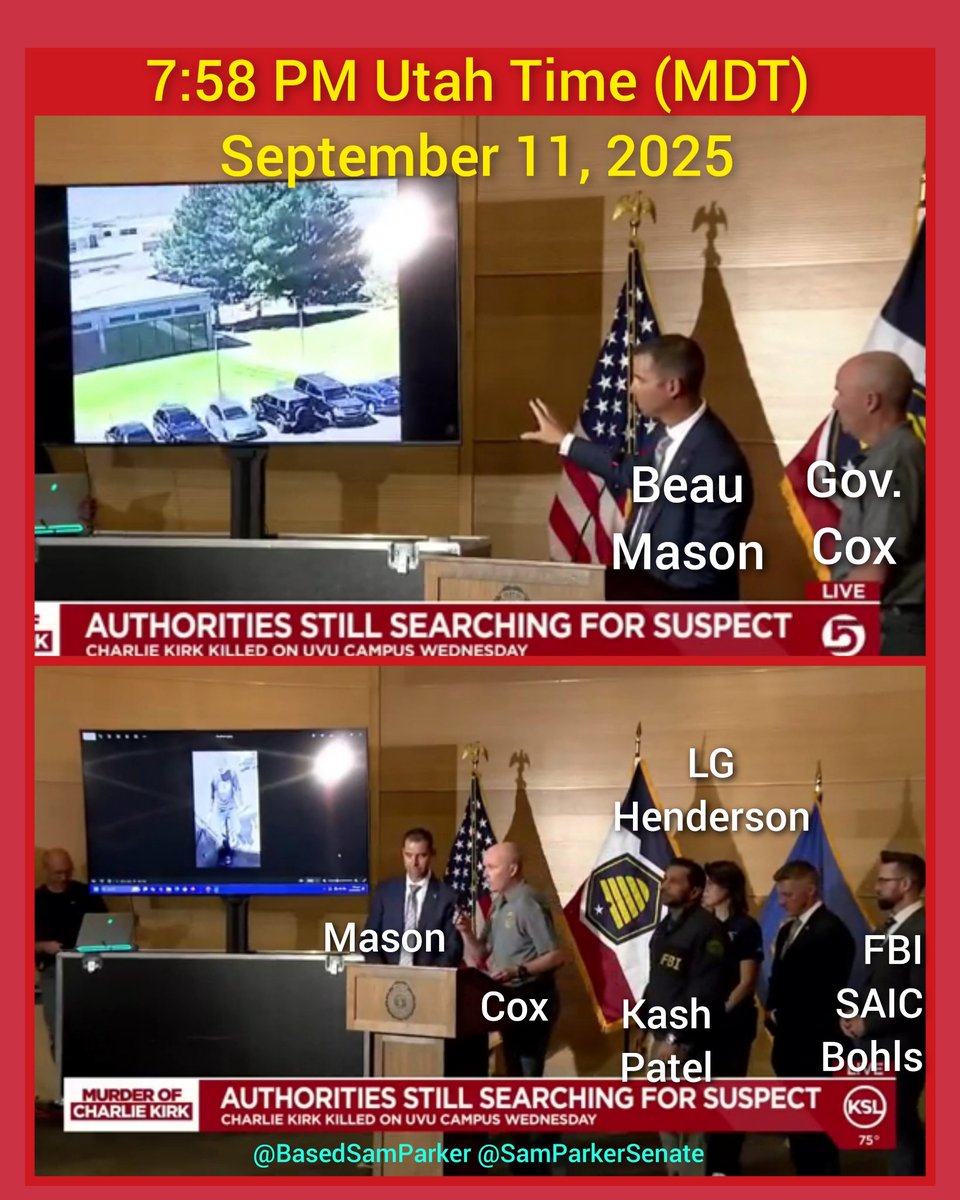
The "Valhalla" remark, the repeated "33 hours," and a roof clip one commentator compared to 1973 VHS. Counted from the shot, 33 hours lands hours after the reported 6:25 PM Miranda time.
Read thisBrand says two people who were in a cabinet meeting told him foreign involvement and domestic accomplices were both taken off the table six days in. Anonymous second-hand sourcing, unconfirmed by anyone named.
Read thisBenny Johnson — The Benny Show
A decade-long TPUSA colleague said on camera there is "considerable evidence that there were state actors involved here" — and then stopped talking. He reportedly met the FBI director and the attorney general the next day, over death threats to his family.
Read thisThis website's author is @HolonCitizen on X and YouTube/@HolonCitizen. Follow me there.
Interesting
- Within days the scene was reportedly paved over — one of many signs of cover-up.
- A widely shared .30-06 wound argument notes video 21 seconds later shows no massive bleeding.
- The official autopsy account describes no exit wound, and the full report stays confidential.
Related Areas
Images