Counterpoint: The 24-Hour Investigative Hold
Good investigation means stating the strongest version of the other side. Some commentators push back on the Mirandize timeline, and their point is worth taking seriously: a delay in reading a suspect his rights is not, by itself, a violation of those rights.
This page lays out that counterargument and then explains why investigators say it does not dissolve the core question — because the pivotal issue here was never a Miranda suppression claim in the first place.
The counterargument
One widely shared response to the "they waited to mirandize him" framing reads, in essence:
"Even if they did wait 14 hours to mirandize him, that is not a violation of his rights. You can legally be held for up to 24 hours before they read you your rights and interview you. It's called an investigative hold — they can keep you without charges as long as they don't [question you]."
The legal reality behind this is straightforward. Miranda warnings are required before custodial interrogation — they are not a clock that starts the moment someone is detained. Police can lawfully hold a person for a limited period without immediately reading rights, provided they do not conduct a custodial interrogation during that window. So the mere fact that a formal Miranda reading or booking happened hours after someone entered a station is not, on its own, misconduct.
A related question raised in the same discussion: an investigator reportedly showed up around 3 PM on 9/11, and the 6:25 PM timestamp falls about 3.5 hours into the encounter video — so if the official arrest was logged at 4 AM on 9/12, does that mean roughly 14.5 hours passed before the formal steps? Under the investigative-hold rule, a gap like that is not automatically illegal.
Why the timing still matters
Here is the distinction investigators draw. The Mirandize hub's central claim is not "Robinson's rights were violated, so suppress the evidence." It is a claim about who could have done a specific act:
- If Robinson was in custody and his phone was seized by roughly 6:25–6:30 PM, then a person without his phone could not have typed the ~7:57 PM Discord messages attributed to him.
- That is a question of physical possibility and authorship, not a question of Miranda procedure. The investigative-hold rule answers "was the delay legal?" — it does not answer "did Robinson personally type the confession?"
In other words, the counterargument correctly defeats a Miranda suppression theory, but the argument on the custody-timeline page does not depend on a suppression theory. It depends on when the phone left his hands relative to the messages.
What would resolve it
Both sides agree on what evidence would settle the dispute: the unedited Bates 003996-R2 video with a visible timestamp, the custody and phone-seizure logs, and the Discord server records showing which device and account posted the messages. Until those are public, the honest position is that the counterargument narrows the claim — from "rights violation" to "authorship and timeline" — without ending it. The Charlie Kirk Investigation Laws are aimed at forcing exactly those records into the open.
X.com posts:
Interesting In This Area
- Miranda protects against interrogation, not detention — a distinction most commentary misses.
- The hub's claim was never suppression; it was physical possibility and authorship.
- The counterargument leaves untouched who sent the Discord post at 7:57 that evening.
- The booking record and the database arrest time disagree by six hours.
Interesting In Other Areas
- The arrest and booking chronology lays those competing times side by side.
Images
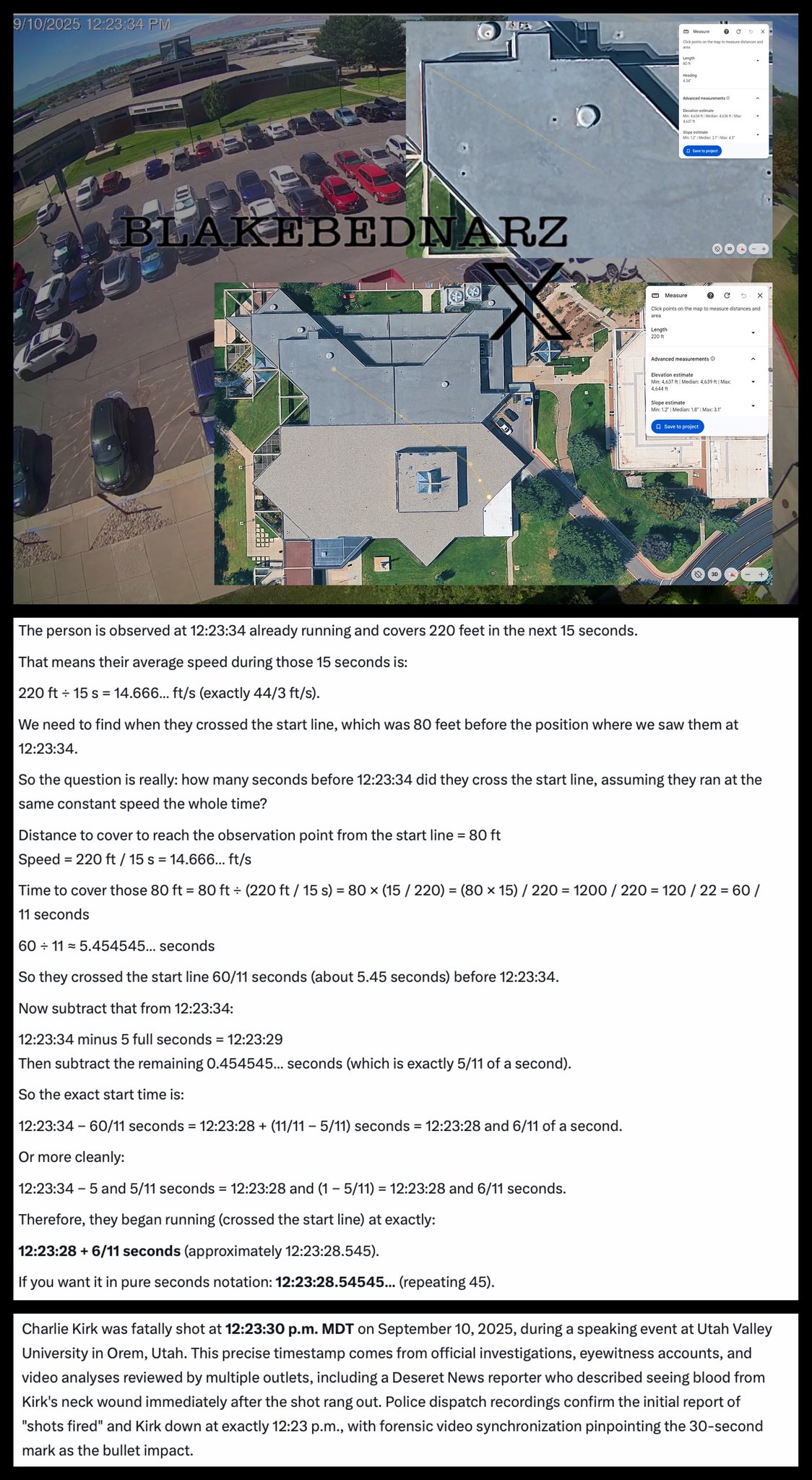
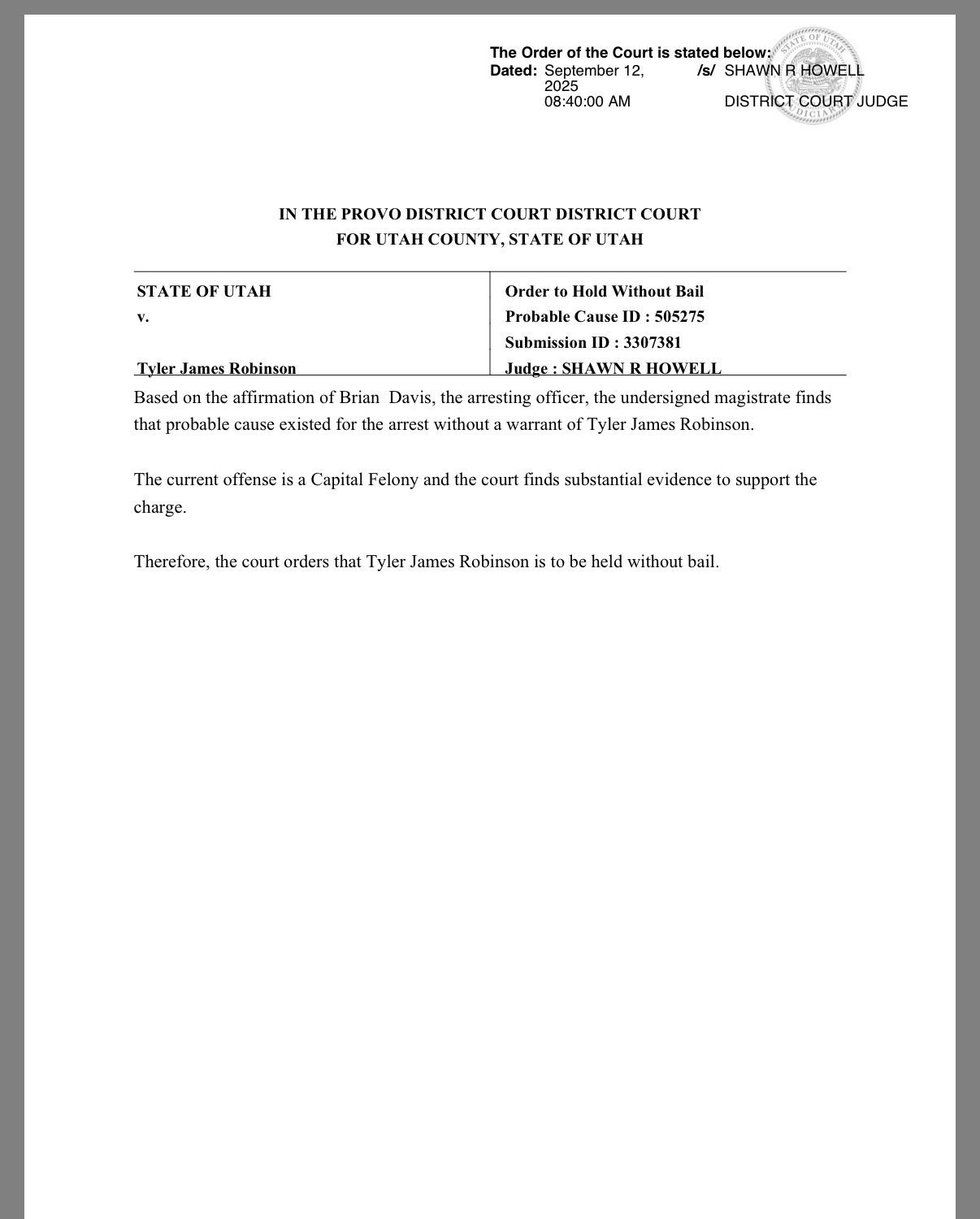
Court Video: He Turned Himself In on September 11, Before 6:25 PM
Preliminary-hearing audio. A state witness places the last text off Lance Twiggs' phone at about 7:42 PM on September 11, is offered September 12 as an alternative, declines it, and agrees September 11 "was when he turned himself in." Source: @JohPersso on X, 2 September 2026.
The September 11 turn-in is no longer only a citizen reading of a leaked exhibit. Three records now point at the same evening: the discovery index lists exhibit Bates 3996-R1 as "Video at WCSO on 9/11/2025"; page 70 of a defense filing quotes companion exhibit Bates 003996-R2 showing the Miranda warning at 06:25 PM and the invocation of counsel at 06:26 PM; and in the clip here the state's own witness, given an explicit chance to move the date to September 12, keeps it at September 11.
If Tyler Robinson was in custody and Mirandized at 6:25 PM, he could not have posted the Discord confession timestamped 7:57 PM that same evening. That is the argument, and it is now document-backed rather than inferred.
Two ordinary explanations stay open and are recorded in full on the linked page: the 6:25 PM reading could be a misread frame or an internal video clock not synced to wall time, or someone other than Robinson could have had the account — which would undo the confession as a confession by a different route. Nothing here states that any witness or official said anything untrue.
- Full write-up, transcripts and both filing pages: September 11 — The Day He Turned Himself In
Other Pages In This Section
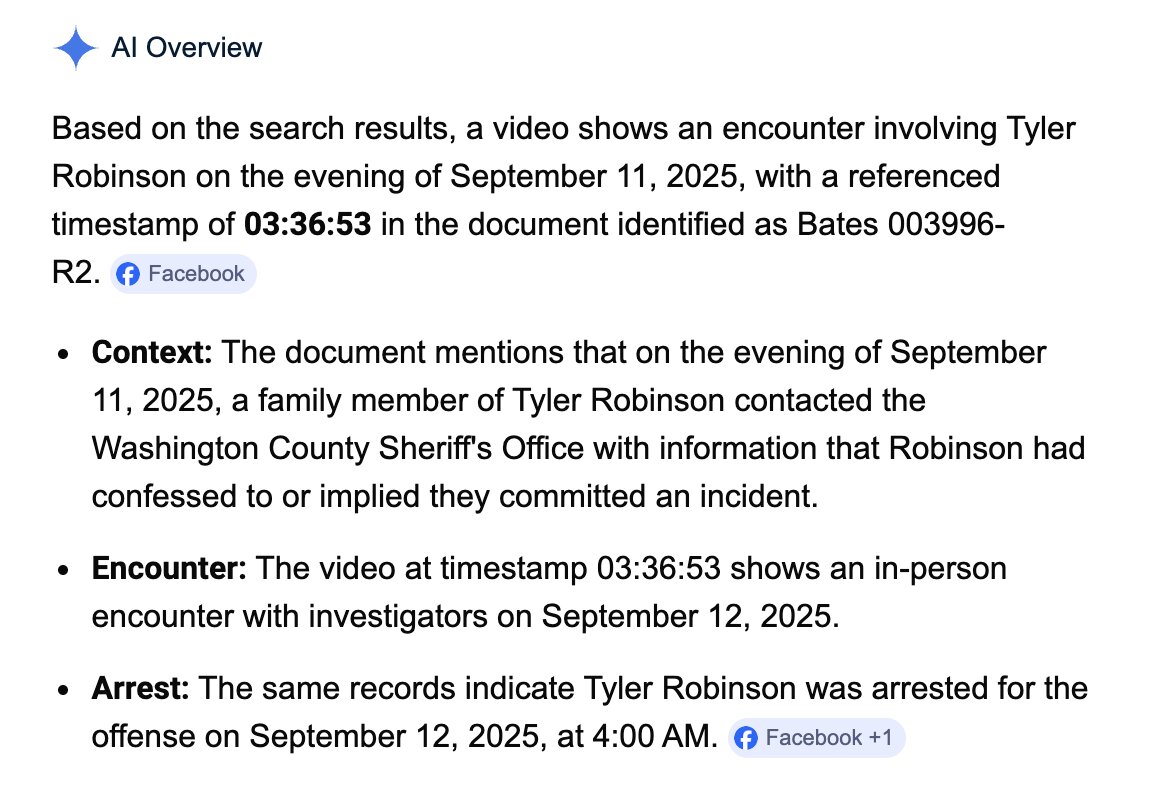
Image: Mirandized Sept 11 — Bates 003996-R2 Reference
A search-result screenshot describing the Bates 003996-R2 exhibit, preserved with its OCR text because the summary itself contains the contradiction: an evening-of-September-11 encounter, a September 12 arrest time of 4:00 AM, and one timestamp doing both jobs.
Read thisScheduling fights, camera access, roommate-testimony disputes and delay motions pushed the preliminary hearing into July 2026. Each one changed what the public could see before it changed what a jury could hear.
Read this
Prosecutors disclaimed forensic extractions; an agent then described performing exactly one, on a Cellebrite tool. The testimony and the disclaimer are quoted side by side.
Read thisThe messages arrive at roughly 7:57 PM on September 11. A defense exhibit puts the rights warning at 6:25 PM the same evening, and the warrant that carries the screenshot names two different usernames for one post. Authentication, not content, is the fight.
Read thisElsewhere In The Investigation
Arrest, Booking & Probable Cause Affidavit Timeline
Four documents describe the same arrest and they do not agree on when it happened. The booking sheet says 10:00 PM on the 11th; the police system record says 04:00 on the 12th.
Read thisThis website's author is @HolonCitizen on X and YouTube/@HolonCitizen. Follow me there.
Interesting
- The ATF comparison left no bullet-to-rifle link of any kind.
- A reported NSA scoop counts Israeli-registered phones pinging at the site, relayed to the White House.
- One argument favors a small directional PETN charge over a .30-06, with soil excavated after.
Related Areas
- Discovery & Brady Disputes
- Proof Not Tyler
- Fix — Investigation Laws
- Legal Investigation
- Tyler Robinson Profile
- Cover-Up Evidence