Joe Kent: NCTC Pulled Off Foreign Ties
Joe Kent addresses the Charlie Kirk assassination on the Julian Dorey Podcast. Video by @juliandorey, quoted by @ArtifexMemor on X, July 21, 2026.
In a July 2026 clip from the Julian Dorey Podcast, former National Counterterrorism Center (NCTC) director Joe Kent describes — in his own words — how the NCTC's parallel review of potential foreign ties to the Charlie Kirk assassination was halted early. The clip was circulated on X by @juliandorey ("Joe Kent Addresses the Charlie Kirk Assassination STRANGENESS...") and quote-tweeted by @ArtifexMemor: "This is what an American patriot looks like. God bless @joekent16jan19. Glad we're fighting the same fight brother."
What Kent Says in the Clip
According to Kent, whenever a terrorist attack or an assassination of a prominent figure occurs, NCTC investigates in parallel with the FBI, specifically looking for foreign ties — and stops only once it is established there are none, because NCTC does not operate domestically.
Kent says that in the Kirk case, the NCTC was in the very early phases of looking at potential international ties — Kirk "was killed in a very public event," "was an international figure," and "had lots of international connections" — when the team "was quickly told, like, hey, stop what you're doing now because we have Tyler — we have a suspect. We have Tyler Robinson in custody."
Kent argues the suspect-in-custody rationale did not justify ending the foreign-nexus review, citing reported online pre-knowledge of the assassination: "there was people who clearly had pre-knowledge. There was people posting online who said that Charlie Kirk was going to die that day... when you have people posting and have pre-knowledge of his assassination, I'm going to go on a limb here and say more than likely there's something else at play here."
He also connects the unexplored leads to Kirk's reported disputes with pro-Israel donors: "Charlie had a lot of foreign ties... there's what's been disclosed about the disputes he was having with different donors, you know, pro-Israel donors. So I felt on the international front... we had more work to do."
Kent notes he was already viewed adversarially by the FBI over his questions about the Butler rally attack before Kirk was killed. He frames his complaint carefully: most investigative leads turn out to be dead ends, "but there was still more work there that I thought needed to be done. So that was my issue with the Kirk case and the fact that we were pulled off a little bit early on that one."
Why This Matters to the Foreign-Intel Thread
This first-person account is the core primary source behind the reporting that the NCTC foreign-nexus review was halted. It complements the execution-adjacent analysis at Joe Kent Foreign Inquiry Shutdown and the motive-layer pages on Israel donor disputes. Kent states no definitive foreign involvement — he explicitly says "if there was something that I knew definitively, I would say it" — but he asserts the leads were never run down. That is the disclosure gap Fix Law 2 — Intelligence Disclosure targets.
Full Transcript
From video testimony by Joe Kent on the Julian Dorey Podcast, circulated July 20, 2026.
DOREY: So the other thing I wanted to ask you about was you've talked about it before. You wanted to look into the Charlie Kirk thing, obviously, very tragic what happened there and very odd, the aftermath and all that. I'm open to pretty much any story, but I think the way it's been presented publicly, the optics at the very least have been bad, and we've covered it a little bit in here, but not a ton, but you had said you were a little bit stonewalled in trying to look at details there. What were the specifics with that?
KENT: Well, by the time Charlie was killed, the FBI was already mad at me for Butler. So we were already kind of adversarial in terms of like, you stop asking questions. So when Charlie was killed, obviously, whenever there's a terrorist attack or an assassination of a prominent figure, National Counterterrorism Center will investigate in parallel with the FBI. In parallel, because we're looking for foreign ties. And once it's established there's no foreign ties, NCTC stops. We're done because we don't do anything domestically. So with the Kirk case — he was killed in a very public event. He was an international figure. He had lots of international connections. So we were in the very early phases of looking at potential — and I say potential because if there was something that I knew definitively, I would say it. We're in the initial phases of looking at potential international ties. We are quickly told, like, hey, stop what you're doing now because we have Tyler — we have a suspect. We have Tyler Robinson in custody. And to me, I was just like, okay, well, fine. You have a suspect. Great. Do the FBI criminal investigation, do that whole thing. We need to continue to look at all the potential foreign ties because there was people who clearly had pre-knowledge. There was people posting online who said that Charlie Kirk was going to die that day. So like the idea that he simply worked alone — maybe we'll find out that that ends up being the case, although when you have people posting and have pre-knowledge of his assassination, I'm going to go on a limb here and say more than likely there's something else at play here.
DOREY: Another one plus one equals two.
KENT: Yeah, another one plus one. Until we disprove it, it's our duty to run that down. And then also too, like, look, Charlie had a lot of foreign ties. There's what's been disclosed about the disputes he was having with different donors, you know, pro-Israel donors. So I felt on the international front, in terms of international connections potentially to any foreign individuals, foreign entities or foreign governments, we had more work to do. Now, the way any investigation works, you run down 100 leads and 99.5 of them were total dead ends, right? So a lot of the stuff that I wanted to do, maybe it was going to end up being nonsense, but there was still more work there that I thought needed to be done. So that was my issue with the Kirk case and the fact that we were pulled off a little bit early on that one.
X.com posts:
- Kent tells Dorey NCTC pulled off Kirk foreign ties
- Original Dorey post: Kent addresses Kirk assassination strangeness
Interesting In This Area
- Kent names Kirk's reported pro-Israel donor disputes as the foreign thread he wanted to keep pulling.
- The halt he describes is why the 44-phone count and Islamabad trace were never resolved.
- Egyptian Air Force jets reportedly left Provo that morning, unexamined by any foreign-nexus review.
- Kent cites people posting pre-knowledge online as reason the lone-actor account looks incomplete.
Interesting In Other Areas
- Kent stepped down in order to say it on the record, which separates him from anonymous sourcing.
- Reporting says the block escalated to a tense White House meeting and then simply stopped.
- The NCTC exists to run exactly the parallel foreign check that was reportedly cancelled.
- Geopolitical motive frameworks lean on this halt more than on any single artifact.
Other Pages In This Section
Foreign Phones at UVU (Sept 10, 2025)
The claim that 44 foreign-registered phones sat near Charlie Kirk when he was shot, 16 of them Israeli. No subscriber list has ever been released, and the page keeps the benign explanations on the same screen as the allegation.
Read thisTPUSA Foreign Recruitment Claims
A former Turning Point representative alleges new hires were taken to Arizona bars in rented vans and asked where they stood on Mossad and Israeli forces. It is a whistleblower claim, unproven and disputed, and it is filed beside the wider foreign-intelligence threads.
Read this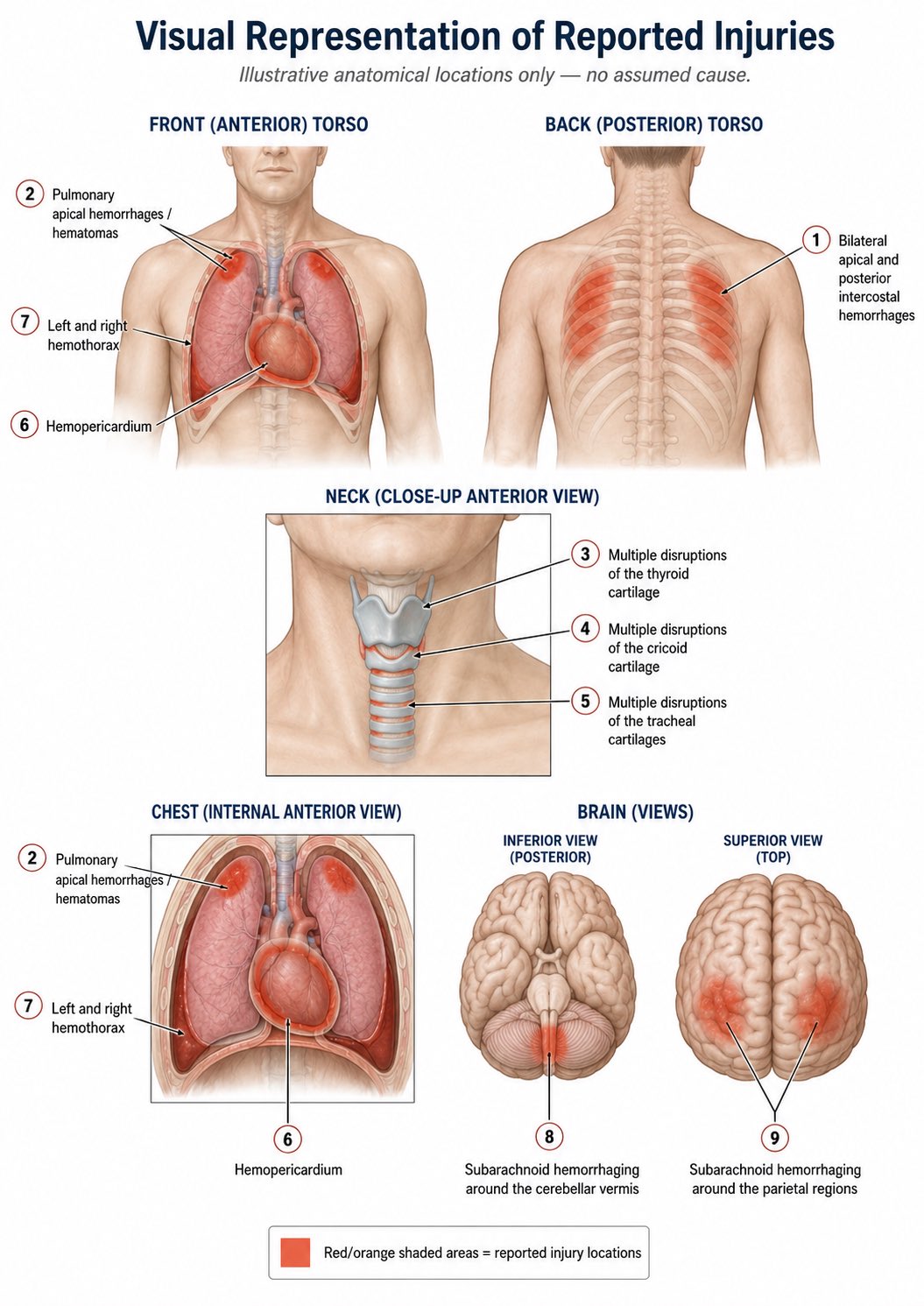
The non-U.S. services hub: foreign phones at the venue, Egyptian air-force tail numbers, search-pattern claims, and the blocked follow-up. Presence, motive and obstruction — not a courtroom finding.
Read thisElsewhere In The Investigation
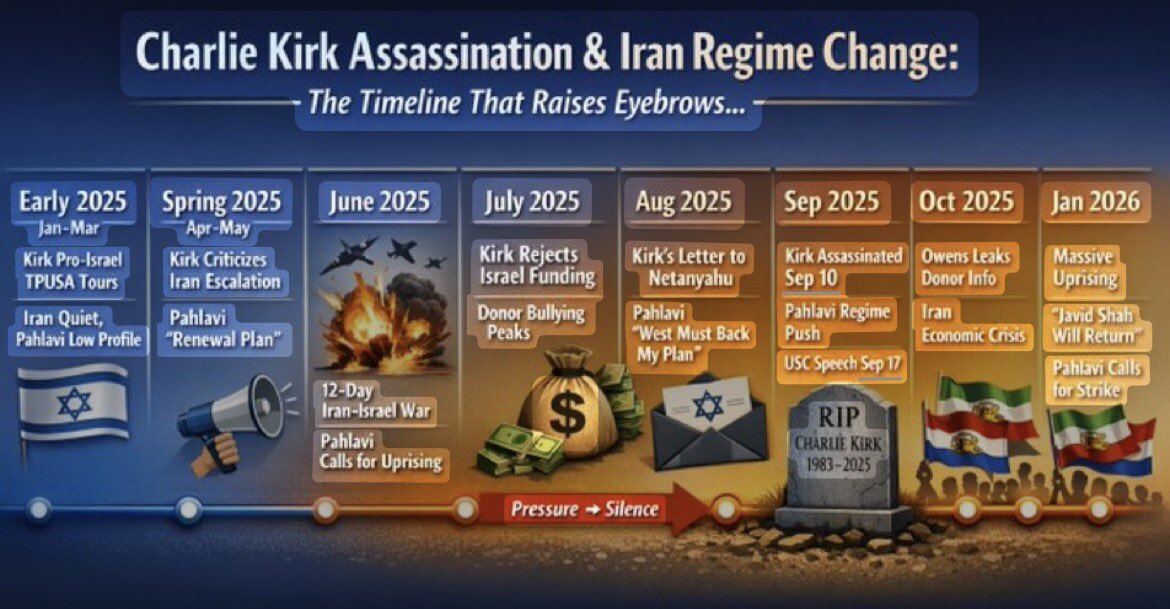
White House Escalation Halts Intelligence Leads (Claims)
Claims that follow-up on foreign leads was blocked, escalated to a tense White House meeting, and then stopped. If accurate, the investigation narrowed for reasons never made public.
Read thisJoe Kent — Foreign Inquiry Shutdown
Joe Kent says the FBI halted his NCTC foreign-nexus inquiry. It is the most directly attributable U.S. intelligence thread on the site — a named official, on the record.
Read thisJoe Kent, then NCTC director, says the FBI shut his inquiry down before he could run out his leads. The Bureau publicly said foreign intelligence was assisting — assistance and shutdown, at the same time, on the same threads.
Read thisThis website's author is @HolonCitizen on X and YouTube/@HolonCitizen. Follow me there.
Interesting
- An Egyptian Air Force jet reportedly departed Provo at roughly 7:08 AM that morning.
- Fourteen seconds of CCTV fuels an alibi and carpet comparison claim.
- A ballistic gel head test shows nothing like what the stage footage shows.