Notes: Law 2 - US Intelligence Services Forced Disclosure
These notes assume the state prosecution proceeds on its own track: nothing compelled by this law would depend on the outcome of the case against Tyler Robinson, who is charged and not convicted.
Legal Research
Precedent: JFK Assassination Records Collection Act of 1992
- Mandated that all assassination-related records be transferred to the National Archives
- Created the Assassination Records Review Board (ARRB) to oversee compliance
- Despite the law, CIA and other agencies delayed disclosure for over 30 years
- Nearly 5% of records still redacted as of 2025
- Key lesson: Intelligence agencies have vast experience circumventing disclosure mandates through delay, over-classification, and legal technicalities
Precedent: Executive Order 13526 (Classification)
- Governs classification of national security information
- Agencies routinely over-classify to avoid embarrassment rather than to protect genuine national security
- Key lesson: The law must explicitly prohibit using classification as a shield against disclosure
Precedent: Epstein Files Transparency Act Compliance Failures
- DOJ produced only ~12,285 documents by the deadline out of potentially 6+ million pages
- Massie and Khanna had to request a Special Master to compel compliance
- Key lesson: If law enforcement agencies resist this aggressively, intelligence agencies will resist even more
Key Improvement: Broad Catch-All Plus Specific Intelligence Items
The dual-track approach:
- Section 2 provides a broad catch-all requiring ALL intelligence that could assist in understanding the case
- Section 3 specifically enumerates intelligence-related items from the 175-item list (foreign planes, Israeli phones, electronic warfare, meetings, TPUSA connections, psychological operations, DoD contracts, international communications)
- Section 3(c) states both tracks apply concurrently
Analysis
Pros
- Explicitly covers ALL 18+ elements of the Intelligence Community
- Distinguishes between sources (protectable) and conclusions (must disclose)
- Broad catch-all ensures agencies cannot hide behind narrow interpretations
- Specific enumeration of 175 items provides granular accountability
- Criminal penalties for obstruction (10 years) and destruction (15 years)
- No presidential override addresses the JFK Act's fatal flaw
- Records preservation triggered at bill introduction
- Private right of action and permanent review board
Cons
- Intelligence agencies have vast experience circumventing disclosure mandates
- "Sources and methods" exception could be exploited
- 30-day timeline is aggressive for intelligence bureaucracy
- May face Article II constitutional challenges
- Foreign diplomatic consequences of disclosing liaison communications
Interesting In This Area
- Law 2 narrows source protection to active sources, and the audit checks that it held.
- The Epstein Files Act passed 427-1 and still produced a fraction of its pages.
- The threat model assumes every evasion route will be tried, including an Israel exception.
- The charter is what the compliance audit checks each draft against.
Interesting In Other Areas
- Your Actions Fix It is where a reader turns this into a phone call.
Other Pages In This Section
Output Analysis: Law 2 - US Intelligence Services Forced Disclosure
The audit of Law 2 against the citizen requirements: eight broad categories of covered information, a thirty-day catch-all mandate, and a final category built to cover whatever the list missed.
Read this
Charlie Kirk Files Forced Disclosure -- Summary of Four Proposed Federal Laws
The charter document. All four bills summarised in order, with the agencies each one reaches and the case number they were drafted around. This is the file every compliance audit checks the drafts against.
Read thisAttorney Analysis: Improvements for Law 1 (DoJ/FBI Forced Disclosure Act) — FIXED ITEMS
The attorney improvements already folded into Law 1: congressional findings for constitutional footing, a severability clause, and the rest of the structural work a bill needs to survive a challenge in court.
Read thisOutput Analysis: Law 1 - DoJ/FBI Forced Disclosure
The archived audit of the earlier Law 1 draft against the citizen requirements. Reading it beside the current version shows which gaps were closed, and when.
Read thisElsewhere In The Investigation
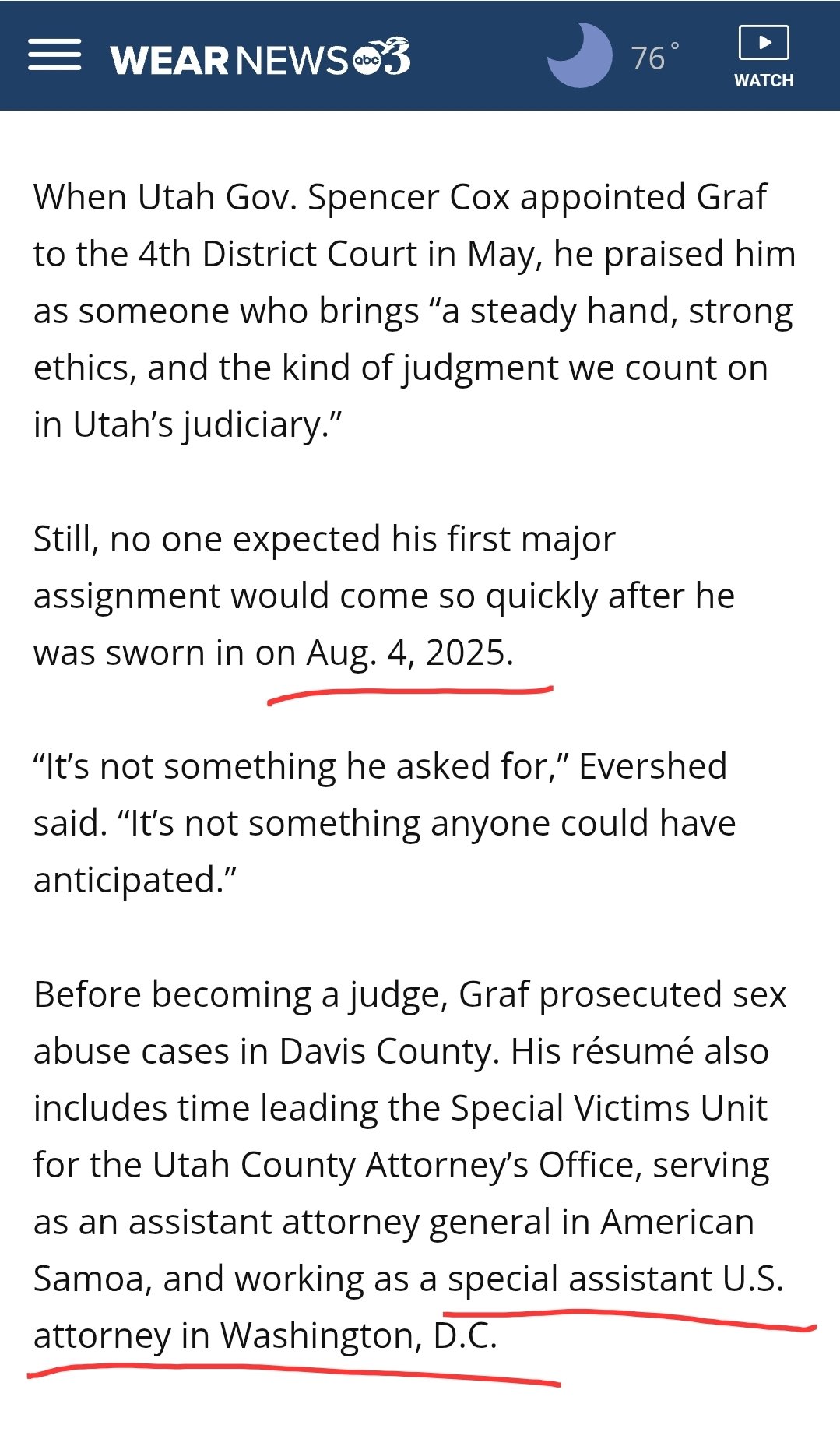
State of Utah v. Tyler Robinson, case 251403576, is where the government's narrative meets adversarial testing — every court date, the day-by-day preliminary hearing transcripts, and the inconclusive ATF ballistics.
Read this
Concrete things one person can do: records requests, contacting representatives, preserving and sharing evidence. It is the shortest route from reading this site to changing anything on it.
Read thisSources
- JFK Records Act: https://www.congress.gov/bill/102nd-congress/senate-bill/3006
- Trump JFK EO: https://www.whitehouse.gov/presidential-actions/2025/01/declassification-of-records-concerning-the-assassinations-of-president-john-f-kennedy/
- Epstein Act compliance: https://thehill.com/homenews/house/5744386-doj-epstein-files-transparency-act/
- Charlie Kirk 175 Critical Items: https://github.com/BryanStarbuck/Charlie_Kirk_175_Critical_To_Expose
This website's author is @HolonCitizen on X and YouTube/@HolonCitizen. Follow me there.
Interesting
- The four-law package targets Epstein-style token compliance head on.
- N888KG reportedly went dark for 30-50 minutes with no filed flight plan.
- The Pilatus PC-12 entry exists precisely to caveat an unverified claim.
Related Areas
- Fix the Charlie Kirk Situation
- U.S. Intelligence
- Intelligence Services
- Proof Intel Services
- (Possible) Cover‑up
- Government Evidence