Four Laws to Force the Truth About Charlie Kirk
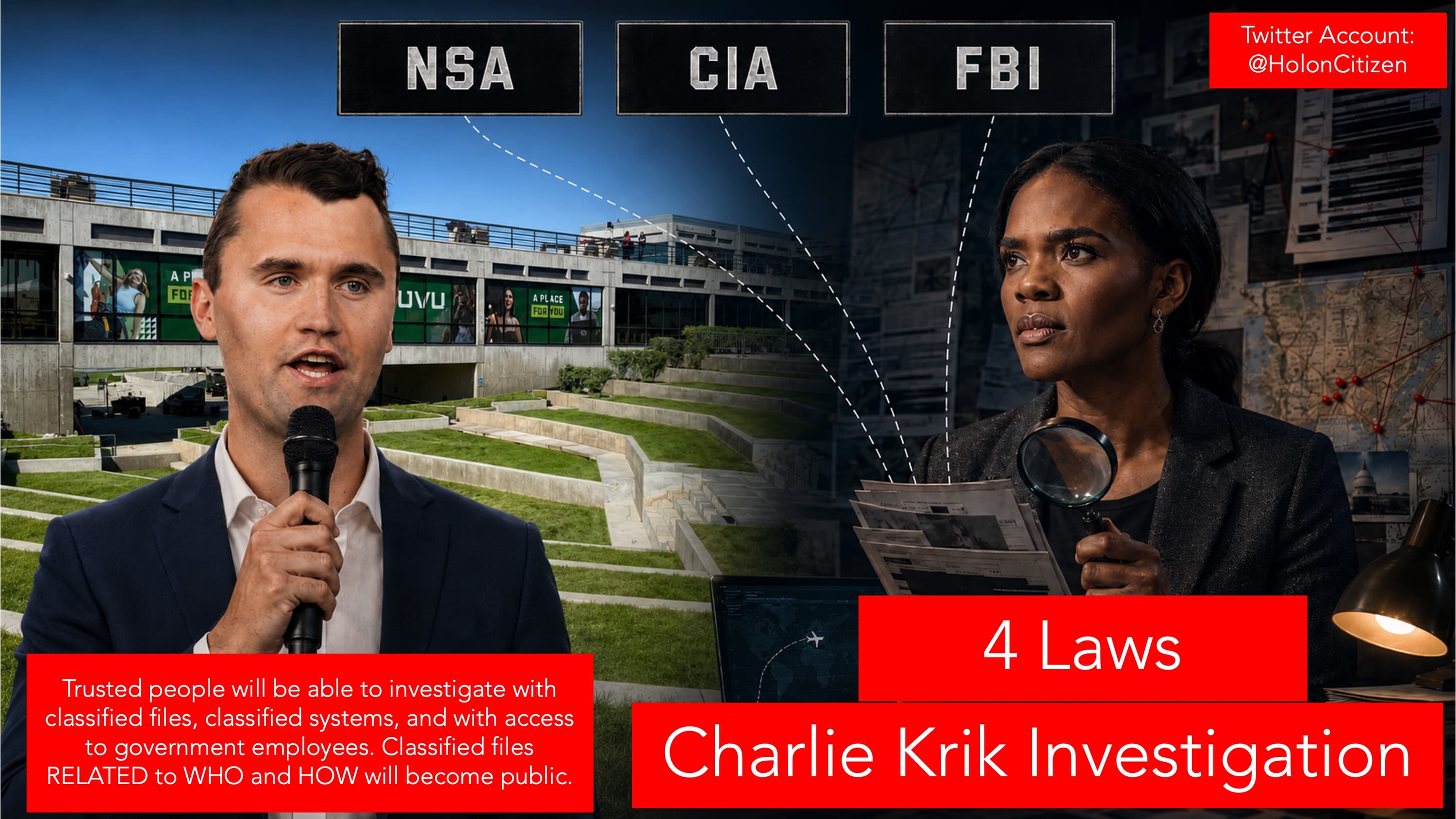
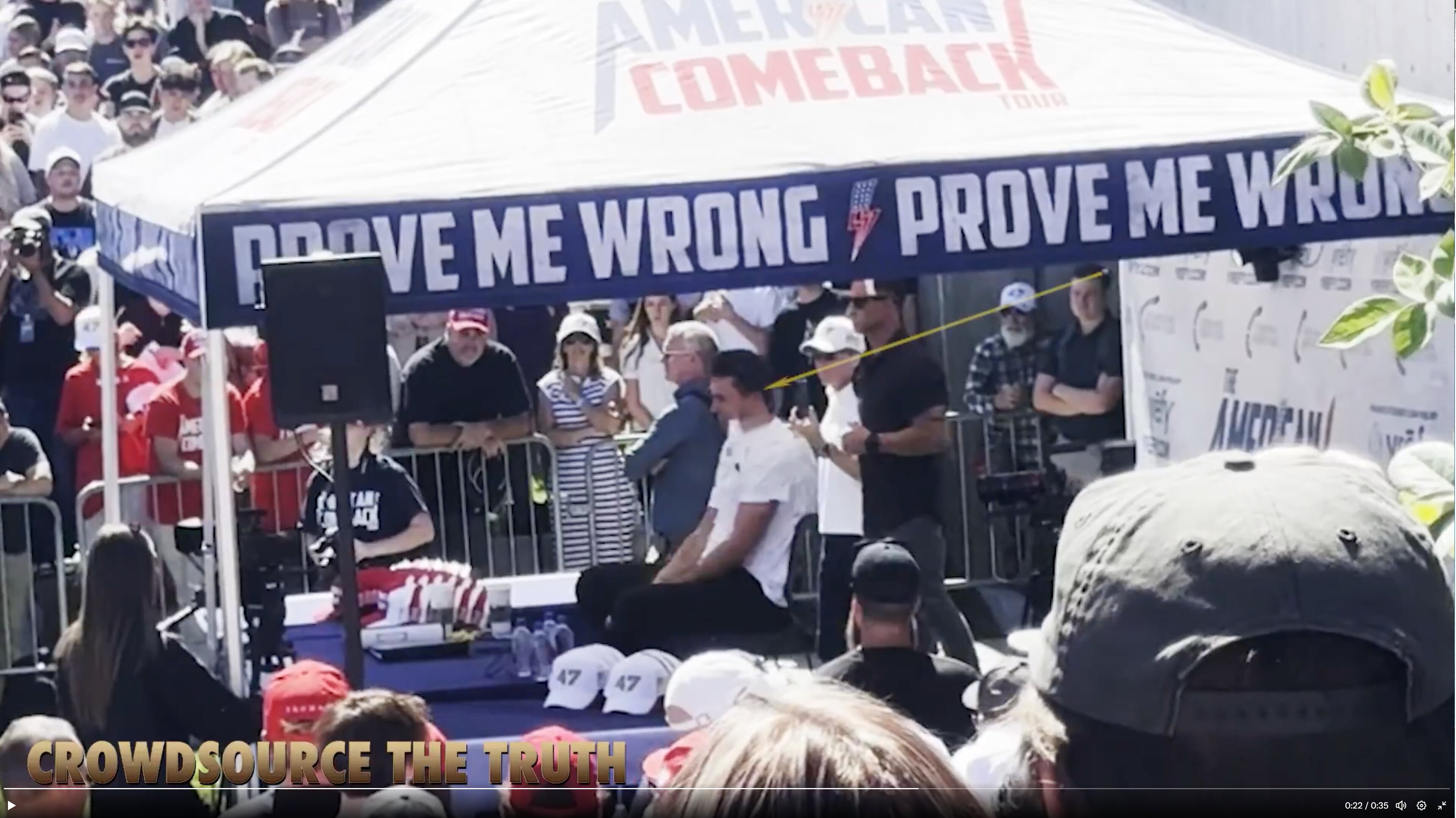
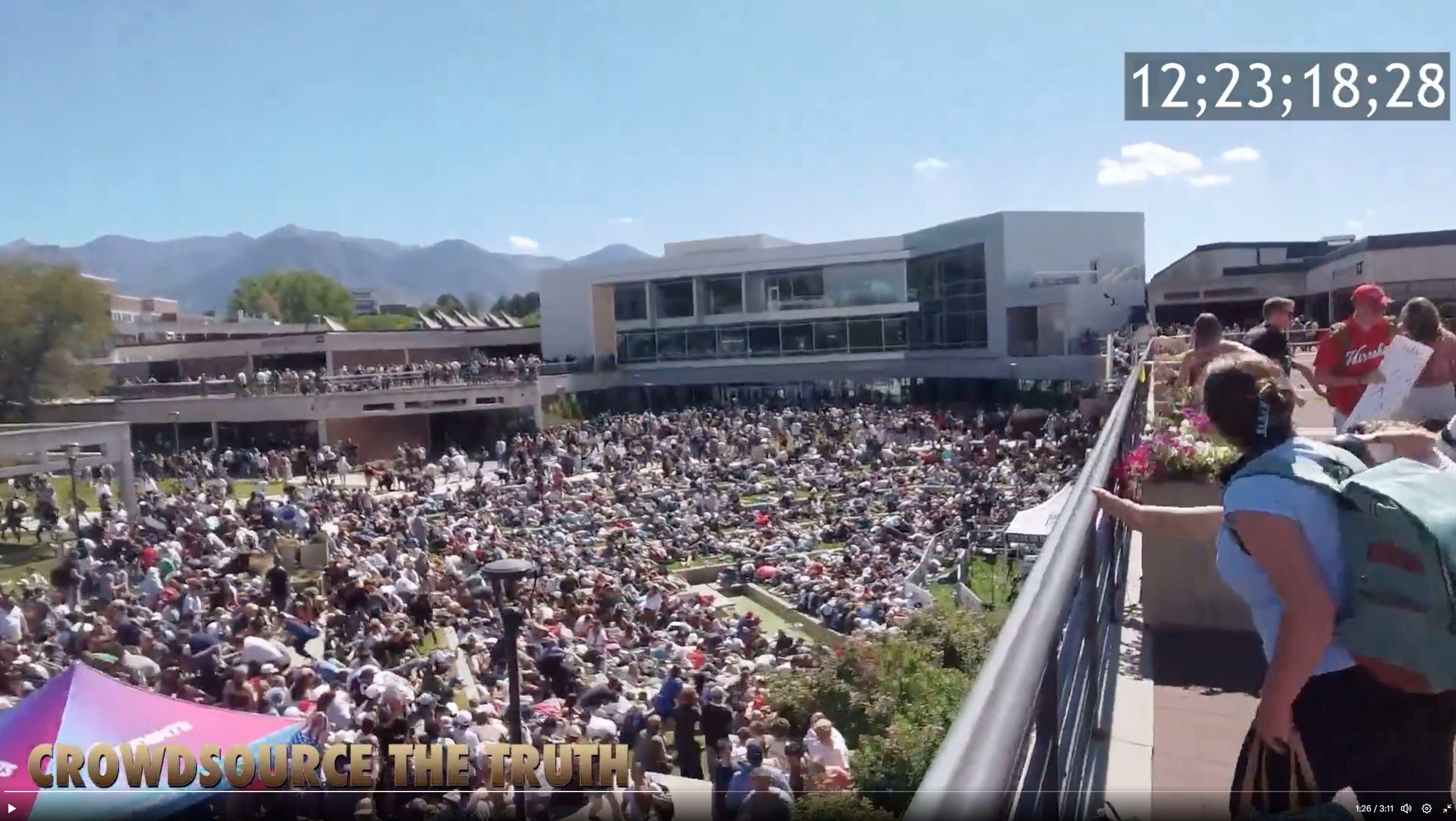
On September 10, 2025, Charlie Kirk was killed at Utah Valley University in Orem, Utah. In the months since, a wide range of citizen-investigators, journalists, and commentators have raised serious questions about the official narrative — questions about evidence handling, witness treatment, foreign-intelligence indicators at the scene, aircraft activity in the hours surrounding the event, and the speed with which the case was declared closed.
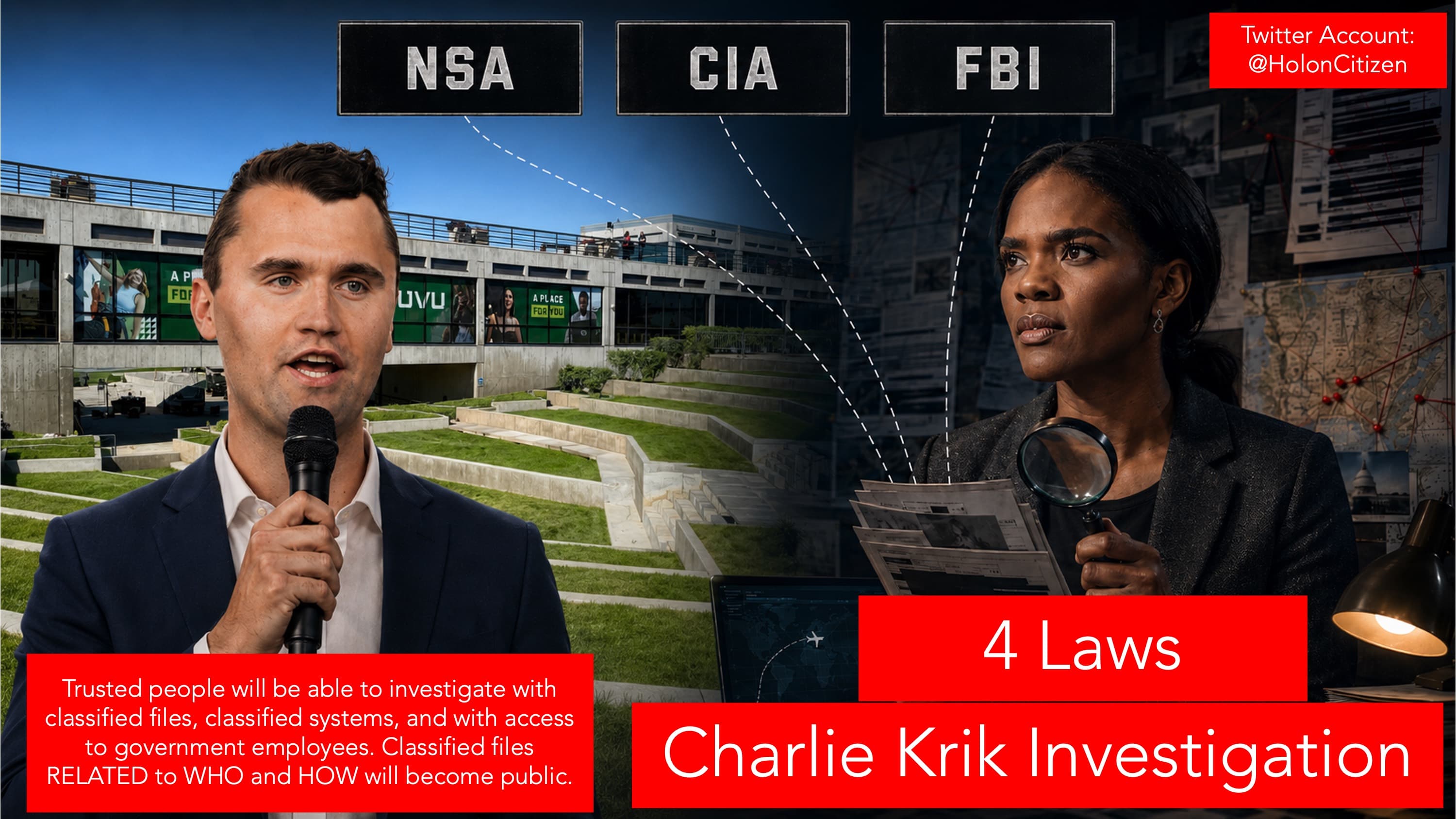
This page introduces a legislative package of four proposed federal laws designed to address those questions through lawful disclosure, mandatory investigation, and independent oversight. The laws are modeled on the Epstein Files Transparency Act (Public Law 119-38) and on the JFK Assassination Records Collection Act of 1992 — and they are written to remedy the structural failures of both.
Why a Legislative Package, Not a Single Bill
The Epstein Files Act passed the House 427-1 and cleared the Senate by unanimous consent. It still failed to deliver full disclosure. The Department of Justice released roughly 12,285 documents out of an estimated six million pages by the statutory deadline, with no Special Master mechanism to compel further compliance. The JFK Act failed even more dramatically — successive Presidents exercised override authority to withhold records for more than 30 years.
A disclosure law alone is not enough. A disclosure law without enforcement is a press release. The four laws in this package are designed to work together:
- Law 1 forces the law-enforcement side of the federal government to disclose every relevant file.
- Law 2 forces the intelligence community to do the same, adapted for the distinct classification framework intelligence agencies operate under.
- Law 3 ensures that disclosure is paired with active investigation, not just the passive release of existing files.
- Law 4 establishes independent civilian oversight so that the agencies under investigation are not the only parties evaluating the evidence.
Each law has its own scope, its own enforcement mechanism, and its own penalties. Together they form a single accountability structure with no override authority, no escape valve, and no sole reliance on the good faith of the agencies being investigated.
The Four Laws
Law 1 — FBI & DOJ Forced Disclosure
Forces the Department of Justice, FBI, ATF, DHS, FinCEN, and all federal, state, and local law-enforcement agencies to disclose every record related to the Charlie Kirk investigation within 30 days of enactment. The law applies to primary case files, counterintelligence files, FISA files, headquarters supervisory files, Office of Professional Responsibility files, every field office (not just Salt Lake City), Director-office files, agent email archives, and all classified and compartmented information systems.
Criminal penalties of up to 10 years apply for withholding and up to 15 years for destroying records. No presidential override is permitted. A permanent congressional review board has independent subpoena power, the authority to direct agencies to search additional systems, and the power to appoint a Special Master with on-site inspection authority over private entities including TPUSA, Mosaic Pro Events, hotels, rental-car companies, banks, and telecommunications providers.
A rolling 72-hour disclosure obligation continues indefinitely after the initial 30-day production. Negative certifications — agency claims that no responsive records exist — must be sworn, detailed, and subject to challenge.
Read Law Number One →Law 2 — U.S. Intelligence Community Forced Disclosure
Compels the full U.S. Intelligence Community — CIA, NSA, DIA, NRO, NGA, military intelligence, and every other agency defined at 50 U.S.C. § 3003(4) — to release all information that could identify perpetrators or illuminate the circumstances of Charlie Kirk's death.
Redaction is permitted only for currently active human-intelligence source identities and specific live technical-collection methods. Analytical conclusions must always be disclosed. The law explicitly forbids the historical pattern of withholding analytical product on classification grounds. The same criminal penalties and enforcement mechanisms as Law 1 apply, adapted for the intelligence community's distinct classification framework.
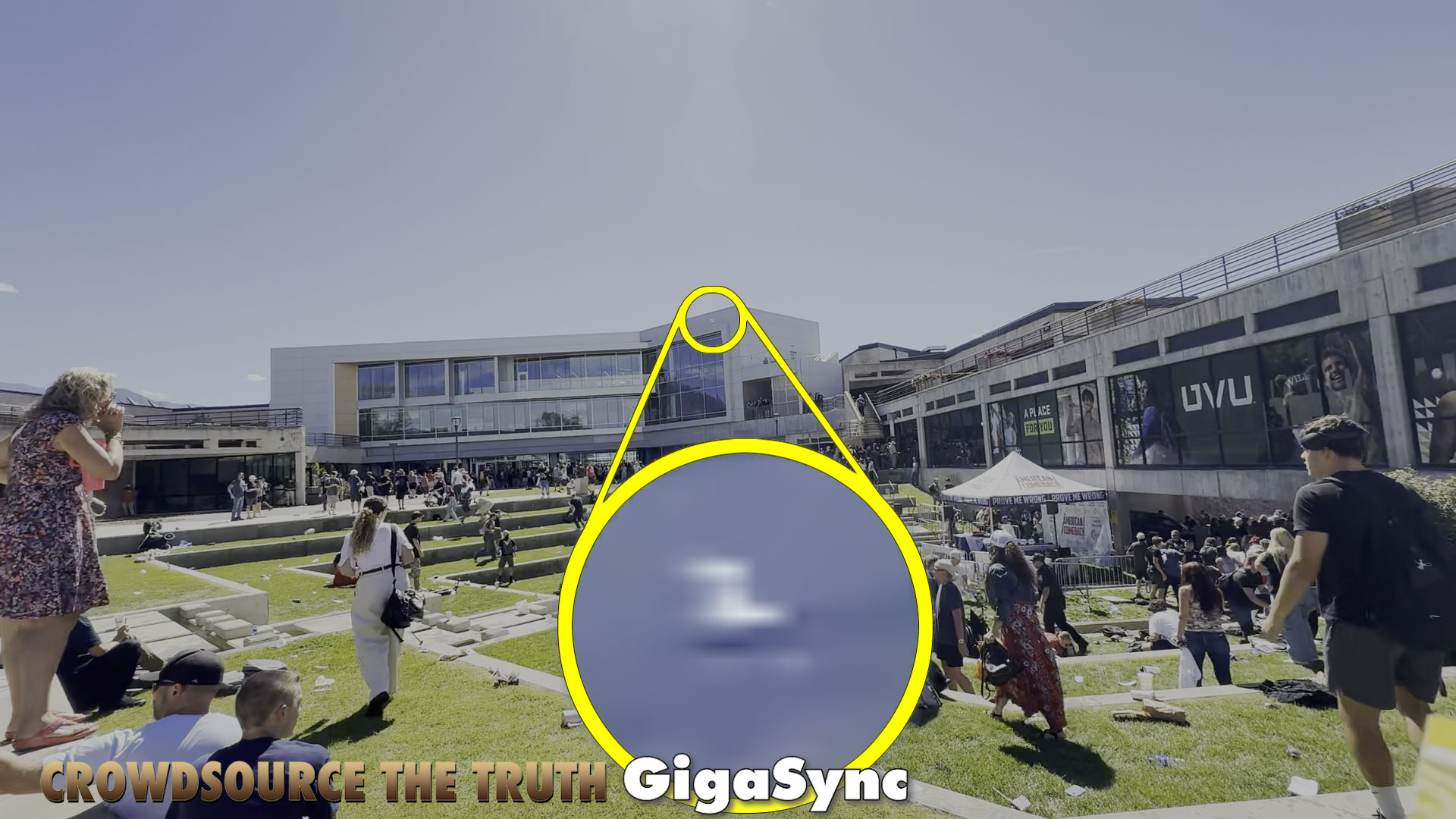
This is the law that addresses the foreign-intelligence indicators reported around the September 10 event: approximately 12 foreign-registered cell phones detected at the shooting site, foreign military aircraft delivering personnel with Defense Attaché badges to Provo Municipal Airport, and a HADES surveillance aircraft circling 35 minutes before the shooting. If any of those reports is wrong, the disclosure will show that. If any is right, the disclosure will show that too.
Read Law Number Two →Law 3 — Mandate the Investigation
Disclosure alone is not investigation. Law 3 requires designated federal agencies to conduct a real, good-faith investigation of every item in Schedule A — not merely to release whatever they happen to have on file.
Each covered agency must dedicate a team of at least 20 agents, with a $10 million independent budget, led by a senior agent with no prior case involvement. An independent external monitor appointed by Congress has the authority to direct investigators to pursue neglected leads. If evidence emerges that a covered agency was itself involved in the underlying events, investigation authority transfers automatically to an independent congressional commission — removing the conflicted agency from the inquiry.
The law is designed for the specific failure mode where an agency releases documents while quietly closing the investigation. Under Law 3, that is no longer possible. That failure mode is not hypothetical: former NCTC director Joe Kent has said on the record that his center's parallel review of potential foreign ties to the Kirk assassination was ordered to stop once Tyler Robinson was in custody, before those leads were exhausted.
Read Law Number Three →Law 4 — Trusted Investigators
Establishes independent investigation teams led by Designated Trusted Investigators drawn from across the political spectrum. Each investigator receives:
- One law-enforcement oversight team
- One intelligence-community oversight team
Both teams have full access to all files and personnel, sole authority to select their own members, and the power to publicly release findings without prior agency review. Teams operate for a minimum of 24 months, cannot be terminated by any government official — including the President — and must produce public reports on a set cadence addressing every item in Schedule A.
This is the law that answers the question: who watches the watchers? The answer, under Law 4, is people the agencies do not choose, cannot fire, and cannot silence.
Read Law Number Four →How These Laws Fit Together
Each law addresses a specific failure mode observed in prior disclosure efforts:
| Failure Mode | Historical Example | Addressed By |
|---|---|---|
| Records exist but are not released | JFK Act records held back 30+ years | Law 1 + Law 2 |
| Records are released, but investigation stops | Epstein document drop without follow-through | Law 3 |
| Agencies investigate themselves | Internal-affairs conflicts of interest | Law 4 |
| Presidential override authority | JFK Act override clause | Law 1 + Law 2 (no override) |
| No Special Master to compel compliance | Epstein Files Act enforcement gap | Law 1 (review board + Special Master) |
| Private entities outside subpoena reach | Civil-discovery limits | Law 1 (review board subpoena power) |
| Negative certifications without scrutiny | "No responsive records found" | Law 1 (sworn negative certs + challenge process) |
The package is designed so that each law closes a specific historical loophole. Read together, the four laws form a single legislative architecture.
Defamation and Investigative Framing
These laws — and every page on this site — are proposed legislative and investigative frameworks, not accusations. The Schedule A items in each bill are questions for investigation, not conclusions. No statement in this package asserts as fact that any individual, organization, or government entity has committed a criminal, illegal, or immoral act.
If the disclosure required by these laws produces evidence of wrongdoing, that is the disclosure doing its job. If it produces evidence that the official account is correct, that is the disclosure doing its job too. The point of the laws is to ensure the question is answered through lawful process rather than left to speculation.
See Conclusion Logic for the evidence thresholds used across this site.
What Citizens Can Do
This package is drafted for federal legislative sponsors. The path from drafted text to enacted law runs through Congress — which means it runs through constituents who contact their representatives and senators.
- Read each of the four laws. Each has its own page linked above.
- Share the launch article with people who follow the Charlie Kirk case but may not have seen the legislative response.
- Contact your House representative and your two Senators. Tell them you want the Charlie Kirk Files Forced Disclosure Act introduced.
- Track which representatives sponsor, co-sponsor, oppose, or remain silent. See Vote Out Cover-Up Politicians for the framework on evaluating elected officials on this issue.
- Support the related reforms — event security, digital evidence preservation, whistleblower protections, victim-family rights — that are described in the Fix the Charlie Kirk Situation overview.
Related Pages
The Four Laws
Surrounding Context
- Fix the Charlie Kirk Situation
- Cover Up
- Proof Intel Services
- Proof Not Tyler
- Your Actions Fix It
Citizen Investigator Claims on X (Forced Disclosure Discourse)
(Attributed public commentary about transparency demands — does not rewrite statutory text above.)
Citizen investigators and legislative advocates on X argue that ordinary FOIA and criminal discovery will not force full production in the Charlie Kirk case, citing JFK Records Act failures (agencies missing decades of deadlines; reports of large unreviewed FBI caches) and the Epstein Files Transparency Act pattern of partial dumps without a Special Master with teeth. Accounts such as @HolonCitizen have promoted a four-law package (FBI/DOJ disclosure, IC disclosure, mandatory investigation, trusted civilian investigators) and named figures including Candace Owens, Dave Smith, Tucker Carlson, Ian Carroll, and others as proposed trusted investigators under Law 4-style designs — a policy proposal, not an enacted statute.
Parallel media clips recirculated by accounts such as @FurkanGozukara claim Candace Owens has alleged federal discovery obstruction (FBI/ATF files; director-level blocks). Counter-posts argue the Robinson case already has DNA, video, and confession-note material unlike JFK and therefore needs no special act. Investigators answer that none of that material shows how Charlie died: the ATF could not tie the autopsy fragment to the rifle, and the physical evidence points to an explosive at his microphone, not the government's .30-06 account. This page records both the demand for forced disclosure and the official-narrative pushback so readers can judge whether Schedule A-style lists (FBI 302s, cell data, aircraft, drones, ballistics, AV SD cards) match what X investigators say remains withheld.
Related public pages: Fix overview, laws landing, Discovery, explain all four laws.
Interesting In This Area
- Law 1 and Law 2 split disclosure between law enforcement and intelligence.
- Law 3 makes investigating a duty; Law 4 seats civilians inside it.
- The threat analysis lists every evasion route this package has to close.
- The charter names the case number all four bills were drafted around.
Images
Other Pages In This Section
Law 1: Charlie Kirk Investigation - DoJ/FBI Forced Disclosure Act
The full statutory text of the DoJ and FBI disclosure law, modelled on the Epstein Files Act. This is the live draft the Fix section summarises.
Read thisLaw 2: Charlie Kirk Investigation - Intelligence Services Disclosure Act
Full text of the intelligence disclosure act: CIA, NSA, DIA, NRO and every IC element releasing findings within 30 days, with protection limited to active sources.
Read thisLaw 3: Charlie Kirk Investigation - Mandatory Investigation Act
Full text of the mandatory investigation act — the statute that pairs release of the files with a duty to actually investigate them.
Read thisLaw 4: Charlie Kirk Investigation - Trusted Investigators Act
Full text of the trusted investigators act — civilian-led teams embedded inside the FBI and intelligence agencies with full access and their own release authority.
Read thisElsewhere In The Investigation
Sealed warrants, gag orders and restricted discovery, and what is scheduled to become public in 2026. A map of the closed doors, which is the precondition for most of the unanswered questions in this section.
Read thisThis website's author is @HolonCitizen on X and YouTube/@HolonCitizen. Follow me there.
Interesting
- Law 1's rewritten privilege section blocks any executive order from suspending the Act.
- Attendees reportedly queued for selfies at a replica of the tent Kirk died under.
- Carlson used Kirk's own stage for remarks about AIPAC money.
Related Areas
- Fix the Charlie Kirk Situation
- FBI
- U.S. Intelligence
- (Possible) Cover‑up
- Proof Intel Services
- Your Actions Fix It