Output Analysis: Law 1 - DoJ/FBI Forced Disclosure
Does the Law Meet the Human Requirements?
Requirement: Force DOJ, FBI, and all law enforcement to disclose all files
MET. Section 2(a) mandates a broad catch-all disclosure of ALL records within 30 days. "Covered agencies" in Section 1 now explicitly includes DOJ, FBI, ATF, CBP, TSA, DHS, FinCEN, and any federal, state, or local law enforcement.
Requirement: Broadly require any and all information about the investigation
MET. Section 2(a) uses explicit catch-all language: "ALL records... that relate in any way to the investigation... This requirement is not limited to the specific items enumerated in Schedule A but extends to any and all information."
Requirement: Include the 175 specific items for full disclosure
MET. Section 3 specifically enumerates all 175 items organized by category. Section 3(b) formally incorporates the 175-item repository by reference. Section 10(a)(4) requires the AG to certify compliance with each of the 175 items individually.
Requirement: Not limited to the 175 items
MET. Section 3(c) explicitly states: "The enumeration of specific items... shall not be construed to limit the scope of the broad disclosure mandate in Section 2. Both the broad mandate and the specific enumeration apply concurrently."
Requirement: Any government employee may send information
MET. Section 6(a) allows any government employee to voluntarily submit records to the disclosure body, to any Designated Trusted Investigator, or directly to the public.
Requirement: Illegal to persecute employees for disclosing
MET. Section 6(b-d) makes it unlawful to retaliate in any way, with criminal penalties up to 5 years, rebuttable presumption of retaliation, mandatory reinstatement, and treble damages.
Key Improvements Over Previous Version
| Feature | Previous Version | Current Version |
|---|---|---|
| Timeline | 90 days | 30 days (Epstein model) |
| Scope | General "covered records" | Broad catch-all + 175 specific items |
| Agency coverage | DOJ, FBI, generic | DOJ, FBI, ATF, CBP, TSA, DHS, FinCEN + all |
| Presidential override | Not addressed | Explicitly prohibited (Section 11) |
| Records preservation | Not addressed | Triggered at bill introduction (Section 5) |
| Forensic audit | Not addressed | Required (Section 5(c)) |
| Private right of action | Not addressed | Any citizen may sue (Section 9) |
| Review board | Not specified | Permanent, congressional appointment |
| Anti-embarrassment clause | Not addressed | Explicit prohibition (Section 4(a)(1)) |
| Contempt authority | Not addressed | AG non-compliance = contempt (Section 7(d)) |
| 175-item tracking | Not addressed | Individual certification required (Section 10(a)(4)) |
Potential Problems
Problem 1: Volume and Timeline
DOJ will argue that 30 days is insufficient for potentially millions of pages.
Mitigation: The Epstein Act proved 30 days is legally viable. Section 2(a) requires disclosure of ALL records, not review-then-redact. Narrow permitted redactions (Section 4(b)) eliminate most review time.
Problem 2: Executive Privilege
Executive branch will argue separation of powers.
Mitigation: Section 11 explicitly removes presidential override. Congress has broad Article I oversight authority.
Problem 3: Records Destruction
Agencies may destroy records.
Mitigation: Section 5(a) triggers preservation at bill introduction. Section 5(b) makes destruction a 15-year crime. Section 5(c) requires forensic audits.
Problem 4: DOJ Non-Compliance (Epstein Act Pattern)
DOJ will resist even after signing.
Mitigation: Multiple parallel enforcement: automatic budget cuts (25%/month), contempt of Congress, criminal prosecution, private citizen lawsuits, permanent oversight board.
Recommendations
- Draft congressional findings section to support constitutionality
- Add Special Master provision as backup enforcement mechanism
- Coordinate with Law 4 for Trusted Investigator access to disclosed materials
- Pre-draft discharge petition strategy
Interesting In This Area
- Section 2(a) is a catch-all: all records, not only the enumerated list.
- The archived requirements are what this audit measures against.
- The current audit covers the expanded Schedule A.
- Law 2's archived audit uses the same MET-by-section format.
Interesting In Other Areas
- The Fix section is the plain-language version of these four bills.
- Your Actions Fix It lists records requests a citizen can file today.
- Vote is where the legislative path stops being theoretical.
Other Pages In This Section
Charlie Kirk Files Forced Disclosure -- Summary of Four Proposed Federal Laws
The original March 10, 2026 charter for the four bills, kept unchanged. The current summary supersedes it; this page is the record of where the project started.
Read this
Human Requirements: Law 4 - Trusted Investigations
The demand in plain words before the lawyers touched it: give people the public actually trusts their own teams inside the FBI and inside the intelligence community, and make obstructing them a crime rather than a policy breach.
Read thisOutput Analysis: Law 2 - US Intelligence Services Forced Disclosure
The original clause-by-clause audit of Law 2, showing where the catch-all beats the enumerated list. Section 1(b)(8) is the one that matters — a category built to cover whatever the other seven missed.
Read thisLaw 3: Charlie Kirk Investigation - Mandatory Investigation Act
Full text of the mandatory investigation act — the statute that pairs release of the files with a duty to actually investigate them.
Read thisElsewhere In The Investigation
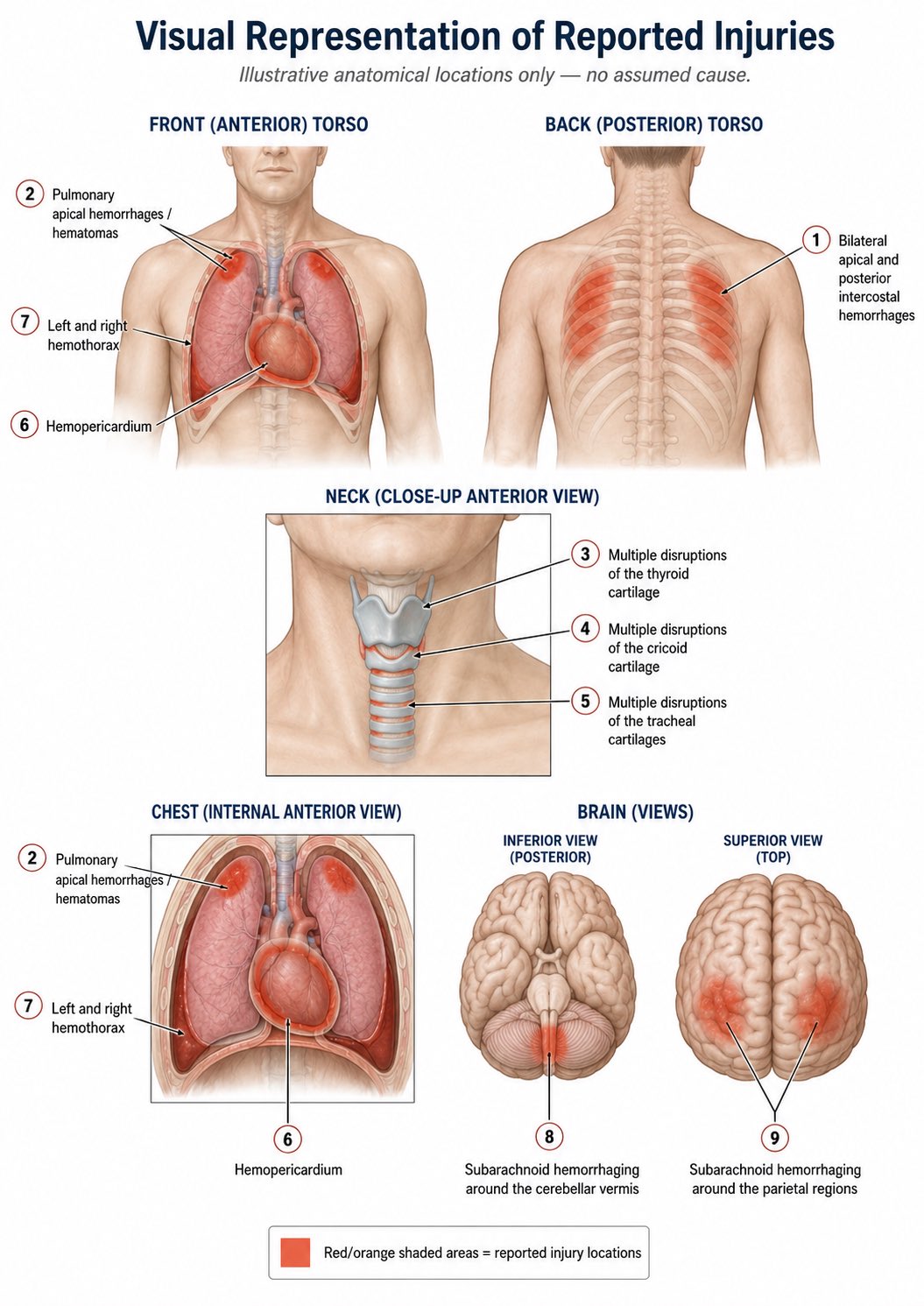
One page stating what most independent investigators had concluded by July 2026 about what killed Charlie Kirk and what did not. The official account is a single .30-06 round; this is where the reasons for rejecting it are gathered.
Read this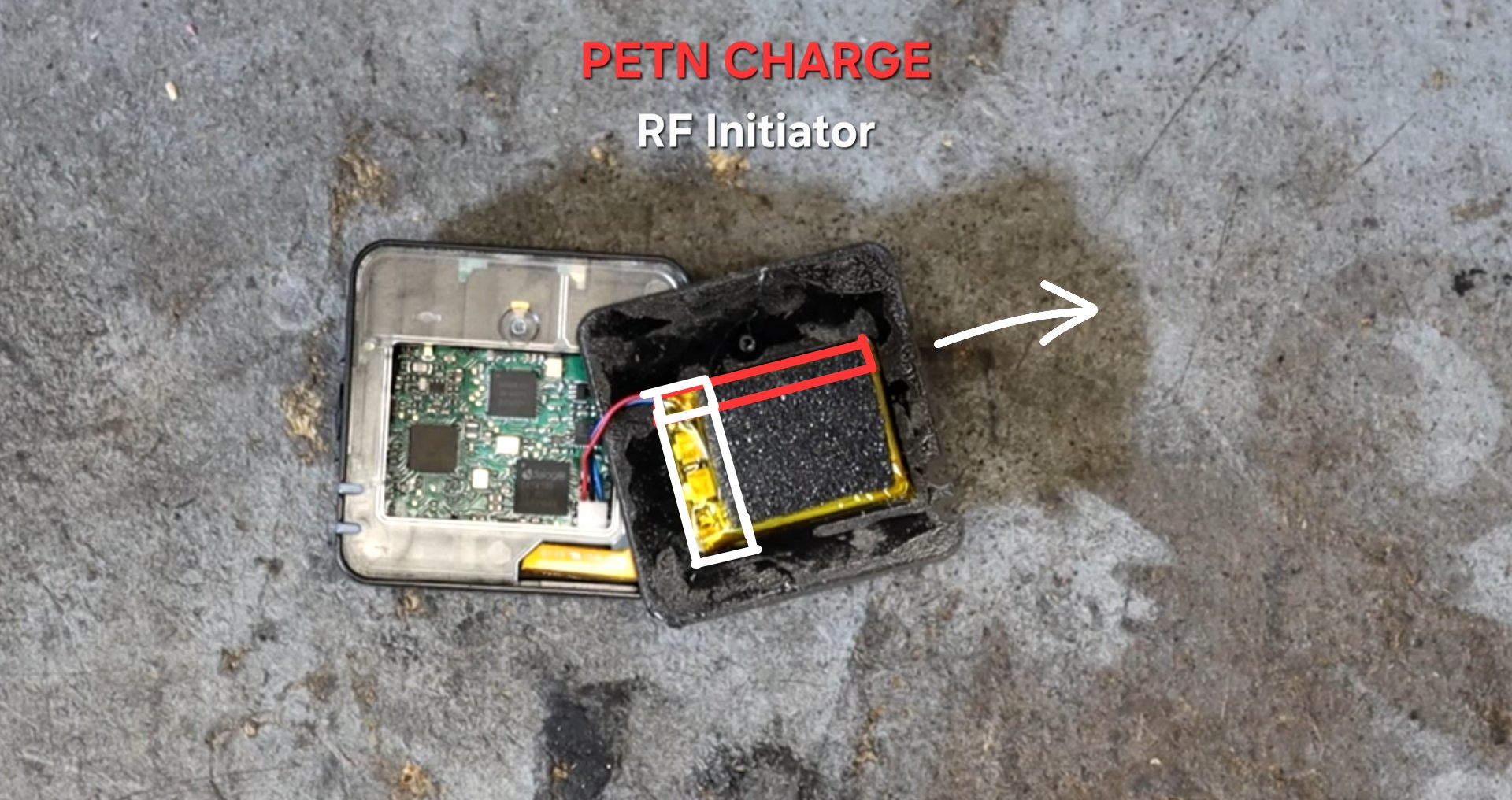
Microphone — The Exploding Mic Theory
The theory that the lavalier microphone on Charlie Kirk's shirt, not a rooftop round, was the kill mechanism. Shirt fabric reportedly moves spherically before the wound appears, and the audio reportedly splits one event into two.
Read thisThis website's author is @HolonCitizen on X and YouTube/@HolonCitizen. Follow me there.
Interesting
- The requirements demand all autopsy photos and every FD-302, plus records of destroyed evidence.
- Carlson appeared on Kirk's show hours before UVU and says his friends blame Israel politics.
- OSINT threads report Israeli-IP search spikes for defense counsel and a surgeon at odd dates.
Related Areas
- FBI
- Government Evidence
- (Possible) Cover‑up
- Government Organizations
- Fix the Charlie Kirk Situation
- Legal Investigation