Output Analysis: Law 4 - Trusted Investigations
Does the Law Meet the Human Requirements?
Requirement: Trusted people each get a team within FBI and within US intelligence
MET. Section 2 establishes two teams per Designated Trusted Investigator (one FBI, one intelligence), totaling six teams.
Requirement: Trusted person chooses who they work with
MET. Section 3(a) gives sole authority to select team members.
Requirement: Government employees do the investigation
MET. Section 3(d) provides for government employees to be temporarily reassigned.
Requirement: Nothing is allowed to stop them
MET. Section 4(b) prohibits any limitation. Section 7 makes obstruction a 15-year crime. Section 9 provides personal security.
Requirement: Allowed to release information
MET. Section 5(a) grants public release authority. Section 5(e) allows interim releases at any time.
Requirement: Classified info removed but results disclosed
MET. Section 5(b-c) allows only narrow redactions. Substance must always be disclosed.
Requirement: Government employees can submit requests to join
MET. Section 3(b) allows direct submission to Designated Trusted Investigator, bypassing chain of command.
Requirement: Illegal for managers to block or persecute
MET. Section 3(c) makes it unlawful, including prohibiting surveillance of communications about team membership.
Requirement: Any government employee can send information for disclosure
MET. Section 8(a) allows direct submission to any team.
Requirement: Illegal to persecute anyone for disclosing
MET. Section 8(b-d) provides criminal penalties, reinstatement, treble damages, and rebuttable presumption.
Requirement: Trusted people are Candace Owens, Dave Smith, Tucker Carlson
MET. Section 1(a) names all three.
Requirement: Broadly investigate any and all information
MET. Section 4(a) gives access to ALL records from Laws 1 and 2 plus all Schedule A items. Section 6 mandates investigation of all 175 items.
Requirement: Include the 175 items as mandatory investigation targets
MET. Section 6 enumerates 8 investigation categories from the 175 items. Section 6(b) requires individual tracking. Section 11(b) requires final report to address all 175 items individually.
Key Improvements Over Previous Version
| Feature | Previous | Current |
|---|---|---|
| Investigation scope | General authority | 175 items as mandatory targets (Section 6) |
| Schedule A integration | None | Full enumeration and tracking |
| Personal security | Not addressed | Dedicated security detail (Section 9) |
| Anti-surveillance | Not addressed | Crime to surveil investigators (Section 9(b-c)) |
| Succession | Not addressed | Joint nomination by remaining investigators (Section 10) |
| Report requirements | General | Must address all 175 items individually |
| Access to Laws 1-2 records | Not specified | Explicit access (Section 4(a)) |
| Coordination mechanism | Not addressed | Voluntary shared findings database (Section 12) |
| Communication protection | Not addressed | Crime to monitor team membership communications (Section 3(c)) |
Potential Problems
Problem 1: Appointments Clause Challenge
Naming private citizens with government authority may face constitutional challenge.
Recommendation: Structure as congressional appointees under Article I. The 9/11 Commission provides precedent for private citizens with government investigative power.
Problem 2: Personal Security Threats
Given the nature of this investigation, Designated Trusted Investigators face real security risks.
Mitigation: Section 9 now provides dedicated security details and criminalizes surveillance of investigators.
Problem 3: All Three Investigators Compromised
No mechanism if all three are incapacitated.
Mitigation: Section 10 provides succession mechanism. If all three are simultaneously unable to serve, congressional committees should have backup appointment authority.
Problem 4: Coordination Between Teams
Six independent teams may duplicate effort.
Mitigation: Section 12 provides voluntary coordination mechanism while preserving independence. Redundancy is a feature, not a bug -- it makes suppression nearly impossible.
Recommendations
- Address Appointments Clause by structuring as congressional appointees
- Add backup congressional appointment authority if all three investigators cannot serve
- Consider adding independent legal counsel funded by investigation budget (DONE in Section 2(d))
- Ensure investigators' Schedule A tracking is public so citizens can monitor progress
Interesting In This Area
- Six teams, sole selection authority, and a fifteen-year obstruction penalty in this draft.
- Interim releases are allowed at any time, not held for a final report.
- The current audit adds security details and succession.
- Law 2's archived audit covers the intelligence disclosure half.
Interesting In Other Areas
- The Fix section is the plain-language version of these four bills.
- Your Actions Fix It lists records requests a citizen can file today.
- Vote is where the legislative path stops being theoretical.
Other Pages In This Section
Law 2: Charlie Kirk Investigation - Intelligence Services Disclosure Act
The archived earlier draft of the intelligence-community disclosure bill, back when Schedule A held 175 items. It already reached every element named in 50 U.S.C. 3003(4) — CIA, NSA, DIA, NRO, NGA, ODNI and the rest.
Read this
Human Requirements: Law 1 - DoJ/FBI Forced Disclosure
The plain-English demand behind Law 1, written before any drafting: every DOJ, FBI, ATF and local file released, any employee free to send records in, and retaliation made a crime. The statute is then audited line by line against this list.
Read thisOutput Analysis: Law 3 - Require Investigation
The audit of Law 3 against the citizen requirements: a mandated investigation with its own team, budget and timeline, and a parallel intelligence assessment directed by the DNI. Every requirement is checked against the section that carries it.
Read this
Human Requirements: Law 2 - US Intelligence Services Forced Disclosure
The plain-English demand behind Law 2: every part of the intelligence community — CIA, NSA, DIA, NRO — releases what it holds, and blocking an employee from coming forward becomes a crime.
Read thisElsewhere In The Investigation
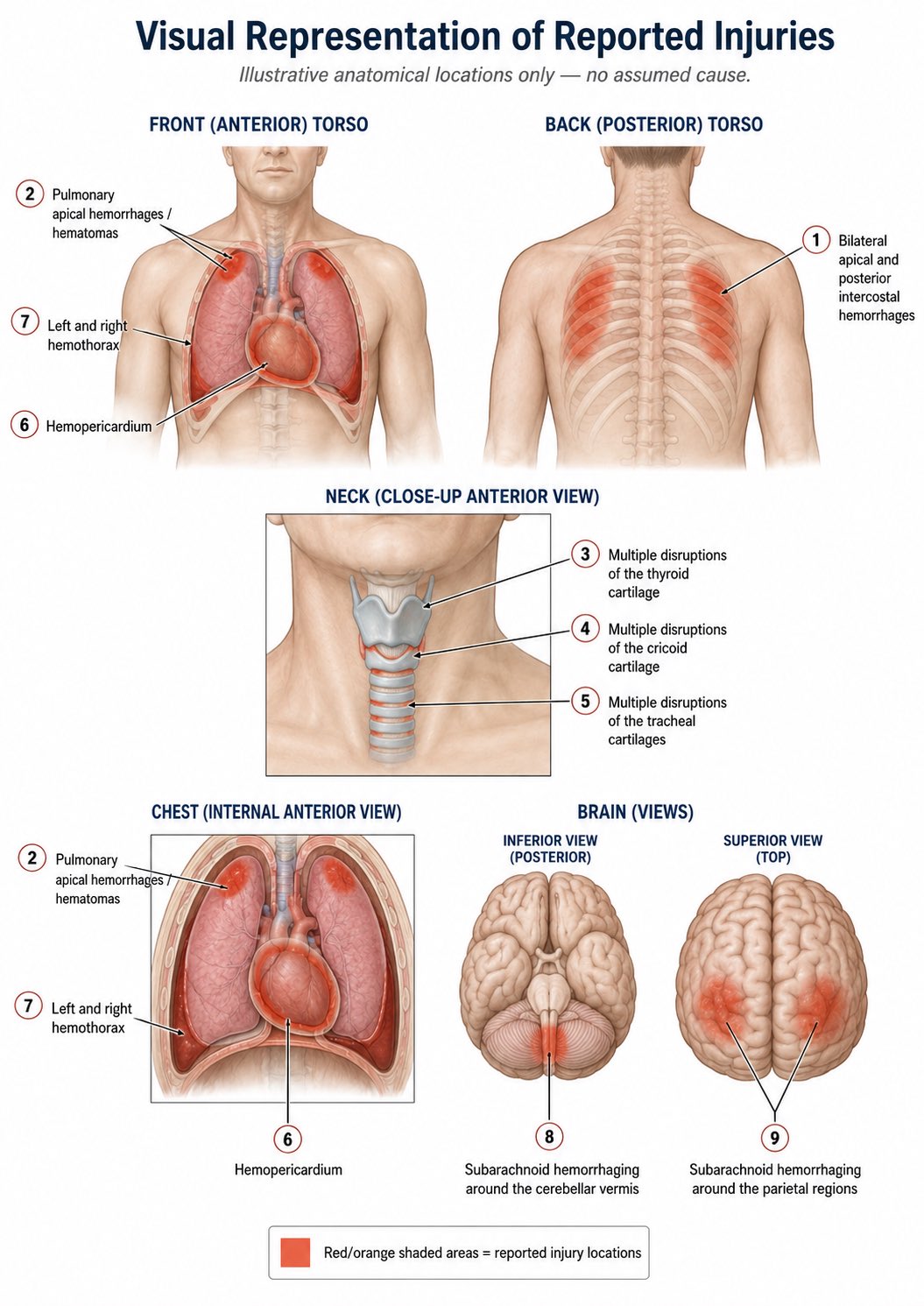
One page stating what most independent investigators had concluded by July 2026 about what killed Charlie Kirk and what did not. The official account is a single .30-06 round; this is where the reasons for rejecting it are gathered.
Read this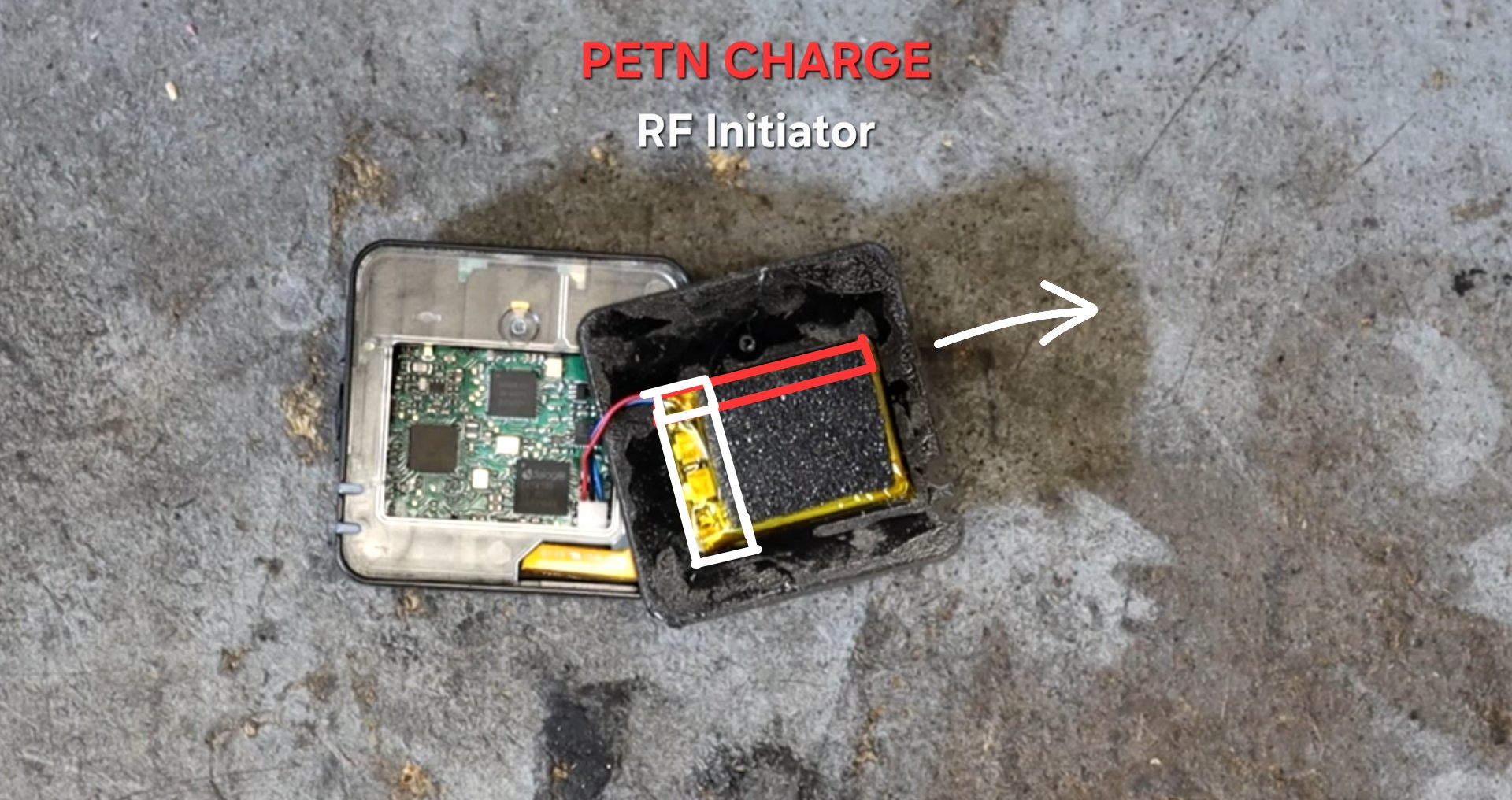
Microphone — The Exploding Mic Theory
The theory that the lavalier microphone on Charlie Kirk's shirt, not a rooftop round, was the kill mechanism. Shirt fabric reportedly moves spherically before the wound appears, and the audio reportedly splits one event into two.
Read thisThis website's author is @HolonCitizen on X and YouTube/@HolonCitizen. Follow me there.
Interesting
- "Slow rolling" records into unusable formats is now countered by mandatory searchable PDFs.
- A memo eight days before reportedly had Kirk replacing his COO.
- One clip claims the accused met a TPUSA representative three hours before the shot.
Related Areas
- Podcast Coverage
- FBI
- U.S. Intelligence
- Fix the Charlie Kirk Situation
- Your Actions Fix It
- Intelligence Services