Output Analysis: Law 2 - US Intelligence Services Forced Disclosure
Does the Law Meet the Human Requirements?
Requirement: All US intelligence services must release information pointing to the real killer
MET. Section 1(b) defines "covered information" with 8 broad categories. Section 2(a) mandates catch-all disclosure within 30 days.
Requirement: Broadly require any and all information about the investigation
MET. Section 2(a) uses explicit catch-all language not limited to any enumerated list. Section 1(b)(8) adds a catchall covering "any aspect" of the investigation.
Requirement: Include the 175 specific items for full disclosure
MET. Section 3 enumerates intelligence-related items from the 175 list in 8 categories. Section 3(b) incorporates the repository by reference. Section 9(e) requires individual response to each item.
Requirement: Not limited to the 175 items
MET. Section 3(c): "The specific enumeration does not limit the broad catch-all requirement. Both apply concurrently."
Requirement: Applies to all parts of intelligence services
MET. Section 1(a) lists all IC elements by name plus catch-all clause.
Requirement: Crime to stop any government employee from releasing information
MET. Section 5(a) makes obstruction a 10-year federal crime regardless of rank (Section 5(b)). Includes attempted violations (Section 5(c)).
Requirement: Cannot disclose sources, but must provide final output
MET. Section 4(a) allows only active source identity and active method redactions. Section 4(c) requires conclusions even when sources are protected.
Requirement: Any government employee can send information
MET. Section 7(a) allows submission to disclosure body, Trusted Investigators, or congressional committees.
Requirement: Illegal to persecute employees for disclosure
MET. Section 7(b-d) provides criminal penalties, rebuttable presumption, reinstatement, and treble damages.
Key Improvements Over Previous Version
| Feature | Previous | Current |
|---|---|---|
| Timeline | 60 days | 30 days |
| Scope | General | Broad catch-all + 175 items |
| Presidential override | Not addressed | Prohibited (Section 8) |
| Records preservation | Not addressed | At bill introduction (Section 6) |
| Private right of action | None | Any citizen (Section 10) |
| Review board | Unspecified | Permanent, congressional |
| Anti-embarrassment | Not addressed | Explicit (Section 4(d)) |
| Contempt authority | None | DNI = contempt (Section 9(d)) |
Potential Problems
Problem 1: "Sources and Methods" Exploitation
Mitigation: Section 4(c) requires substance disclosure. Section 5(a) criminalizes using the exception to withhold conclusions.
Problem 2: Records Destruction
Mitigation: Preservation at bill introduction (Section 6(a)). 15-year penalty (Section 6(b)). Forensic audit (Section 6(c)).
Problem 3: Constitutional Challenge
Mitigation: Congress has Article I oversight authority. IC is a creature of statute. Congressional findings section should establish basis.
Problem 4: Diplomatic Consequences
Mitigation: Section 4(d) prohibits withholding for diplomatic reasons. JFK experience showed these arguments are used to withhold records about defunct governments for decades.
Recommendations
- Include congressional findings to support constitutionality
- Add Special Master provision as backup enforcement
- Coordinate with Law 4 for Trusted Investigator access to classified intelligence
- Ensure coordination with Law 1 so both law enforcement and intelligence disclosures are cross-referenced
Interesting In This Area
- Section 1(b)(8) is the catch-all built to cover whatever the seven categories missed.
- Enumeration and catch-all apply concurrently, so the list never becomes a ceiling.
- The current audit runs the same test on the expanded text.
- The archived requirements are what each MET line answers.
Interesting In Other Areas
- The exploding-mic theory rests on a May 2025 Navy demolition-charge contract.
Other Pages In This Section
Charlie Kirk Assassination — Forced Disclosure
The section hub for all four proposed federal laws, plus the court discovery list and the exploding-microphone disclosure items. Full statutory text, not summaries.
Read this
Human Requirements: Law 3 - Require Investigation
The demand behind Law 3 is different from disclosure. The concern is not only that files are withheld but that the case is reportedly not being worked, so the requirement is stated plainly: the FBI and the intelligence services must investigate.
Read thisOutput Analysis: Law 4 - Trusted Investigations
The audit of Law 4: two teams per designated investigator, six in all, each with sole authority over who joins. Every citizen requirement is checked against the section that delivers it.
Read this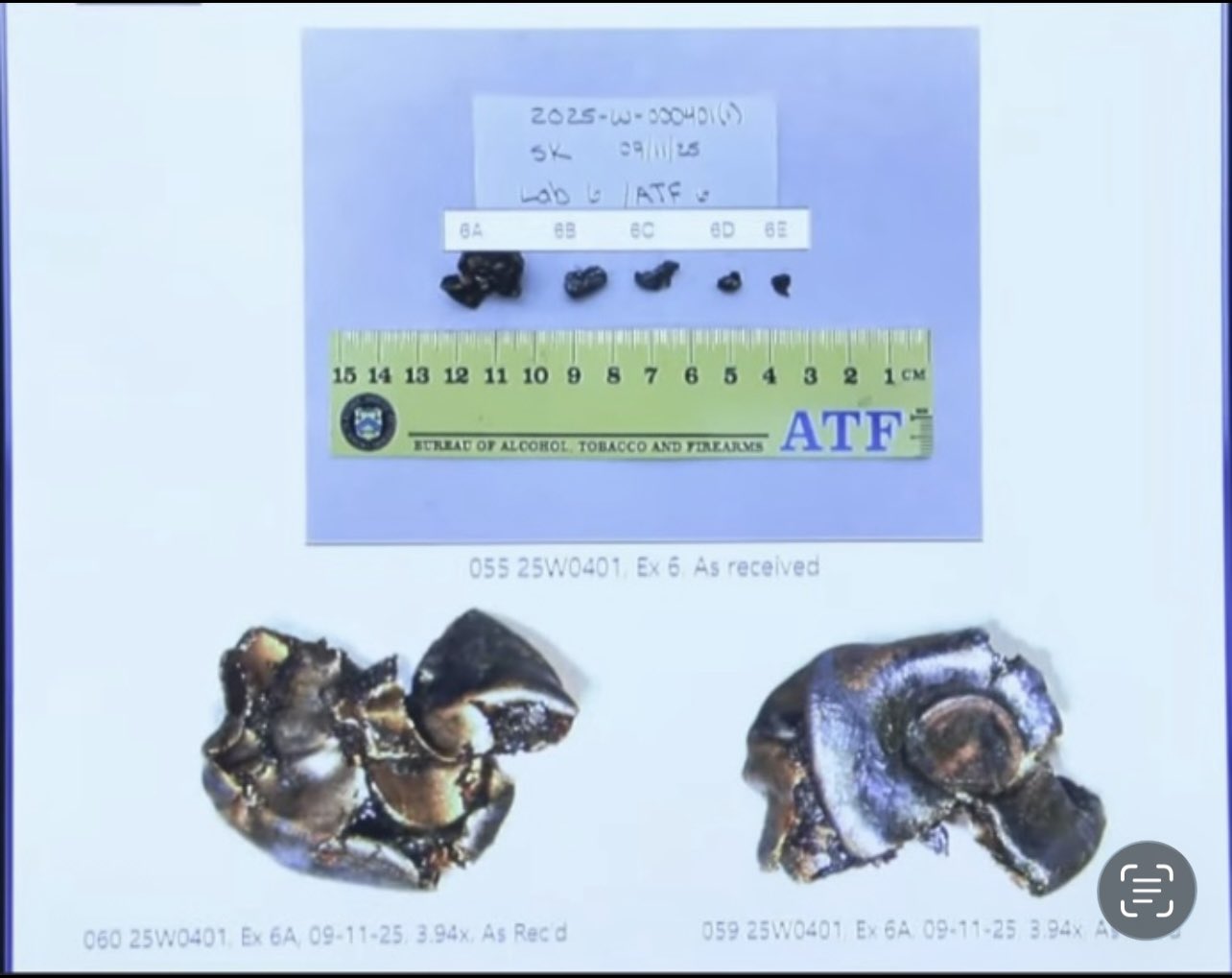
SVG Slide Requirements — Law #2
The slide specification for Law 2, matched to the Law 1 palette so the four read as one set. The frame has a single job: make plain that no agency file bearing on how Charlie Kirk was killed stays inside the building.
Read thisElsewhere In The Investigation
AES — Accurate Energetic Systems (Company Profile)
A Tennessee explosives maker whose federal contract list reportedly includes miniature XS demolition devices, anti-personnel. A paralegal pulled it from USASpending.gov; the plant was destroyed about a month after September 10.
Read thisThis website's author is @HolonCitizen on X and YouTube/@HolonCitizen. Follow me there.
Interesting
- Three presidents reportedly kept 3,500 JFK records withheld past the deadline, with nobody prosecuted.
- A chain of warnings ends with "They're going to kill me" that evening, per one account.
- Owens says three people were warned, yet none has ever been publicly named.
Related Areas
- U.S. Intelligence
- Intelligence Services
- FBI
- Government Evidence
- (Possible) Cover‑up
- Fix the Charlie Kirk Situation