Islamabad's Red Zone
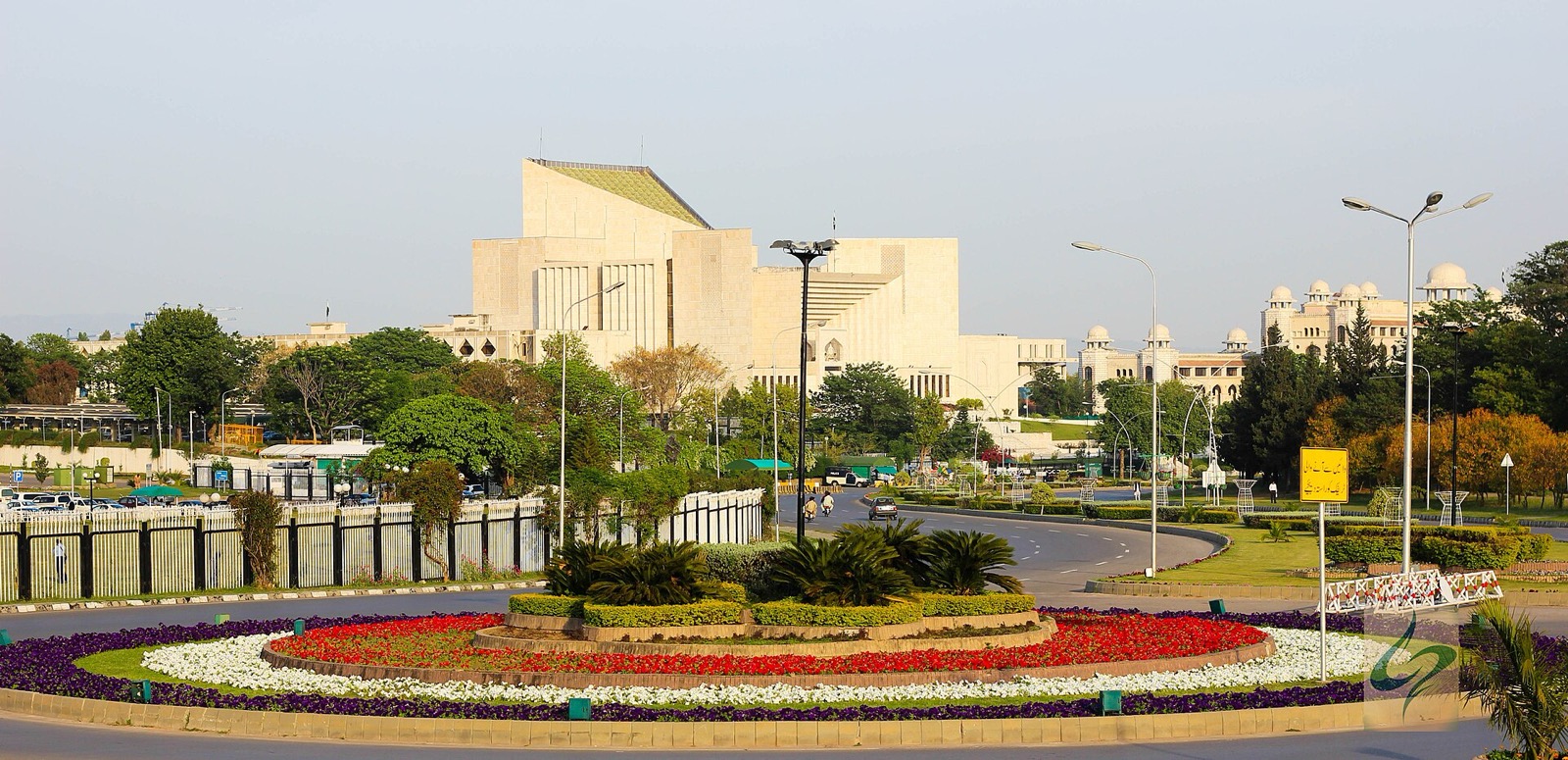
The Red Zone is Pakistan's government district, in the middle of the capital. The Islamabad Serena Hotel is inside it, next to the Foreign Ministry. Getting into the hotel during the talks meant first getting into the Red Zone, and in April 2026 the Red Zone was closed to anyone without official business.
What is inside
The Red Zone, established in 1967, "houses the highest executive, judicial and legislative authority buildings of the country" (Wikipedia: Red Zone). Along and around Constitution Avenue it contains:
- The Parliament of Pakistan and the Pakistan Secretariat
- Aiwan-e-Sadr (the President's house) and the Prime Minister's Secretariat and House
- The Supreme Court and the Election Commission
- The Ministry of Foreign Affairs, which is adjacent to the Serena
- The Diplomatic Enclave in Sector G-5, home to about 43 embassies and high commissions, including the U.S. Embassy. It is "not accessible to the general public without a pass" (Wikipedia: Diplomatic Enclave).
Photo: D-Chowk and the Supreme Court on Constitution Avenue. Ghezwanshamshad, 2014, CC BY-SA 4.0 — Commons.
Entry on a normal day
Even without a summit, the Red Zone has controlled entry points. When it is sealed, access is "restricted to authorised personnel via Margalla Gate only," and government employees are told to carry departmental ID at all times. The Diplomatic Enclave behind it is reached through numbered, guarded gates (Wikipedia: Diplomatic Enclave). Pakistan routinely seals the zone with shipping containers, police lines and Section 144 orders banning gatherings during protests and state visits (Dawn).
Entry during the talks
- Round one (April 9–12). The government declared public holidays for April 9–10, sealed the Red Zone and diverted traffic away from the Serena (Wikipedia: Islamabad Talks).
- Round two, planned (April 19–27). The zone was sealed again from Sunday, April 19. Government offices inside it were ordered to work from home, army personnel were posted at D Chowk, blockades went up at the President's House, and police diverted traffic from every road leading to the Serena. On April 22, Dawn reported that public entry "has remained sealed since Sunday" and that "major roads have been closed in recent days to facilitate the arrival of foreign delegations and advance teams" (Dawn).
- Lifted. On April 26, after Iranian Foreign Minister Abbas Araghchi left for Oman, Pakistan lifted the traffic restrictions around the Serena and the Red Zone (BPI News on X).
The one outside view: One Constitution Avenue
The one gap reported in the cordon was a view, not an entrance. One Constitution Avenue is a 22-storey residential tower right next to the Serena. Senior journalist Talat Hussain said video and photographs of the American and Iranian delegations were taken from it during the talks, with "clear views of the adjacent Serena Hotel and even interior angles of foreign embassies." He called it a "serious breach of diplomatic confidentiality" (MM News). That line of sight is an outside observation post. It is not a way inside.
Why the Red Zone matters to the phone claim
A phone "at the Serena Hotel" on April 10 had to pass through the Red Zone perimeter and then the hotel's own cordon (Who Could Get Inside). Both layers were run by the Pakistani state and both logged who came through. If the phones were detected by location data rather than by someone standing at a gate (How Phones Could Be Tracked), the question is precision. A reading placed at the Serena could also have come from the Foreign Ministry, an embassy, or One Constitution Avenue next door, and none of those can be walked into either.
Related Areas
This website's author is @HolonCitizen on X and YouTube/@HolonCitizen. Follow me there.