Vote
Overview
This page focuses on how citizens might respond through voting and civic engagement in light of the questions raised by the Charlie Kirk case. It does not endorse specific candidates or tell anyone how to vote. Instead, it outlines themes that have emerged in public commentary—such as demands for transparency, accountability, and reform—and suggests how those concerns can be evaluated in democratic processes.
Those questions begin with an unresolved one: Charlie Kirk was assassinated in public on September 10, 2025, the cause of his death is still contested, and the only criminal proceeding is the court case against Tyler Robinson, who is charged and not convicted.
Voting as a response to institutional trust questions
Many people reacting to the case have raised concerns about institutional trust—including law enforcement, courts, media, and political leadership. From a voting perspective, this raises questions such as:
- How do candidates and officials talk about transparency, oversight, and whistleblower protections in high‑profile investigations?
- Are they open to independent reviews or reforms when serious questions are raised about how a case was handled?
- Do they treat citizen investigators, journalists, and concerned families with respect, or dismiss them without engaging the substance of their concerns?
Voters can use these criteria, among others, to assess whether current or aspiring officials seem likely to improve or diminish trust in institutions.
Evaluating “bad laws” and proposed legal changes
The case has prompted discussion about laws that affect access to information and accountability, such as:
- Statutes governing autopsy records, medical‑examiner reports, and evidence disclosure in homicide cases.
- Proposed or existing social‑media and online‑speech regulations that could impact public discussion of sensitive investigations.
- Rules around public records requests, transparency, and data retention for law enforcement and related agencies.
Rather than accepting slogans, voters can review how candidates and parties explain and vote on specific bills, and whether they support reforms that balance privacy, due process, and the public’s right to know. See also: Law1 and Law2 for law‑focused ideas discussed in this project.
Holding officials accountable (claims vs. evidence)
Calls to “vote out” certain officials often appear in commentary about the case. When considering such appeals, it can be helpful to distinguish between:
- Documented actions – votes cast, policies implemented, public statements made, and verifiable decisions regarding the investigation or related reforms.
- Allegations or perceptions – claims that an official is part of a cover‑up, acted in bad faith, or failed to act, which may or may not be supported by primary evidence.
Voters can prioritize officials’ track records on transparency, integrity, and responsiveness, rather than relying solely on unverified accusations.
Civic engagement beyond the ballot
Voting is one tool among many. Other forms of engagement include:
- Attending public meetings, town halls, or hearings to ask informed questions about the case and related policy issues.
- Supporting independent journalism and legal advocacy that seek factual clarity and institutional reform.
- Participating in or organizing peaceful, lawful campaigns for specific policy changes (for example, strengthening evidence‑preservation rules or whistleblower protections).
These activities can help ensure that concerns raised by the case lead to constructive, evidence‑based improvements rather than reactive or purely partisan responses.
Laws (Charlie Kirk)
- The sealed autopsy and evidence disclosure officials are blocking, which lawmakers vote against forced-disclosure bills, and the FBI and intelligence files still withheld are not public yet; the Charlie Kirk Investigation Laws could bring these powerful truths out.
Civic Pressure Themes After UVU
Citizen investigators on X frame voting and legislative pressure around:
- Mandating FBI/DOJ and intelligence disclosure on political-violence cases.
- Strengthening state GRAMA/FOIA penalties for unjustified redactions.
- Electing officials who will fund independent investigators (see Charlie Kirk Laws).
This section endorses no candidates. It records how the investigation has entered civic life.
Interesting In Other Areas
- The four proposed laws are what a voter could ask a candidate to support.
- Court gag orders and discovery fights show how little reaches the public.
- Citizen action items list what to do beyond the ballot.
Elsewhere In The Investigation
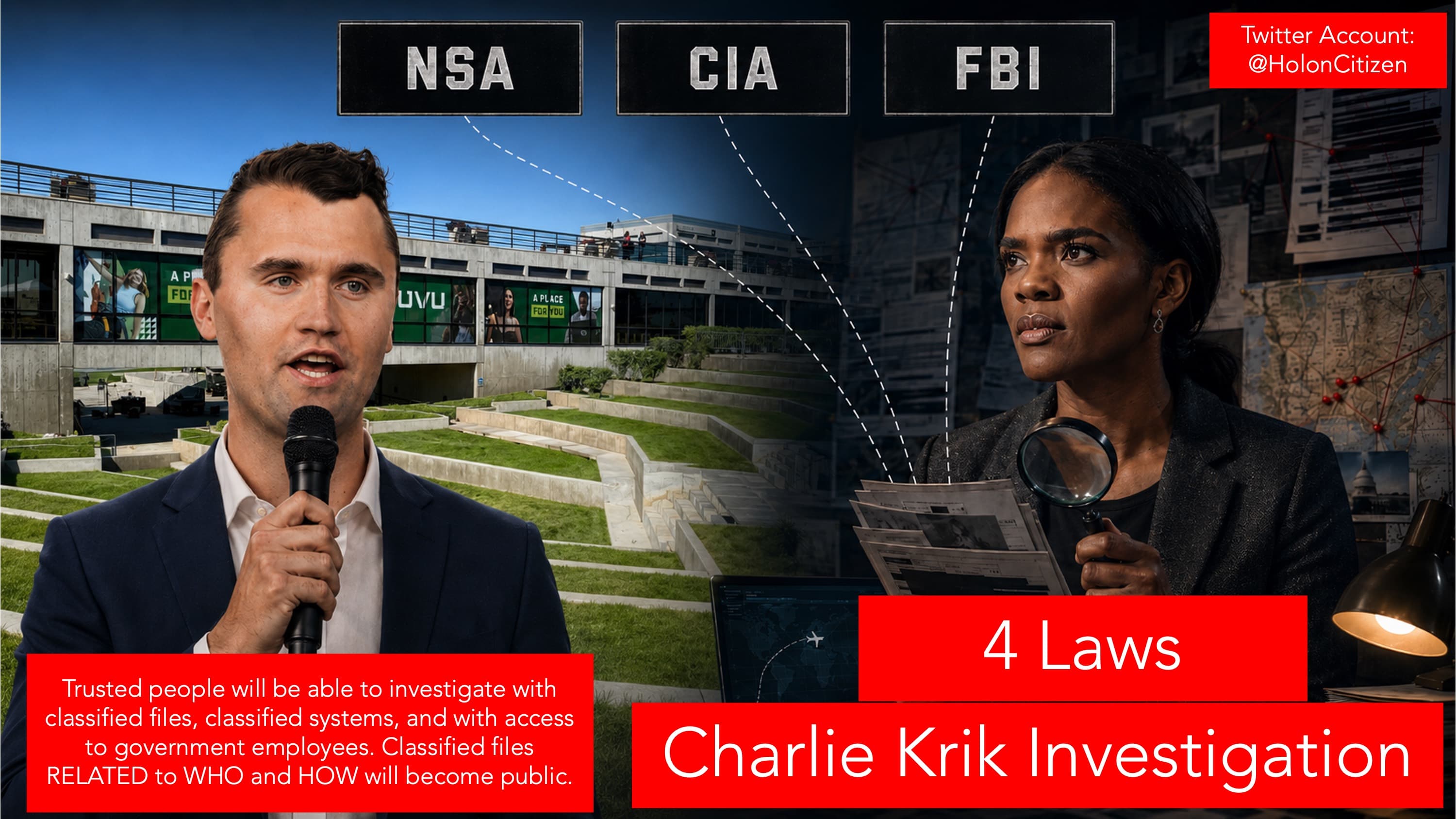
Four federal laws modeled on the Epstein Files Act, drafted to force disclosure and mandate a real investigation. Every unanswered question in the aftermath is downstream of records nobody can compel today.
Read this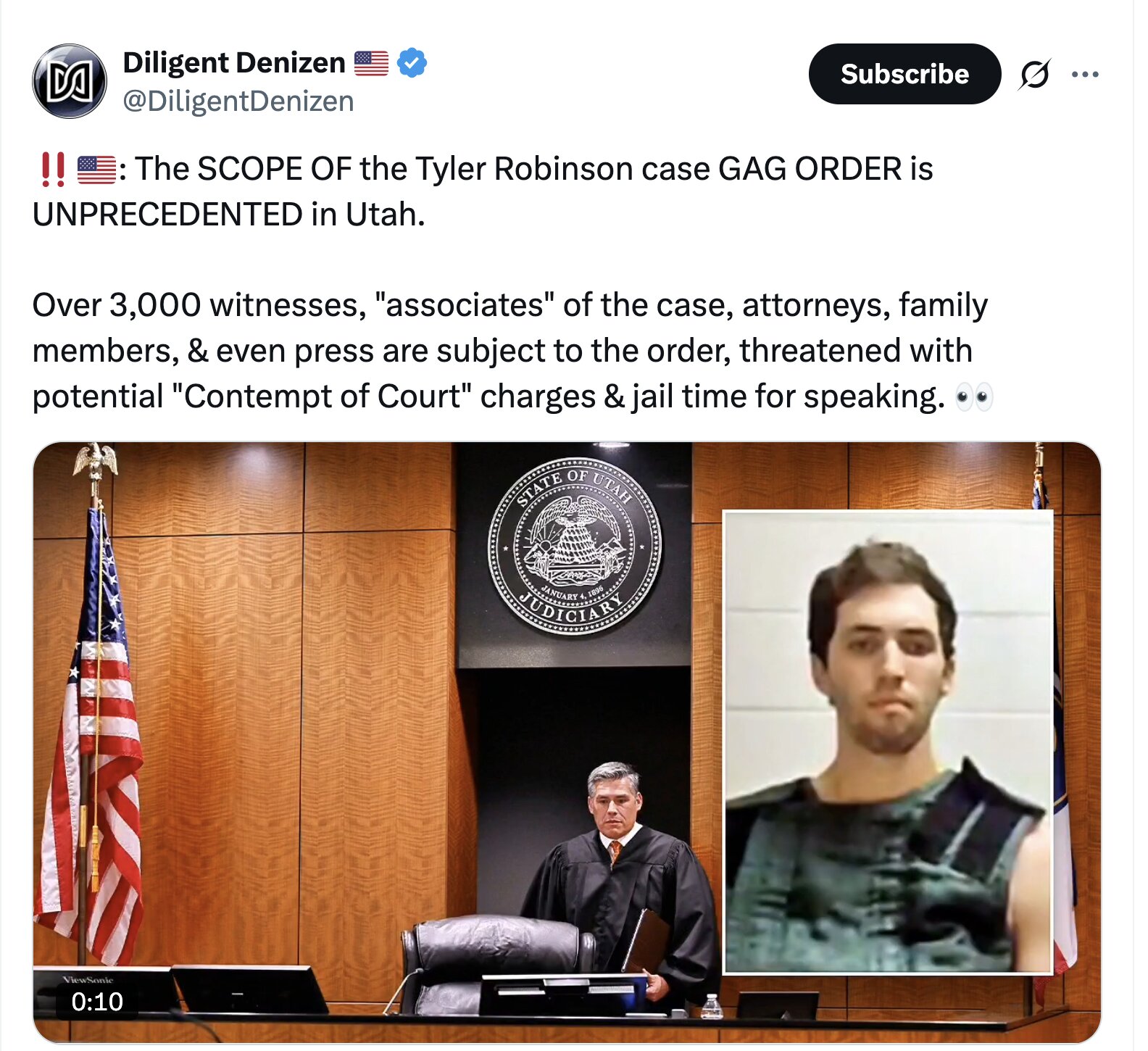
A December 2025 gag order, closed hearings, and a March 2026 motion to seal the inconclusive ATF report — opposed by a media coalition. The public record narrows in stages.
Read this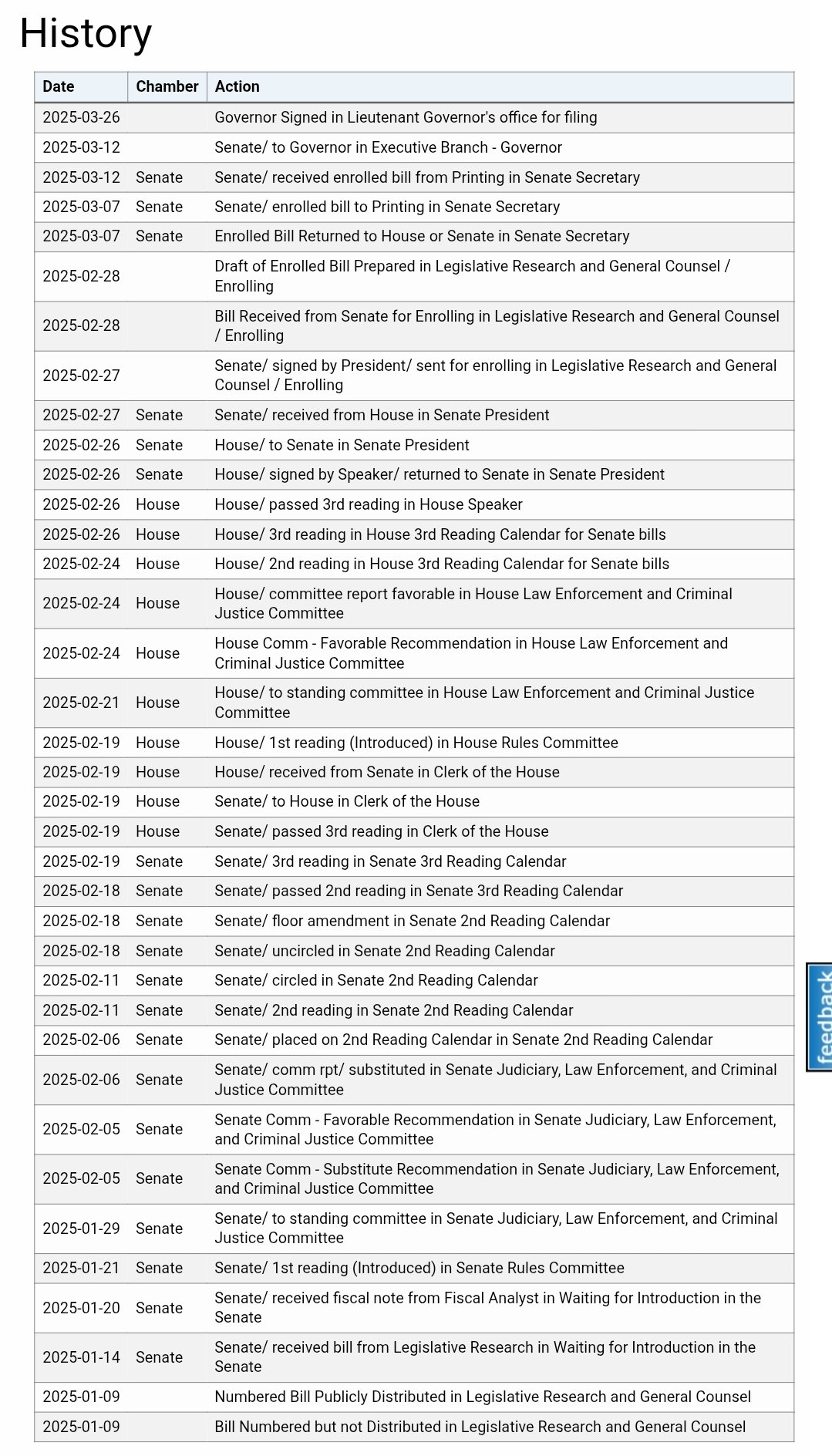
Concrete things one person can do: records requests, contacting representatives, preserving and sharing evidence. It is the shortest route from reading this site to changing anything on it.
Read thisThis website's author is @HolonCitizen on X and YouTube/@HolonCitizen. Follow me there.
Interesting
- "They will execute me tomorrow" reportedly went to Kirk's own head of security.
Related Areas
- Censorship
- (Possible) Cover‑up
- Media
Related
- Government Evidence
- (Possible) Cover‑up
- Censorship