Cover Up (Possible)
Reported allegations that evidence was destroyed, foreign leads were shut down, or the official narrative was constructed — not findings this site asserts as proven. Start with the investigation index. Tyler Robinson is charged, not convicted.
Start with the Cover-Up Investigation Index for the full routed roster. The claim pages below are grouped by the kind of cover-up alleged.
Physical scene & site alteration
- Six Inches of Dirt Removed
- Transport SUV Destroyed
- Rifle Found After Federal Redirect
- Black-Clad Rooftop Suspect Dropped
- Cameras & SD Cards Removed
- Officer Bodycam "Died" on Roof
Kill mechanism & ballistics
- Exploding Microphone Theory
- Removing Explosive Residue Cover-Up ↗
- AES Factory Explosion (Device Maker)
- Ballistics Sealed, Banned Test Revived
- Standard Forensic Tests Skipped
- Israeli Tech in the Case
- Robinson's Phone & Devices
Foreign leads & intelligence shutdown
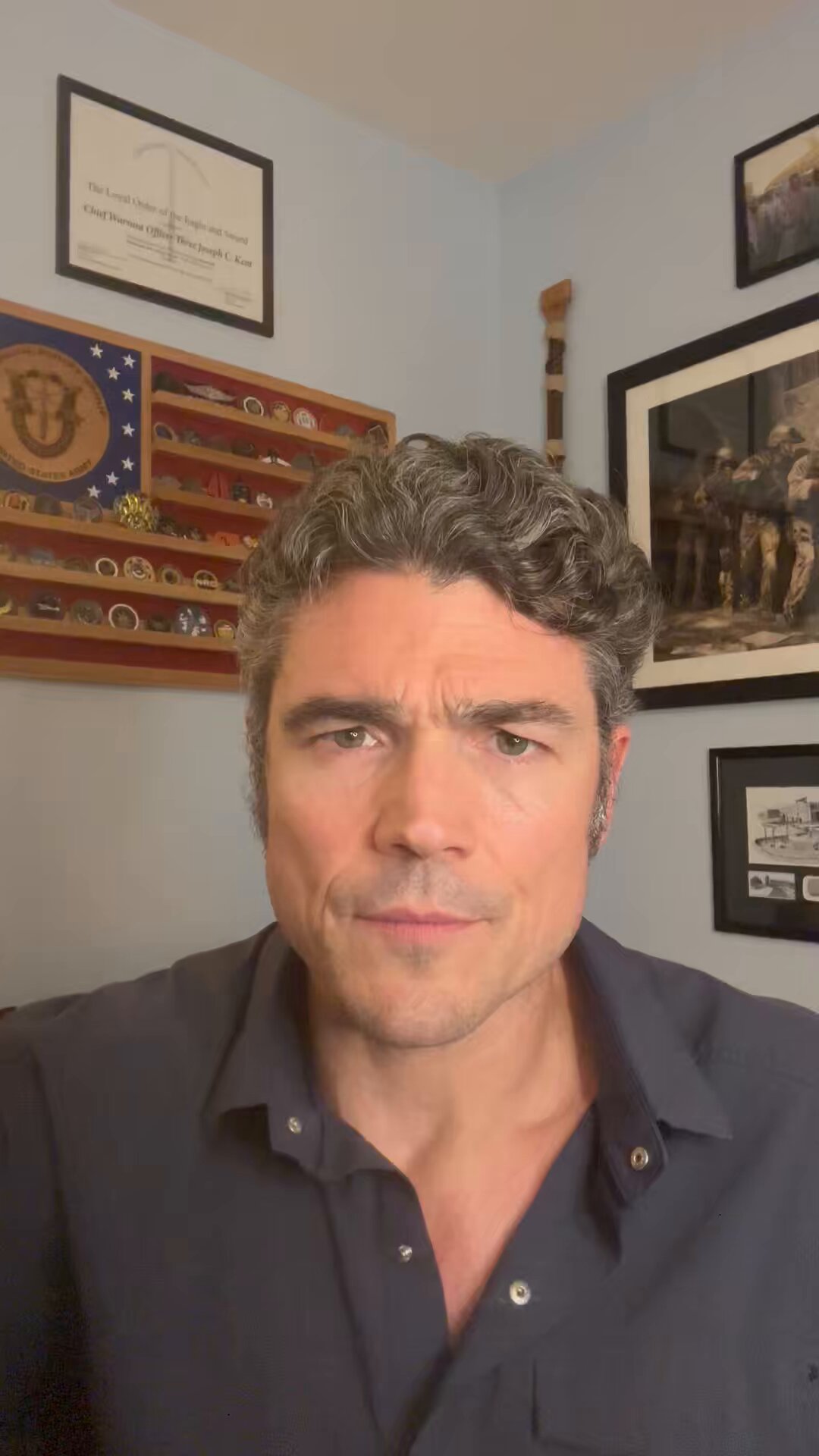
- Joe Kent NCTC Halt
- White House IC Halt
- Fort Huachuca Records Withheld
- Foreign-Nexus Flight Records
- CIA Blocked From Investigation
- Airborne Surveillance Records
- AES Tennessee Explosion
Digital evidence & records
Censorship & narrative control
- Google Search Censorship
- Narrative Psyop Operations
- Shot-Through-the-Heart Narrative
- Censorship of Investigators
- YouTube @HolonCitizen
- X @HolonCitizen
- 600+ Punished for Kirk Comments
- "Blood Libel" Branding
- Wikipedia Narrative Reference
- Foreign-Agent Distribution Capture
- Police Told Not to Interview
- "Trauma Counseling" Intimidation
Institutional & legal secrecy
Not Cover Up. But Interesting
Not every notable thread points to a cover-up. The items below are documented or widely discussed and worth understanding on their own — but they are not presented here as cover-up evidence.
Institutional & legal
Digital evidence & records
The physical-scene cluster is what many readers notice first: dirt removed and courtyard paving within days of the Sept 10, 2025 shot, contractor Dan Merrell quoting a reported "governor and FBI by Monday" deadline, and the parallel mic explosive theory that a shaped charge — not a .30-06 round — killed Charlie Kirk. These are reported claims and interpretations, not court findings.
Institutional and digital suppression threads run through Joe Kent's halted foreign-nexus review, witness video deletion (Ryne Simmons' 4K footage), the custody-vs-Discord timeline (Miranda ~6:25 PM vs confession ~7:57 PM Sept 11), and platform throttling of citizen investigators. Baron Coleman alleges a multi-agency frame of Tyler Robinson — presented as his reported claims, not this site's conclusion.
Narrative control has a case study that lives outside this section, in the cause-of-death area: the Shot-Through-the-Heart Narrative. Witnesses on live television described, in the first person, a shot "right directly to the heart" — a description Charlie Kirk's white shirt shows did not happen, since there is no chest entry and no blood from the sternum. That framing surfaced fast, reached TV news in several places, and then receded as coverage moved to the neck wound. Whether that is a selection effect of live booking (the ordinary explanation, argued in full on that page) or something installed is not settled by anything currently public. It is an attributed thesis, rated SPECULATIVE, and no witness is accused of lying or being coached.
Read Investigation Index → Dirt Removed + Mic Explosive for physical evidence → Joe Kent Halt + Custody Confession Timeline for institutional timing. For post-shot legal secrecy see After Legal Process. For DOJ prosecution framing see Legal DOJ Secrecy.
Removing Explosive Residue — The Cross-Cutting Thread
Several items above are usually read one at a time — dirt removed, the transport SUV, the skipped forensic tests, the mic explosive theory. Collected on one page they form a narrower question: if a charge detonated on Charlie Kirk's chest, explosive residue would be on fabric, skin, soil and upholstery, and a single swab would confirm or kill the theory. Item by item — the necklace, ten inches of soil, the pavers poured over it, the ceiling under the courtyard, the security detail's clothing, the Yukon, the charred object in it — those surfaces were reportedly removed, sealed, cleaned or resold, and no public record shows any of them tested for explosives. Each step has an ordinary explanation on its own; no wrongdoing by any agency or person is established. The full item-by-item hub is Removing Explosive Residue Cover-Up.
Asking A Witness To Erase His Own Copy
Most of the threads on this page concern physical evidence at the scene. This one concerns evidence that never left a private phone.
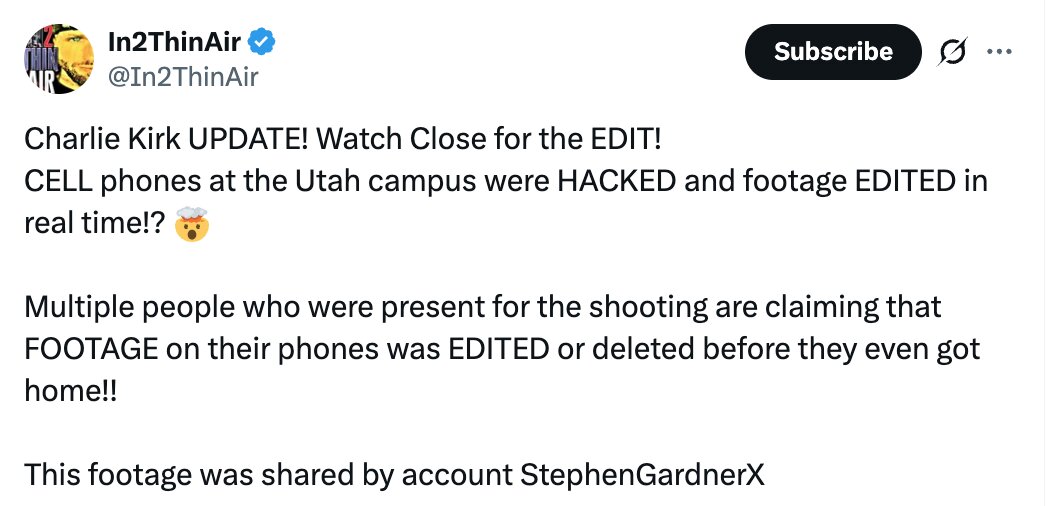
A witness who filmed the event says he sent his footage to the FBI as a tip, was escalated from a local field office to a contact he describes as national, and was then advised by that contact to erase the video from his phone — presented to him as being for his own wellbeing, since the victim had been his friend. He says a later call asked him to confirm he had erased it. He had not, and says the confirmation call is what pushed him to publish the footage and copy it across many hard drives in many places.
Note carefully what this is and is not. It is not the claim, made separately elsewhere on this site, that footage vanished from people's phones on its own — see Videos deleted remotely for that distinct allegation. This is an account of two telephone conversations, given on camera by the person who says he had them. The FBI has not addressed it publicly, ordinary welfare and evidence-handling explanations fit the same described facts, and nothing here asserts wrongdoing by any individual.
- Watch it: Erase It, You'll Get PTSD — The Clearest Copy Of That Account
- Full write-up: FBI Asked a Witness to Delete Their Video
Laws (Charlie Kirk)
Who authorized paving over the crime scene, the sealed discovery video and forensic reports, and witness-delete pressure are things the Charlie Kirk Investigation Laws may result in powerful truths coming out that aren't out yet.
Public commentary
Public commentary on X/Twitter and around the hearings continues to treat this section as active, with recurring themes across the cover-up area — all attributed claims, not findings of guilt by this site.
Related public coverage includes July 2026 preliminary-hearing reporting (defense DNA and ballistics challenges, and media exhibit rules under Judge Graf), along with Candace Owens and TPUSA succession-donor discussion where it intersects this area. Tyler Robinson remains charged, not convicted.
The Mirandize Timeline — Why It's Pivotal
Two categories of video around Tyler Robinson's surrender — lobby CCTV and officer bodycam — have both been declared unavailable, even as defense filings show a 6:25 PM September 11 Miranda reading that predates the ~7:57 PM Discord confession. Investigators argue the unedited custody video and phone-seizure logs would settle the case in minutes, which is why their absence is treated as a central cover-up question. See the Mirandize evidence hub and the GRAMA "no bodycam footage" admission.
Interesting In This Area
- Ten inches of dirt reportedly left before the paving contractor even arrived.
- The exploding microphone theory is the majority citizen finding this section keeps returning to.
- Joe Kent's counterterrorism review was reportedly stopped once a suspect was in custody.
- The investigation index routes all forty-plus claim pages by the kind alleged.
Interesting In Other Areas
- The microphone section carries the device evidence this overview only points at.
- Israel foreign leads and NCTC hold the foreign-nexus half of these claims.
- Dirt removed before the pavers is the scene-side record of the same morning.
- Signs of cover-up reads the same list from the defendant's side.
Other Pages In This Section
The routing table for the whole cover-up section, grouped by the kind of concealment alleged: scene alteration, kill mechanism, foreign-lead shutdown, digital records, narrative control and institutional secrecy. Start here if you do not yet know which page owns which question.
Read this
The Exploding Microphone Theory (Claims)
The exploding-microphone theory as a cover-up item: what is alleged, who alleges it, and what would have to be suppressed for it to be true. The majority citizen reading of the case runs through this page.
Read this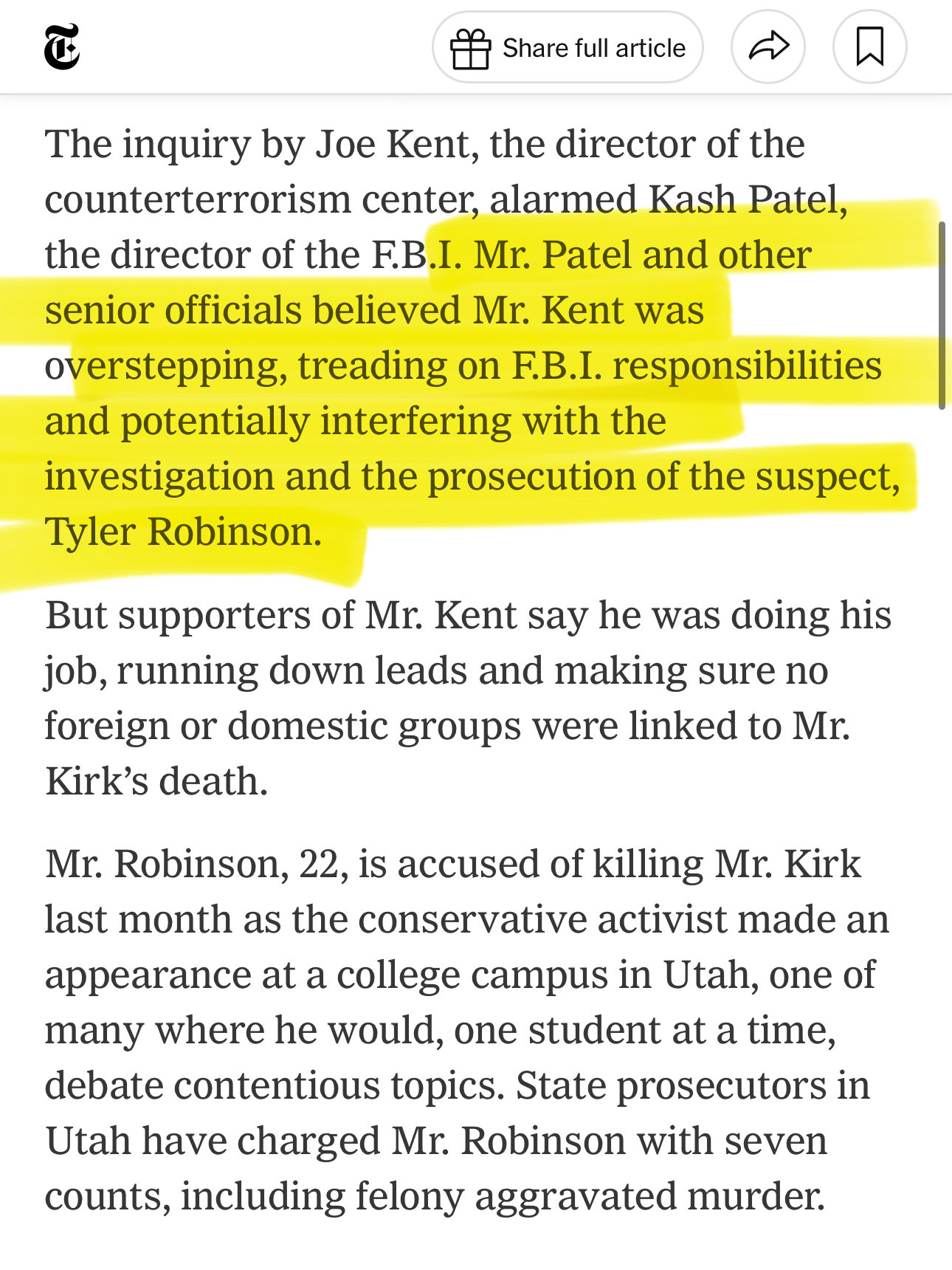
FBI Halt of Joe Kent's Counterterrorism Leads (Claims)
Reported allegations that a counterterrorism review into a possible foreign role was stopped before its leads were run down. Every person named is a living public figure who denies or has not commented, and nothing here is a finding of fact.
Read this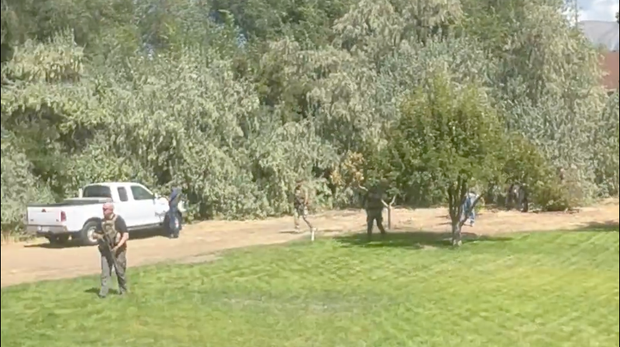
Ten inches of dirt reportedly taken out of the courtyard, and pavers laid over the ground where he fell. Whatever residue that soil held is gone.
Read thisElsewhere In The Investigation
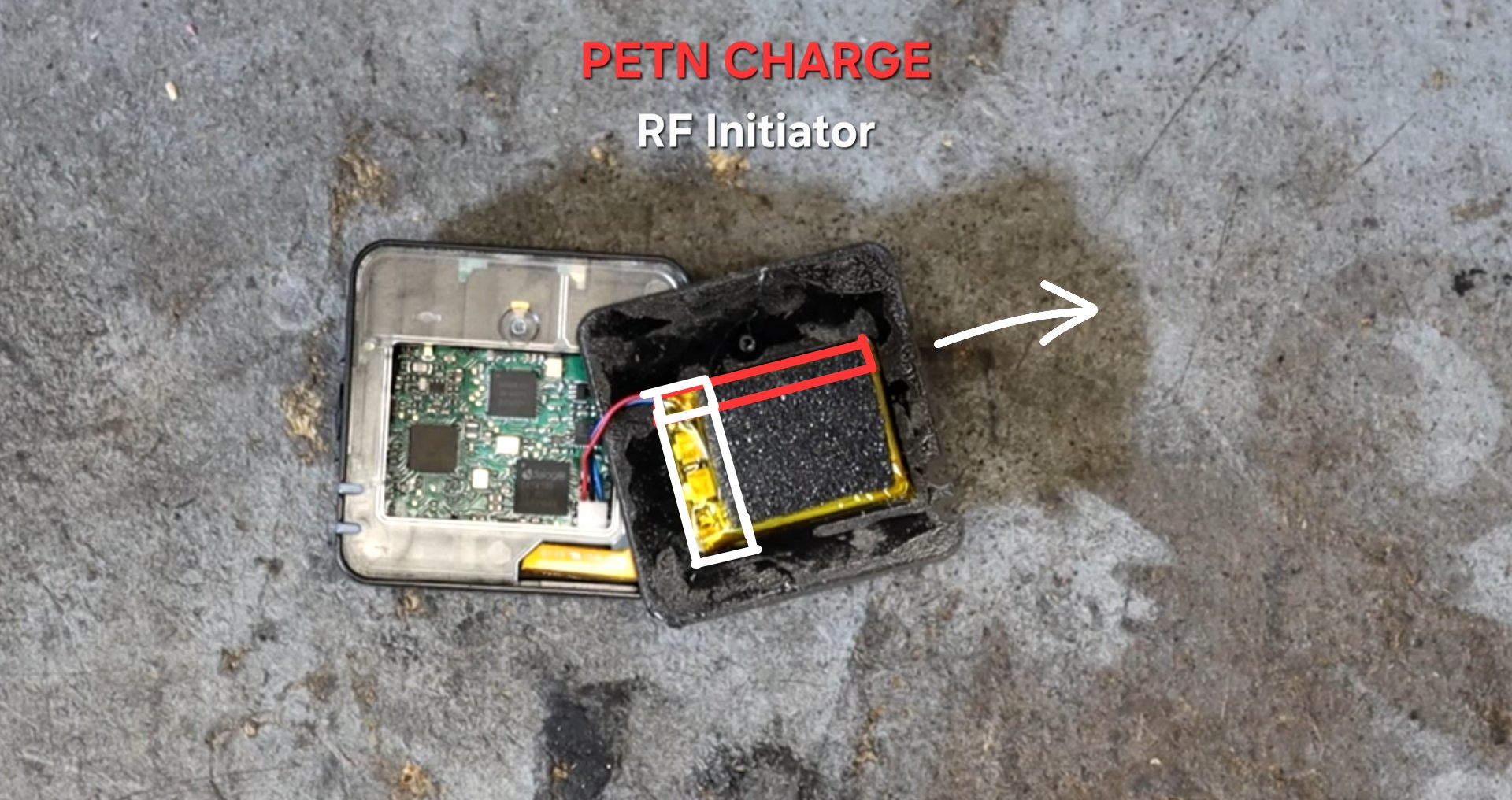
Microphone — The Exploding Mic Theory
The lavalier clipped to his shirt may have concealed a small explosive — the leading conclusion among citizen investigators, and the thread that runs through video, audio, procurement, and post-event debris.
Read this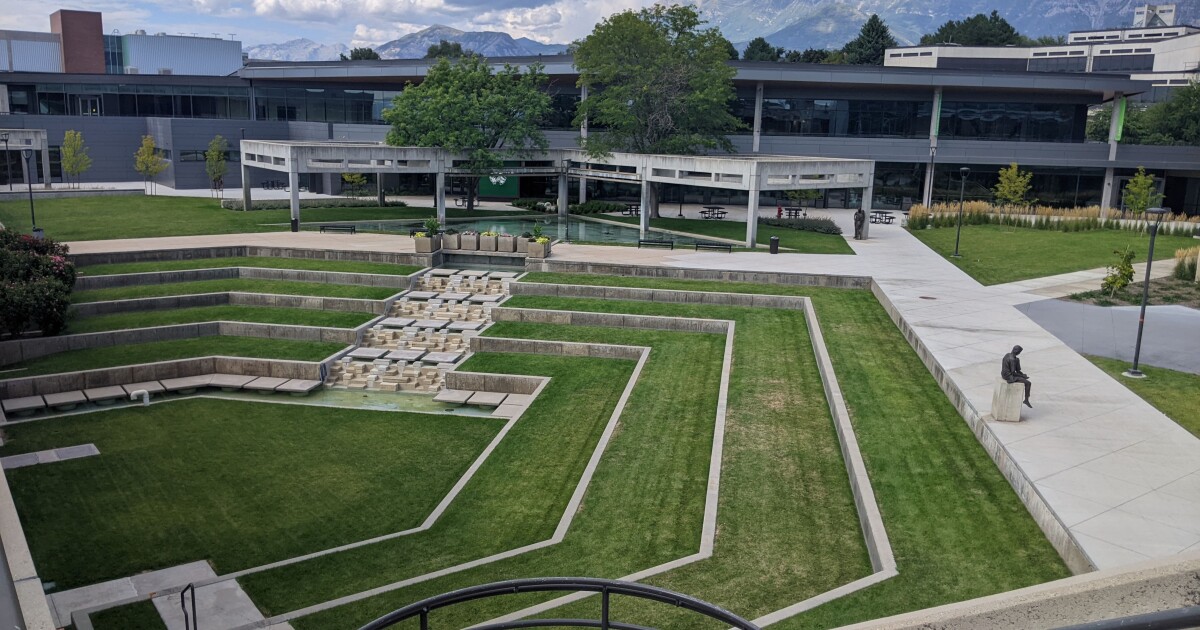
The leads pointing outside the United States — phones, travel, SIGINT, search patterns — and the prior question of whether the government ran any of them down at all.
Read thisNCTC — National Counterterrorism Center
The center that integrates terrorism intelligence across agencies, its chain of command running up to the President, and the reported order that stopped its foreign-involvement inquiry.
Read this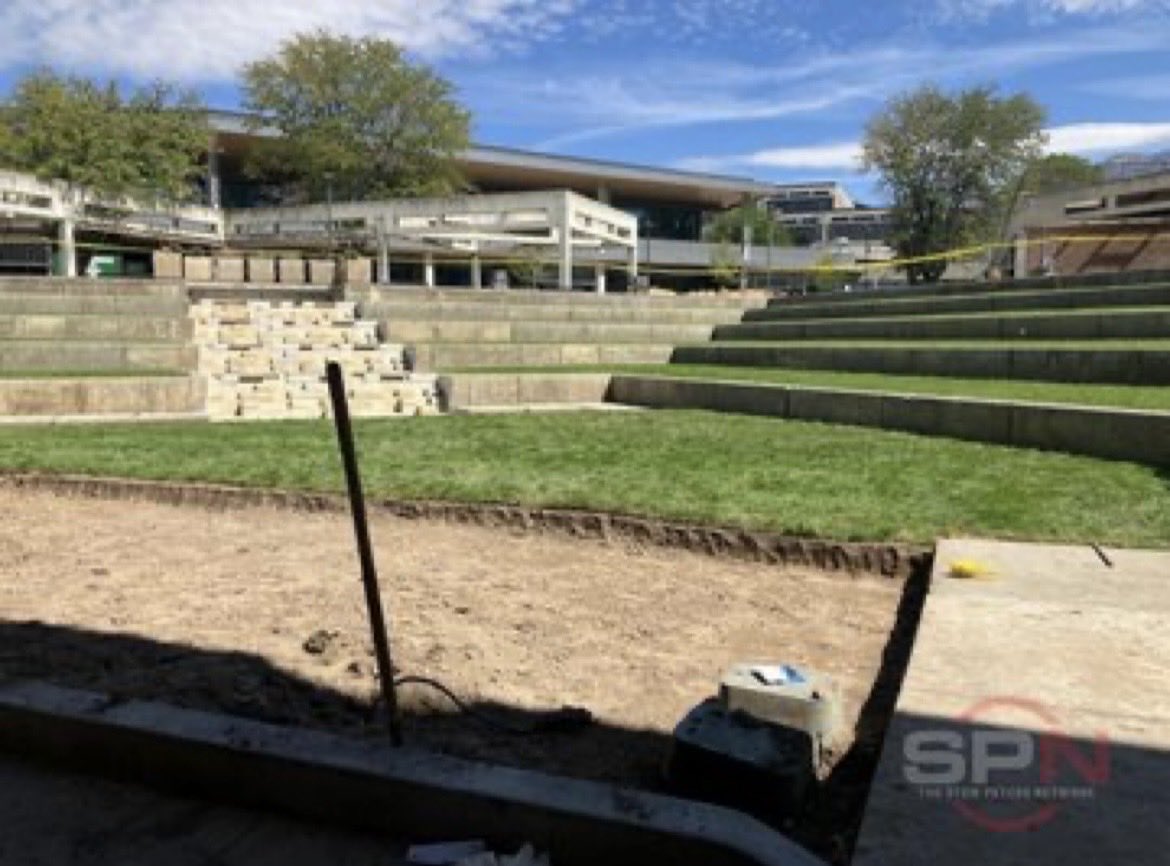
10 Inches of Dirt Removed Before the Pavers
By the time the paving contractor reached the courtyard on Sunday, September 14, roughly ten inches of soil was already gone — taken by an earlier, still-unidentified crew described only as men working for the state.
Read thisThis website's author is @HolonCitizen on X and YouTube/@HolonCitizen. Follow me there.
Marjorie Taylor Greene Questions the Narrative
Former U.S. Rep. Marjorie Taylor Greene said on camera (August 3, 2026) that she is "very much compelled by the lapel-mic stories," that having shot a .30-06 herself "it's hard for me to go along with the traditional narrative," and that the SD-card collection and the paving of the scene two days later are "very questionable."
Source: @SenseReceptor on X. Full quotes and transcript: her profile · archived video page: MTG Questions the Charlie Kirk Narrative.
Interesting
- Fifty days after the killing, the FBI subpoenaed the hardest web archive to delete from.
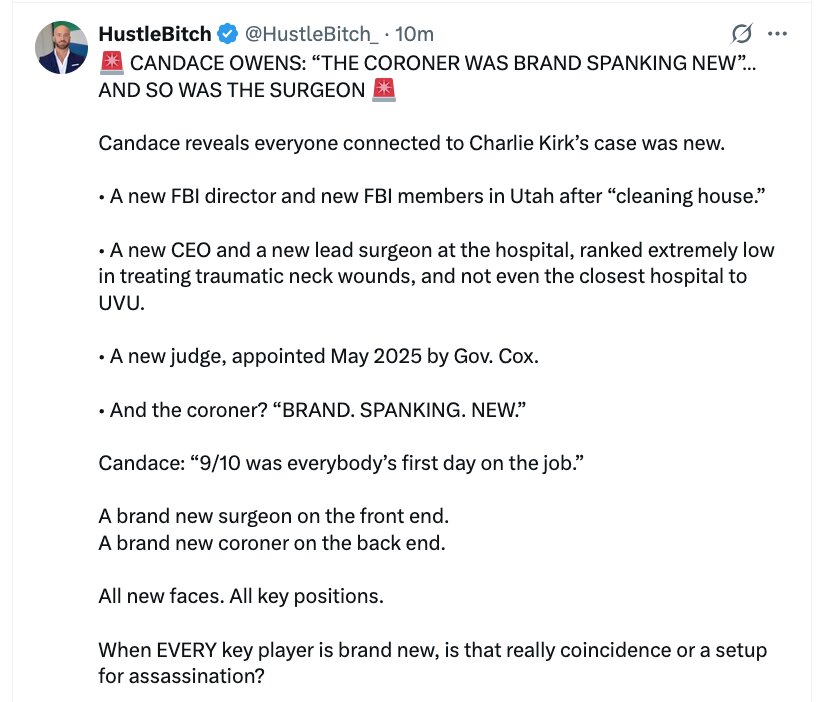
- The hospital's new CEO started sixteen days before the shooting, reportedly searched from an Israeli IP.
- Seven Timpanogos surgeons were reportedly searched from Israel weeks beforehand.
Charlie Kirk: The Threat He Said Actually Got His Attention
Speaking on stage before September 10, 2025, Charlie Kirk drew a line between two kinds of people who hated him. The stranger on a campus who wanted him dead, he said, did not bother him. The ones who did were the "close proximity" people — the ones he already knew, who had some sort of relationship with him, and who he says had betrayed or deceived him. Clip surfaced by @NihiloX on X, quoting @unhealthytruth.
"Yeah, there's like the purple haired jihadist on a college campus that wants to murder me in my family. Those people don't bother me. The other type of haters, though, are the ones that are the close proximity ones, and these are the ones I know, that had some sort of relationship with me and either betrayed me or deceived me or said that I could not succeed. That is a whole different. Those actually get my attention. Just like the random, troubled person on a campus, whatever."
— Charlie Kirk, full transcript of the 28-second clip above
Whether investigators ever pursued the close-proximity question, or closed it the moment a stranger was in custody, is the subject of this section.
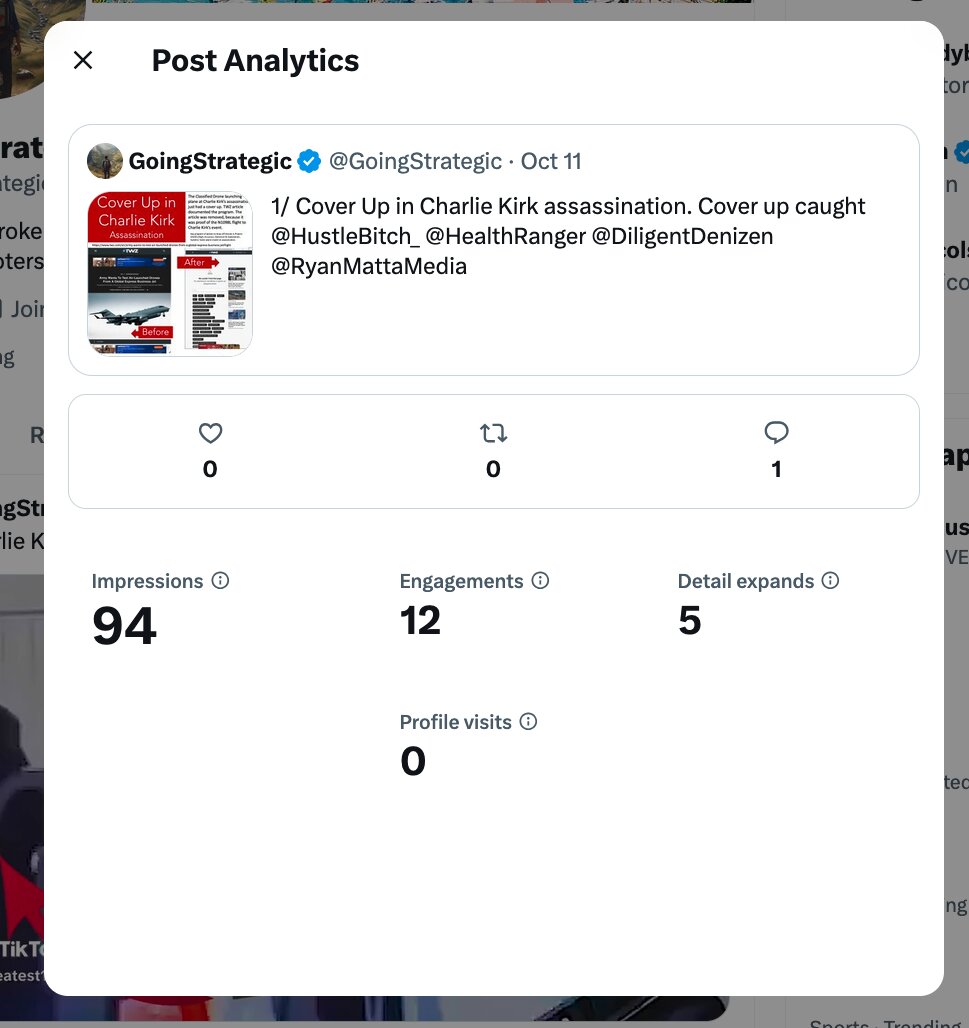
X.com posts:
Related Areas
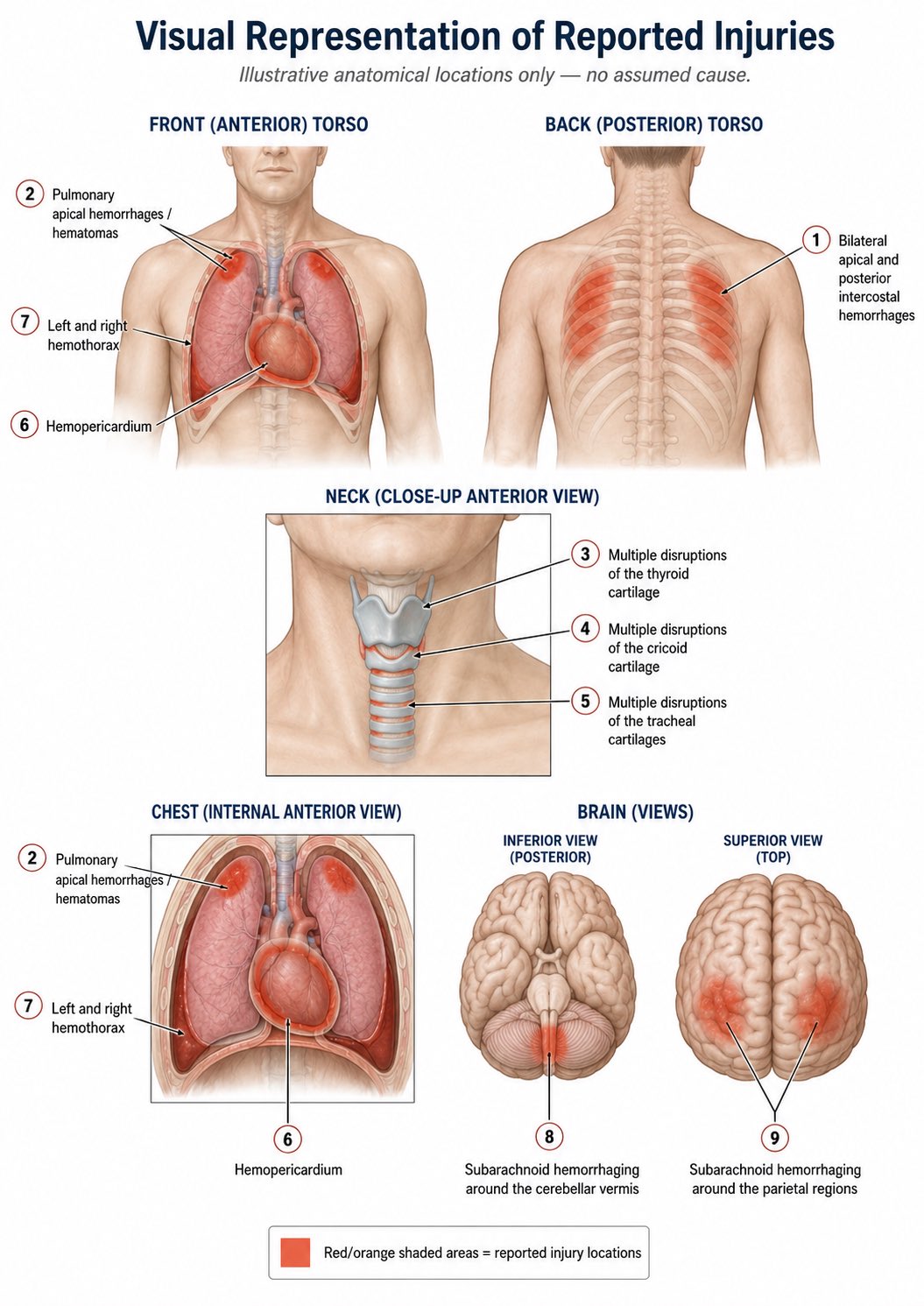
The shape charge is what killed Charlie Kirk.
Images
Videos
Footage related to this page. Each card opens that clip's own page, with the video, the full write-up, and its source.