Charlie Kirk Laws
These are the Charlie Kirk disclosure laws: four proposed federal laws that would force the government's records out and require a real investigation of his September 10, 2025 assassination, plus related reforms.
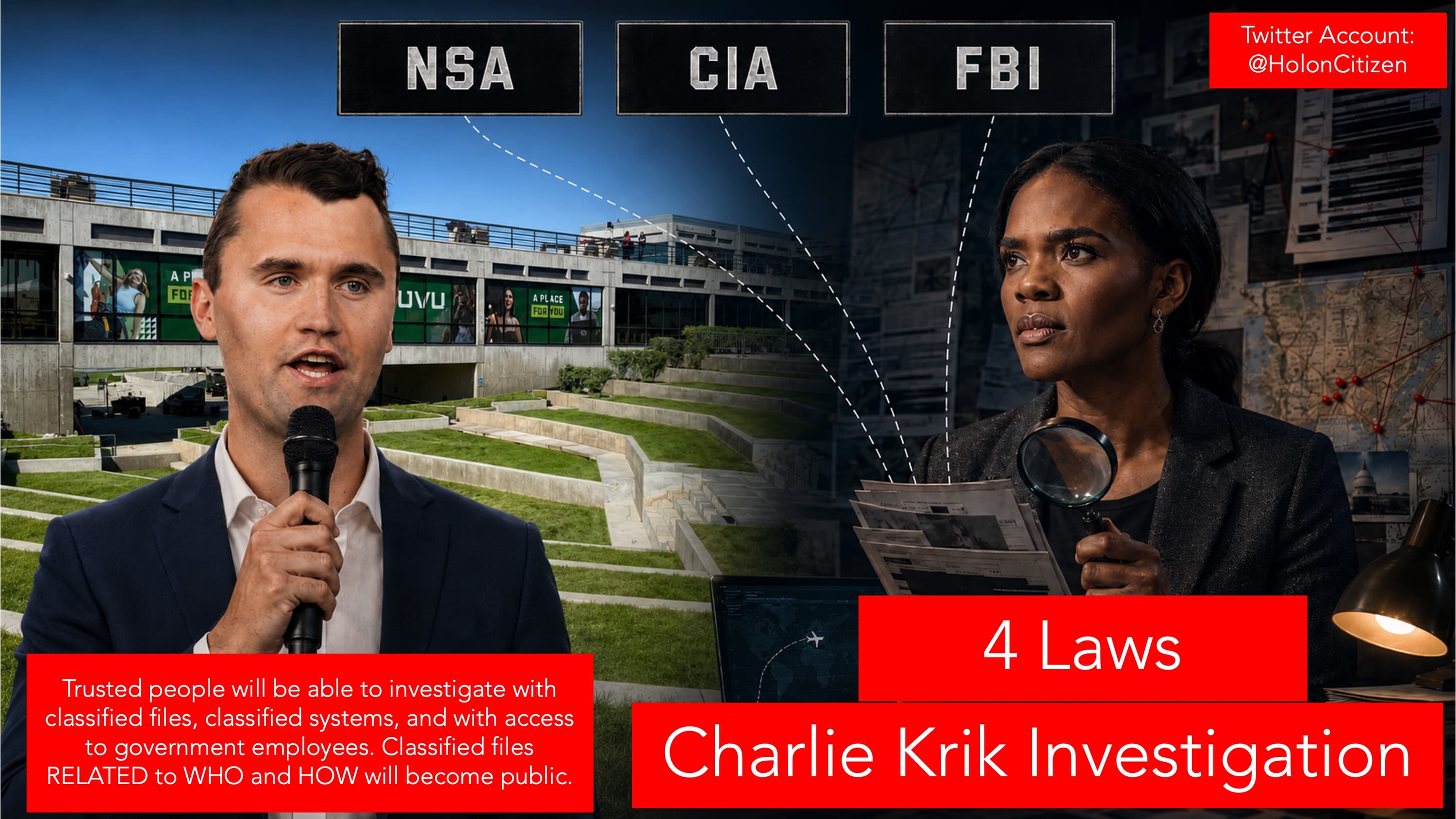
The path to justice runs through a set of reform plans discussed in the research corpus. Four of them are drafted as federal laws modeled on the Epstein Files Transparency Act. The rest address related gaps in event security, evidence handling, discovery practice, media transparency, foreign-influence disclosure, whistleblower protection, victim-family rights, civic responsibility, and the logic by which we weigh evidence.
Every page in this section describes ideas and claims raised by commentators and citizen-investigators. The pages do not assert that any named individual, agency, or institution has committed a crime or engaged in unlawful conduct. Attribution language is used throughout for specific factual claims. See Conclusion Logic for the evidence thresholds used across different domains.
The Four Core Laws
Law 1: FBI & DOJ Disclosure
Forces the Department of Justice, FBI, ATF, DHS, FinCEN, and all federal, state, and local law enforcement agencies to disclose every file related to the Charlie Kirk investigation within 30 days. Criminal penalties of up to 10 years apply for withholding and 15 years for destroying records. No presidential override is permitted — compliance is automatic and enforced by a permanent congressional review board.
View Law Number One →Law 2: Intelligence Disclosure
Compels the full U.S. Intelligence Community — CIA, NSA, DIA, NRO, NGA, military intelligence, and others defined at 50 U.S.C. § 3003(4) — to release all information that could identify perpetrators or illuminate the circumstances of the death. Redaction is permitted only for currently active human intelligence source identities and specific live technical collection methods; analytical conclusions must always be disclosed. The same criminal penalties and enforcement mechanisms as Law 1 apply, adapted for the intelligence community's distinct classification framework.
View Law Number Two →Law 3: Mandate the Investigation
Requires designated federal agencies to conduct a real, good-faith investigation — not merely release existing records. Dedicated teams of at least 20 agents per covered agency, each with a $10 million independent budget, must pursue every one of the items in Schedule A, led by a senior agent with no prior case involvement. An independent external monitor appointed by Congress has authority to direct investigators to pursue neglected leads, and if evidence emerges that a covered agency was itself involved, investigation authority transfers to an independent congressional commission.
View Law Number Three →Law 4: Trusted Investigators
Establishes independent investigation teams led by Designated Trusted Investigators drawn from across the political spectrum. Each investigator receives one law-enforcement oversight team and one intelligence-community oversight team, with full access to files and personnel, sole authority to select members, and the power to publicly release findings. Teams operate for a minimum of 24 months, cannot be terminated by any government official, and produce public reports on a set cadence addressing every item in Schedule A.
View Law Number Four →Companion Plans
Alongside the four core laws, the research corpus describes a set of additional reform plans that address related gaps.
Medical Examiner Transparency
A conceptual framework for balancing autopsy privacy with meaningful independent review in high-profile cases: baseline forensic-examination requirements, non-graphic public summaries, expert-access provisions, and narrowly tailored penalties that preserve dignity while permitting accountability.
View Plan →Whistleblower Protections
Protected channels for government employees and contractors to raise concerns about investigation conduct, with a rebuttable presumption of retaliation, mandatory reinstatement, treble damages, and criminal penalties for the most serious retaliatory conduct.
View Plan →Event Security Standards
Tiered baseline standards for public-event security — covering venue assessment, perimeter control, transparent contracting, coordination with local law enforcement, counter-drone and counter-electronic planning, medical response, digital-evidence preservation, and independent after-action review.
View Plan →Digital Evidence Preservation
Automatic preservation triggers for covered incidents, standardized chain-of-custody procedures, platform preservation duties with certificates of preservation, protection of witness-captured footage from deletion requests, and criminal penalties for destruction or remote deletion during preservation periods.
View Plan →Discovery Rights Reform
Extending Brady v. Maryland disclosure duties to federal agencies as custodial parties in serious criminal cases, with affirmative search duties, independent classification review, statutory deadlines, and real remedies for non-disclosure of material evidence.
View Plan →Media and Journalism Transparency
A federal journalist-shield law, anti-SLAPP protections, defined standing for citizen-investigators, strengthened public-records law, platform distribution transparency, and balanced safeguards for subjects of coverage against defamation and harassment.
View Plan →Foreign Influence Transparency
Modernized disclosure under FARA and related statutes, clearer definitions, proportional enforcement, transparency around foreign funding of U.S. non-profits, and coordinated disclosure for digital political advertising.
View Plan →Victim Family Rights
Structured family liaison, timely forensic briefings, participation in charging decisions, access to evidence for designated counsel, media-coordination support, and economic and counseling support for families during prolonged investigations.
View Plan →Civic and Institutional Plans
Vote out Cover-Up Politicians
Framework for citizens evaluating elected officials on transparency, oversight, and response to major investigative questions — with guidance on distinguishing principled positions from evasion and on avoiding unfair blanket accusations.
View Plan →Ask Churches to Ensure Justice Happens
How faith communities can support grieving families, create space for honest conversation, model principled concern for justice without incitement, and encourage civic engagement rooted in conscience rather than collective blame.
View Plan →TSUSA: Ethically Aligned Organizational Reform
Non-profit governance reforms that organizations like TPUSA could consider in light of the Charlie Kirk case — independent audits, donor-influence boundaries, internal review committees, standardized security protocols, confidential whistleblower channels, and honest communication during crises.
View Plan →Conclusion Logic: Evidence Thresholds
Cross-domain reference to the evidence thresholds used in U.S. legal, administrative, military, and intelligence practice — so that citizen-researchers can match claims to the level of confidence the evidence actually supports.
View Reference →Pages in This Section
Core Laws
- Law 1: FBI & DOJ Disclosure
- Law 2: Intelligence Disclosure
- Law 3: Mandate the Investigation
- Law 4: Trusted Investigators
Companion Reforms
More Companion Reforms
- Discovery Rights Reform
- Media and Journalism Transparency
- Foreign Influence Transparency
- Victim Family Rights
Civic and Institutional
Background: What Needs to Change
This section gathers proposed reforms and areas for change discussed in connection with the Charlie Kirk case. These ideas reflect what commentators and citizen-investigators believe could improve transparency, accountability, and justice in future incidents. They are not legal advice and may not represent a consensus view.
Legal and Policy Reforms (Claims)
Several suggested reforms focus on laws and policies that affect information access and investigations:
- Disclosure and records laws — Proposals to ensure that critical records (autopsy reports, ballistics findings, key investigative documents) can be released in a timely and transparent way while respecting due process and privacy. See Law 1 and Law 2.
- Autopsy and medical-examiner statutes — Discussion of how current rules about autopsy photographs and reports may limit independent review, and whether adjustments could better balance privacy with public interest. See Medical Examiner Transparency.
- Mandatory investigation requirements — Ensuring that disclosure is paired with active investigation, not just the passive release of existing files. See Law 3.
- Independent civilian oversight — Embedding trusted civilian investigators with full access to agency files. See Law 4.
- Discovery in criminal cases — Extending Brady obligations to federal agencies as custodial parties. See Discovery Rights Reform.
- Foreign-influence disclosure — Modernizing FARA and related statutes. See Foreign Influence Transparency.
Political Accountability and Leadership
Another cluster of proposals centers on political leadership and oversight:
- Encouraging voters to consider how elected officials respond to serious investigative questions.
- Assessing appointments and oversight of key roles to ensure they are perceived as credible and independent.
- Supporting efforts to strengthen checks and balances between branches of government and between levels of law enforcement.
The page Politicians focuses on arguments advanced by commentators about voting and political accountability in this context.
Institutional Practice and Culture
Beyond formal laws, many suggestions involve changes in institutional practice and culture:
- Improving event-security protocols to reduce the risk of preventable incidents. See Event Security Standards.
- Enhancing digital-evidence handling, including clear policies on preservation and chain of custody. See Digital Evidence Preservation.
- Encouraging law enforcement and security organizations to communicate more clearly and proactively about what they are doing and why.
- Protecting insiders who raise good-faith concerns. See Whistleblower Protections.
Role of Civil Society and Community
Finally, many reform proposals emphasize the role of civil society and community organizations:
- Faith communities can support victims' families, promote accurate information, and encourage non-partisan calls for justice. See Churches.
- Organizations like TPUSA can adopt governance reforms that reduce donor-influence risk and strengthen ethical culture. See TSUSA.
- Independent research and watchdog groups can document timelines, collect public evidence, and push for formal inquiries without resorting to harassment or premature accusations. See Media and Journalism Transparency.
- Families affected by major cases deserve structured participation and support. See Victim Family Rights.
Together, these efforts aim to ensure that the lessons drawn from the Charlie Kirk case lead to constructive change rather than deepening cynicism. For related discussions about voting and civic action, see Vote.
What Citizen Investigators Emphasize on X
Across X, the case for new transparency laws is made with concrete gaps: crime-scene paving without lead-investigator sign-off, hospital footage without public inventory, foreign-lead shutdowns described by Joe Kent, sealed discovery, ATF inconclusive results debated without full exhibits, and witness video-deletion pressure. Fix pages translate those gaps into policy concepts—not into findings of guilt against living persons. Use Level 3 reform pages for the statutory sketches; use FBI, Gun & Bullet, and Cover-Up for the underlying claims.
UVU's 158-page After-Action Report never once mentions the house UVU owns on the hill above the construction site, 691 W 925 S, even though the rooftop man's exit path ran right beside it and the rifle was found at the base of that hill. Who was in that house on September 10, and whose vehicles were parked in front, may be the single fastest way to crack open who really carried out Charlie Kirk's assassination. UVU holds the keys, the approvals, and the records, so we all need to ask UVU to release a "UVU House / Charlie Kirk Report".
Interesting In This Area
- Discovery reform sets 30, 60 and 90-day clocks; digital evidence sets 180 days.
- Whistleblower drafts add treble damages and reach intelligence contractors, usually excluded.
- Conclusion Logic ranks about forty proof standards, from criminal conviction down to a hunch.
- Churches, voting and TSUSA governance are the non-statutory routes here.
Interesting In Other Areas
- The full statutory text of all four laws lives outside this section, with the discovery list.
- Your actions and voting are the two civic routes off this page.
Images
Other Pages In This Section
Law 1: Force Information Disclosure
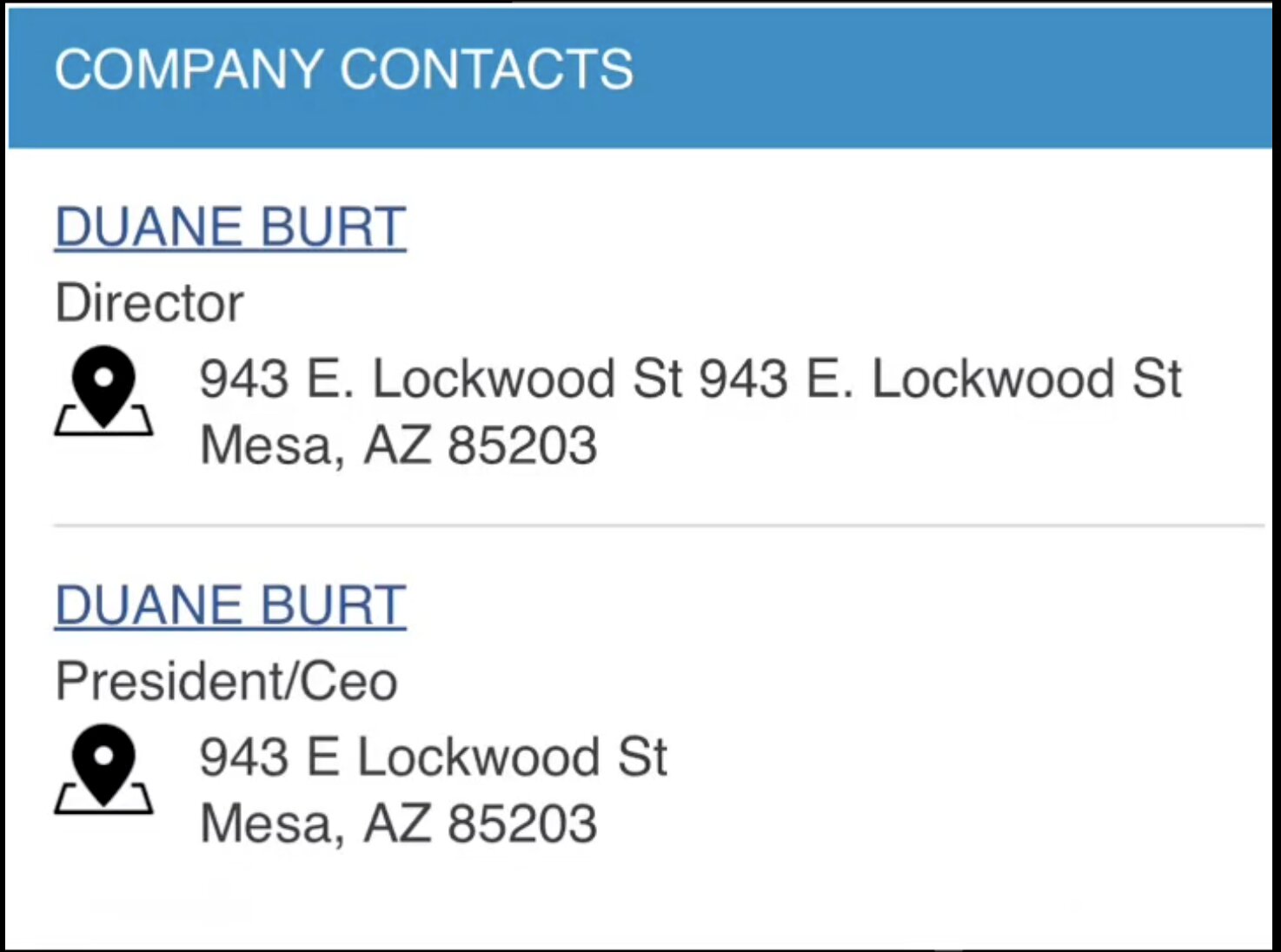
The earlier working draft of the disclosure law: categories of covered information, hard timelines, and a duty to log evidence that is missing or destroyed. The current text lives at Law 1.
Read thisLaw 3: Mandate the Investigation
Disclosure without investigation just releases what someone already chose to write down. This draft forces multi-agency teams with protected budgets, an independent monitor, mandatory database queries and a minimum duration.
Read thisThe forensic record that would settle how Charlie Kirk died has never been opened to independent review. This reform would require a thorough examination, a structured public summary, and a named route for outside experts to see the work.
Read thisMost of what the public knows about September 10 exists only as phone video and venue-camera footage. This proposal would freeze that material the moment a covered incident happens, with a minimum 180-day hold and criminal penalties for deletion.
Read thisElsewhere In The Investigation
Charlie Kirk Assassination — Forced Disclosure
The section hub for all four proposed federal laws, plus the court discovery list and the exploding-microphone disclosure items. Full statutory text, not summaries.
Read this
Concrete things one person can do: records requests, contacting representatives, preserving and sharing evidence. It is the shortest route from reading this site to changing anything on it.
Read thisThis website's author is @HolonCitizen on X and YouTube/@HolonCitizen. Follow me there.
Interesting
- Memory cards were allegedly removed before police could secure them.
- Only seven people took the live stand, and the week's lone FBI witness came from the defense.
- A veteran says a CIA official told him agents were turned around at an airport.
Related Areas
- Government Evidence
- (Possible) Cover‑up
- Proof Intel Services