Media
Most people met this case through headlines first — wires, live blogs, Fox panels, X threads. Start with the investigation index, then Sept 10 breaking news and Tyler Robinson trial press.
Coverage settled almost instantly on a single story of how Charlie Kirk was killed, and it has barely revisited that framing since — the reason this section is read alongside the cause-of-death analysis.
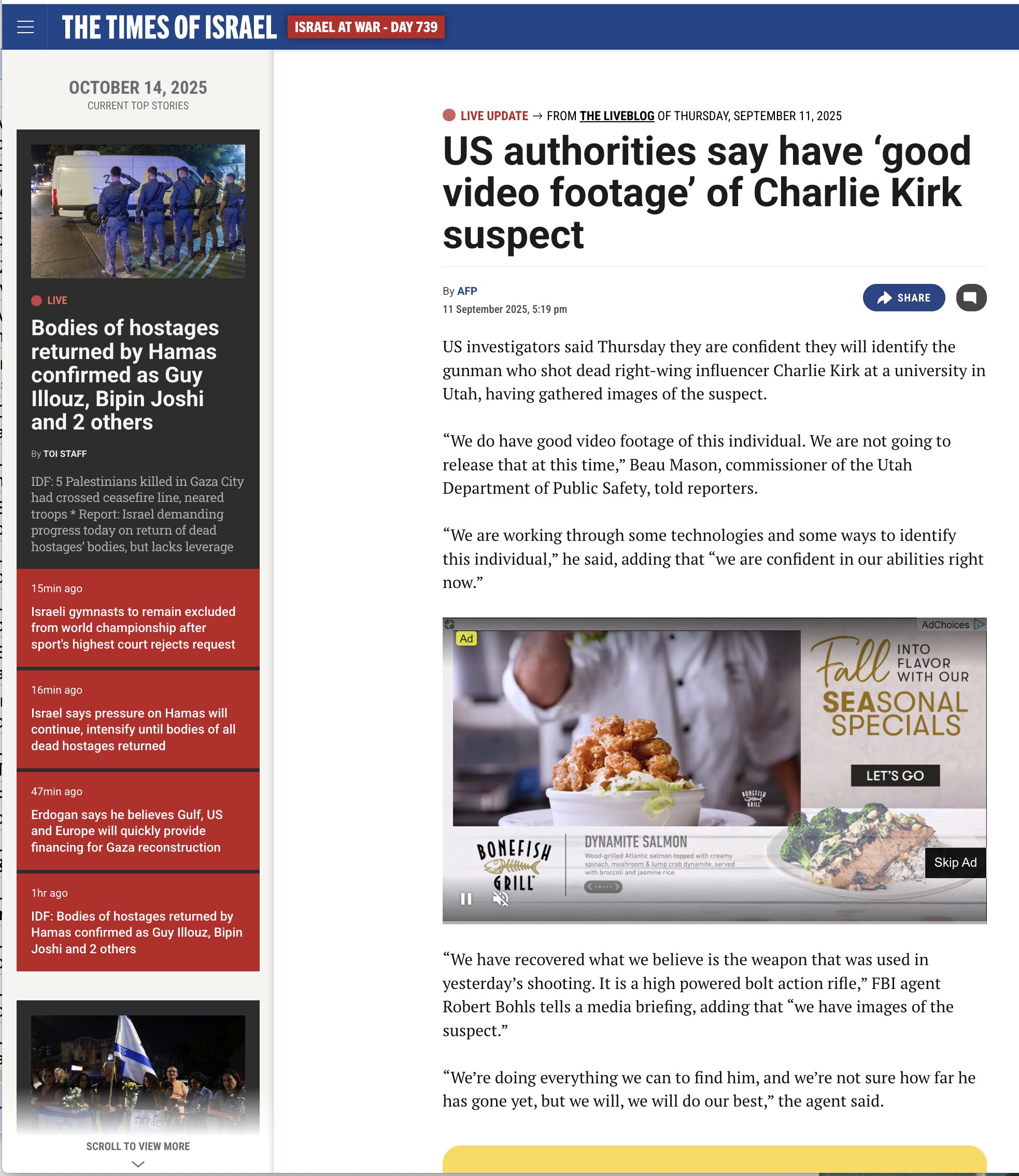
Media is where the government's bullet-killed-Charlie-Kirk story became common knowledge before ballistics, audio, and flight data had adversarial testing. September 10–11 live blogs fixed a template — political assassination, rooftop shooter, manhunt — while a premature FBI custody correction showed how official channels can mislead rebroadcasters (breaking news, FBI press). Tyler Robinson is charged, not convicted in all trial coverage referenced here.
The 2026 press arc shifted to courtroom ethics: a December 2025 gag order, a March 2026 Deseret News / Tribune / AP / NYT / Fox / CBS coalition opposing defense sealing of an inconclusive ATF report, and June 2026 contempt over prosecutor comments to TMZ, Fox, and USA Today (trial press). PBS supplied rare forensic literacy on what inconclusive ballistics does and does not mean — while citizen investigators on X and YouTube pushed Miranda timing, discovery dumps, and alternate-shooter threads mainstream desks deferred (social platforms, Mainstream vs Alternative).
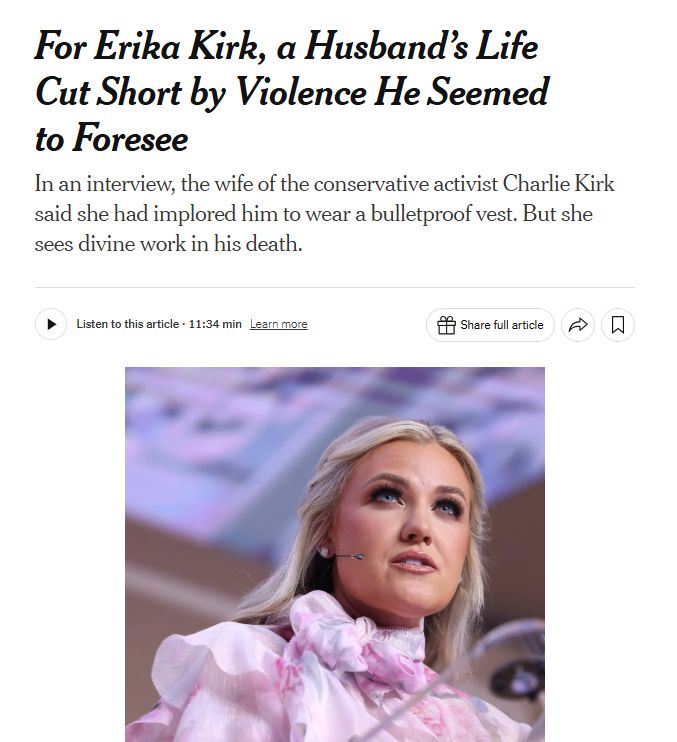
Parallel tracks matter: memorial politics (Medal of Freedom, National Day, Trump/Vance legacy speeches) and society backlash (Reuters 600+ workplace actions over Kirk-related posts) ran alongside criminal-process reporting without replacing it. A TPUSA replacement Fox interview within hours of death sits in the succession-media bucket (TPUSA Fox timing) — documented as reported media timing.
New readers: Investigation Index → Media Articles → Trial press. For platform takedowns and gag orders see Censorship; for court docket detail see Court & Trial; for podcast ecosystems see Influencers.
Laws (Charlie Kirk)
Witness delete-video allegations, gag-order dockets, unreleased FBI 302s, and full ATF production are among records the Charlie Kirk Investigation Laws may force into public view.
What Citizen Investigators Are Watching (Attributed)
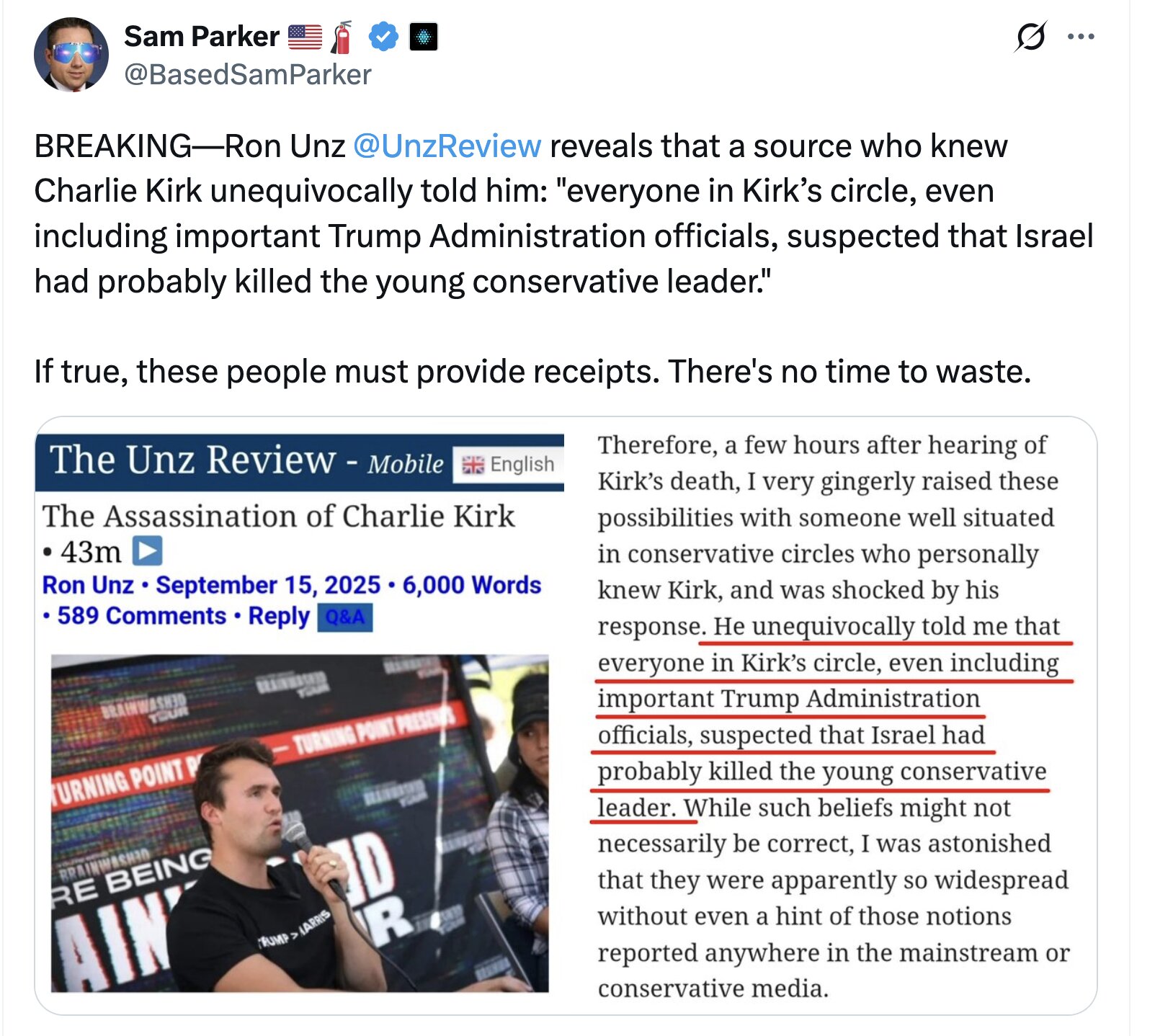
Media-section priority on X in 2026: accurate reporting of ATF/ballistics language; court access vs gag; Candace vs TPUSA information wars; and whether national TV ever treats scene alteration and hospital routing as more than conspiracy sidebars. Dive via TOC children.
Interesting In This Area
- Coverage settled on one account of how Charlie died and has barely revisited it.
- A premature custody claim showed how official channels can mislead every rebroadcaster.
- Six outlets went to court together to oppose sealing an inconclusive ATF report.
- Citizen threads carried Miranda timing and discovery dumps that broadcast desks deferred.
Interesting In Other Areas
- The cause-of-death dispute is the argument this section never re-opened.
- The exploding-microphone theory is the majority citizen finding on X.
- The court section holds the filings behind every trial headline.
Images
Other Pages In This Section
The routing memo for the whole Media section — wires, broadcast, Utah locals, tabloids, platforms and trial press — organised by the question you arrived with rather than by outlet prestige.
Read this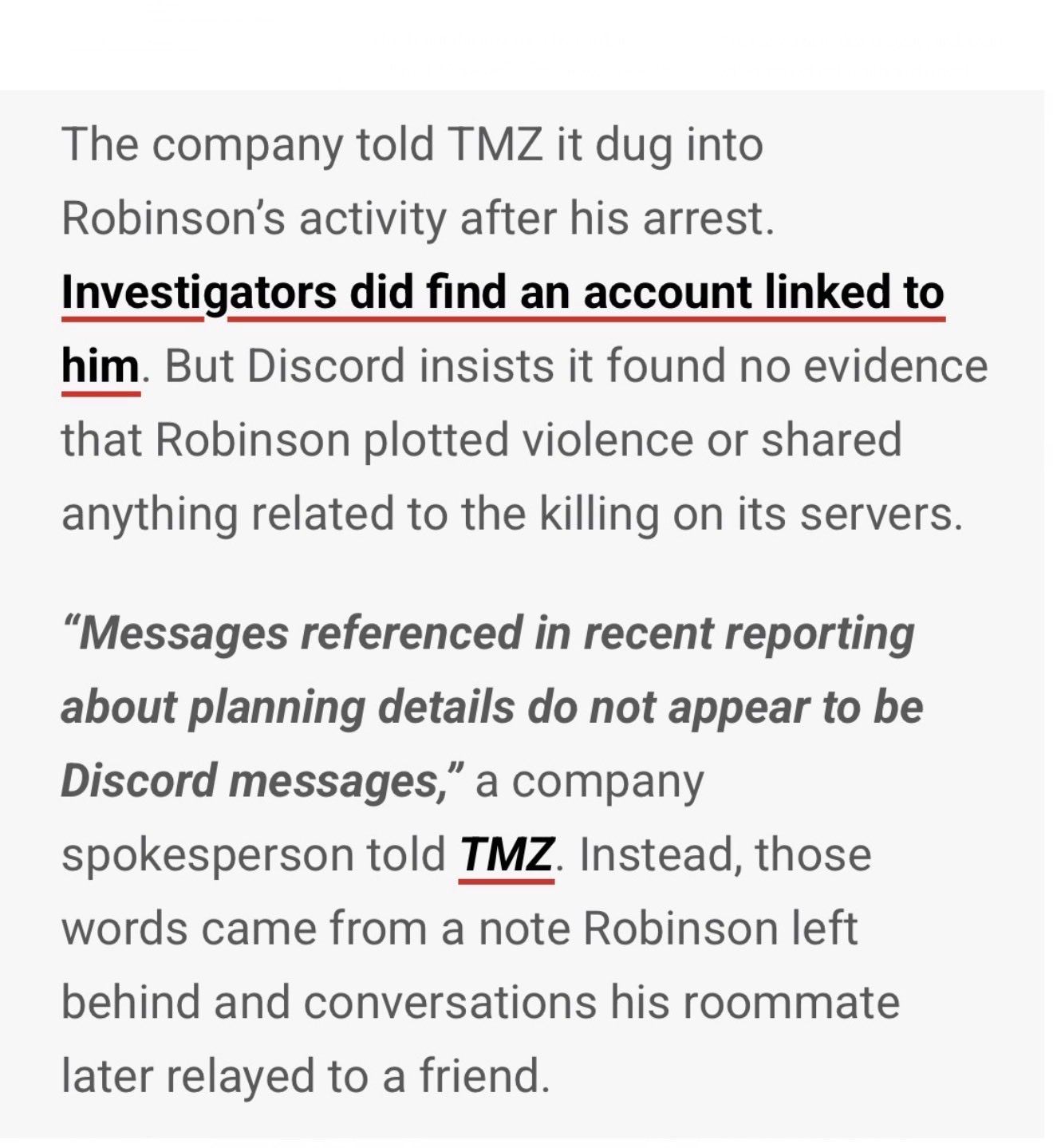
Once the manhunt ended, press value moved from who shot him to what the state can prove and what stays sealed. A running index of the trial coverage, outlet by outlet.
Read this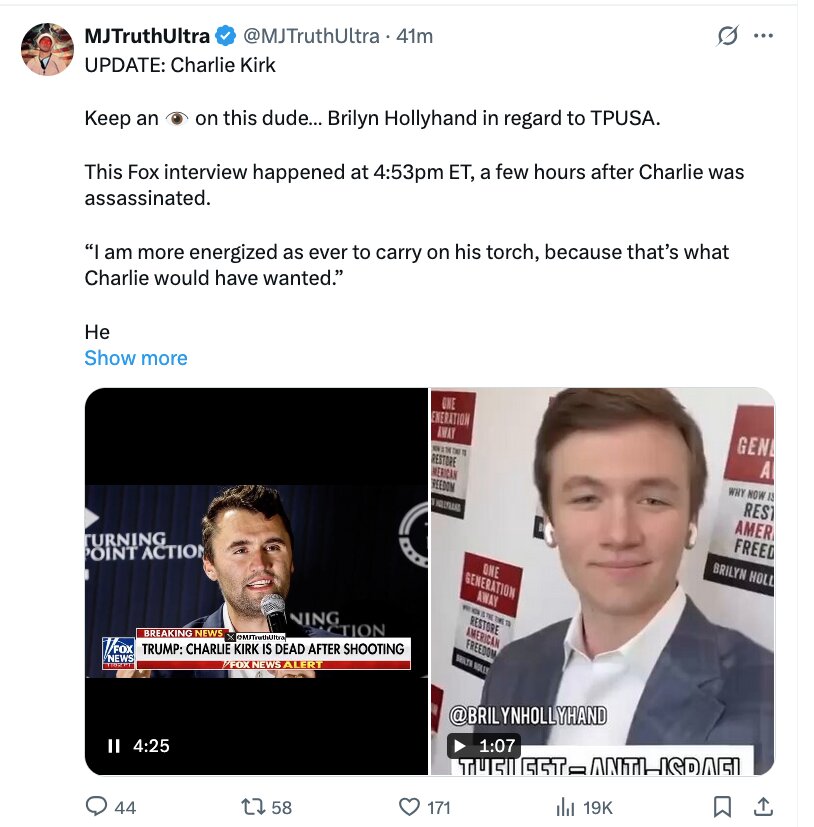
The first forty-eight hours fixed the public template: political assassination, rooftop shooter, national manhunt, suspect named. Almost nobody revised that template when the forensic and timeline disputes arrived later.
Read thisClaims of suppression and information control drawn from public reporting — what was removed, who asked for it, and what the platforms will not say about individual actions.
Read thisElsewhere In The Investigation
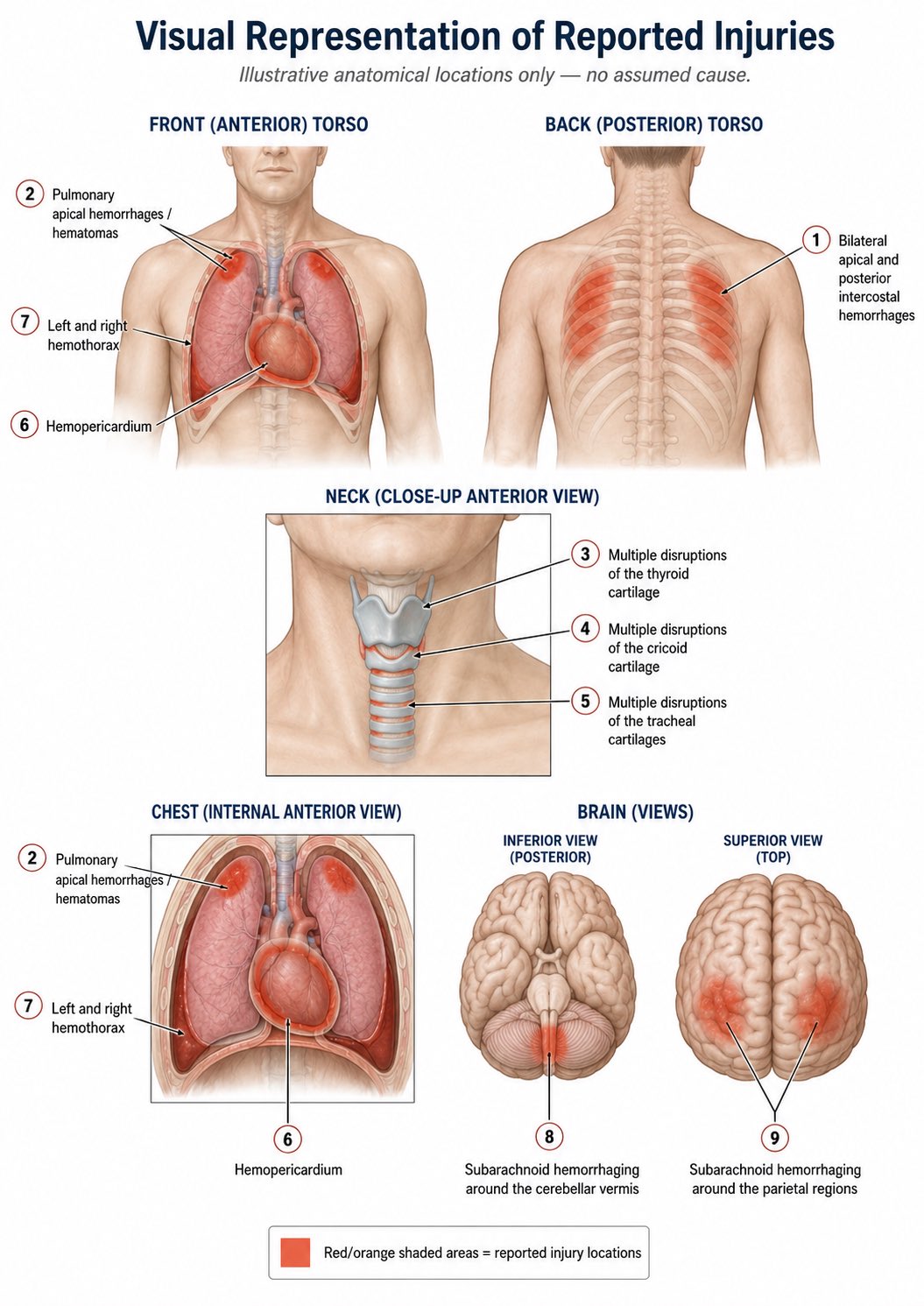
One page stating what most independent investigators had concluded by July 2026 about what killed Charlie Kirk and what did not. The official account is a single .30-06 round; this is where the reasons for rejecting it are gathered.
Read this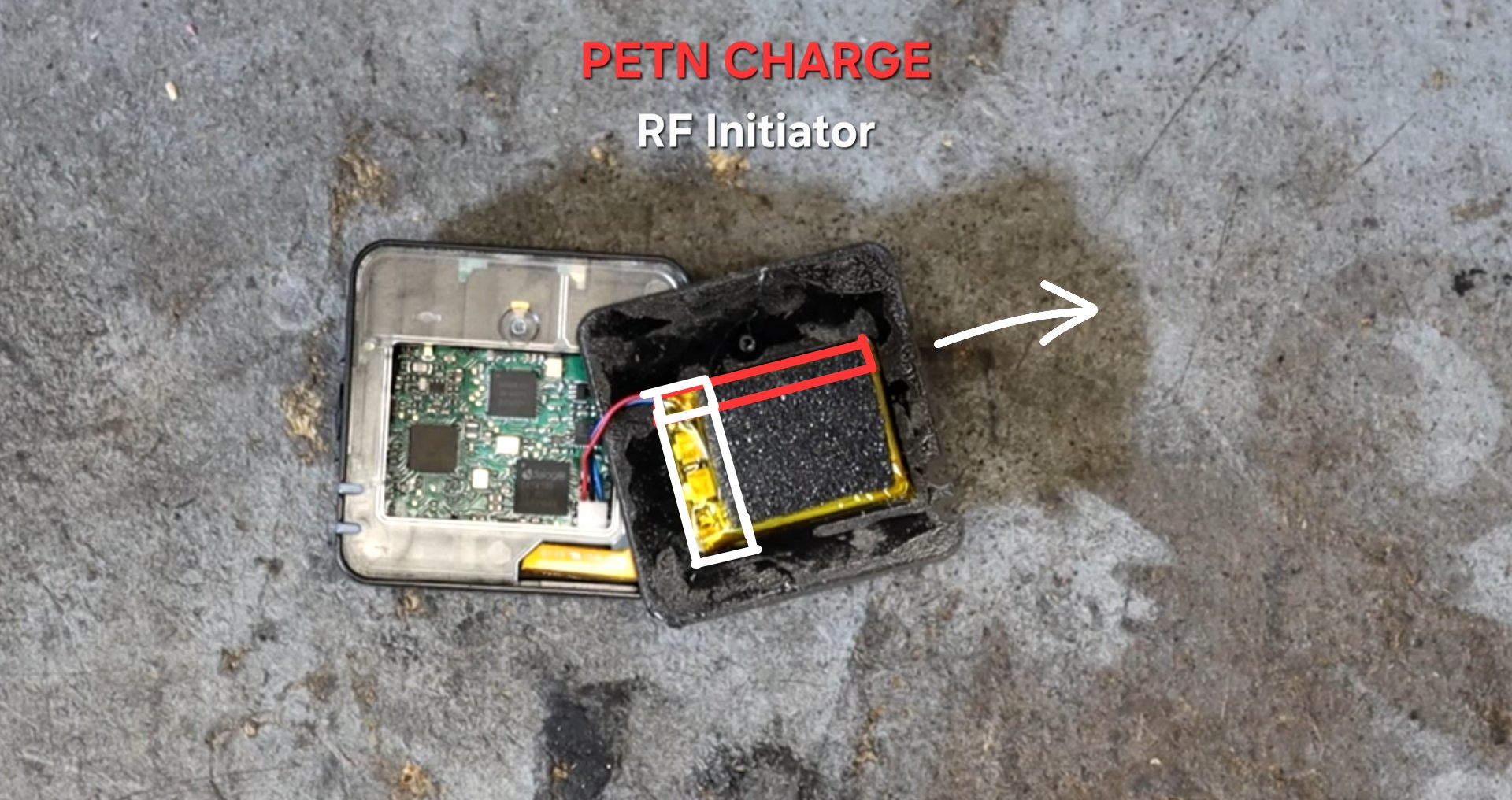
Microphone — The Exploding Mic Theory
The lavalier clipped to his shirt may have concealed a small explosive — the leading conclusion among citizen investigators, and the thread that runs through video, audio, procurement, and post-event debris.
Read this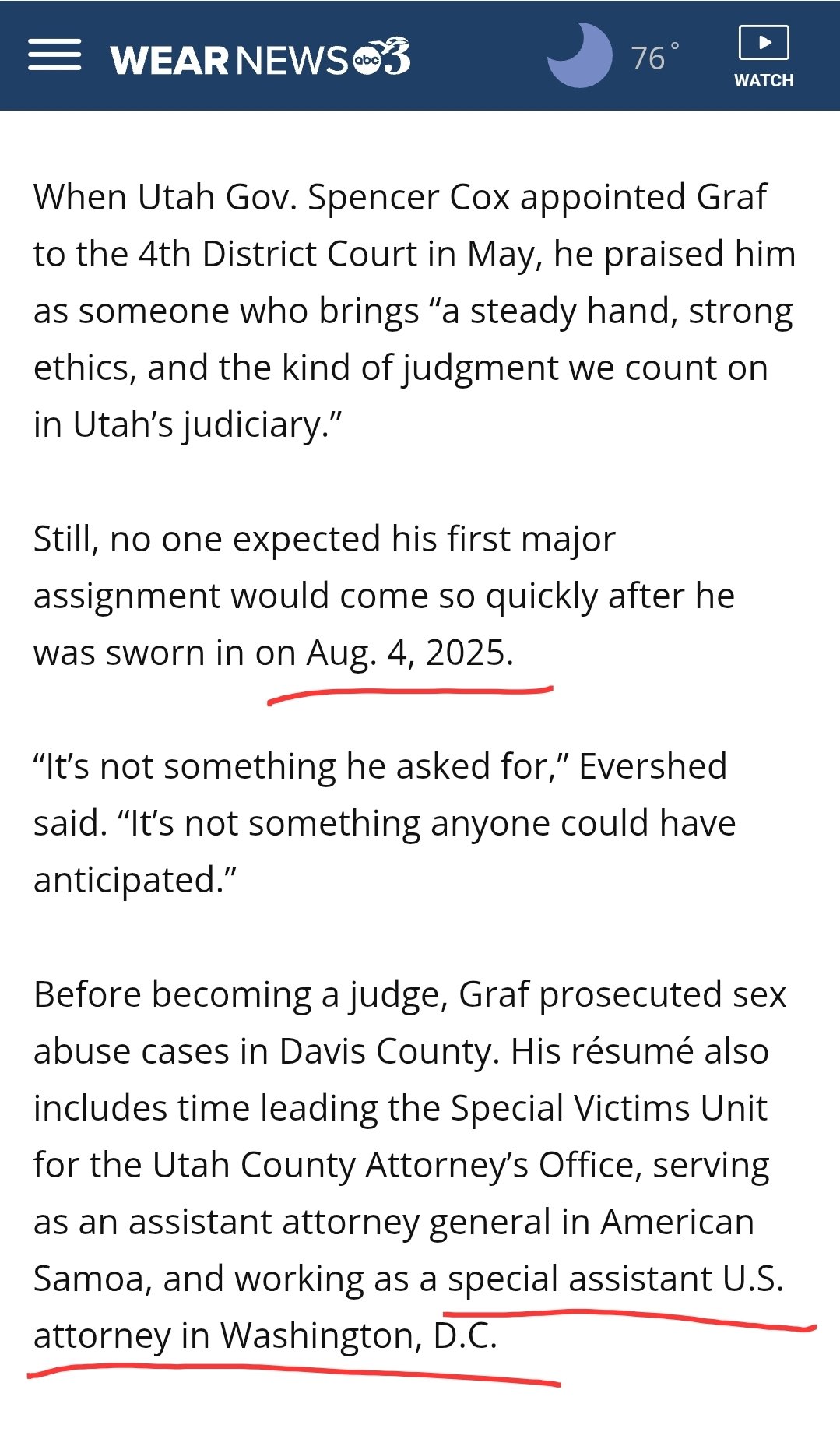
State of Utah v. Tyler Robinson, case 251403576, is where the government's narrative meets adversarial testing — every court date, the day-by-day preliminary hearing transcripts, and the inconclusive ATF ballistics.
Read thisThis website's author is @HolonCitizen on X and YouTube/@HolonCitizen. Follow me there.
Marjorie Taylor Greene Questions the Narrative
Former U.S. Rep. Marjorie Taylor Greene said on camera (August 3, 2026) that she is "very much compelled by the lapel-mic stories," that having shot a .30-06 herself "it's hard for me to go along with the traditional narrative," and that the SD-card collection and the paving of the scene two days later are "very questionable."
Source: @SenseReceptor on X. Full quotes and transcript: her profile · archived video page: MTG Questions the Charlie Kirk Narrative.
Interesting
- Fox reported the unsealed ATF report, whose comparison findings were inconclusive.
- Kirk went on air in August 2025 and lashed out about donor pressure.
- Among motive theories on X: a planned TPUSA pivot to "America Only."
Related Areas
- Influencers & Podcasts
- Platform & Speech Censorship
- Court & Trial Proceedings
- After — Media Narratives
- Proof Intel Services
- Cover-Up Evidence