Real Killer
Who killed Charlie Kirk? These are the theories investigators are pursuing:
Satirical LEGO-animated music video referencing Charlie Kirk's RØDE mic, via @RickyTheGuido, July 24, 2026. IPFS CID Qmd6zPTaBkhDSqCA9nEVrx1e7JsgAEUV7qSDu1pGELiPZJ.
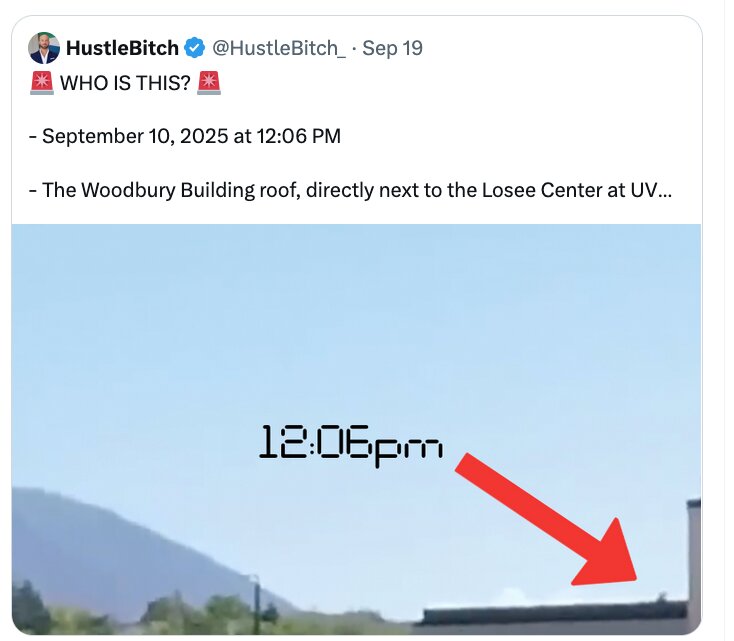
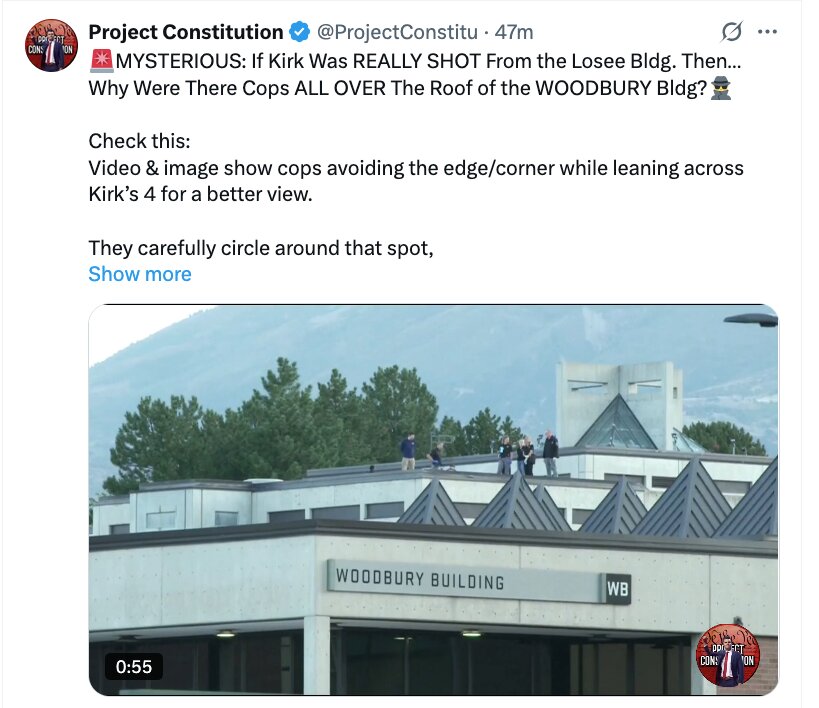
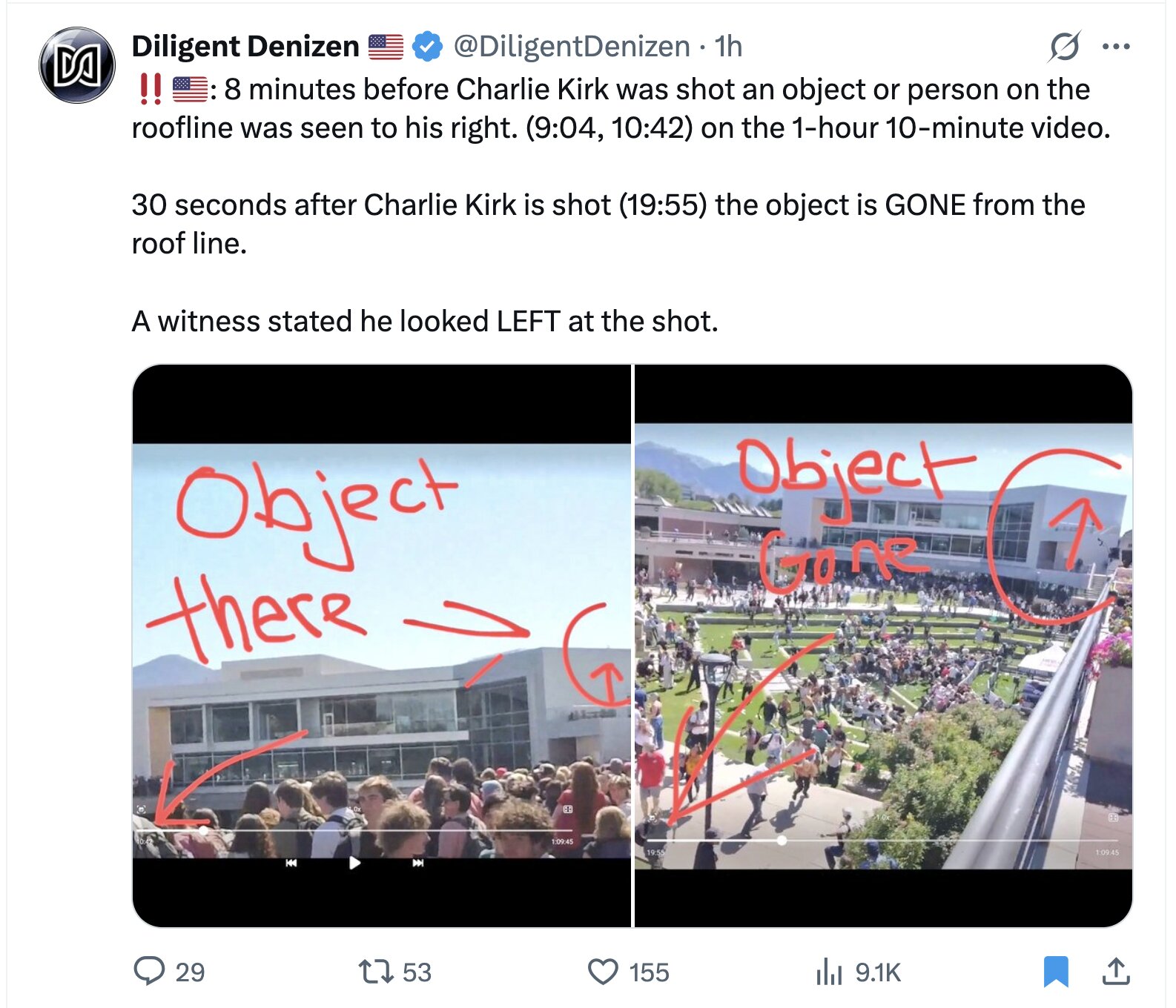
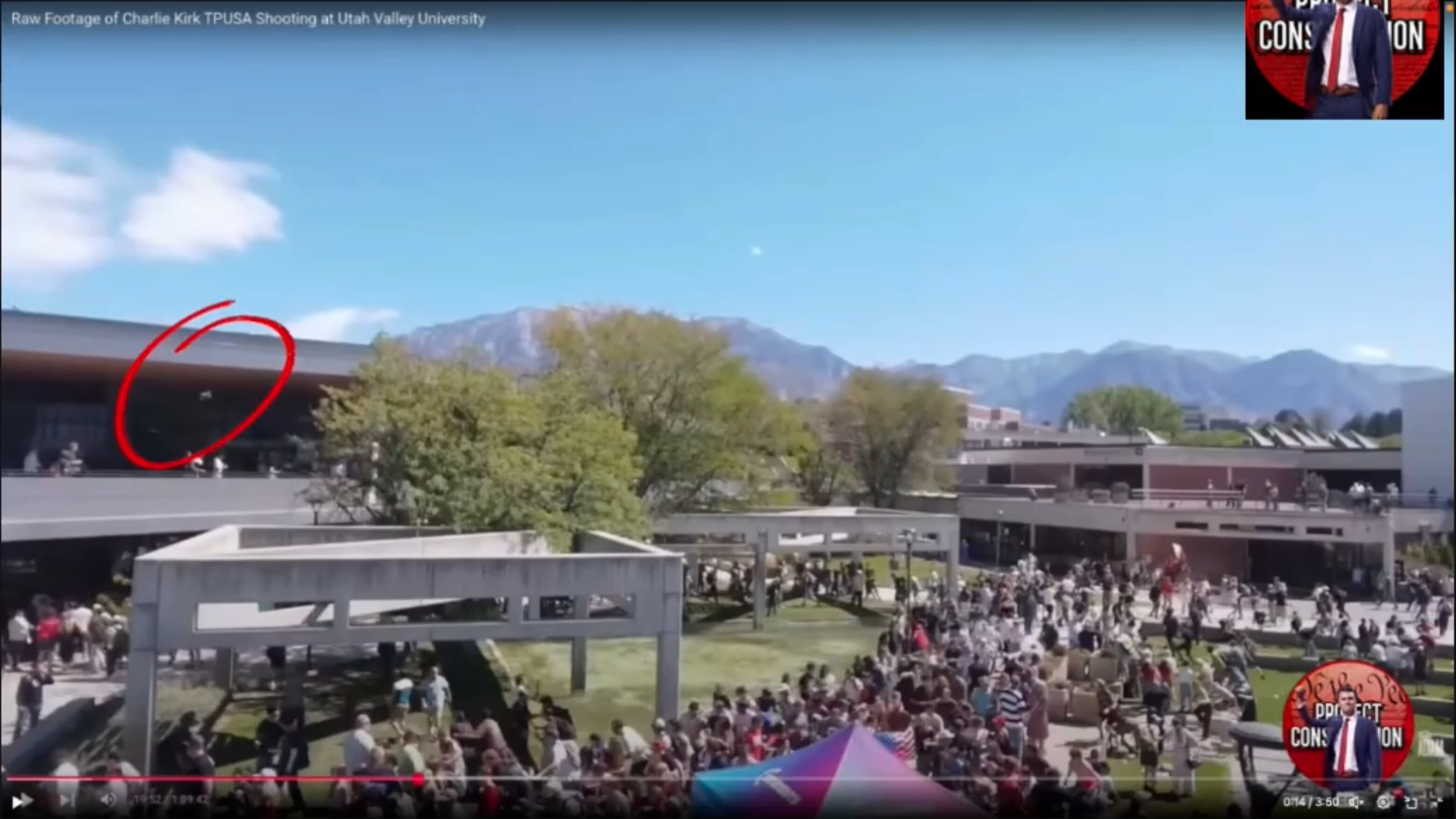
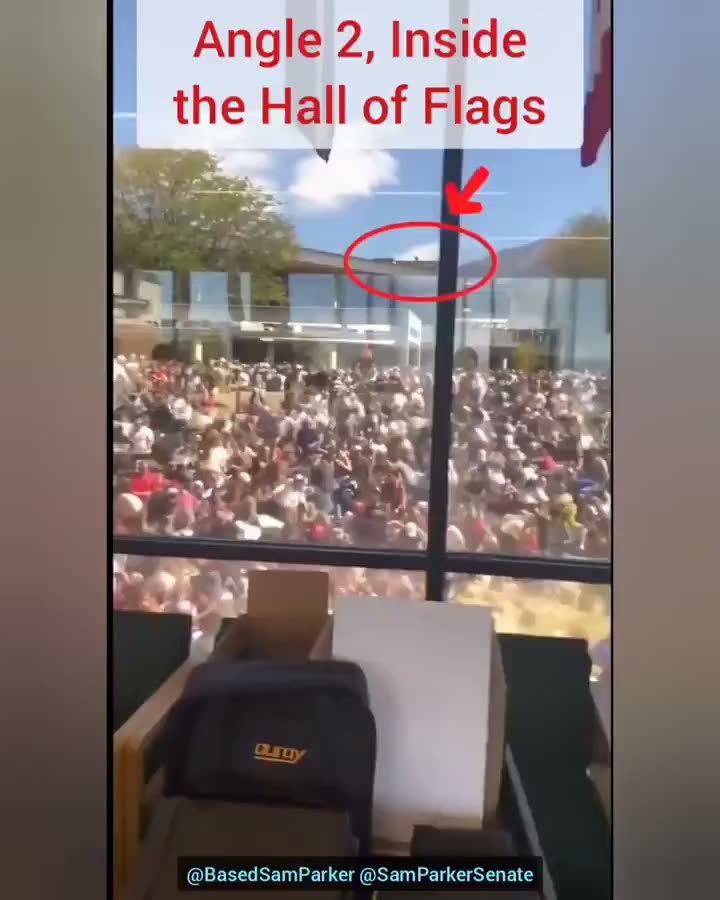
Citizen investigators argue that the official narrative — that Tyler Robinson acted alone — does not hold up against what they read in the ballistics record, the acoustic profile of the shot, questions raised about security posture on the day, and the movement of aircraft and drones around UVU on September 10. Those are contested readings of the public record, not court findings, and no named security officer or other living person is accused here of wrongdoing. The alternative theories documented on this site argue that the killing would have required coordination, foreknowledge, and operational support that a lone student could not plausibly provide. The question of who ordered and executed the assassination is the central unresolved question of the entire investigation.
Three categories of evidence bear on who was responsible: the physical evidence of how the shot was fired (ballistics, acoustics, wound profile, camera angle), the logistical evidence of what was arranged before the event (security posture, aviation assets, lane access), and the motive evidence of who stood to gain from Kirk's death politically and strategically. Each of the suspect categories scores differently on these dimensions — and each has a different level of evidentiary support and a different institutional relationship to the cover-up that investigators allege.
Start with the Israel/Mossad page for the strongest motive argument. Read the US Intelligence page for the operational capability and cover-up argument. Review Tyler Robinson for the official case and the documented challenges to it. The More Theories page covers TPUSA internal conflict, other foreign actors, and combination theories that multiple investigators consider more likely than any single-actor explanation.
Laws (Charlie Kirk)
- The full autopsy and wound‑trajectory report and flight manifests for the aircraft and drones over UVU and NSA SIGINT queries on the foreign actors named in these theories are things that the Charlie Kirk Investigation Laws may result in powerful truths coming out that aren't out yet.
Citizen Investigator Discourse on X (Attributed)
Public commentary on X about Real Killer continues to evolve alongside the July 2026 preliminary hearing in State of Utah v. Tyler Robinson. Citizen investigators and major podcasters treat this section as a live evidence map — not a closed case file. Claims below are attributed public commentary unless a court has ruled; Robinson remains charged, not convicted, and no court has found that any foreign service or living private person ordered Charlie Kirk's death.
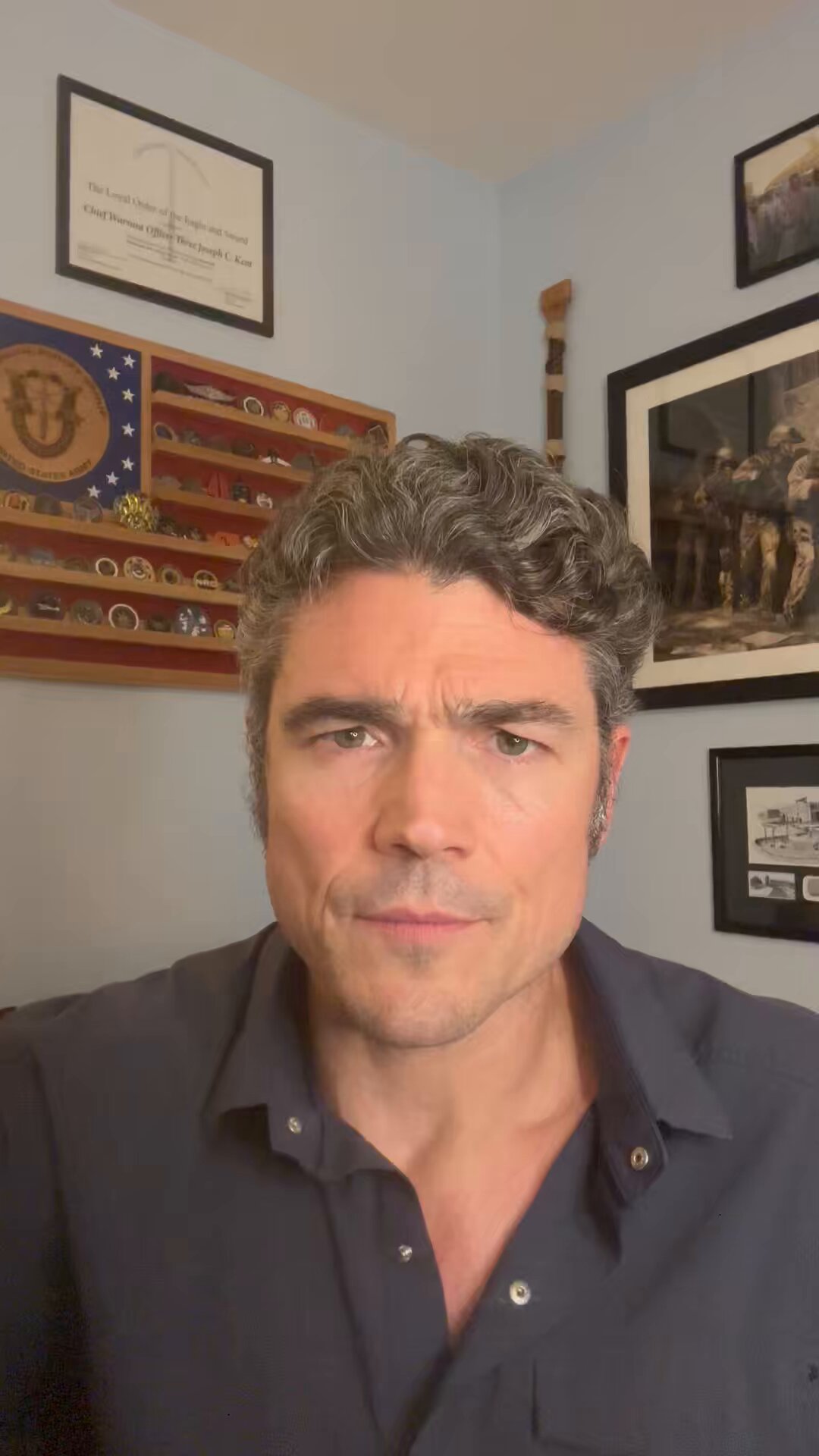
Investigators watching this area repeatedly cross-link: Joe Kent's on-record claims that the FBI limited foreign-lead work after the arrest; ballistics and acoustics disputes over the .30-06 / rooftop narrative; courtyard paving questions (lead investigator reportedly learned of paving from news coverage); and SIGINT-style claims about foreign-registered phones at UVU. Competing voices on X argue the DNA, texts, Discord posts, and roommate statements close the case. Both lanes belong in the record so readers can weigh them.
For navigation: use the TOC above for topic pages. Related statutory disclosure proposals remain at Fix Laws. Cross-check Proof Not Tyler, Cover-Up, and FBI when reading motive or agency-conduct claims.
Rifle-Concealment Satire Clip (Counterpoint)
A widely shared satire video pushes back on one of the recurring skeptic arguments — that a full-length .30-06 bolt-action rifle could not realistically have been concealed and walked off campus. In the clip, two men wearing "Candace is a demon" shirts each slide a rifle down one leg of slim-fit jeans and walk on camera, with the narration: "we're going to prove to these people that a 30-06 easily fits inside slim-fitting jeans... see, we told you." It is comedy, not a controlled test — no timing, clothing, or gait comparison to the campus footage is offered — but it is recorded here because the concealment question is argued on both sides across this section, and the counter-argument belongs in the record alongside the backpack and rifle concealment analysis.
Satire clip: two men slide bolt-action rifles down slim-fit jeans to mock the argument that a .30-06 could not have been concealed. Source: @jvalentine82 on X, 2026-08-01.
Interesting In This Area
- Israel and Mossad carry the motive argument; US intelligence carries capability.
- The official case rests on DNA, rifle recovery, surveillance and a contested confession.
- Patsy claims and cover-up indicators stay explicitly unproven allegations.
- More theories covers TPUSA friction, other foreign states and multi-actor coordination.
Interesting In Other Areas
- Barrel dust and a .286 to .301 fragment sit under the .308 a .30-06 fires.
- Every proposed shooter position fails if the mechanism was a device at the podium.
- Joe Kent stepped down in order to say the foreign-nexus review was halted.
- Proof Not Tyler lists the standard physical tests reportedly never run.
Images
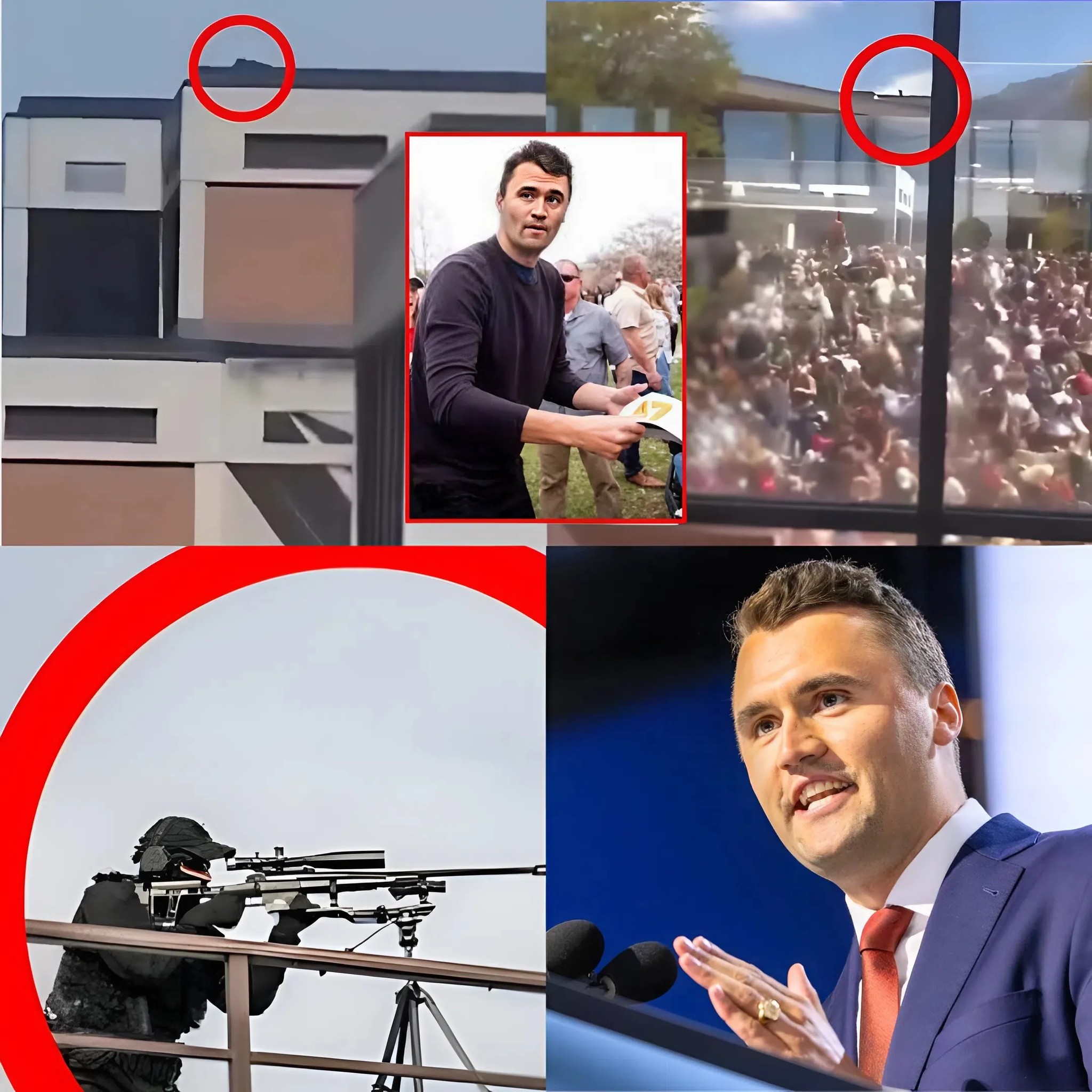
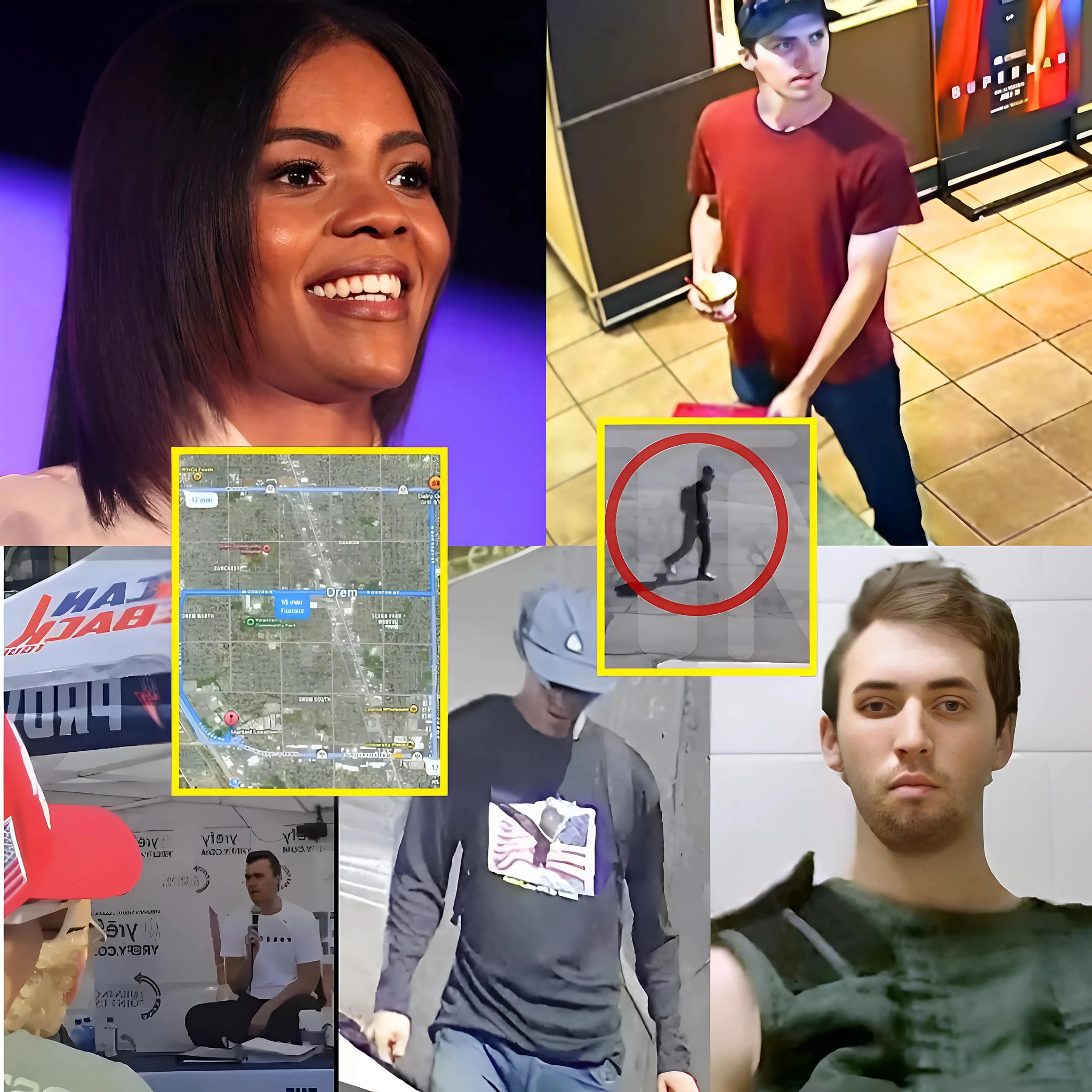
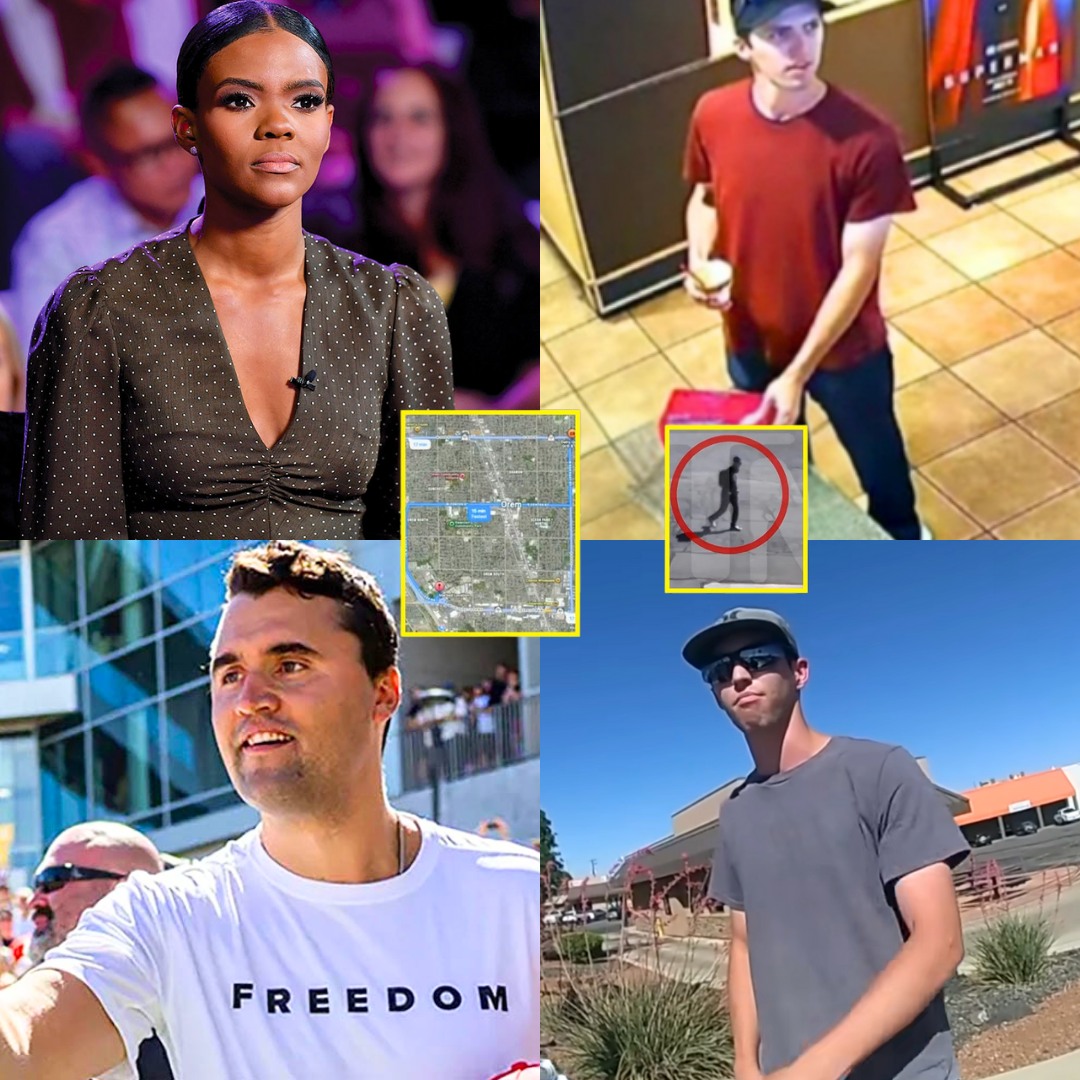
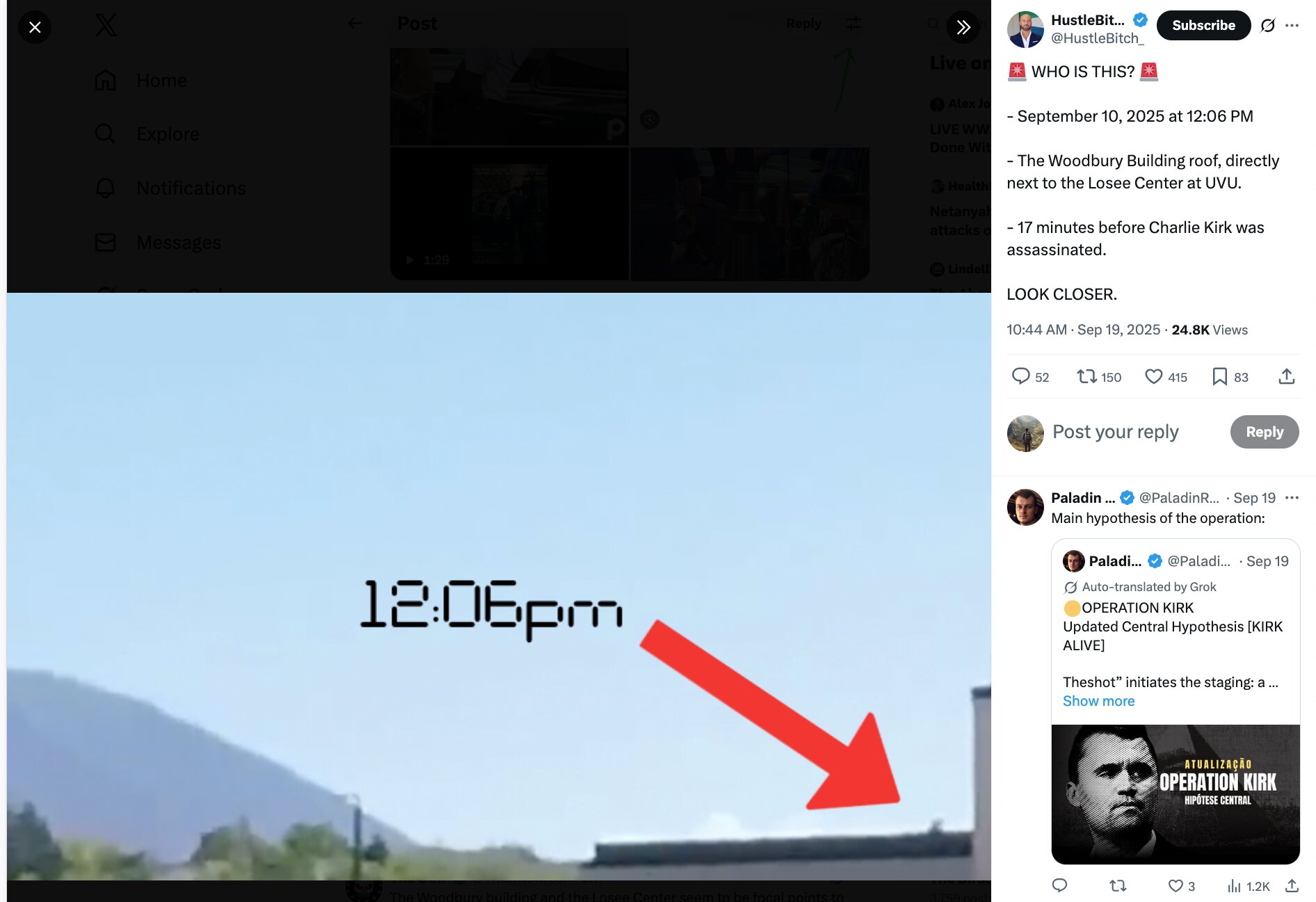
Videos
Footage related to this page. Each card opens that clip's own page, with the video, the full write-up, and its source.
Other Pages In This Section
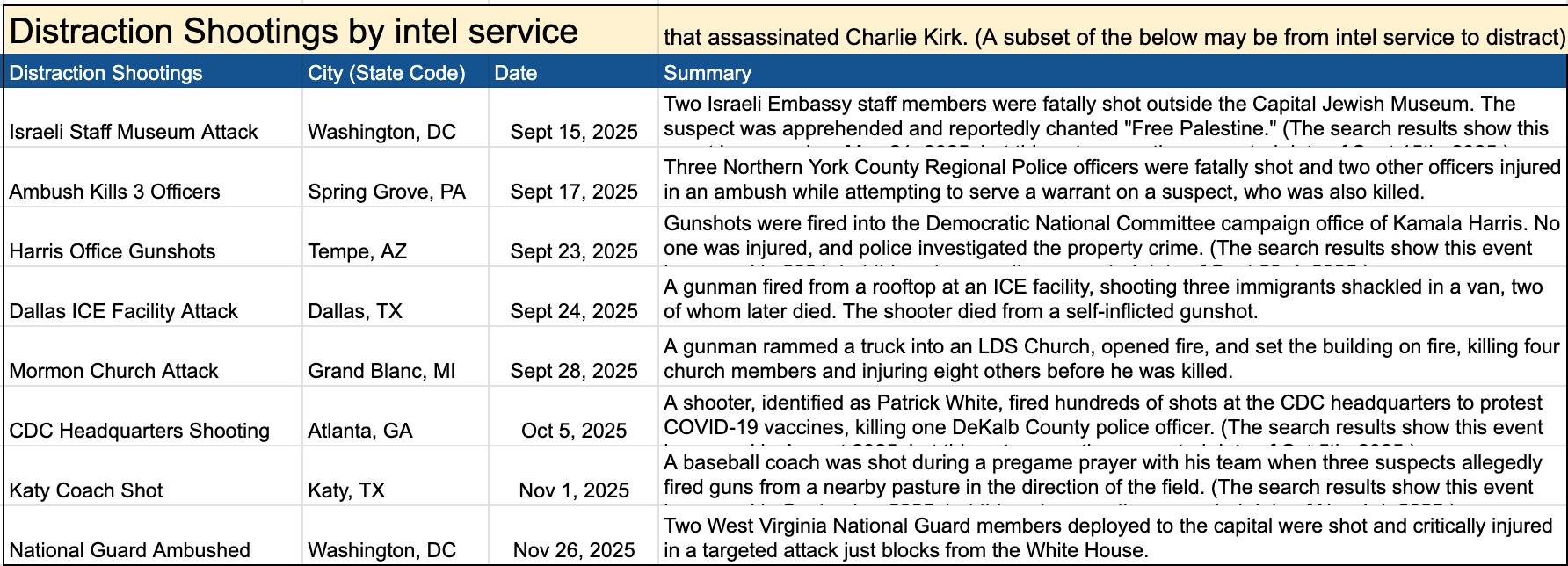
Charlie Kirk had begun breaking publicly with the pro-Israel consensus on the right, and this page follows the motive and capability argument built on that. Every operational claim in it — the alleged signals, the paving, the halted foreign leads — is recorded as contested. No court has found that any foreign service ordered his death.
Read thisThe argument that domestic agencies had the motive, the capability and a documented history — COINTELPRO, Operation CHAOS — plus what investigators say happened after September 10. Its most specific on-record item is a former counterterrorism director saying his foreign-nexus review was ordered stopped.
Read thisTheory: Tyler Robinson — Official Suspect
The government's case against the charged man, set beside the documented challenges to it: the rifle-to-wound mismatch, the acoustic timing, the gaps in his day. He is charged, not convicted, and the page is written so you can weigh both sides.
Read this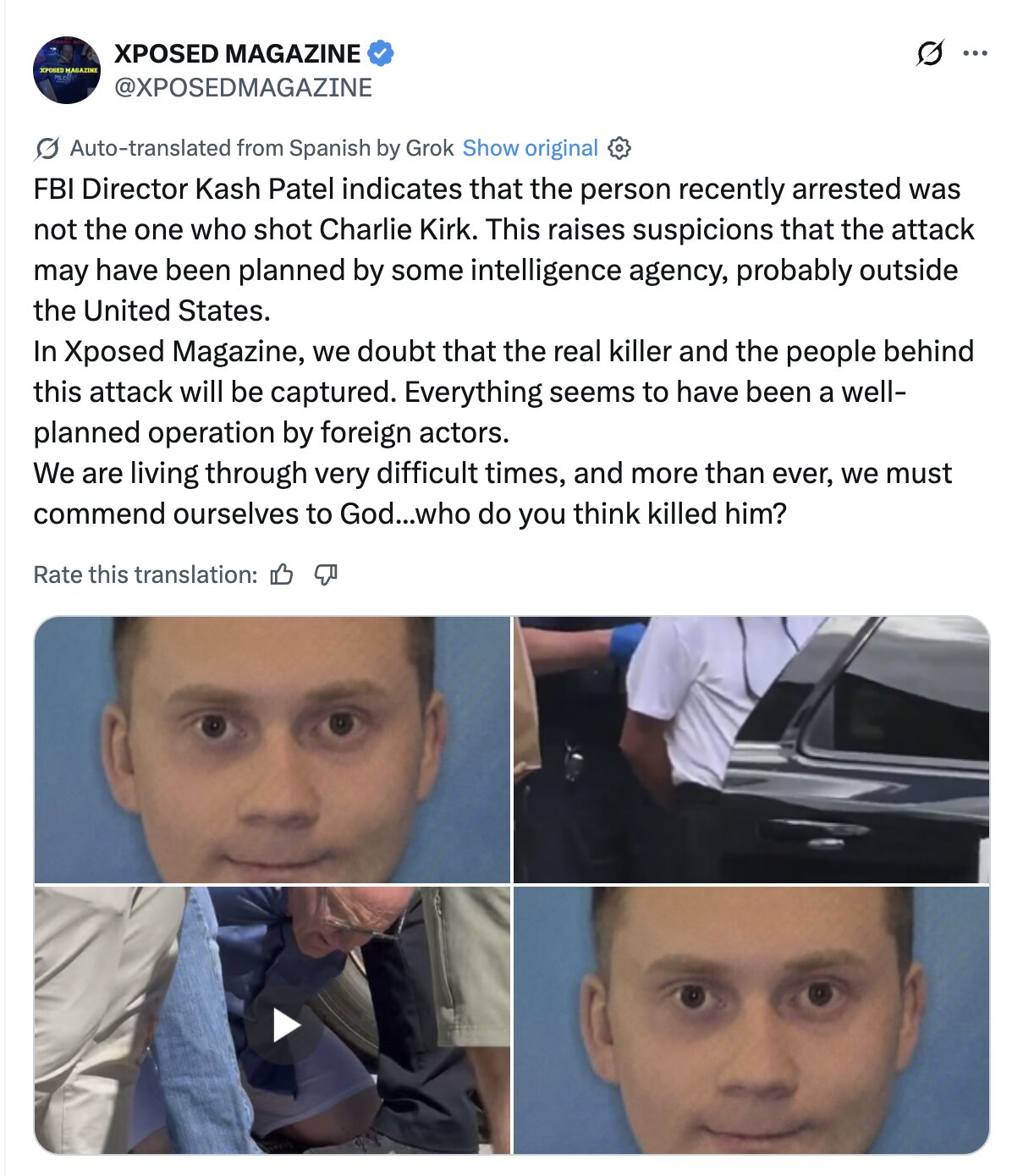
Alleged Cover‑Up Indicators Relevant to the "Real Killer" Question (Claims)
The anomalies citizen investigators argue obscure who actually killed Charlie Kirk, gathered in one place and each marked as claim rather than finding.
Read thisElsewhere In The Investigation
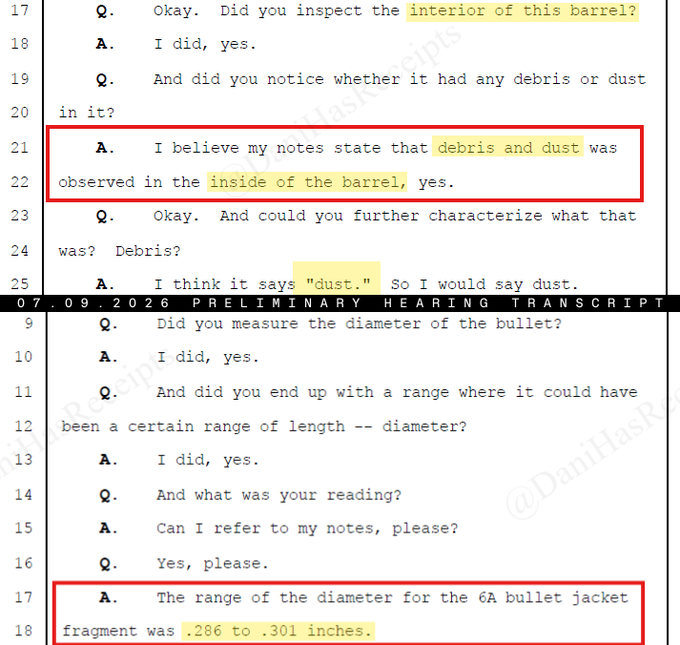
An ATF examiner testified that dust and debris were observed inside the seized barrel, and measured the jacket fragment at .286 to .301 inches — under the .308 a .30-06 fires. The counterarguments are here too: a deformed jacket measures small, and a fired barrel still collects dust.
Read this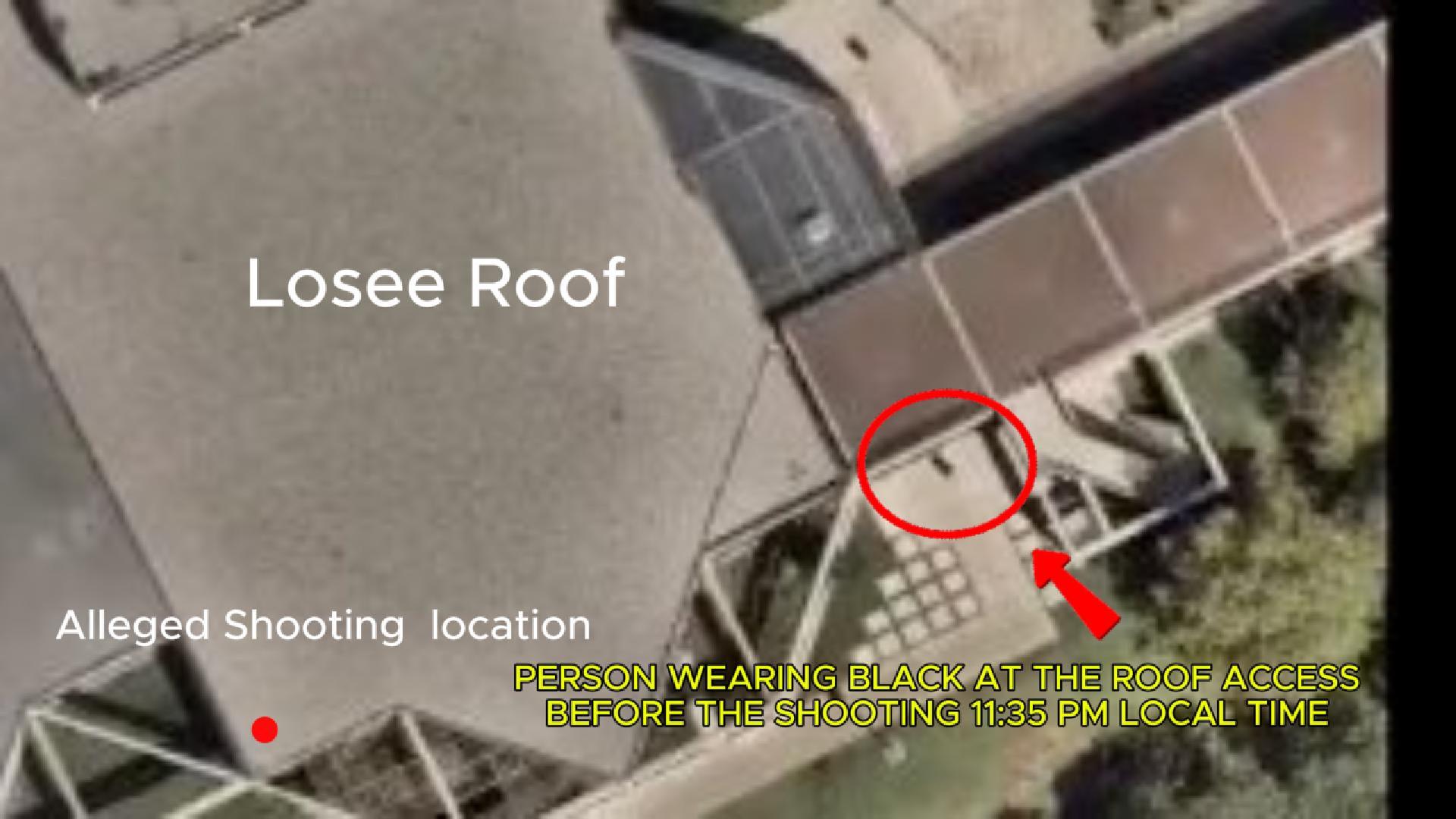
Rooftop, tent line, van, tunnel — every proposed origin for the shot, tested against sight lines, acoustics, and the affidavit clock. If the mechanism was a device at the podium, no shooter position explains the wound.
Read this
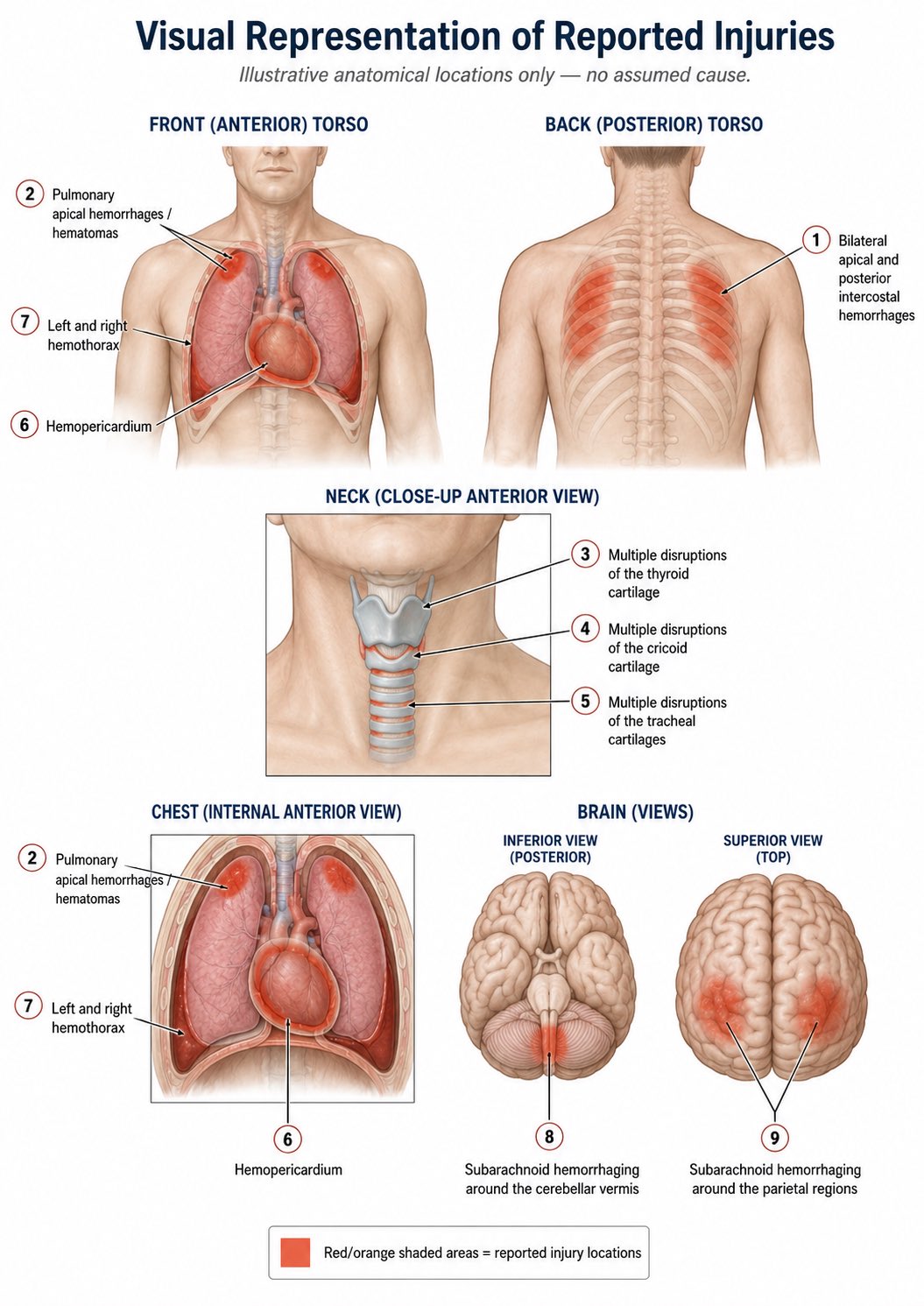
The hub for every argument that Tyler Robinson did not cause Charlie Kirk's death — ballistics, acoustics, identity gaps, and the standard physical tests that were reportedly never run.
Read thisThis website's author is @HolonCitizen on X and YouTube/@HolonCitizen. Follow me there.
Interesting
- Donor friction and a fast CEO succession feed the organizational motive theories.
- Citizen research questions how a long-dormant paving LLC was revived months before September.
- UVU's own joint public order unit was never activated for the event.
Charlie Kirk: The Threat He Said Actually Got His Attention
Speaking on stage before September 10, 2025, Charlie Kirk drew a line between two kinds of people who hated him. The stranger on a campus who wanted him dead, he said, did not bother him. The ones who did were the "close proximity" people — the ones he already knew, who had some sort of relationship with him, and who he says had betrayed or deceived him. Clip surfaced by @NihiloX on X, quoting @unhealthytruth.
"Yeah, there's like the purple haired jihadist on a college campus that wants to murder me in my family. Those people don't bother me. The other type of haters, though, are the ones that are the close proximity ones, and these are the ones I know, that had some sort of relationship with me and either betrayed me or deceived me or said that I could not succeed. That is a whole different. Those actually get my attention. Just like the random, troubled person on a campus, whatever."
— Charlie Kirk, full transcript of the 28-second clip above
If Kirk's own assessment is taken at face value, the search for who killed him begins with proximity and relationship rather than with a lone stranger on a campus.