Israel
This section maps Israel-related threads in the Charlie Kirk investigation — from reported donor friction and NSA cellphone claims to PM statements and foreign-lead blockages. Start with the investigation index, then open the topic that matches your question. We do not claim any Israeli individual or institution ordered or carried out the killing.
Satirical LEGO-animated music video referencing Charlie Kirk's RØDE mic, via @RickyTheGuido, July 24, 2026. IPFS CID Qmd6zPTaBkhDSqCA9nEVrx1e7JsgAEUV7qSDu1pGELiPZJ.
One thread turns the section's own premise into a question: if Israel is treated as a suspect, why is Israeli-made software extracting and authenticating the evidence in the trial? Cellebrite performed the phone extraction behind the Robinson–Twiggs texts, and BriefCam — also Israeli — was reportedly used on UVU camera footage. Israeli Tech in the Case holds the conflict-of-interest argument, the Karen Read parsing precedent, and the counterarguments — including that Cellebrite is the industry standard chosen by U.S. investigators, and that its output is hash-verified and independently re-checkable by the defense.
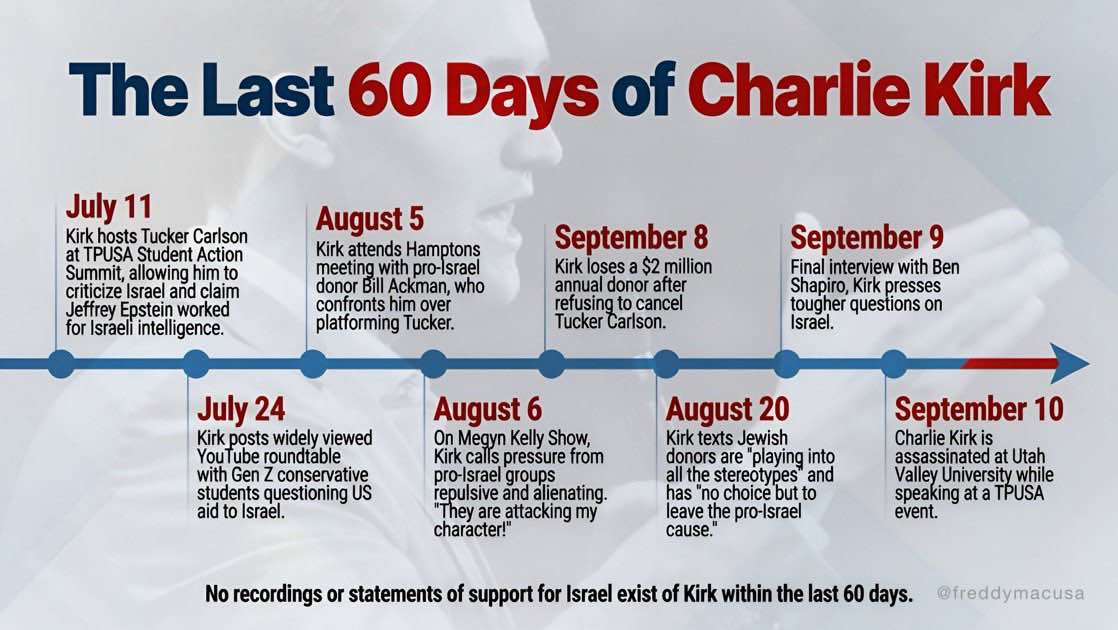
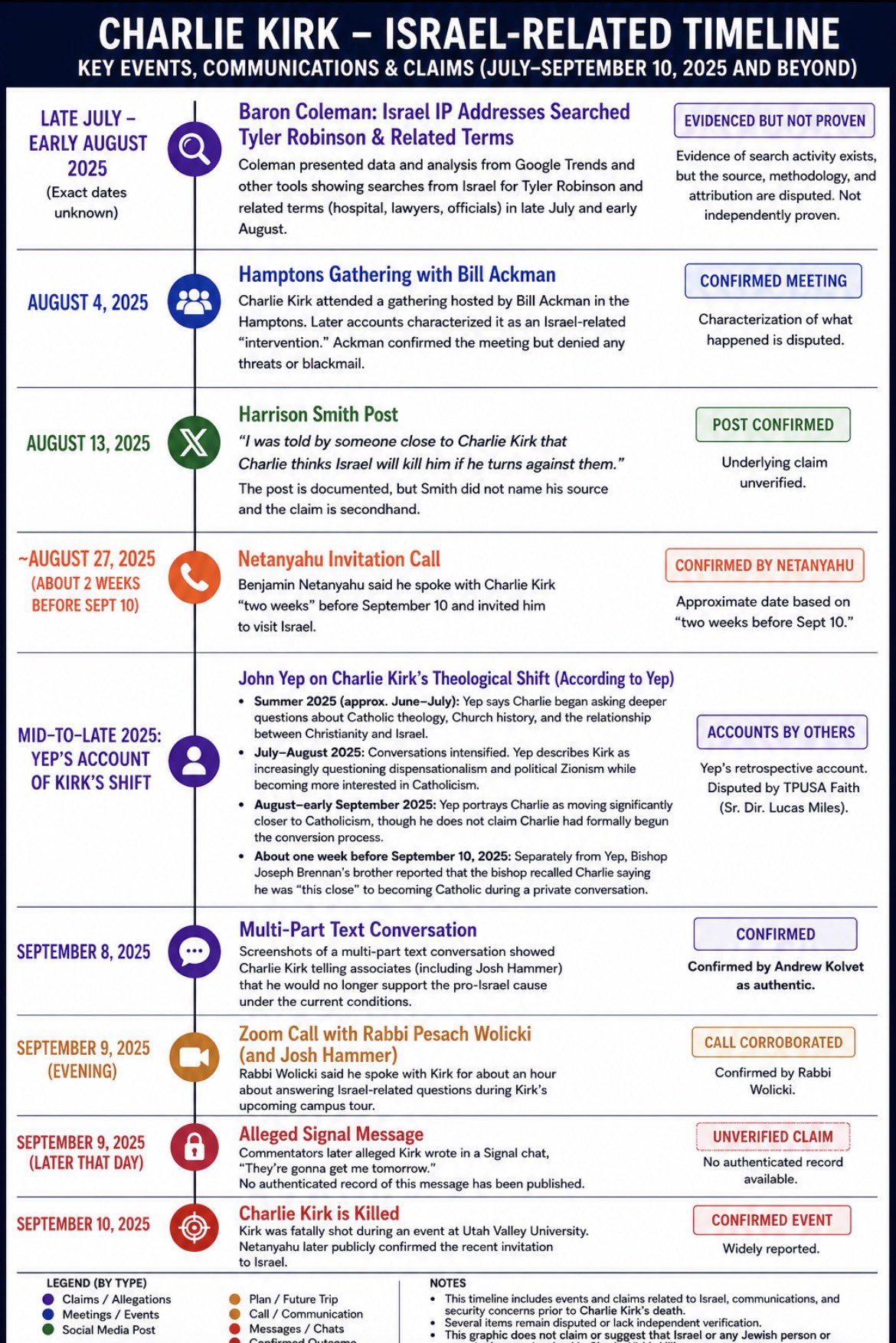
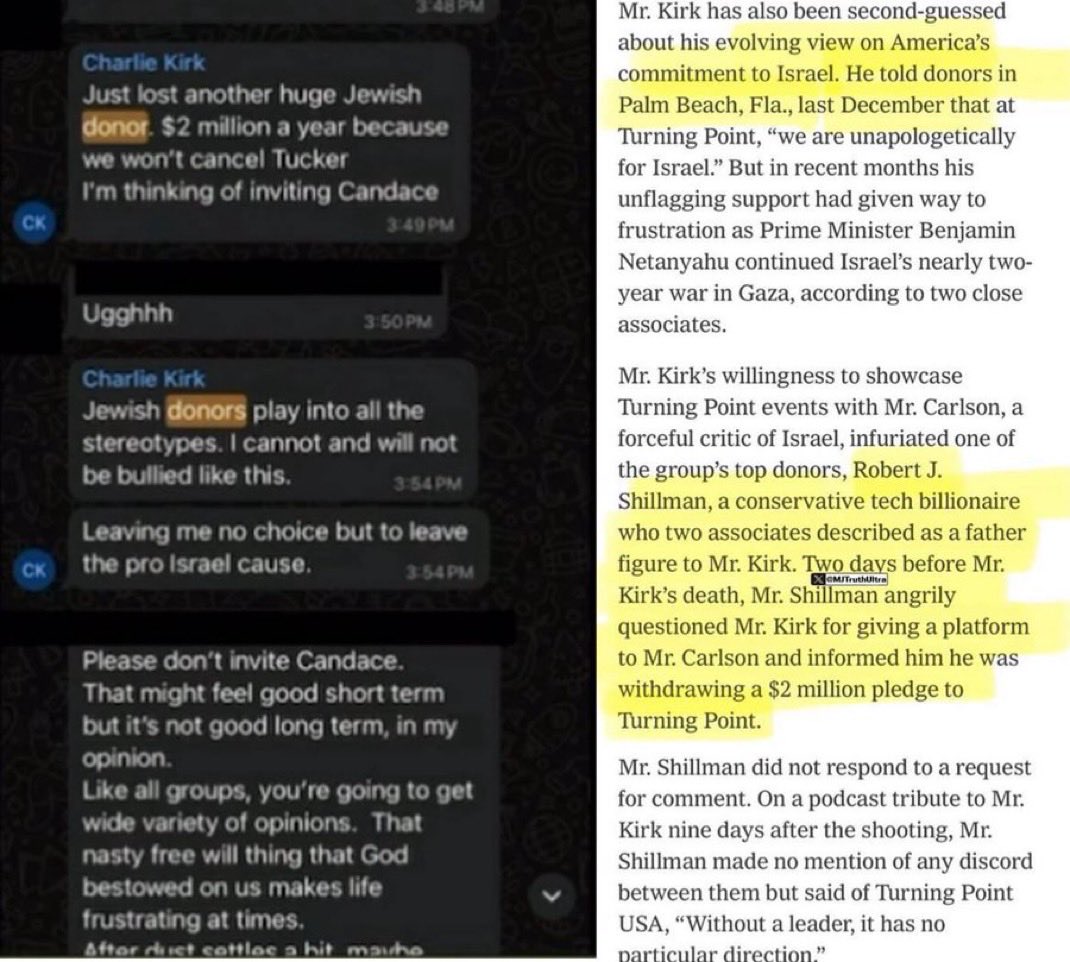
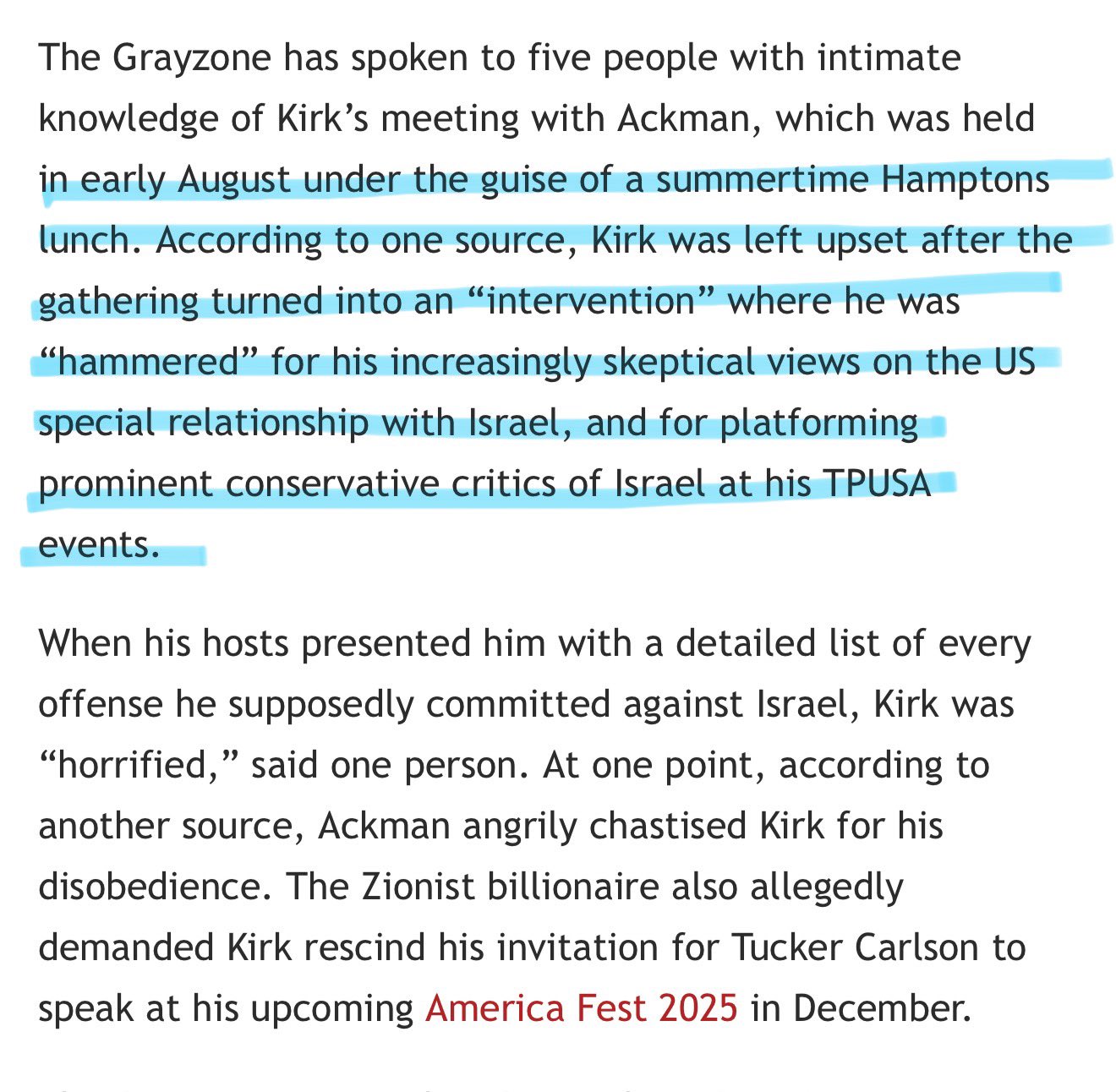
The Israel section matters because citizen investigators converge on a pattern: Charlie's reported mid-2025 break with pro-Israel donor pressure, combined with alleged Israeli-linked signals at UVU and blocked federal foreign threads, fits a geopolitical motive narrative that the Tyler Robinson lone-gunman frame does not address. The area does not restate that conclusion as fact — it sorts allegations so readers can weigh each on its own evidence.
The substance breaks into three layers. Motive: friction checklist items (Epstein push, declined funding, DOGE audit, Iran back-channel), Hamptons pressure, and friend statements. Execution-adjacent: 12–16 cellphone claims, search spikes, April 2026 Islamabad pings, and aircraft. Response: Brand's cabinet allegation, FBI foreign-lead shutdown, and PM outreach. Each layer has a different evidentiary profile.
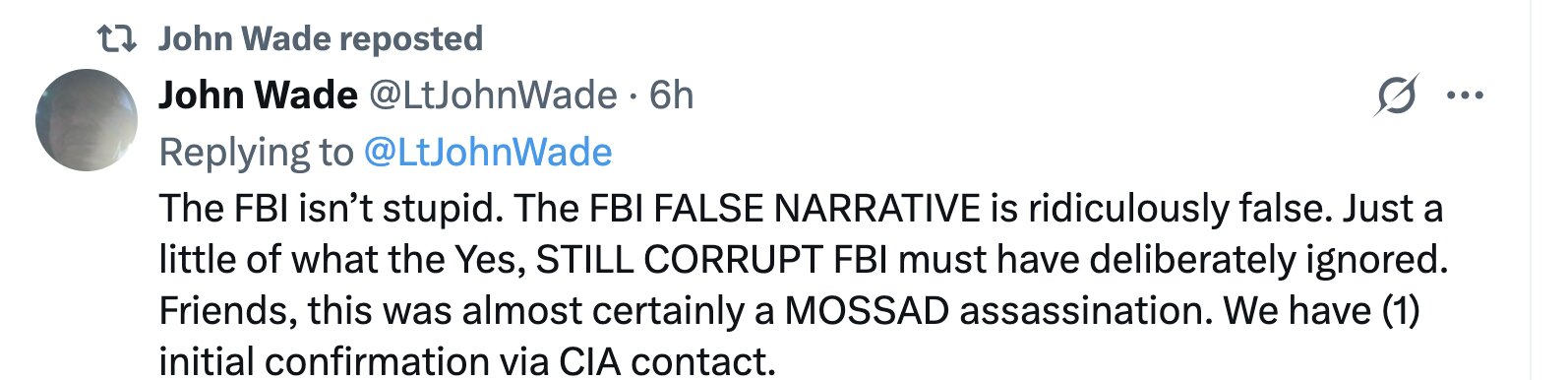
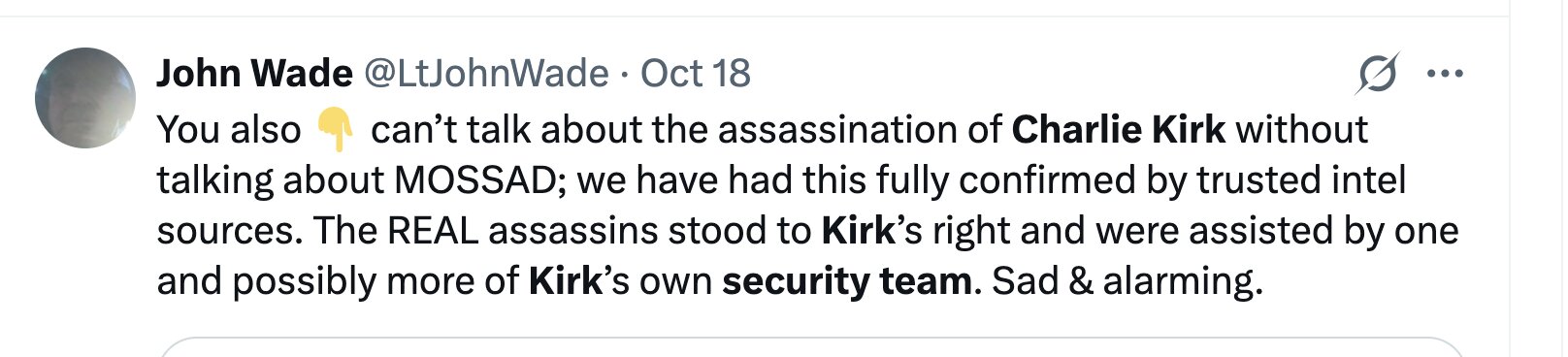
New readers should start with Israel Investigation Index for the full map, then Charlie–Israel Friction and NSA Cellphones for the two highest-traffic threads. Security Team covers the separate Netanyahu-bodyguard allegation about Brian Harpole. Flight records live under Planes.
The Orem House and the Google Search from Israel
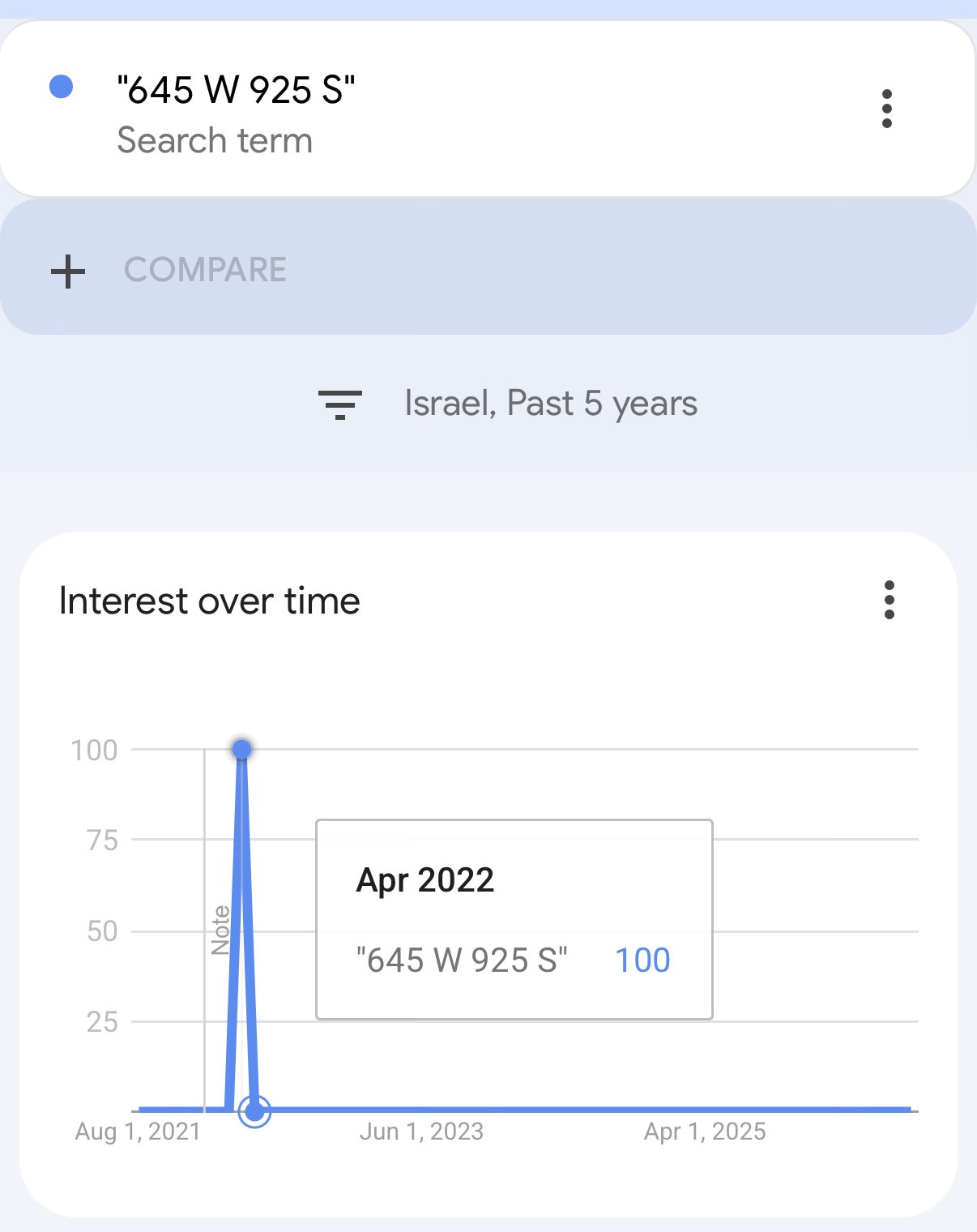
Google Trends, term "645 W 925 S", region Israel, past 5 years — one spike to 100 in April 2022. Source: @NihiloX on X, Aug 7, 2026. Full analysis: Israel Search: 645 W 925 S.
One of the newer Israel-adjacent threads is about a house, not a person. This site keeps a whole section on the alleged staging house at 691 W 925 S, Orem — a 7,486-square-foot, six-bedroom home on 1.239 acres, roughly a quarter-mile north of the UVU campus, which Utah Valley University itself purchased in 2019 for $900,000 as property "contiguous to campus." Citizen investigators allege the block was used to plan or stage the attack; nothing official names the address, and the owner of record is not accused of anything. The same street carries real court evidence: prelim media placed a grey Dodge Challenger on Ring video at 680 W 925 S around 00:30 on September 11 (W 925 S block page).
On August 7, 2026, @NihiloX added the Israel angle, posting a Google Trends chart and asking: "Israel was interested in the house located in front of the wooded area where the gun was discovered? Weird." The chart filters the search term "645 W 925 S" to the region Israel over five years and is flat except for one spike to 100 in April 2022 — three and a half years before the shooting.
Two cautions travel with it, and both are load-bearing. First, 645 W 925 S is not 691 W 925 S — it is a different house on the same block, so the chart is not a search for the staging property itself. Second, Google Trends plots normalized relative interest, not counts: for an obscure address string in a small region, the value "100" may rest on a handful of searches, and it identifies no searcher. The full breakdown, including what would actually settle it, is on Israel Search: 645 W 925 S; the wider set of similar screenshots sits on Search-Pattern & IP Claims.
Video: Russell Brand on Charlie Kirk and Israel
Russell Brand — 4:45 monologue (detail page: Russell Brand Cabinet Claims). Source: @rustyrockets on X, 2026-05-14. IPFS CID Qma3dQgv74Lr1W6yipQU8SUZYY7WNch7P18XQ9ah15rTP2.
Video: Tyler Robinson's Address Googled in Hebrew from the Egyptian Jet
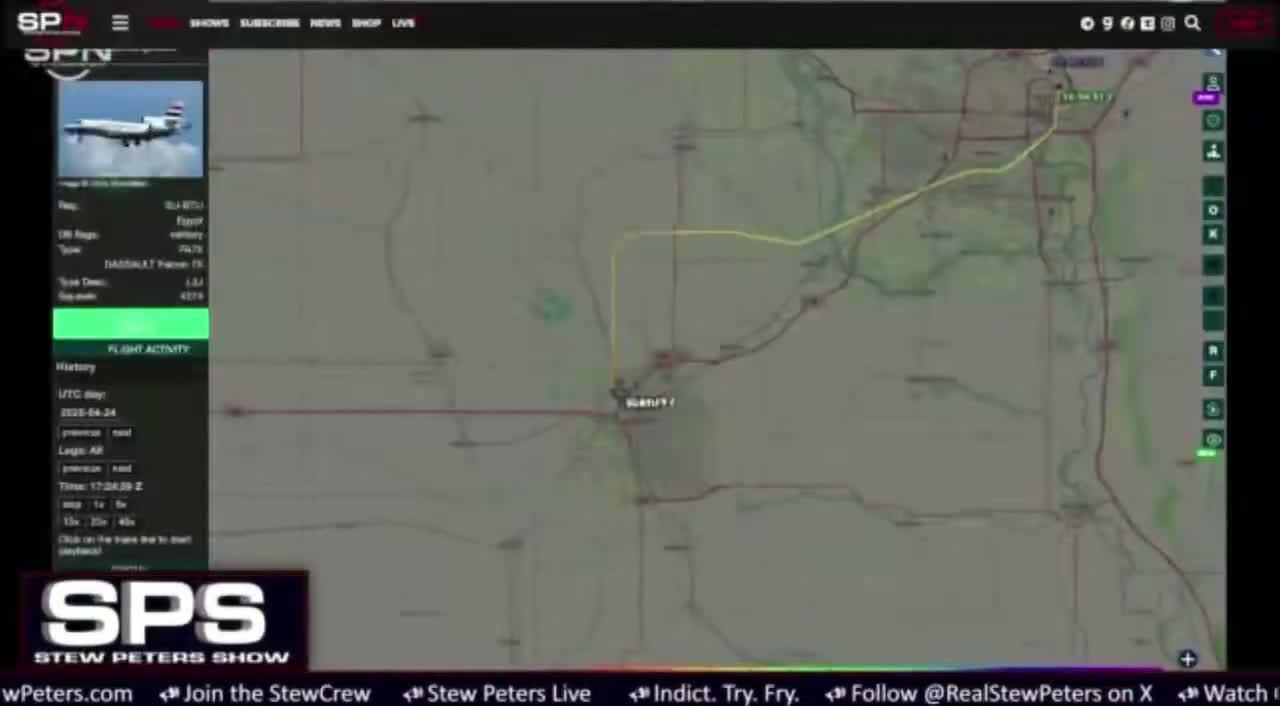
A researcher interviewed by Stew Peters reports that Tyler Robinson's exact apartment address — down to the unit number — was Google-searched in Hebrew on April 29, 2025, while an Egyptian-registered jet tracked by investigators sat parked in Lincoln, Nebraska. Full analysis and transcript: Stew Peters: Tyler Robinson's Address Googled in Hebrew.
Video: Frank Turek on the September 9 Zoom Call With Israeli Officials
The day before he was killed, Charlie Kirk sat down at TPUSA headquarters for a scheduled 50-minute Zoom call with two officials in Israel. The source for that is not a rumour — it is Frank Turek, who says he was in the room, and who names Blake Neff and Mikey McCoy as also present. Turek's purpose in telling it is to rebut the authenticated September 8 donor chat in which Kirk wrote that he had "no choice but to leave the pro-Israel cause": "This idea that Charlie was giving up on Israel is false." What Turek does not say is which officials — and that is the open question. Full analysis, the timeline collision, and the seven unanswered questions: The September 9 Zoom Call With Israeli Officials.
Frank Turek, 53 seconds. Clip page: Turek on the Sept 9 Zoom. IPFS CID QmSWJ3kPpm6JfwanDp3tvXhm97e5SpRRimytvUZJCzXX4i.
Laws (Charlie Kirk)
Subscriber IDs for alleged Israeli phones at UVU, NSA queries, flight manifests for SU-BTT, and cabinet readouts are among the truths the Charlie Kirk Investigation Laws may force into public view.
Citizen Investigator Discourse on X (Attributed)
Public commentary on X about Israel continues to evolve alongside the July 2026 preliminary hearing in State of Utah v. Tyler Robinson. Citizen investigators and major podcasters treat this section as a live evidence map — not a closed case file. Claims below are attributed public commentary unless a court has ruled; Robinson remains charged, not convicted, and no court has found that any foreign service or living private person ordered Charlie Kirk's death.
Investigators watching this area repeatedly cross-link: Joe Kent's on-record claims that the FBI limited foreign-lead work after the arrest; ballistics and acoustics disputes over the .30-06 / rooftop narrative; courtyard paving questions (lead investigator reportedly learned of paving from news coverage); and SIGINT-style claims about foreign-registered phones at UVU. Competing voices on X argue the DNA, texts, Discord posts, and roommate statements close the case. Both lanes belong in the record so readers can weigh them.
For navigation: use the TOC above for topic pages. Related statutory disclosure proposals remain at Fix Laws. Cross-check Proof Not Tyler, Cover-Up, and FBI when reading motive or agency-conduct claims.
Interesting In This Area
- The friction checklist dates 2025's pressure points; the quote inventory preserves the wording.
- Alleged Israeli-registered phones at the venue reportedly pinged Islamabad later during Iran talks.
- Israeli forensic software authenticates the trial evidence, and the defense is not contesting it.
- Operation Grim Beeper is carried as capability context, never as evidence of authorship.
Interesting In Other Areas
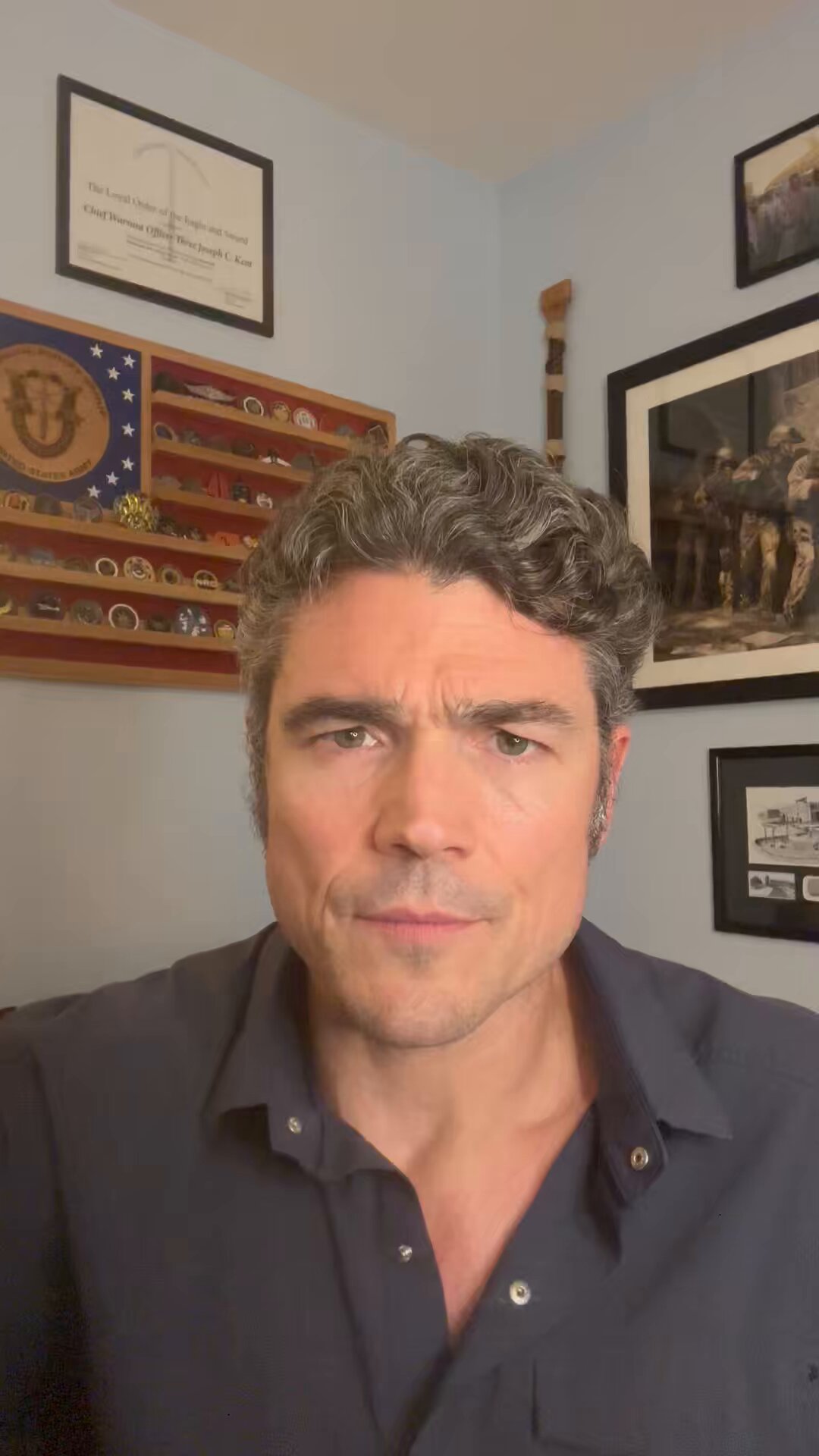
- Joe Kent says his foreign-nexus inquiry was halted before he could run it out.
- Labelling foreign-lead questions blood libel reportedly killed them faster than any evidence did.
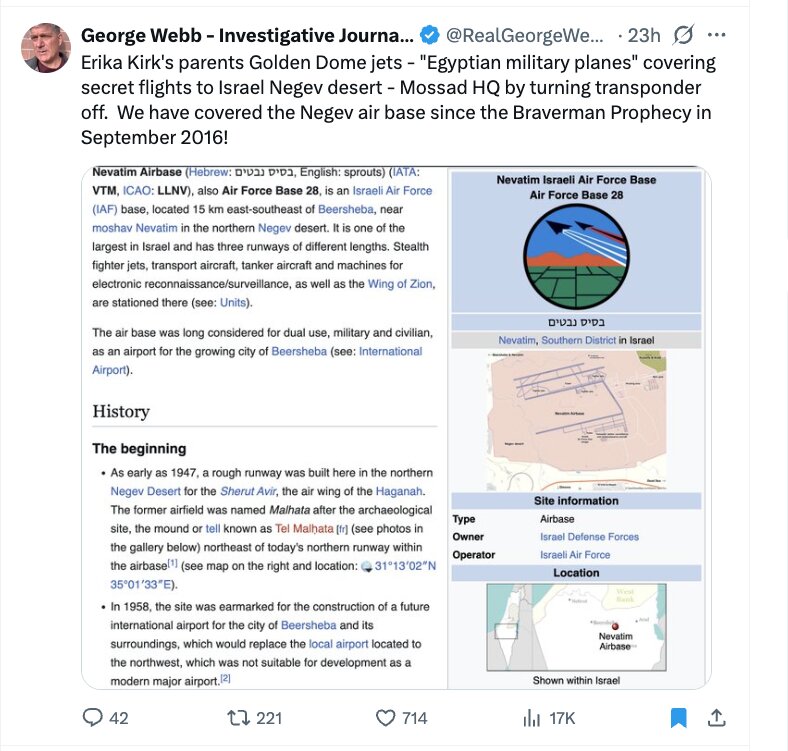
- An Egyptian-registered Falcon reportedly sat near Provo from September 4 until the shooting.
- Kirk's opposition to an Iran war is the motive logic stated plainly.
Images
Videos
Footage related to this page. Each card opens that clip's own page, with the video, the full write-up, and its source.
Other Pages In This Section
The working memo for this whole section, sorted into a motive layer, an execution-adjacent layer and a response layer. Read it first if you want the map before the individual claims.
Read thisIsrael's Motivation to Kill Charlie
The reported motive narratives in one place: shifting rhetoric, donor pressure, and what friends say changed through 2025. Motive is not proof, and the page says so before it says anything else.
Read thisCharlie–Israel Friction Checklist (Claims)
A checklist of reported friction points through 2025 — Epstein files, funding offers, platform decisions, refused invitations. Each entry is an allegation with a source attached, not a proven motive.
Read this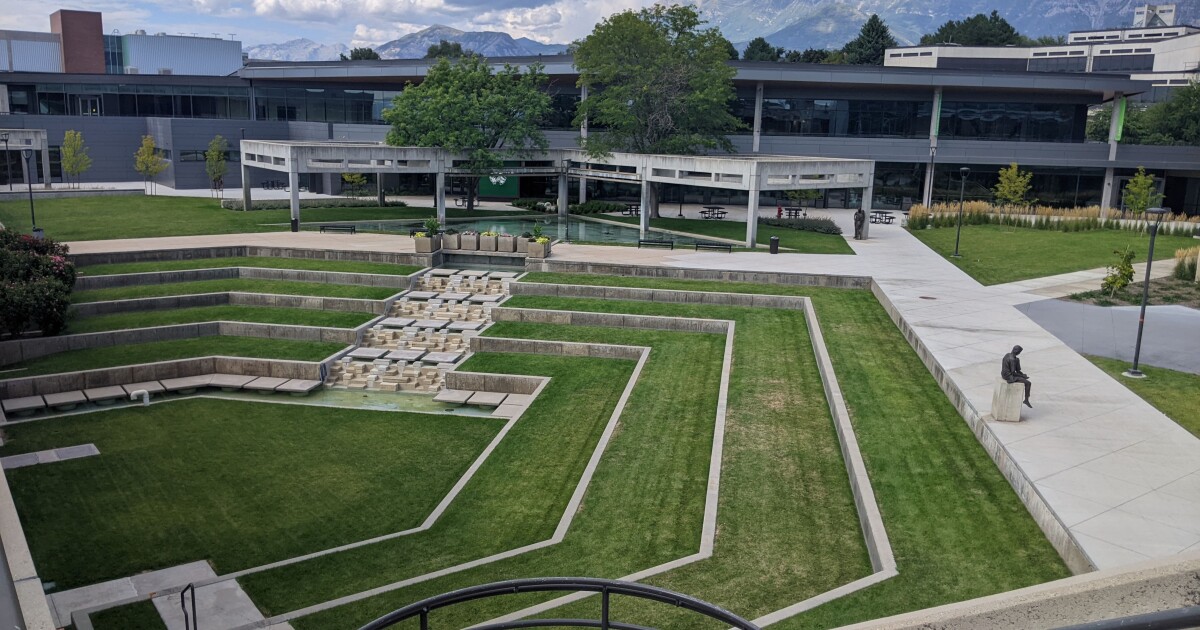
The leads pointing outside the United States — phones, travel, SIGINT, search patterns — and the prior question of whether the government ran any of them down at all.
Read thisElsewhere In The Investigation
Joe Kent, then NCTC director, says the FBI shut his inquiry down before he could run out his leads. The Bureau publicly said foreign intelligence was assisting — assistance and shutdown, at the same time, on the same threads.
Read this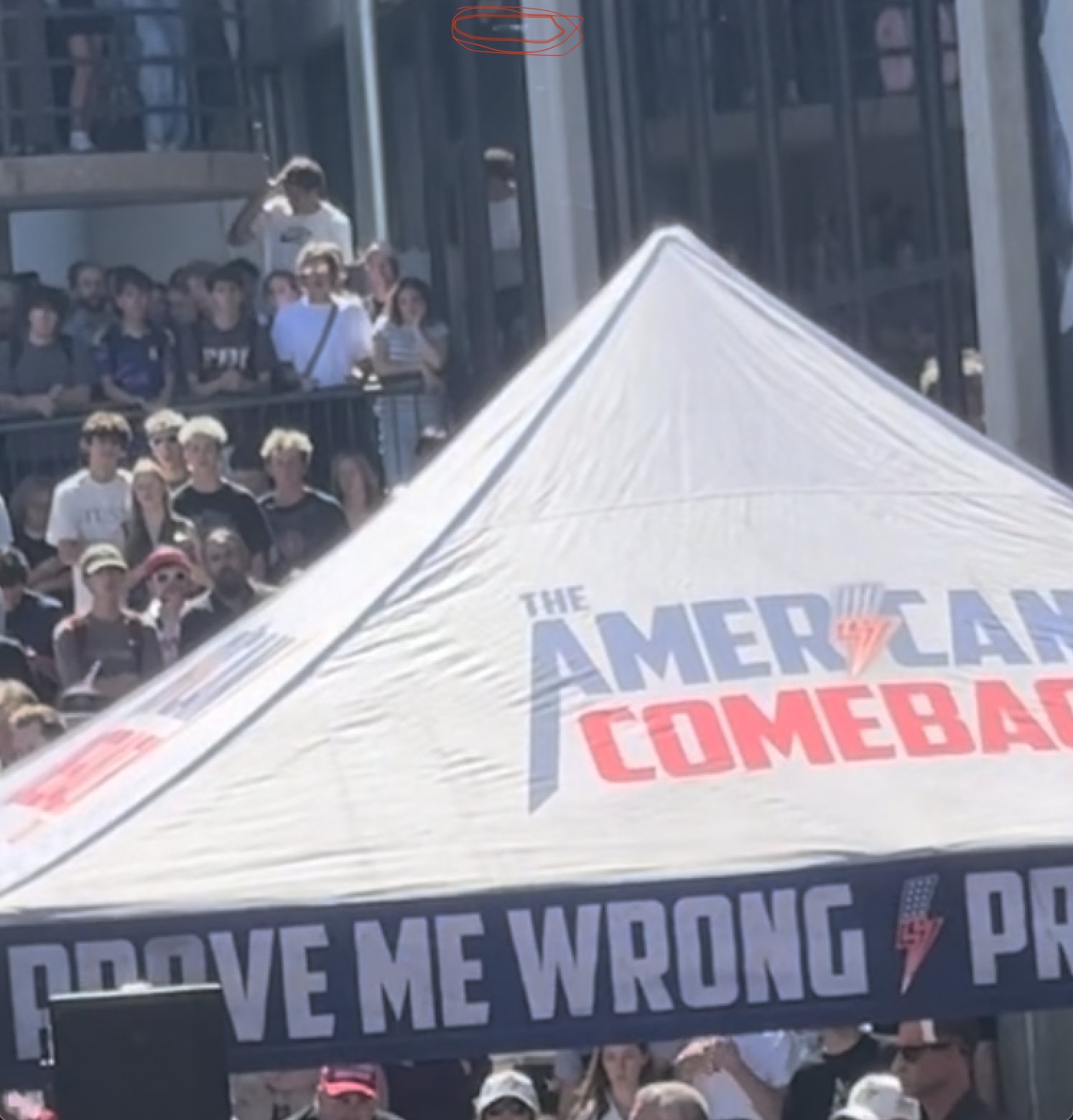
"Blood Libel" Branding Used to Kill Foreign Leads (Claims)
The allegation that labelling foreign-nexus questions "antisemitism" or "blood libel" worked as rhetorical closure — not removing the question, just making it radioactive to ask. The page notes the dynamic cuts both ways.
Read this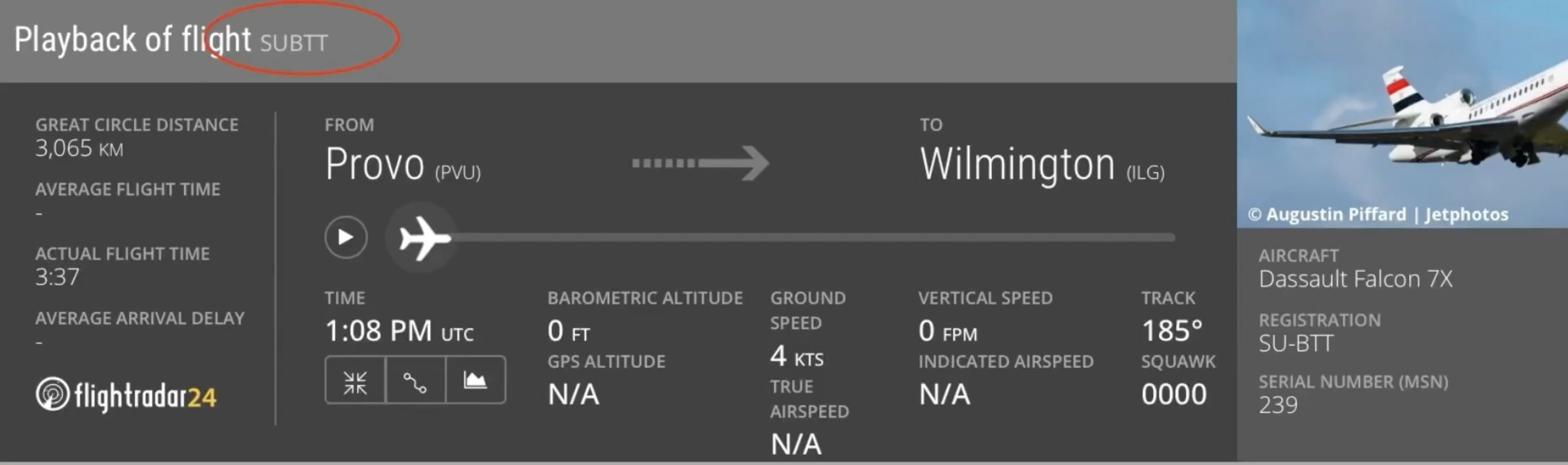
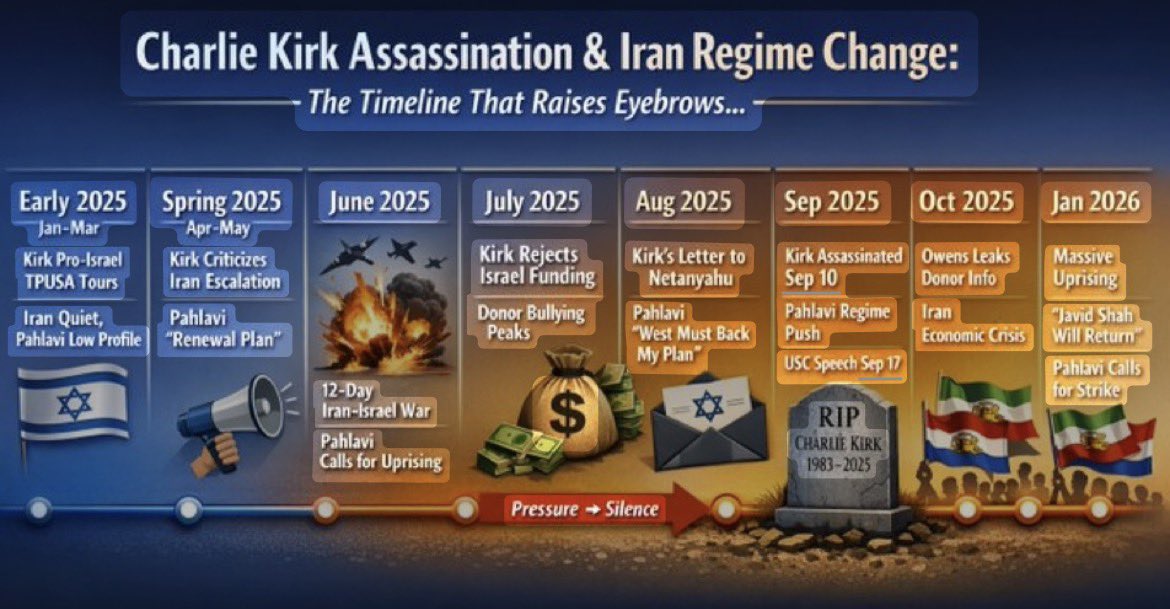
Israel's Push for War With Iran
Why a U.S.–Iran war sat at the centre of pro-Israel advocacy in 2025, and how Charlie's reported opposition put him against it. Presented as reported positions, not as a motive finding.
Read thisThis website's author is @HolonCitizen on X and YouTube/@HolonCitizen. Follow me there.
X.com posts:
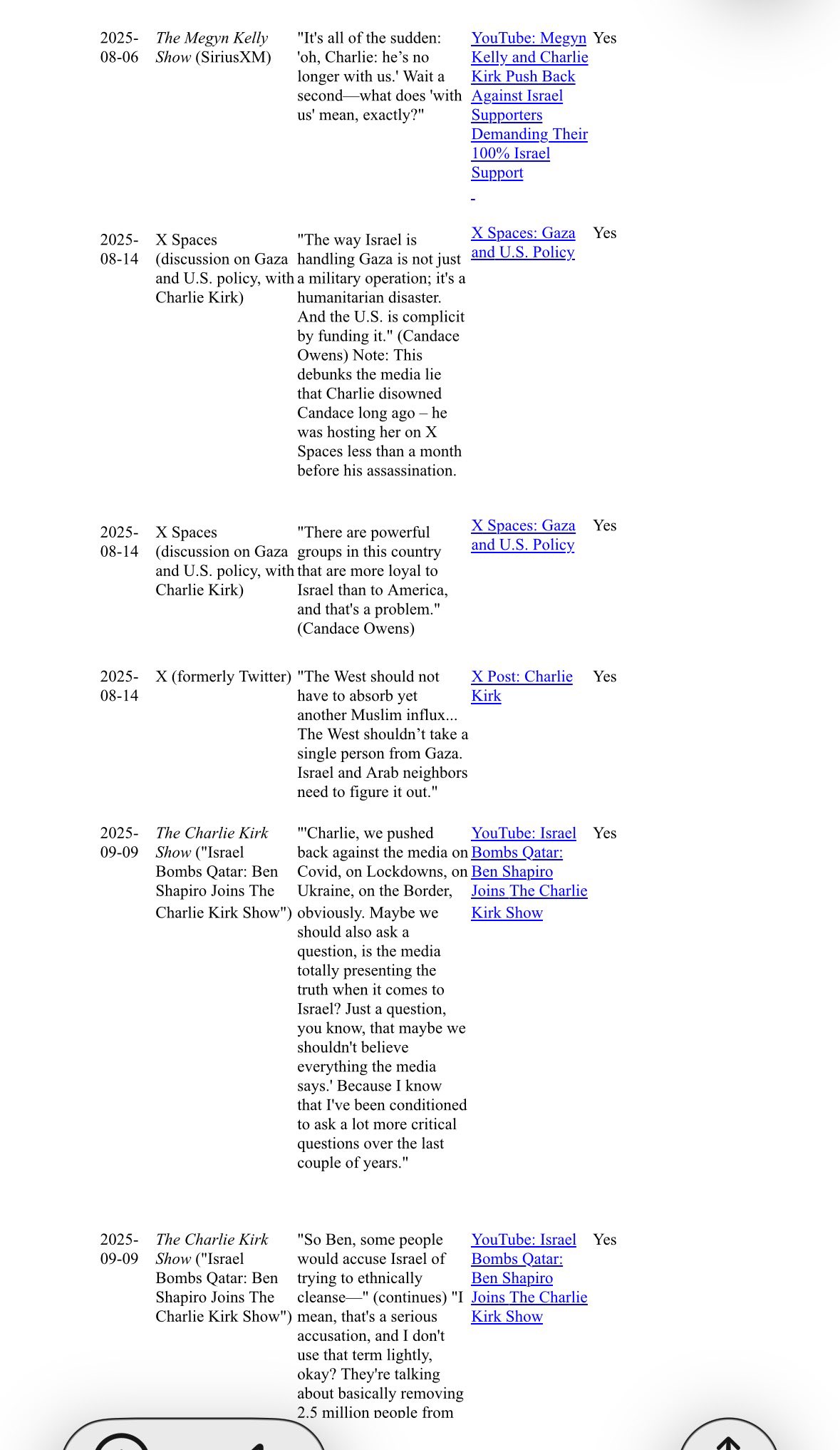
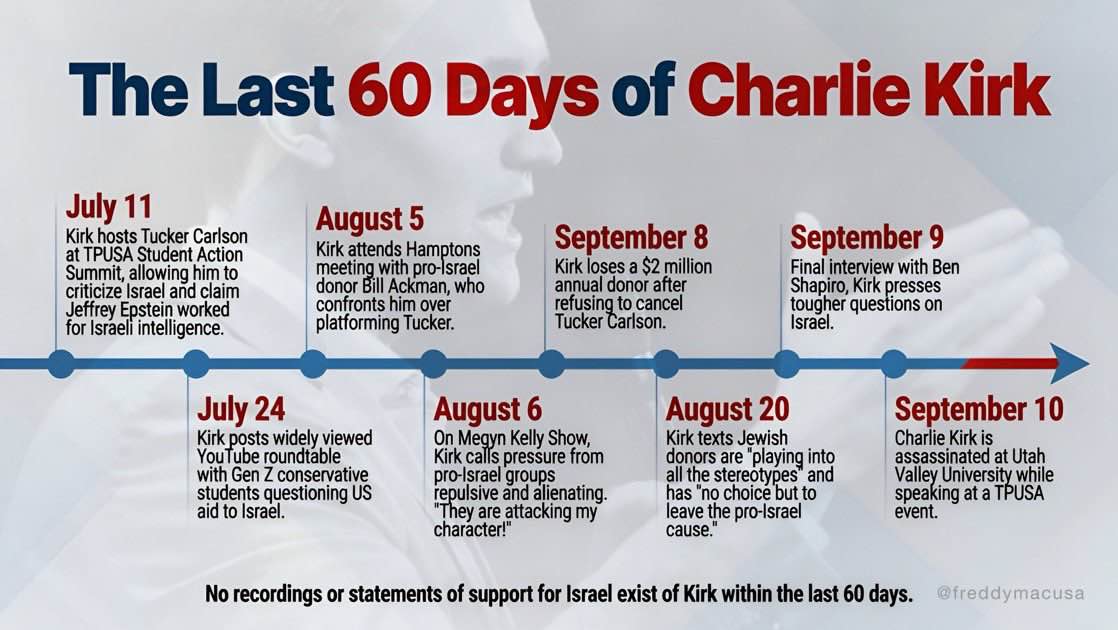
- Israel-CK fallout timeline graphic, July to September 10
- Dillon text: Charlie knew criticizing Bibi carried a cost
- Charlie Kirk: close-proximity betrayers got his attention
Interesting
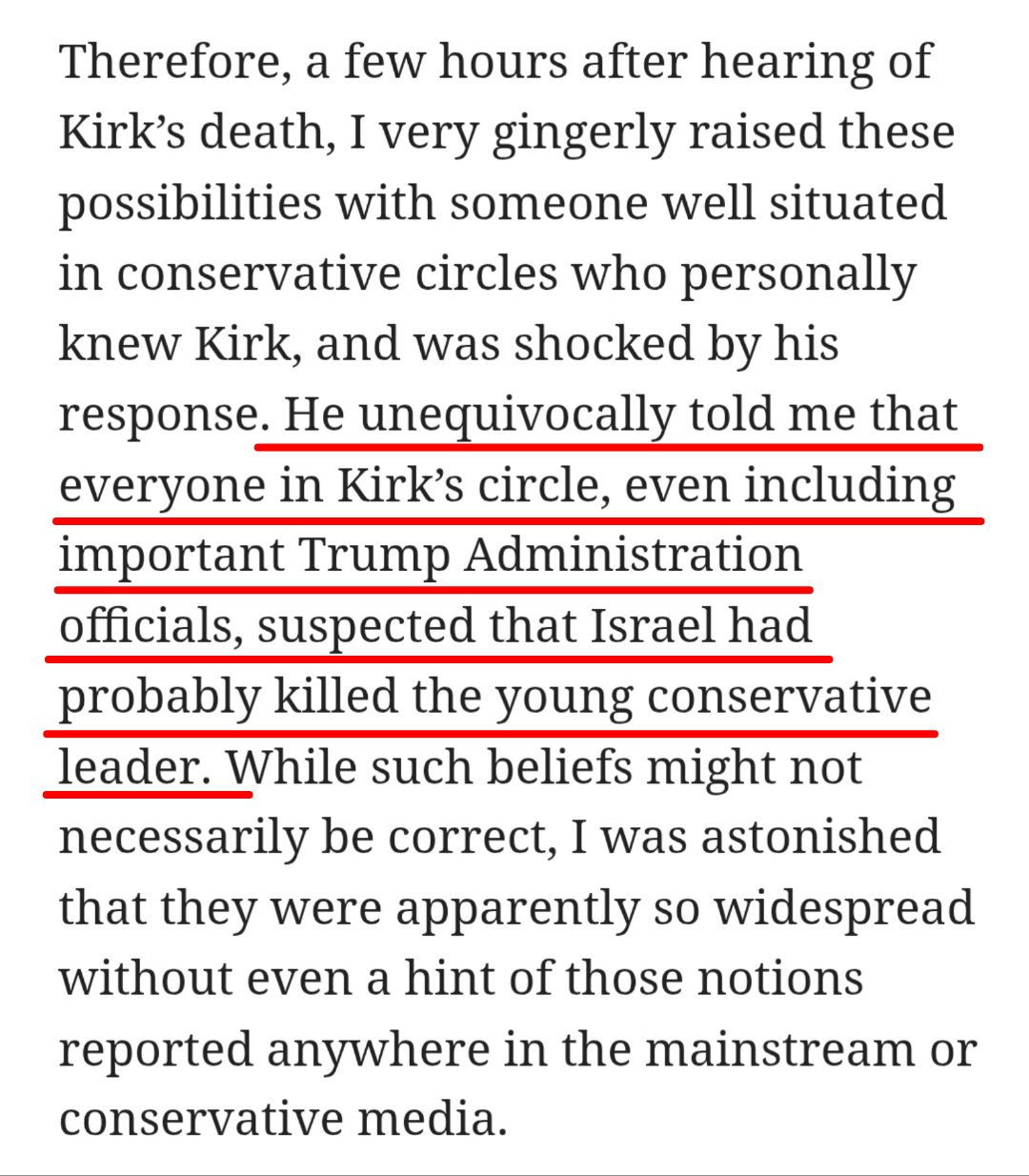
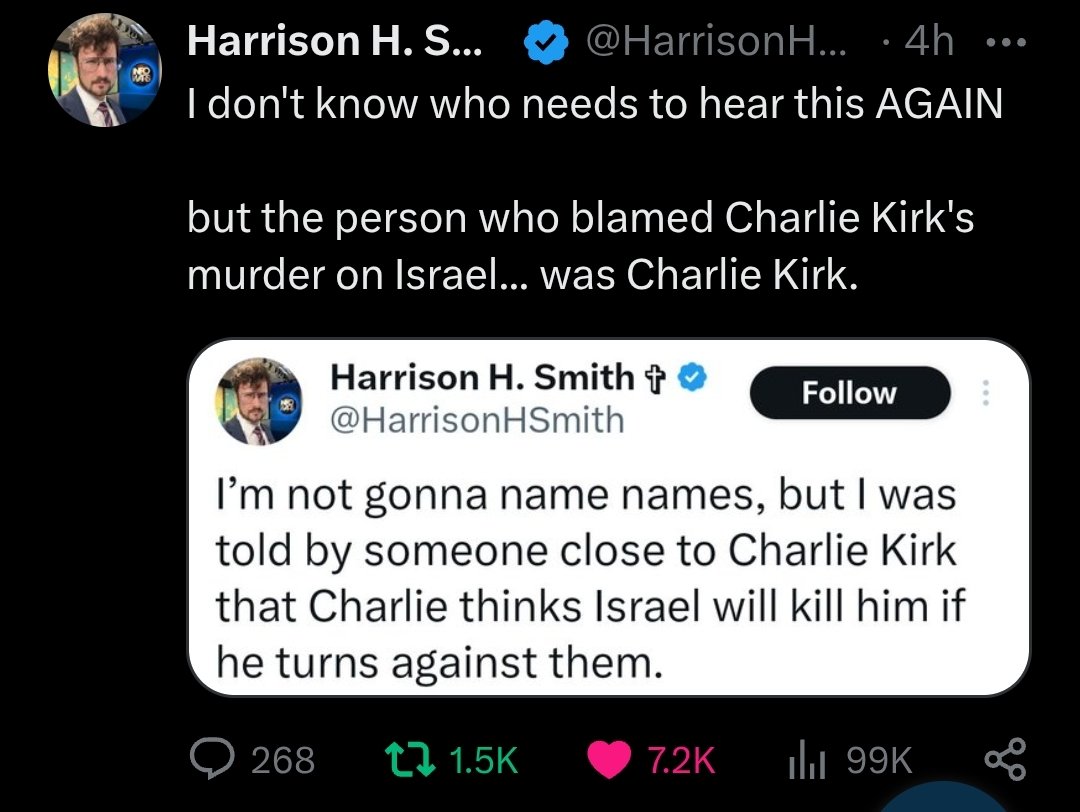
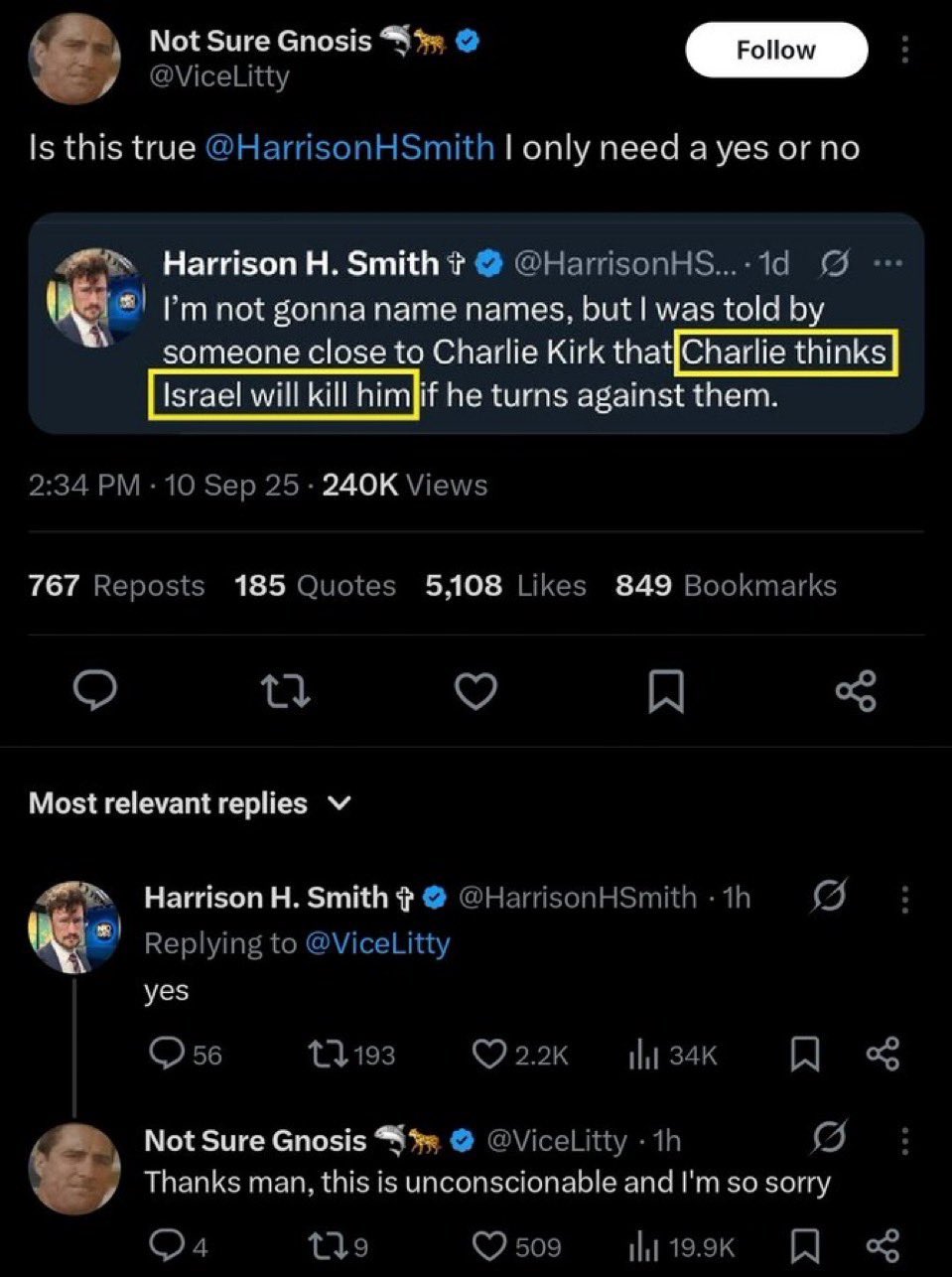
- Kirk reportedly said some version of "if I go against Israel, they will kill me".
- The UVU crew roster includes the man who reportedly took down the camera behind Charlie.
- Reconstruction of the Losee Center rooftop clip leaves a two-second gap that breaks the shooter story.
Charlie Kirk: The Threat He Said Actually Got His Attention
Speaking on stage before September 10, 2025, Charlie Kirk drew a line between two kinds of people who hated him. The stranger on a campus who wanted him dead, he said, did not bother him. The ones who did were the "close proximity" people — the ones he already knew, who had some sort of relationship with him, and who he says had betrayed or deceived him. Clip surfaced by @NihiloX on X, quoting @unhealthytruth.
"Yeah, there's like the purple haired jihadist on a college campus that wants to murder me in my family. Those people don't bother me. The other type of haters, though, are the ones that are the close proximity ones, and these are the ones I know, that had some sort of relationship with me and either betrayed me or deceived me or said that I could not succeed. That is a whole different. Those actually get my attention. Just like the random, troubled person on a campus, whatever."
— Charlie Kirk, full transcript of the 28-second clip above
The people Kirk describes are people who already had a relationship with him. That is the frame this section asks you to hold: reported donor pressure and friction inside his own coalition, rather than a stranger on a campus.
Related Areas
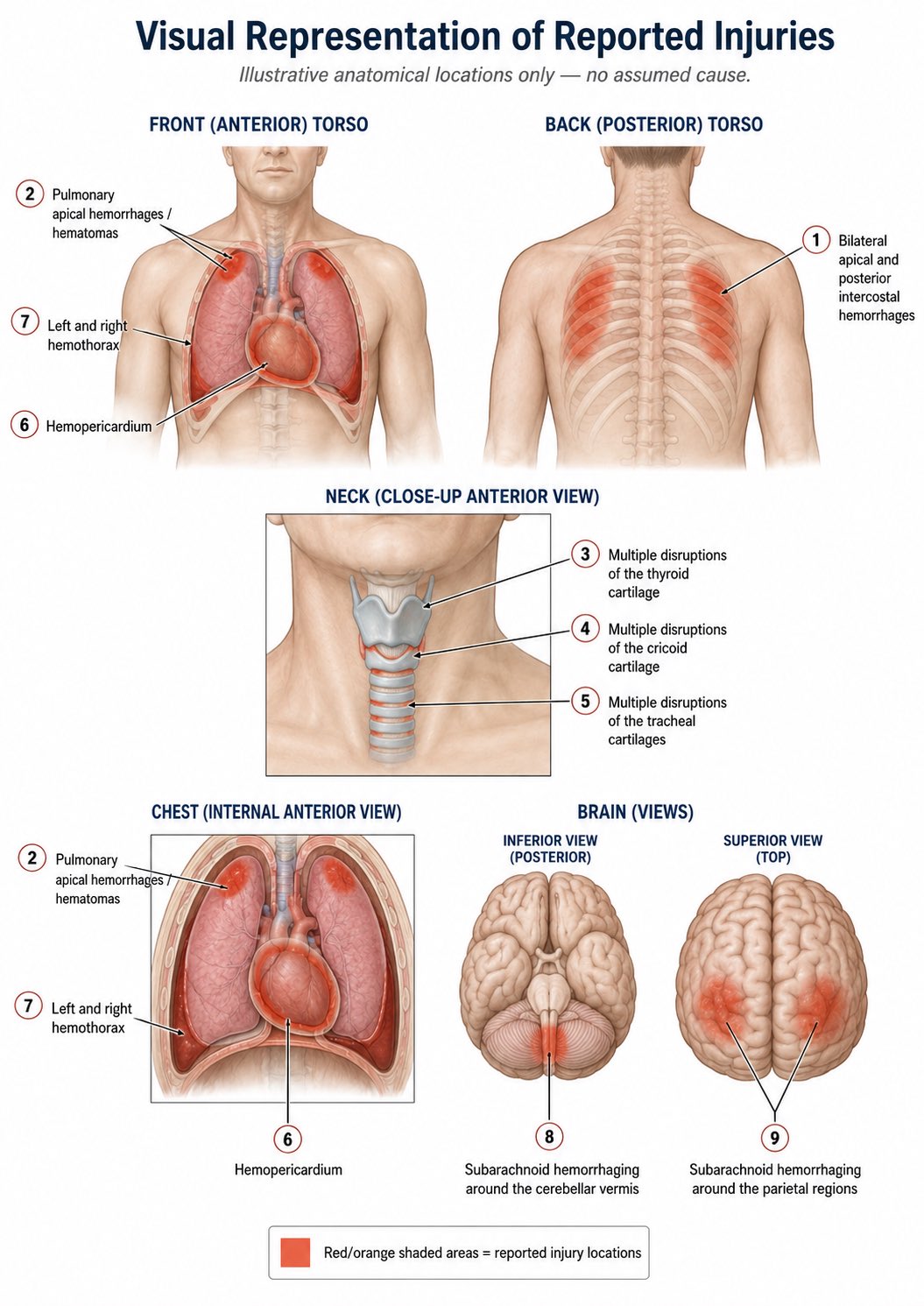
The shape charge is what killed Charlie Kirk.