Alleged Israeli Presence and Connectivity at UVU and in the Case (Claims)
Overview
This Level_3 page summarizes claims about Israeli individuals, devices, or institutions being present at, or otherwise connected to, the UVU event and the broader Charlie Kirk case. These claims appear in X/Twitter threads, podcasts, and investigative‑style videos; they are not findings from official investigations published to date.
Because these topics involve nationality, religion, and intelligence‑related allegations, they must be approached with particular care. This page aims only to document what has been claimed and on what kind of public evidence, not to endorse those claims or assign blame to any Israeli person or institution.
Claims about Israeli‑registered cellphones at the scene
See also the dedicated page: NSA Cellphones & Bumblehive (Claims).
One widely discussed allegation involves Israeli‑registered mobile devices:
- NSA tip narrative (claims):
- Some X/Twitter threads and podcast segments describe an unnamed source allegedly stating that the NSA detected 12 Israeli‑registered cellphones at or near the UVU event at the time of the shooting.
- According to these accounts, the data was said to have been passed to federal law enforcement and then to the White House, with insiders reportedly “freaked out” by the revelation.
- Alternative explanations noted by commentators:
- Even within these same posts, possible benign explanations are acknowledged, including:
- Israeli nationals or dual citizens studying at Utah Valley University’s Center for National Security Studies,
- Visitors associated with local synagogues in the Salt Lake City area, or
- Tourists and business travelers.
- Even within these same posts, possible benign explanations are acknowledged, including:
- Lack of public documentation:
- No official NSA, DOJ, or FBI document confirming such device data has been released publicly. The story rests on anonymous sourcing and second‑hand reporting.
Accordingly, this allegation should be treated as unverified and highly sensitive, not as proof that any Israeli individual was involved in planning or execution.
Alleged institutional or academic links (claims)
Some narratives explore academic and institutional connections involving Israeli nationals or Israel‑related programs:
- University programs and visiting students (claims):
- Posts and forums note that UVU and other Utah institutions host national‑security and international‑relations programs that may attract foreign students, including from Israel.
- These observations are used to argue that Israeli nationals being present in Utah is not inherently suspicious, and that any device‑presence data must be interpreted in that context.
- Research collaborations and funding (claims):
- Commentary occasionally references U.S.–Israel research grants or academic collaborations in national‑security or technology fields as part of a broader landscape of cooperation.
- These partnerships are common and do not, by themselves, indicate any connection to the killing.
These institutional points illustrate why the mere presence of Israeli citizens or institutions in Utah cannot be taken as evidence of wrongdoing.
Stronger claims about Israeli intelligence roles (claims)
At the outer edge of the discourse are direct accusations that Israeli intelligence played a role:
- “Mossad did it” narratives (claims):
- Some social‑media posts and long‑form videos explicitly assert that Mossad was responsible for killing Charlie, often citing lists of circumstantial points (e.g., flight patterns, donor disputes, search‑pattern spikes, and alleged tradecraft).
- These assertions typically rely on pattern‑matching, prior intelligence controversies, and inferences from public data, not on leaked documents or acknowledged operations.
- Lists of “every Israeli connection” (claims):
- Certain threads compile extensive bullet‑point lists of Israeli‑related touchpoints (media reactions, donor backgrounds, aircraft ownership, security personnel history, etc.) and present them as circumstantial support for an Israeli‑intelligence hypothesis.
- While such lists can be useful for mapping connections, they can also overstate their evidentiary weight if not accompanied by clear, verifiable links to planning or execution.
No official investigation has publicly concluded that any Israeli intelligence service ordered or conducted the killing. These theories therefore remain unproven hypotheses advanced by third‑party commentators.
How to weigh Israeli‑presence and connectivity claims
When evaluating these claims:
- Distinguish presence from culpability: The fact that individuals, devices, or institutions with Israeli ties may be present in Utah, or appear in search or ownership records, does not by itself show involvement in a crime.
- Demand strong evidence for serious allegations: Accusing any country or intelligence service of political assassination requires robust, independently verifiable evidence, not just correlation or suspicion.
- Avoid collective blame: Assertions about “Israeli IPs” or “Israeli phones” should not be generalized to all Israelis, Jews, or Israel‑related institutions, which would be both inaccurate and unfair.
This page is intended to clarify what has been claimed about Israeli presence and connections so that readers can assess those claims critically. For how these ideas tie into motive and operational theories, see Motive, Geopolitical and Intelligence-Service Motive Theories, and Killer.
Laws (Charlie Kirk)
- The subscriber identities behind the 12 alleged Israeli-registered phones at UVU and the NSA SIGINT report said to have reached the White House and CBP entry/exit records for foreign nationals are things that the Charlie Kirk Investigation Laws may result in powerful truths coming out that aren't out yet.
X Discourse and Hearing-Era Claims (Attributed)
For Alleged Israeli Presence and Connectivity at UVU and in the Case (Claims), citizen investigators on X continue to circulate: (1) Carlson's characterization that friends believe Israel-views shifts explain the murder; (2) SIGINT-style 12–16 Israeli-registered phone claims at UVU and Bumblehive deanonymization stories; (3) Grim Beeper / PETN capability analogies; (4) Kent foreign-lead blockage; (5) donor-text and Hamptons-pressure narratives; (6) aggressive counter-posts branding foreign-blame theories as antisemitic blood libel.
None of the above is a court finding that Israel, Mossad, or any named Israeli or Jewish person killed Charlie Kirk. Proximity of phones, donor disputes, and capability demonstrations are investigative questions. Officially, prosecutors present a domestic lone-suspect case against Tyler Robinson (charged, not convicted).
Primary cross-links: foreign leads, NSA cellphones, motivation, Killer Israel/Mossad theory.
Interesting In This Area
- The count moves between twelve and sixteen depending on the post — see the SIGINT page.
- Benign readings include national-security students, synagogue visitors and tourists, noted on Israelis at UVU.
- Search-pattern threads and aircraft claims are the usual companions to presence lists.
- Collective blame is rejected outright here, as it is on the section overview.
Interesting In Other Areas
- Bumblehive would turn deanonymisation into a query rather than an investigation.
- Blood-libel branding allegedly closed foreign questions rhetorically without answering any of them.
- Foreign IP search spikes allegedly hit campus layout, hospital, judges and defence counsel.
- Two men reportedly warned UVU police the night before, per GRAMA records.
Other Pages In This Section
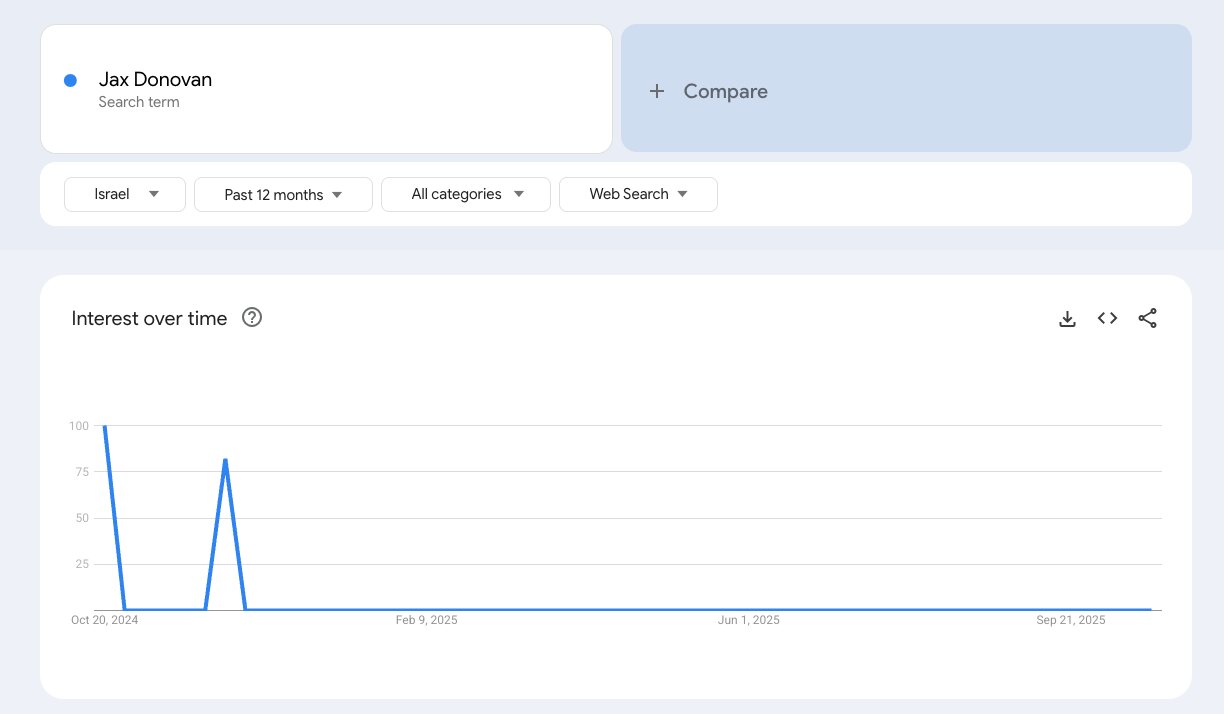
Reported Israeli Search-Pattern and IP Activity (Claims)
Google Trends shows aggregate, anonymized interest and identifies nobody. The page says so up front, then records the spikes citizen researchers keep pointing at anyway.
Read thisBrand says two people who were in a cabinet meeting told him foreign involvement and domestic accomplices were both taken off the table six days in. Anonymous second-hand sourcing, unconfirmed by anyone named.
Read thisThe Bridgehampton gathering of early August 2025, and what people present say was asked of Charlie Kirk. Attendance is documented; pressure is alleged.
Read this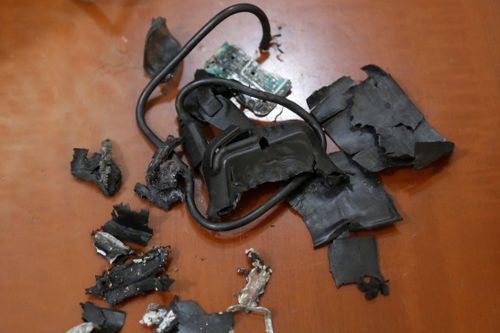
PETN — The Explosive in the Devices (Claims)
PETN is destructive far out of proportion to its size and can be molded into thin sheets or slivers. Reporting on the 2024 pager operation is why capability arguments keep circling back to it.
Read thisElsewhere In The Investigation
Claims about the NSA Utah Data Center holding the phone record that would settle who was on campus. If Bumblehive has it, deanonymisation is a query, not an investigation.
Read this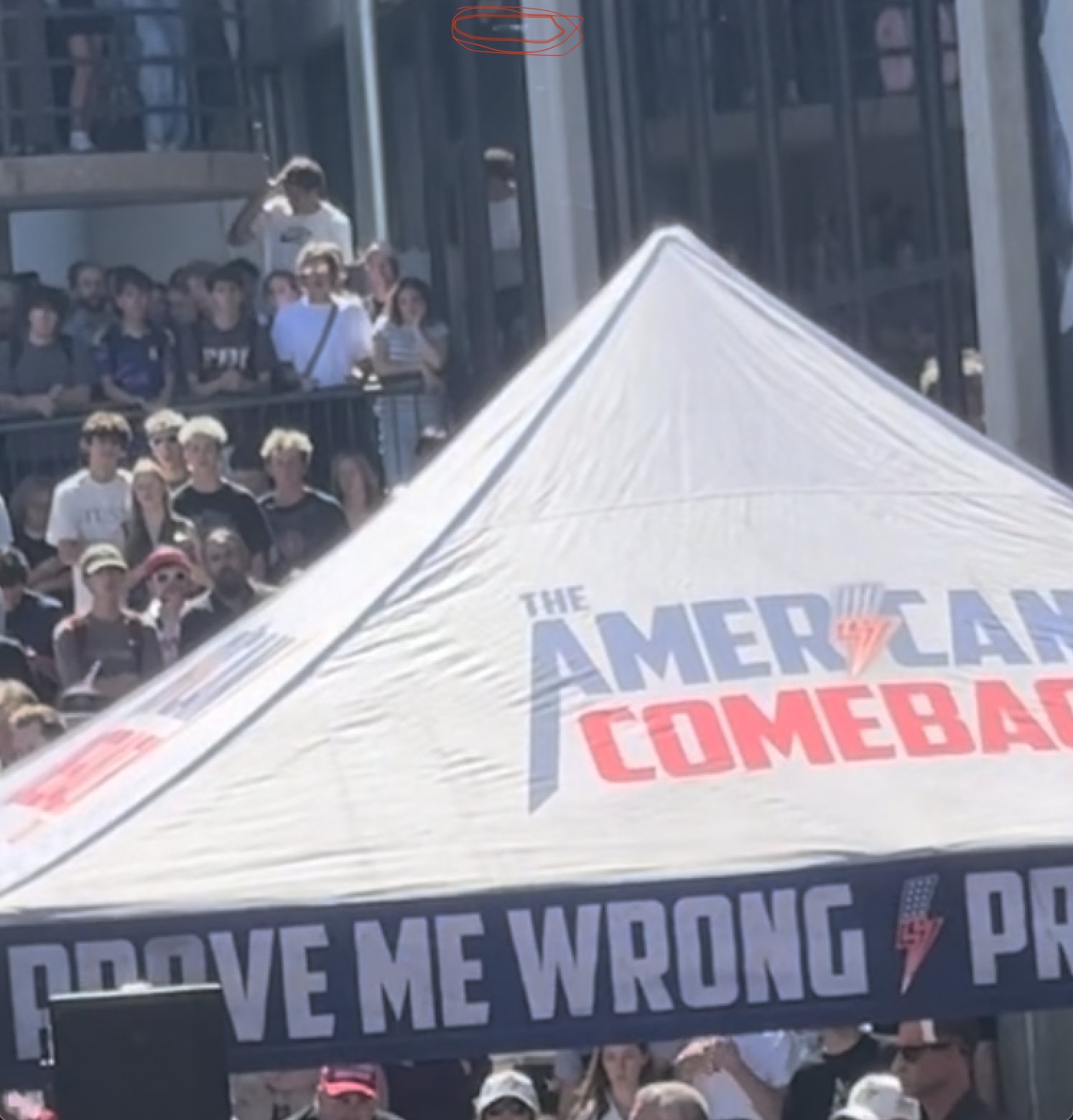
"Blood Libel" Branding Used to Kill Foreign Leads (Claims)
The allegation that labelling foreign-nexus questions "antisemitism" or "blood libel" worked as rhetorical closure — not removing the question, just making it radioactive to ask. The page notes the dynamic cuts both ways.
Read this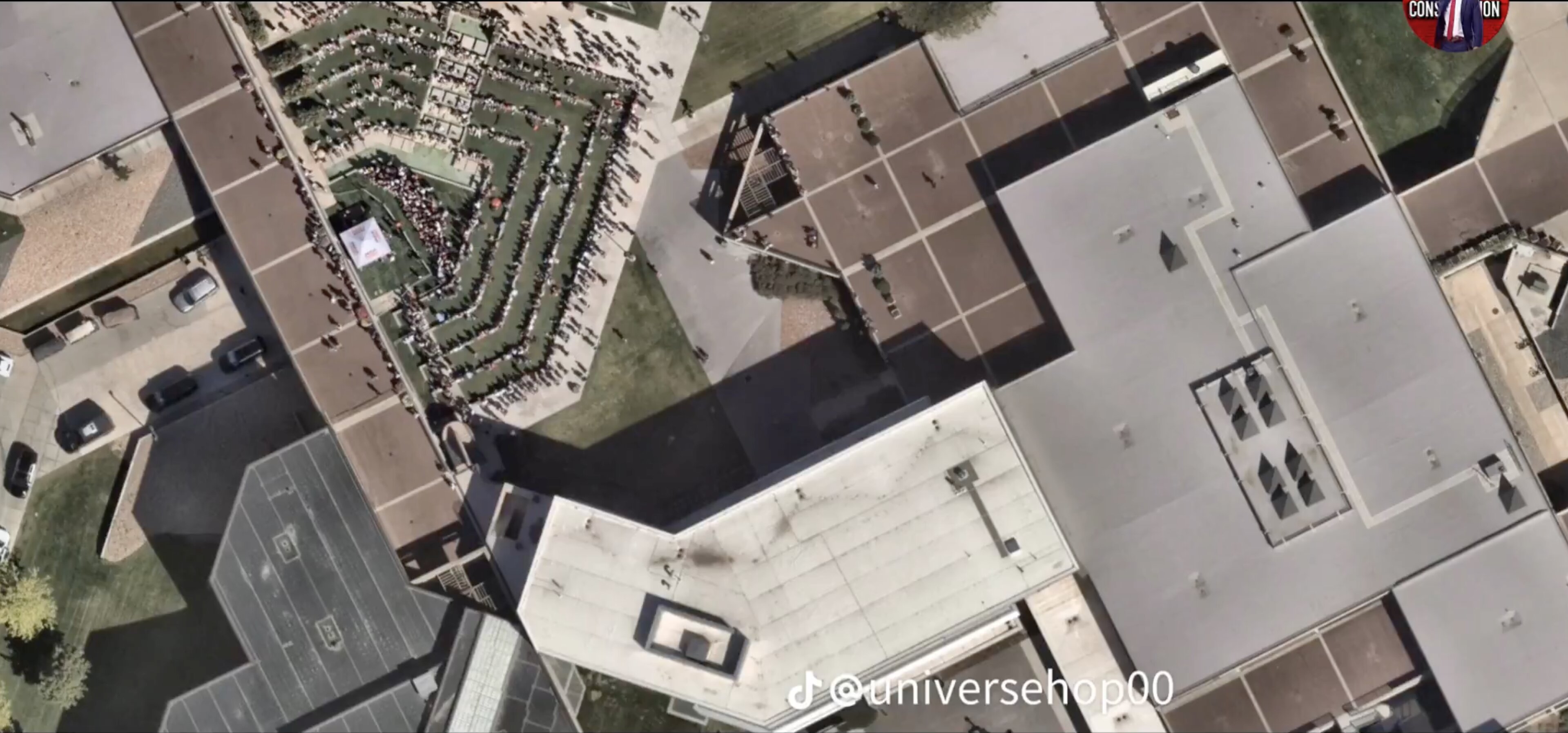
Foreign Search IP Patterns (Claims)
Alleged Israeli and Washington IP search spikes on the campus layout, the hospital, the judges and defense counsel — weeks or months before September 10. Unverified; log-level records would settle it in one line.
Read this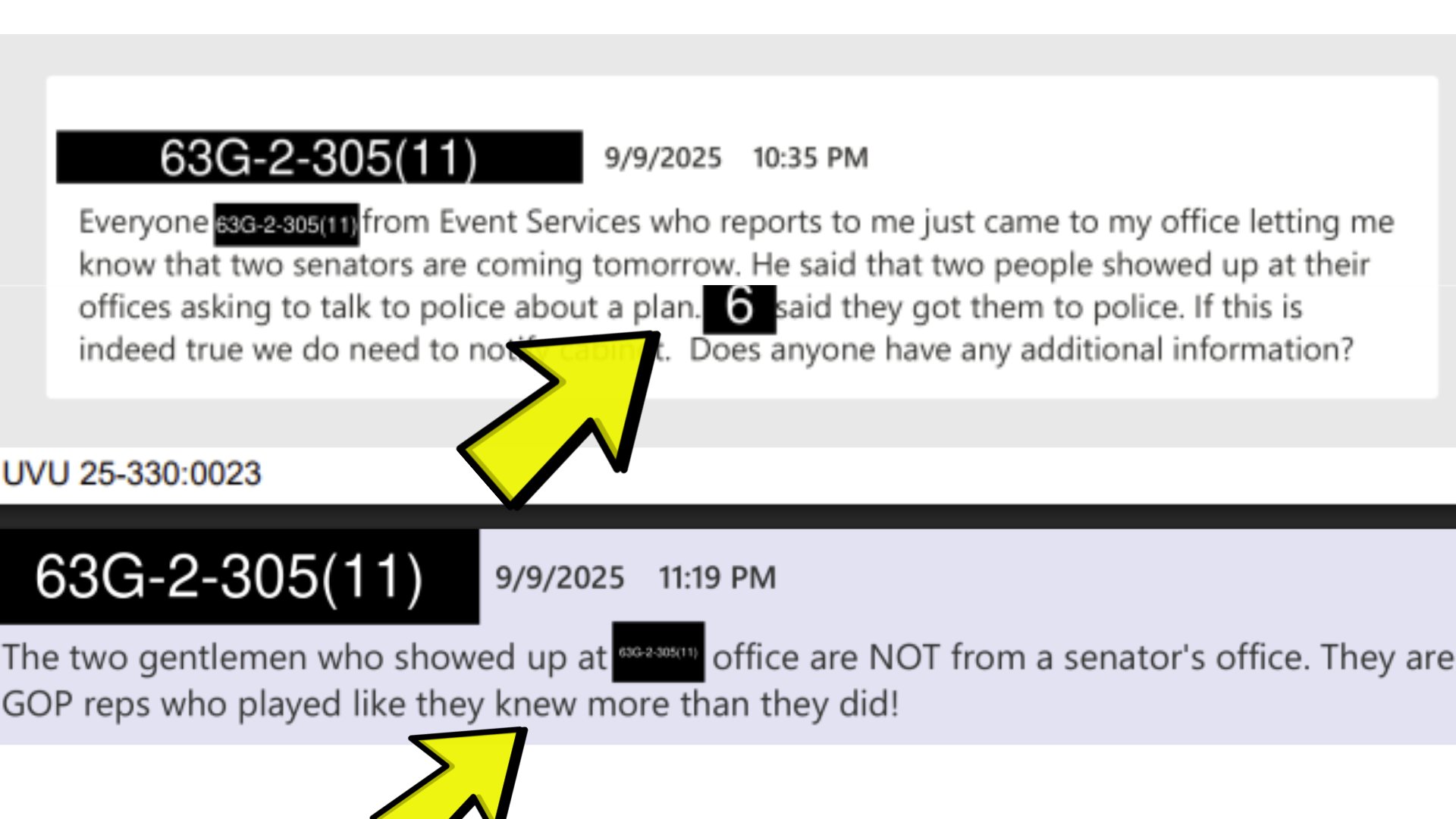
Pre-Shooting Warnings: Two Men Contacted UVU the Night Before
Redacted GRAMA records from September 9, 2025 show internal UVU communications about two men who asked to speak with police about "a plan." The night before.
Read thisThis website's author is @HolonCitizen on X and YouTube/@HolonCitizen. Follow me there.
Interesting
- Hezbollah's retreat to low-tech pagers was reportedly anticipated, the supply chain tampered with first.
- One draft says managers who block staff from joining civilian teams would themselves be offenders.
- The original trusted-investigator draft named only Owens, Smith and Carlson.