Geopolitical and Intelligence‑Service Motive Theories (Claims)
Some motive frameworks argue Charlie Kirk's death required capabilities and incentives beyond a lone ideologically motivated gunman — pointing to foreign-policy stakes, surveillance aircraft, contractor movements, and blocked counterterrorism probes. This page catalogs claims from X, Candace Owens programs, and news summaries. No court has attributed the killing to any intelligence service.
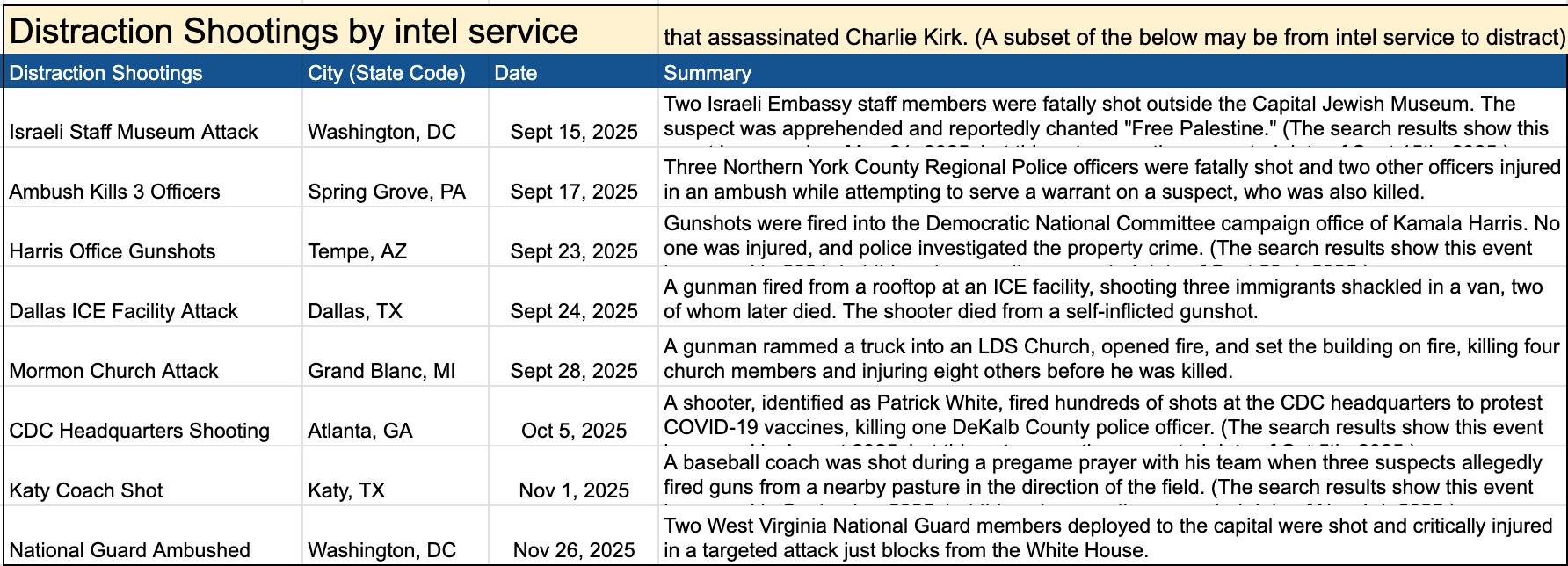
Why intel-linked motives appear (premises)
Commentators typically combine:
- Charlie's reported policy shift — see Donor & Israel Foreign Policy.
- Alleged death warnings — "they will kill me" (KM index) texts Sept 9.
- Operational sophistication claims — shaped-charge / tent-shot theories vs 30-06 narrative.
- Unusual pre-event travel — Egyptian and ISR flights, Fort Huachuca meetings.
Motive here means strategic interest in silencing or controlling fallout, not proven agency participation.
Foreign-interference probe — Kent vs Patel (reported)
Master-file entry #26 cites Daily Mail / Reuters summaries:
- Gabbard DNI Kent investigated whether foreign governments were behind the killing.
- Trump-administration officials reportedly worried the probe could help Tyler Robinson's defense argue multiple suspects.
- Kash Patel allegedly "snuffed out" NCTC efforts to pursue foreign-nexus leads.
If accurate, institutional motive to prefer a lone-actor story could align with suppressing foreign-interference lines — a post-incident incentive, not proof anyone ordered the hit. See FBI and NCTC shutdown.
In a May 14, 2026 conversation posted by @rustyrockets (Russell Brand), Brand claimed two sources who were in a cabinet meeting told him — six days after the killing — that Kash Patel, Tulsi Gabbard, and the Vice President said "we're not looking at foreign involvement" and "we're not looking at any accomplices domestically," which Brand framed as a cover-up. These are Brand's attributed claims from unnamed sources, not confirmed cabinet minutes; no official record corroborates the quotes.
Kent himself has since spoken about the halt on the record — see the Joe Kent profile for his account that NCTC's parallel review of potential international ties was ordered to stop before those leads were exhausted.
Egyptian plane and Provo contractors (claims)
Candace Owens and flight-tracking threads emphasize SU-BTT / Egyptian-government-linked aircraft:
- Sept 4–10, 2025: Contractors with DOD liaison badges; counter-UAS gear tested at Provo airport.
- Only non–army-base U.S. stop for that airframe in some compilations.
- 12 Israeli cell-phone plans reportedly signed up in Israel — Candace disclosure; government secrecy alleged.
- Flight-tracking threads place Walid Mahmoud aboard earlier Provo trips (May–June timeline) — an attributed claim; no released manifest confirms it.
Analysts argue state-level surveillance and contractor access imply interests beyond Tyler's Discord logs. Skeptics counter that diplomatic flights have benign explanations. Deep dive: Egyptian Armada.
Fort Huachuca, SAM-702, BCG (claims)
@RealCandaceO alleges that one of the VIP passengers on SAM-702 leaving Fort Huachuca Sept 9 (day before shooting) was Bradley D. Hansell — Trump Under Secretary of War for Intelligence. No released manifest confirms that identification.
Commentary links Boston Consulting Group Project Aurora — Israeli-linked consulting modeling Gaza displacement payments — to the same week that unverified eyewitness accounts allege Brian Harpole and others attended a secret Huachuca meeting. No released visitor log or official record confirms that any such meeting occurred or who attended it. These are personnel-and-contract overlap arguments, not evidence of assassination planning.
Shaped charge and "professional hit" motive (claims)
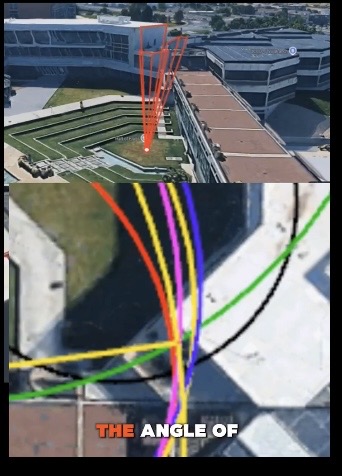
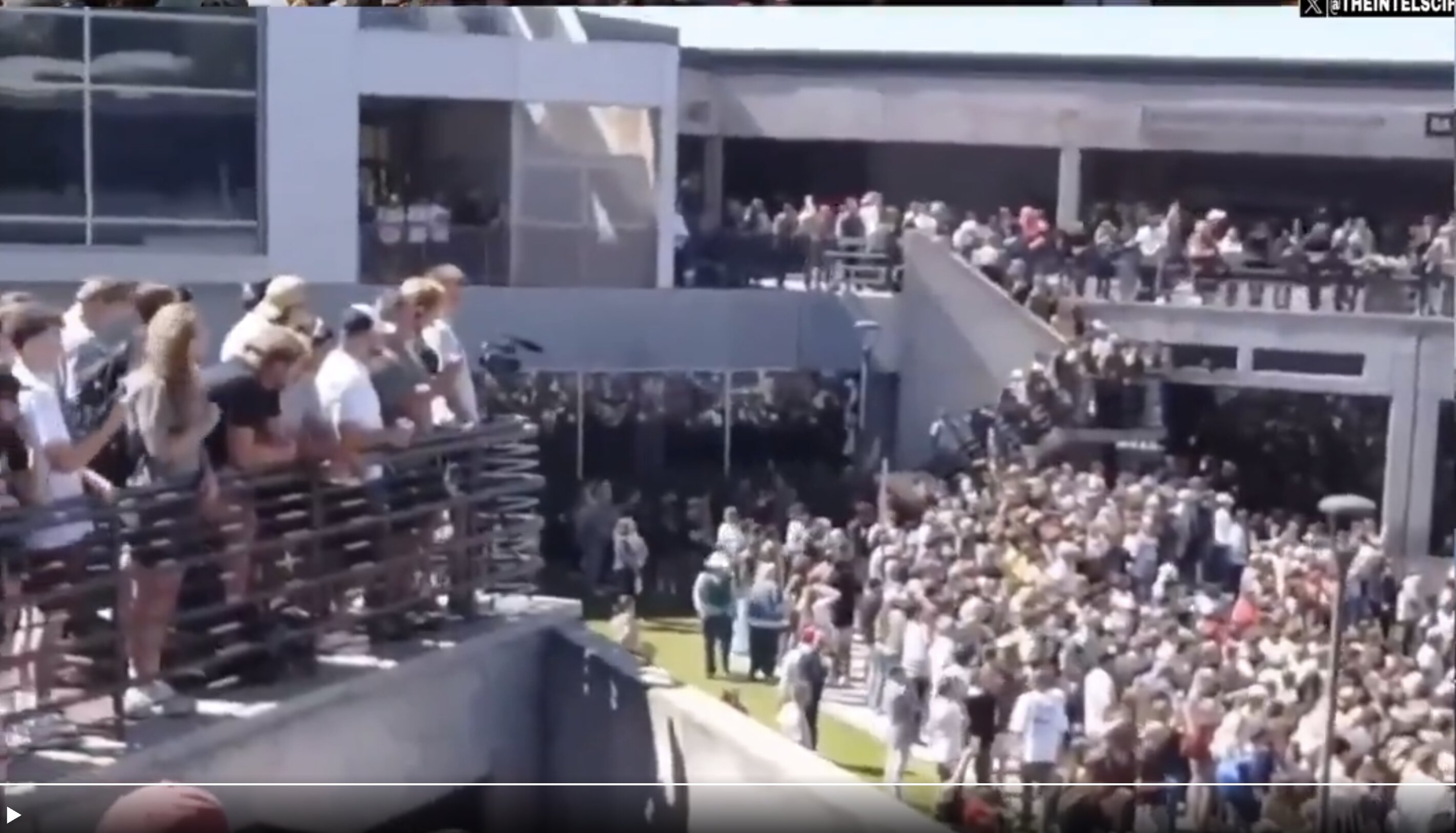
Master-file commentary: Charlie was killed by a shaped charge that malfunctioned upward into the neck instead of the chest (to mimic a bullet). If true, motive theories shift from grudge to silencing a movement leader while preserving a rifle-cover story.
That overlaps Mic, Gun & Bullet, and Proof Not Tyler. Proponents argue only trained actors deploy micro-charges; skeptics demand replicated tests.
ADL, Mark Levin, and escalation rhetoric (claims)
X commentary compiled in the master file quotes Mark Levin and ADL-linked rhetoric about needing "the same energy" as pager operations against American people — framed as atmosphere creating permission structures for violence against critics. The master file also cites John Hammer as having publicly called for Tucker Carlson to be "neutralized" (master file #27) — a quotation reproduced from those notes and not independently verified here.
These are rhetorical motive-context claims: hostile speech does not prove a specific assassination order.
Geofencing and Show Faith By Works (claims)
Investigation notes allege Show Faith By Works — company tied to Israel geotracking — harvested Christian/MAGA phones at TPUSA events and churches after Kirk's memorial. Motive theorists argue surveillance infrastructure around Kirk's audience implies state-level interest in his movement's direction, not random lone-wolf violence.
Arms-trafficking complication (Candace framing)
Candace Owens segments describe arms-trafficking networks approaching large multi-state organizations — if Charlie refused tasks from "powers that be," complications could follow. This is broad investigative narrative in the master file; specific contracts or indictments are not cited on the public site.
Domestic "deep state" and NCTC anecdotes (claims)
X threads cite unnamed NCTC analysts suspecting rogue U.S. factions — anecdotal, without official confirmation. Analogies to JFK/9/11 are rhetorical, not evidence.
Cautions
- Motive ≠ proof for Mossad, CIA, FBI, or any named agency.
- Nationality and religion: careless accusations harm communities; attribute claims to named commentators.
- Related context appears in the Timeline, Planes, and Proof Intel Services sections.
Laws (Charlie Kirk)
NCTC foreign-nexus files, flight manifests for SU-BTT/N1098L, and SIGINT on case actors are among disclosures the Charlie Kirk Investigation Laws may force out.
Citizen Investigator Claims on X (Intel-Service Motive Frames)
- Fort Huachuca / SAM / Bradley Hansell threads (@ProjectConstitu, @hurtfeelingzday, Candace Owens amplification) supply the capability and proximity half of intel-service theories; motive half often points to foreign-policy deviation narratives.
- Grim Beeper / supply-chain assassination analogies remain common capability arguments (CK notes) — still not identification of a service as perpetrator.
- Responsible reading: intelligence-service involvement is a live investigative hypothesis on this site’s thesis pages; it is not a completed adjudication.
Commentator coverage: Citizen journalist Ian Carroll has pursued the donor-friction and foreign-interest motive lines and Joe Kent's blocked-foreign-leads account in his public commentary, while explicitly cautioning according to his posts that raising the Israel question "doesn't mean Israel did it" — it is, in his words, "a perfectly reasonable question to ask," not an attribution of guilt.
Interesting In This Area
- Donor pressure and a shifting Israel position sit under every geopolitical frame here.
- The official personal motive is ideological opposition and partner grievance, reported rather than proven.
- Institutional incentives explain a lone-actor default without requiring any foreign service.
- The four motive lanes are kept separate deliberately, because each demands different evidence.
Interesting In Other Areas
- Joe Kent says the FBI halted his counterterrorism review of a possible foreign nexus.
- Egyptian aircraft sat at Provo from September 4 and left on the tenth.
- An Army HADES ISR jet ran low, slow passes near Orem before and after 12:23.
- Kirk reportedly argued against regime change in Iran at the White House in June.
Images
Other Pages In This Section
Institutional, Media, and Organizational Motive Dynamics (Claims)
Motive that needs no foreign service: lone-actor narrative incentives, a succession announced within hours, insurance and audit pressure, and gag orders shaping which theories could be argued at all. Attributed claims throughout, and not one of them a court finding.
Read thisFour motive lanes kept deliberately apart — donor and Israel-policy friction, the reported death warnings, geopolitical context, and institutional incentives. Each is routed to the page that carries it, and to the disclosure that would settle it.
Read this
Tyler Robinson's Alleged Personal and Ideological Motives (As Reported)
The personal and ideological motive the state and the press assembled. Read it as the account to be tested, because testing it is what the rest of this site does.
Read thisElsewhere In The Investigation
Halted foreign inquiries, an ISR jet overhead, foreign phones, VIP flights and scene control. Indicators rather than proof — but they are the indicators an intelligence service leaves behind.
Read this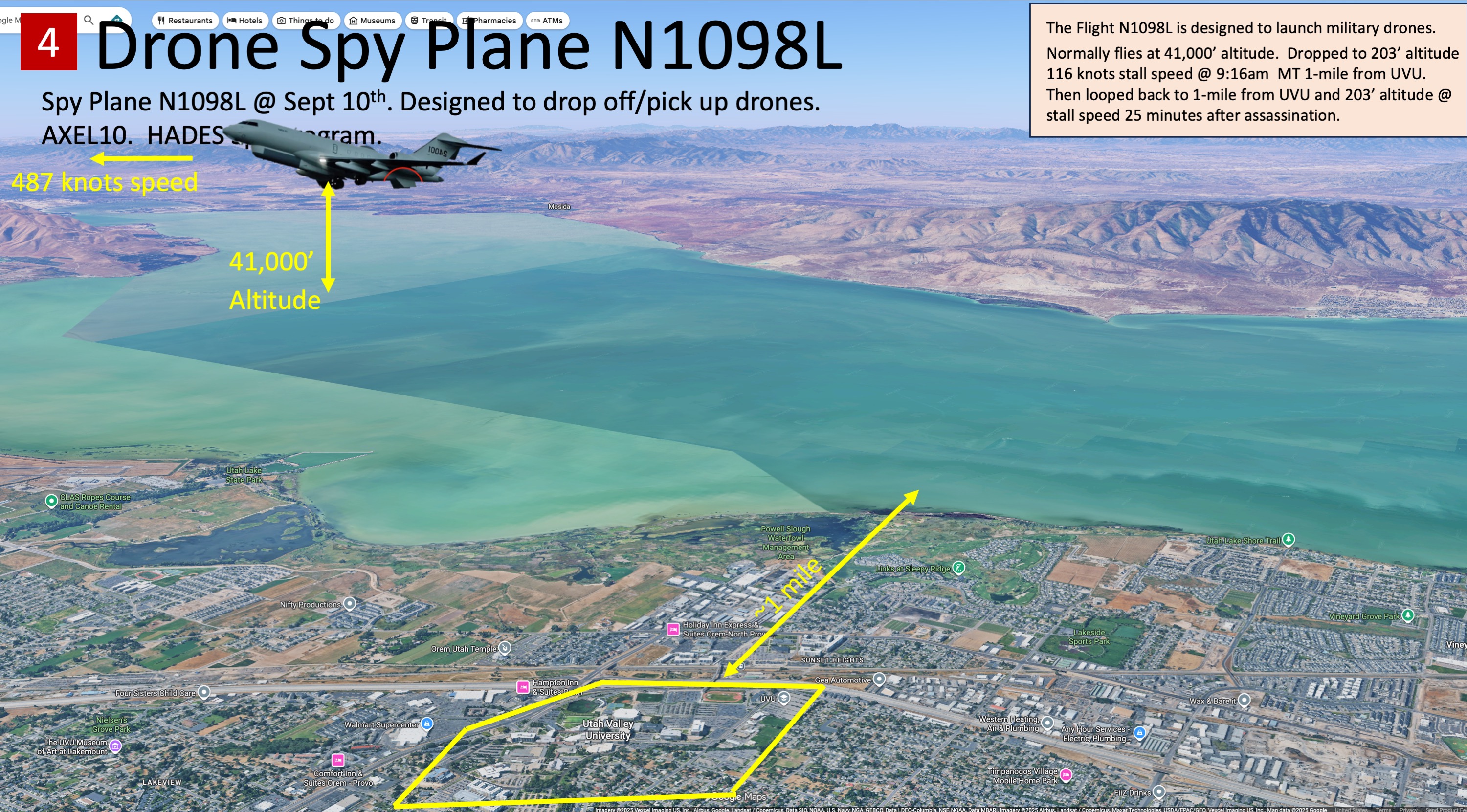
A Bombardier Global 6500 flown by an Army ISR contractor, callsign AXLE10, ran an unusual low and slow profile near Orem on September 10. No track, tasking order, or sensor product from it has appeared in the prosecution.
Read thisHow the Iran War Raised His Risk
The motive logic stated plainly: not that Iran acted, but that Kirk's opposition to a U.S.–Iran war placed him against that war's most powerful advocates. Reasoning about incentive, not proof of a crime.
Read thisThis website's author is @HolonCitizen on X and YouTube/@HolonCitizen. Follow me there.
Interesting
- A FARA filing eight days after the shooting reportedly routed Israeli government messaging into TPUSA's media partner.
- Only seven live witnesses testified, and the defense called the lone FBI witness.
- Researchers report reach collapsing only on case posts, which they read as targeted throttling.