Site Changes and Crime‑Scene Handling After the UVU Event (Claims)
:::caution Legal Disclaimer Tyler Robinson is charged, not convicted and is presumed innocent until proven guilty. Contractor names and company employees discussed here are cited only through public interviews and attributed commentary — not as proof of wrongdoing by any individual or firm. :::
Within days of the 12:23 PM MDT shooting at UVU, citizen investigators documented rapid physical changes at the tent area where Charlie Kirk was struck. The core investigative question is whether landscaping removal, paving, and related construction altered or destroyed trace evidence — bullet fragments, soil disturbance, footwear impressions — before independent experts could examine the scene.
This page summarizes claims and observations from contractor interviews, X/Twitter threads, and comparative crime-scene commentary. It does not conclude that UVU, contractors, or officials intentionally destroyed evidence or participated in a cover-up.
The ground in question is where Charlie Kirk was murdered on September 10, 2025, so anything removed from it is material that can never be re-examined — a point developed further in the cover-up section.
Why the timing matters
Forensic investigators typically treat outdoor shooting scenes as time-sensitive: weather, foot traffic, and construction can erase ballistics and trace data. Commentators therefore focus on:
- How quickly work began after Sept 10 (reported as roughly four days, including a Sunday)
- Who ordered the work (contractor accounts cite state and federal coordination — see X.com section below)
- What was removed before public photography and independent review could occur
For medical and forensic context, see Medical, Charlie Kirk Autopsy, and Construction and site changes. For broader cover-up theory framing, see Cover‑Up and Alleged Cover‑Up Indicators.
Reported timeline of post‑event construction (claims)
Multiple citizen-investigator threads and video interviews describe accelerated construction at the tent site:
| Claim (attributed) | Detail |
|---|---|
| First contact | Contractor Daniel Merrell (Hardscape Utah) reportedly contacted ~4 days after the shooting — on a Sunday |
| Work scope | Tear up landscaping; install pavers or concrete at the spot where Charlie was shot; related work near the tunnel |
| Start date cited | Sept 14 paving start per CK_FILE and @ShadowofEzra threads |
| Performing entity | Hardscape Specialties LLC named in project materials for tent-area paving |
Merrell's circulated interview reportedly states that Sunday work is unusual for him and that he understood the job to be directly connected to the assassination aftermath. These accounts come from publicly posted videos; researchers should verify by watching originals. Deeper contractor coverage: UVU/Pavers, UVU/Hardscape-Specialties, FBI/Crime_Scene_Paving.
Companies named in online discussion (claims)
OSINT-style social-media investigations have named additional firms and corporate-registry connections:
- Hardscape Utah — Merrell interview focal point
- Precision Granite & Marble LLC
- Crew General Contractors (CrewGC)
- Robinson-named entity links — unverified registry threads; may reflect common surnames rather than suspect ties
Such company-link discussions are not court rulings. Even critics acknowledge workers may have been fulfilling contractual orders without knowledge of broader implications.
Hardscape Specialties LLC — registry claims (attributed)
CK_FILE compilations of corporate-registry OSINT make several unverified claims about the firm named for the tent-area paving:
- Hardscape Specialties LLC was reportedly dormant for ~20 years and revived in February 2025 — months before the shooting.
- Its listed owner is described as Michael Powell, said to be a Utah Attorney General special agent.
- A listed co-owner, Burton Romrell, is described as former UVU operations staff.
- A work order was reportedly issued two days post-shooting, with no public bidding process mentioned and a tight finish-by-Monday deadline requiring overnight work.
These registry readings circulate on X and in citizen compilations; researchers should confirm against state business filings before relying on them. They are recorded here as open leads, not established facts, and do not establish that any named person destroyed evidence. Deeper coverage: UVU/Hardscape-Specialties, FBI/Crime_Scene_Paving.
Why some observers view the timing as suspicious (claims)
Commentators advance several reasons the timing and manner of site work could be problematic:
- Sunday work in Utah County: Posts emphasize strong LDS/Mormon cultural norms where many businesses limit Sunday operations, arguing non-emergency construction on a Sunday warrants explanation.
- Comparison to other crime scenes: Threads draw analogies to JFK, RFK, MLK, and the Trump Butler, PA attempt — where rapid scene alteration fueled cover-up suspicions. These comparisons are interpretive and historical, not proof of malicious intent at UVU.
- Forensic loss arguments: @troofevades, Gun_Bullet, and Proof Not Tyler threads argue paving destroys ballistics/trace evidence relevant to whether the charged shooter fired from the alleged rooftop position.
Candace Owens tent-area threads (attributed)
Candace Owens coverage has raised additional site questions in commentary — not verified findings:
- Excavated soil and debris patterns after paving
- Alleged missing necklace and SUV debris at the tent perimeter
These items remain open questions pending work orders, campus security footage, and discovery releases. See court/discovery-brady-disputes for sealed-material context.
X.com / citizen commentary
- @ShadowofEzra: Merrell paver interview — coordinators allegedly said Governor Spencer Cox and FBI Director Kash Patel ordered courtyard paved by Monday; Sunday scheduling flagged as unusual.
- CK_FILE: "They covered up the evidence THE NEXT DAY, demolishing and repaving the crime scene." — advocacy framing; not a court finding.
- Rob O'Neill (attributed posts): Questions quick cleanup, paving over scene, SIM-card removal, and camera confiscation — grouped as transparency concerns.
- @ninoboxer / Ryne Simmons: Separate thread family on witness video retention — overlaps Censorship/Ryne_Simmons_FBI_Video.
July 2026 hearing and fresh OSINT (as reported)
- According to circulating recaps of Lead Investigator Hull's July 2026 preliminary-hearing testimony, Hull was not consulted on the courtyard paving decision and learned of it via news — a claim that, if accurately reported, separates crime-scene investigators from campus construction decision-makers. Automated public-records summaries also assert roughly three days of processing before biohazard soil removal (~10 inches where blood soaked) and paving under OSHA/EPA campus-reopen framing. Neither side is a court finding that evidence was intentionally destroyed.
- According to @SixxisD1344 (Jul 10, 2026), landscaper Dan Merrell's interview with Jimmy Rex continues to circulate as the primary contractor narrative of the cover-up-vs-remediation debate (YouTube reuploads).
- According to @InsightsnR (Jul 8, 2026), UVU Officer Chris Bagley testified his body cam ended while he was on the roof before putting down crime-scene tape — "camera died" language that citizen investigators treat as a preservation failure whether accidental or not. No court has found intentional spoliation.
- Rumble-circulated photo threads (e.g. posts amplified Jul 2026) claim excavation continued with tape still up — treat images as unverified until timestamps and provenance are confirmed.
Cautions in interpreting site‑change claims
When weighing post-event site-change narratives:
- Routine vs. suspicious: Work may have been ordered for campus restoration or memorial efforts on an accelerated timeline; without full planning documents, outside observers can only speculate.
- No direct proof of evidence destruction: Public materials alone do not establish that bullets, residue, or key trace evidence were intentionally removed or that work violated legal requirements — that would require expert forensic review and complete investigative records.
- Separation of roles: Future scrutiny of who ordered work and why should not assume contractors or laborers were complicit in wrongdoing.
Deeper coverage
- Tyler Robinson case — charged, not convicted; ballistics disputes in court/ballistics-atf-cbla
- UVU institutional response · People/nate-brooksby — surrender timeline adjacent to site questions
- After Events · Legal Process & gag orders
- Censorship overview — platform and witness-video threads
Laws (Charlie Kirk)
- Who authorized paving over the crime scene, signed contractor work orders, and pre-destruction trace and explosive-residue testing of the tent area are things that the Charlie Kirk Investigation Laws may result in powerful truths coming out that aren't out yet.
Commentator coverage: Citizen journalist Ian Carroll has questioned the rapid post-event site work in appearances with Jimmy Dore, arguing — as his own commentary, not established fact — that paving over the tent area so quickly deserves independent scrutiny before any evidence questions can be closed.
Interesting In This Area
- Miranda at 6:25 PM predates the first surrender call by two hours.
- A December gag order landed while the ATF report stayed sealed.
- UVU also owns a house a quarter-mile north of the courtyard.
- A witness says the FBI asked him to delete his 4K footage.
Interesting In Other Areas
- Contractor Dan Merrell says he was called on a Sunday, unusual for him.
- The order reportedly came from the governor and FBI director, per attributed commentary.
- Soil was hauled out and pavers went down over the exact spot.
- Cover-up indicators are gathered as one set rather than isolated complaints.
Images
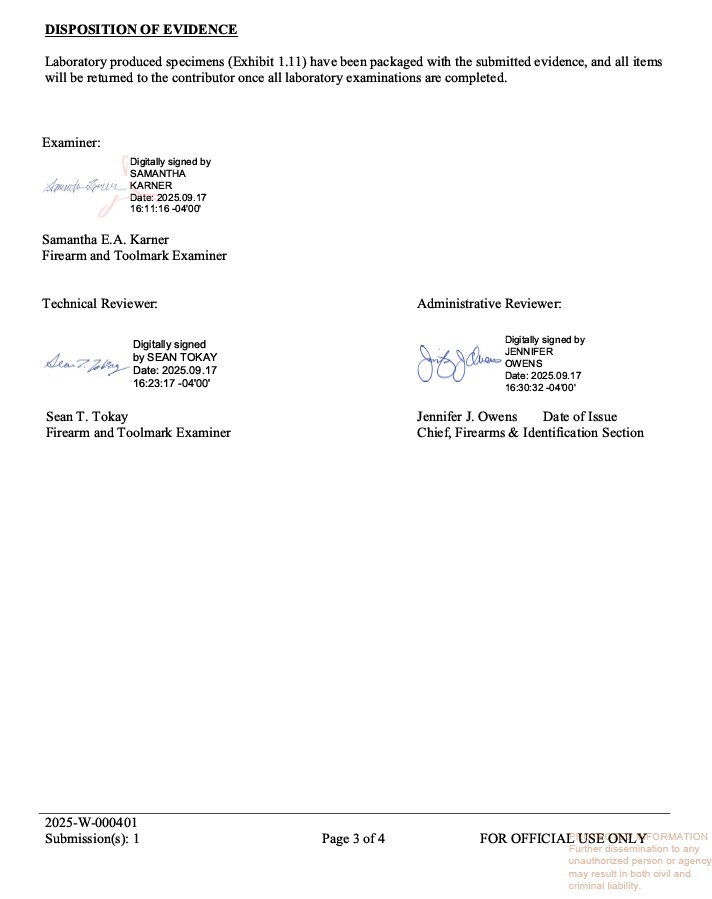
Other Pages In This Section
Visa Revocations After Online Celebrations
Visa revocations, deportations and a reported 600-plus workplace actions followed celebration posts. It is the aftermath thread with the least to do with ballistics and the most to do with how institutions behave under pressure.
Read this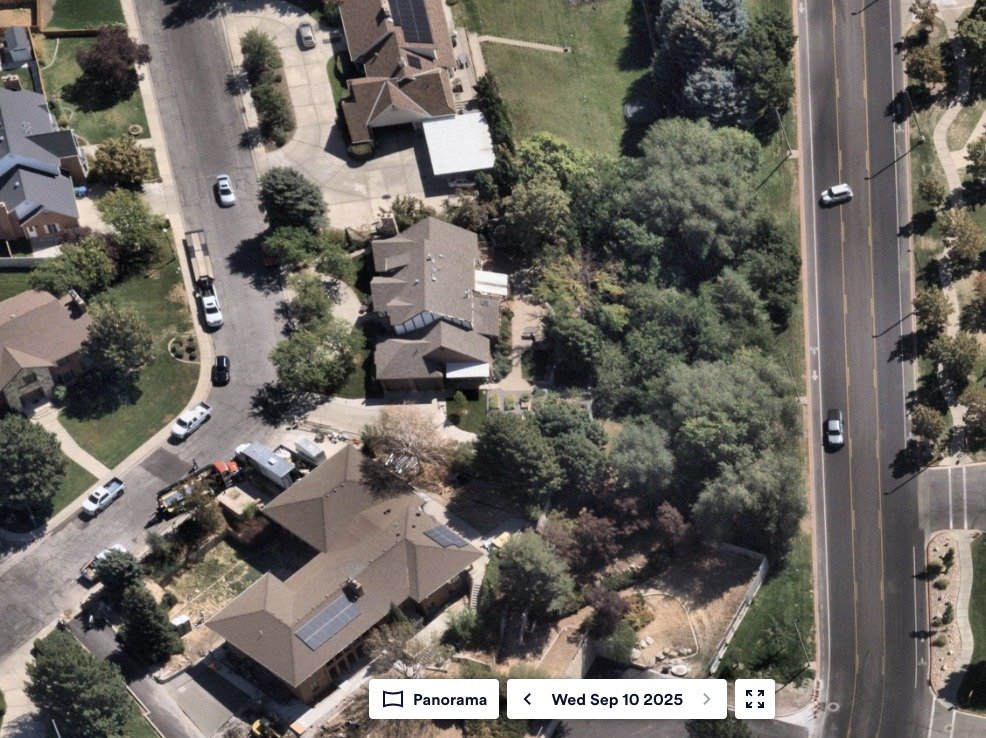
The House at 691 W 925 S, Orem
An unverified citizen allegation says the attack was staged from a house a quarter-mile north of campus. The strangest documented fact is that Utah Valley University itself bought the property in 2019 — which makes its use records public.
Read thisThe Staging Allegation — 691 W 925 S
The claim is one sentence long, with no named source, no date and no described evidence. The page states it exactly as recorded, then sets out the five things that would confirm or kill it.
Read thisThe routing hub for everything past 12:23 PM — surrender, paving, gag orders, resignations, visa enforcement. It is built as a question-first table, so you start from what you actually want to know instead of from a chronology.
Read thisElsewhere In The Investigation
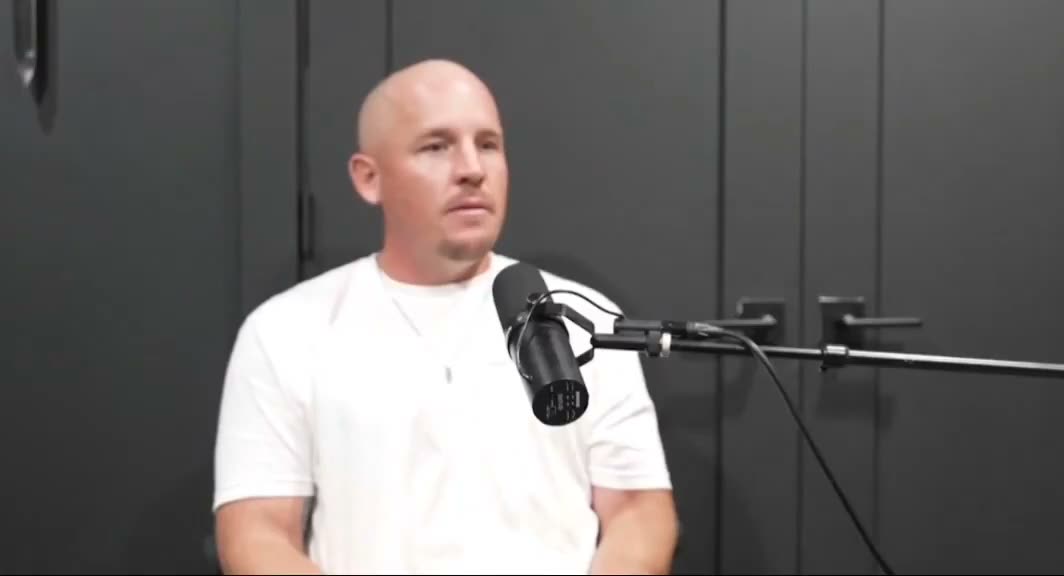
Pavers — Dan Merrell's Account
The contractor describes on camera being called on a Sunday to pave the courtyard where Charlie Kirk was killed, and says the coordinators told him the order came from the top. His interview is the origin of the whole paving story.
Read this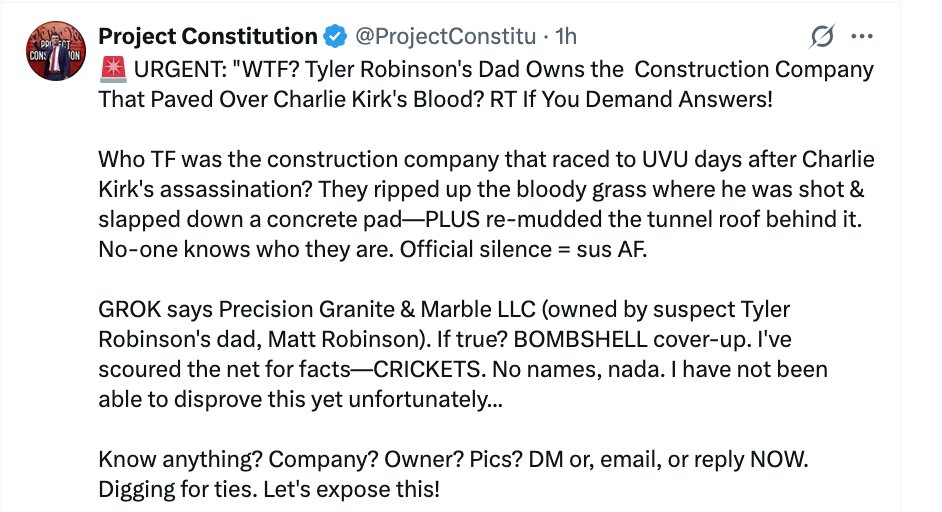
The attributed claim, from the contractor's own interview, that the paving order came down from the governor and the FBI director with a finish-by-Monday deadline. Attributed commentary, not a court finding.
Read thisLandscaping Crew Replaced Dirt With Pavers
Soil was hauled out of the tent courtyard and pavers went down over the exact spot where Charlie Kirk fell. If that ground would have shown residue, it is gone.
Read this
The anomalies citizen investigators argue obscure who actually killed Charlie Kirk, gathered in one place and each marked as claim rather than finding.
Read thisThis website's author is @HolonCitizen on X and YouTube/@HolonCitizen. Follow me there.
Interesting
- A witness says the FBI asked him to delete his 4K footage.
- A Utah County Sheriff timeline records a clothing mismatch before the surrender call.
- Joe Kent says on the record his center's foreign-ties hunt was ordered to stop.