Tyler Robinson’s Alleged Personal and Ideological Motives (As Reported)
Prosecutors and mainstream outlets anchor the case in Tyler Robinson's personal and ideological motives. Citizen researchers often reframe his role as patsy, courier, or manipulated participant. This page holds both frames; it does not adjudicate guilt.
Official and mainstream motive categories (as reported)
From charging documents and press coverage:
Ideological opposition
- Online activity suggesting resentment toward Charlie's positions on transgender issues, conservative politics, and Christianity.
- Described as politically left-leaning or hostile to right-wing figures in media summaries.
Partner and identity grievance
- Reports that Charlie's rhetoric was perceived as personally hurtful to Robinson's partner, intensifying anger.
- Sourced through acquaintances and filings cited by journalists — not a public Robinson confession.
Radicalization and mental-health background
- Intense online engagement, gaming communities, extremist-adjacent content exposure.
- Mental-health and isolation references in TV segments — used to support self-radicalized lone actor narrative.
Financial deposits (as reported)
Public reporting states that investigators cited roughly $20,000 in additional deposits that some coverage associated with Robinson's live-in partner, and framed as supporting an ideological motive rooted in hostility to conservatives and Christians (as paraphrased from that reporting). Robinson's partner is a private individual who has not been charged with any offense, and nothing here should be read as a claim of knowledge of or participation in the killing.
How alternative theories reinterpret motive
Patsy and "drop the gun" scenarios
@ProjectConstitu and @RealCandaceO argue:
- Tyler did not confess — arrest traced to father's contact with a "sheriff friend."
- Credible ground theory: told to walk and drop off his gun at a neighboring house.
- Discord logs treated as "fan-fiction script" vs dispatch tapes describing all-black tactical suspect.
Personal motive could still exist while a second actor supplies means and timing — the frames are not mutually exclusive logically.
Recruitment and pre-event visitors (claims)
Unverified claims circulating in public commentary:
- Unusual visitors with out-of-state plates visited the "shooter" before 9/10 — "did not give off a good vibe."
- Parents may have turned Tyler in to save him from a larger plot (speculation in strange-events list).
See Tyler Robinson Recruited and Proof Not Tyler.
Discord, Turkey Tom, and personal context
Long-form videos (e.g., Turkey Tom) and Substack analyses mine Discord/Twiggs chats, drug-use references, and relationship stress. Some interpreters see vulnerability to steering; others warn against over-reading chat fiction.
Tension with strategic motive theories
If Tyler harbored genuine ideological anger, strategic actors might still exploit it:
| Official motive element | Alternative read |
|---|---|
| Roof access 12:15 | Identity/clothing mismatch — Stairs Guy |
| Mauser rifle | Ballistics fragmentation inconclusive — Gun & Bullet |
| Dairy Queen 6:38 PM | Timeline vs on-site black-clad suspect — Black Clothing Suspect |
| Ideological posts | Compatible with manipulation, not proof of solo sniper shot |
Motive Investigation Index routes donor/intel lanes separately.
Cautions
- Prosecutor motive theories are case theories, not convictions.
- Reducing Robinson to a single emotion oversimplifies human behavior.
- Even proven personal motive would not automatically disprove additional participants.
Laws (Charlie Kirk)
Complete Discord/Steam archives, wire-transfer records, and FBI 302s on recruitment steering are among disclosures the Charlie Kirk Investigation Laws may produce.
Public commentary
- Large X cohorts reject the official ideological lone-gunman motive package, citing Discord disputes, timeline gaps, and ATF inconclusive ballistics as reasons the state’s motive story is incomplete.
- Others accept charging documents’ motive framing pending trial proof.
- July 2026 hearing posts focus more on forensic COD than deep motive litigation — motive fights will intensify if the case proceeds to full trial evidence.
Interesting In This Area
- Institutional incentives favour a single prosecutable suspect in any high-profile killing.
- Geopolitical frames argue the operation needed capabilities a lone student would not have.
- The donor and Israel-pressure account offers a motive needing no Discord logs at all.
- The index keeps these lanes apart because each demands a different kind of proof.
Interesting In Other Areas
- Discord told reporters the reported planning messages were not Discord messages at all.
- The confession reached the public as photographs of a roommate's screen, not a platform export.
- Two incompatible stories run on the same logs: partner radicalization, or cultivation.
- A stairwell figure and the man charged differ on build, gait and clothing.
Images

Other Pages In This Section
Geopolitical and Intelligence‑Service Motive Theories (Claims)
Motive frameworks arguing the killing required capabilities beyond a lone gunman — foreign-policy stakes, aircraft movements, and a blocked counterterrorism probe. No court has attributed the killing to any intelligence service.
Read this
Institutional, Media, and Organizational Motive Dynamics (Claims)
Motive that needs no foreign service: lone-actor narrative incentives, a succession announced within hours, insurance and audit pressure, and gag orders shaping which theories could be argued at all. Attributed claims throughout, and not one of them a court finding.
Read thisFour motive lanes kept deliberately apart — donor and Israel-policy friction, the reported death warnings, geopolitical context, and institutional incentives. Each is routed to the page that carries it, and to the disclosure that would settle it.
Read thisElsewhere In The Investigation
The hub for the official suspect — identity mismatches, surrender timeline, the messages, ballistics, family, trial, and the patsy theories. Charged, not convicted.
Read this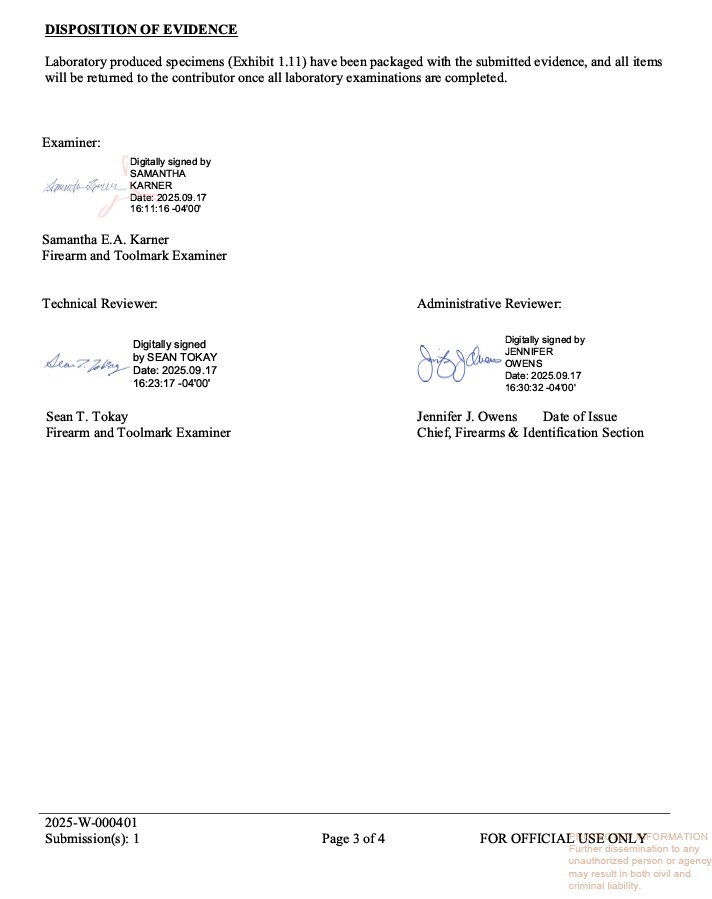
Questions About How the Discord Confession Was Produced (Claims)
The confession reached the public as photographs of a roommate's screen rather than a platform export. Reported questions about its form and authorship follow from that, and remain unresolved.
Read this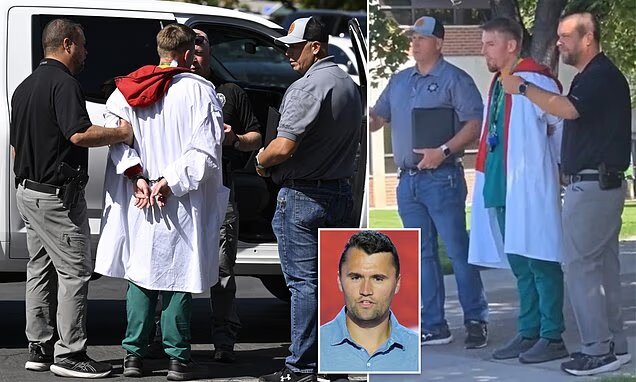
Tyler Robinson — Patsy Framework
Control shows up three ways — behavioral, narrative, and physical — and only the first involves hypnosis at all. That is the point of the framework: the patsy reading survives intact even if nothing ever touched Robinson's mind, which is where the physical arguments come in.
Read this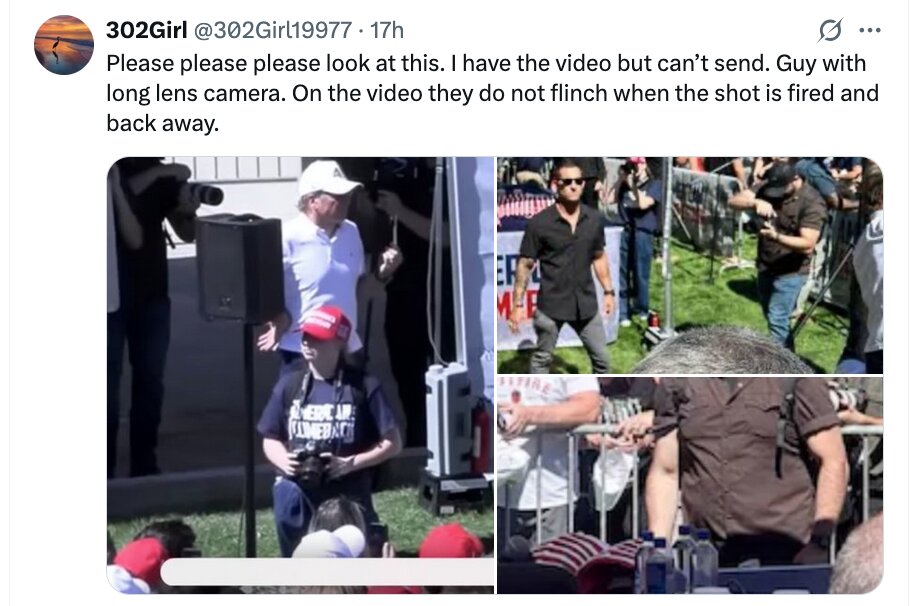
The figure on the stairs and the man in custody, compared frame by frame on build, gait and clothing. The gap between them is the whole argument.
Read thisThis website's author is @HolonCitizen on X and YouTube/@HolonCitizen. Follow me there.
Interesting
- Officials reportedly closed the foreign-involvement question in six days, per cabinet-meeting sources.
- AmericaFest is the single stage recurring most often across this whole investigation.
- Kirk approved a main-stage debate on Israel, Epstein and Mossad weeks before he died.