Officials and Institutions Frequently Mentioned (Context Only)
Overview
This Level_3 page summarizes law‑enforcement, legal, medical, and institutional figures who appear in public reporting and commentary about the Charlie Kirk case. It does not allege wrongdoing or assign blame. Instead, it describes:
- Their publicly reported roles, and
- Where in this project their actions or decisions are discussed in more detail.
Allegations or criticisms involving any of these individuals are treated as claims in the relevant topic sections and are not endorsed as fact here. Individual profiles: Nate Brooksby, Jeff Long. Index: People Investigation Index.
Law‑enforcement leadership and investigators (as reported)
Several law‑enforcement figures are repeatedly mentioned in news and commentary:
- FBI Salt Lake City leadership (as reported):
- Reporting notes that Mehtab Syed was appointed Special Agent in Charge (SAC) of the FBI’s Salt Lake City Field Office in early 2025 and later replaced by Robert Bohls in August 2025, amid broader organizational changes under FBI leadership.
- Bohls is reported to have led an early press conference on the shooting. Commentary sometimes speculates about the timing of these leadership changes; such speculation is explored as claims in sections like FBI and Motive.
- Utah Department of Public Safety (as reported):
- Articles and official statements identify Beau Mason as the Utah Department of Public Safety Commissioner at the time of the incident, with responsibility for overseeing certain state‑level law‑enforcement functions.
- Mason has appeared in press briefings and is referenced in discussions of investigative strategy and public communication.
- Local and campus law enforcement (as reported):
- UVU campus police and local Orem police are reported to have played roles in crowd control, perimeter security, and post‑incident response.
- Details of their deployment and actions are discussed in Security & Law Enforcement and Before.
These individuals are included here because of their institutional roles, not because they have been found culpable of any misconduct. At the federal level, former NCTC director Joe Kent has also entered the record: he has stated that his center's parallel review of possible foreign ties to the assassination was ordered to stop once Tyler Robinson was in custody, before those leads were exhausted.
Judges and attorneys (as reported)
The case has also brought several legal professionals into public view:
- Judge Tony F. Graf Jr. (as reported):
- News coverage and legal‑commentary Substacks identify Judge Tony Graf as the Fourth District Court judge presiding over Tyler Robinson’s case. He was appointed to the bench in 2025.
- He has issued orders relating to scheduling, discovery, and gag orders, which are discussed in Tyler Robinson Trial and Legal Process, Gag Orders, and Hearing Secrecy.
- Defense counsel (as reported):
- Public filings and reports list Kathryn N. Nester (lead counsel), along with Michael N. Burt and Richard G. Novak as experienced capital‑defense attorneys representing Tyler Robinson.
- Online debates about how and why they were appointed are covered as commentary, not fact, in sections like Motive and Timeline.
- Prosecutors and other court actors (as reported):
- Various Utah County prosecutors and court staff appear in case documents and media summaries. Their roles are described in Legal Investigation and Tyler Robinson Trial based on official records and reporting.
Mention of these legal professionals reflects their public, on‑the‑record involvement in the case.
Medical and hospital leadership (as reported)
Medical and hospital officials also feature in discussions of emergency care and autopsy:
- Utah state medical examiner (as reported):
- Public sources identify Dr. Deirdre Amaro as Utah’s chief medical examiner, whose office is responsible for autopsies statewide. She is mentioned in connection with autopsy‑related questions and Utah’s records laws.
- Details about autopsy practice, including limits on public release, are explored in Charlie Kirk Autopsy, Autopsy Law, Medical‑Examiner Practices, and Commentary, and Medical.
- Hospital administration (as reported):
- News releases note that Andrew Zenger became CEO of Timpanogos Regional Hospital in August 2025, a hospital referenced in discussions of Charlie’s emergency care.
- Commentary sometimes speculates about the timing of his appointment; these views are treated as claims, not findings, in sections like Medical and Timeline.
These officials are noted here for their professional roles in Utah’s medical and forensic infrastructure.
Security and event‑protection professionals (as reported)
Finally, several security and protection professionals appear in reporting and online investigations:
- Private security providers (as reported/claims):
- Coverage and interviews refer to firms such as Rockhouse Integrity Group (Integrity Security Solutions) and Shaffer Security Group (SSG), as well as individuals like Greg Shaffer and Brian Harpole, in the context of TPUSA’s event security arrangements at various times.
- Reports describe evolving relationships between TPUSA and these firms, with some commentary questioning staffing decisions before and on the day of the UVU event. These matters are discussed—carefully—as claims in Security & Law Enforcement, Before, and Killer.
- Other named security‑related individuals (as reported/claims):
- Online analyses mention names such as Laine Schoneberger, Dan Flood, and Jeff Long (UVU Police Chief) in discussions of crowd‑control, camera placement, and close‑protection posture.
- Where these names appear in this project, they are presented as part of reconstructing who was present and in what roles, not as determinations of guilt.
As with all individuals in this section, the fact that someone is named reflects public reporting about their involvement or position, not a conclusion by this project that they engaged in misconduct.
Laws (Charlie Kirk)
- The FBI leadership-change directives just before the shooting and the sealed gag-order and discovery filings and why TPUSA's event security firm was swapped are things that the Charlie Kirk Investigation Laws may result in powerful truths coming out that aren't out yet.
Citizen Investigator Claims on X (Officials)
Officials and institutions frequently named in X case discourse include:
- Law enforcement / federal — FBI Salt Lake City leadership; Utah DPS; charging prosecutors.
- Courts — Judge Graf and hearing process commentary (July 2026 prelim coverage).
- Medical — ME office leadership (Amaro), pathologist names from hearing notes (Guajardo spelling per Hull), hospital CEO Andrew Zenger.
- Defense / intel figures in flight threads — Bradley Hansell (SAM/Huachuca commentary on @ProjectConstitu, @hurtfeelingzday).
This section describes the roles in which these names appear in public discussion; it does not assert culpability. Comments about government agencies are matters of public debate, while any reference to a named individual is presented only as a reported claim, with attribution and the presumption of innocence.
This website does not assert as fact that any living person named here committed a crime, did anything wrong or illegal, or had any knowledge of or involvement in the assassination. Names appear only in the context of public discussion and reporting. Nothing here is a finding by this website.
Interesting In This Area
- The FBI's Salt Lake lead changed a month before, replacing Mehtab Syed.
- Utah's chief examiner was new, and her report came in through one agent.
- UVU's police chief commanded roughly six officers for the entire outdoor event.
- The sheriff's surrender account and the reported 6:25 custody time do not align.
Interesting In Other Areas
- The officer's body camera died during the rooftop minutes everyone disputes.
- Gag orders and sealing keep the case record largely out of view.
- The state's brief describes a downward path while damage runs C2 to C7.
- Bomb dogs were reportedly stood down and no counter-snipers covered the roof.
Images
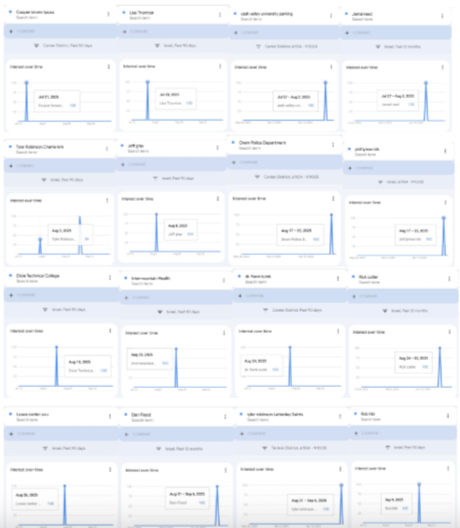
Other Pages In This Section
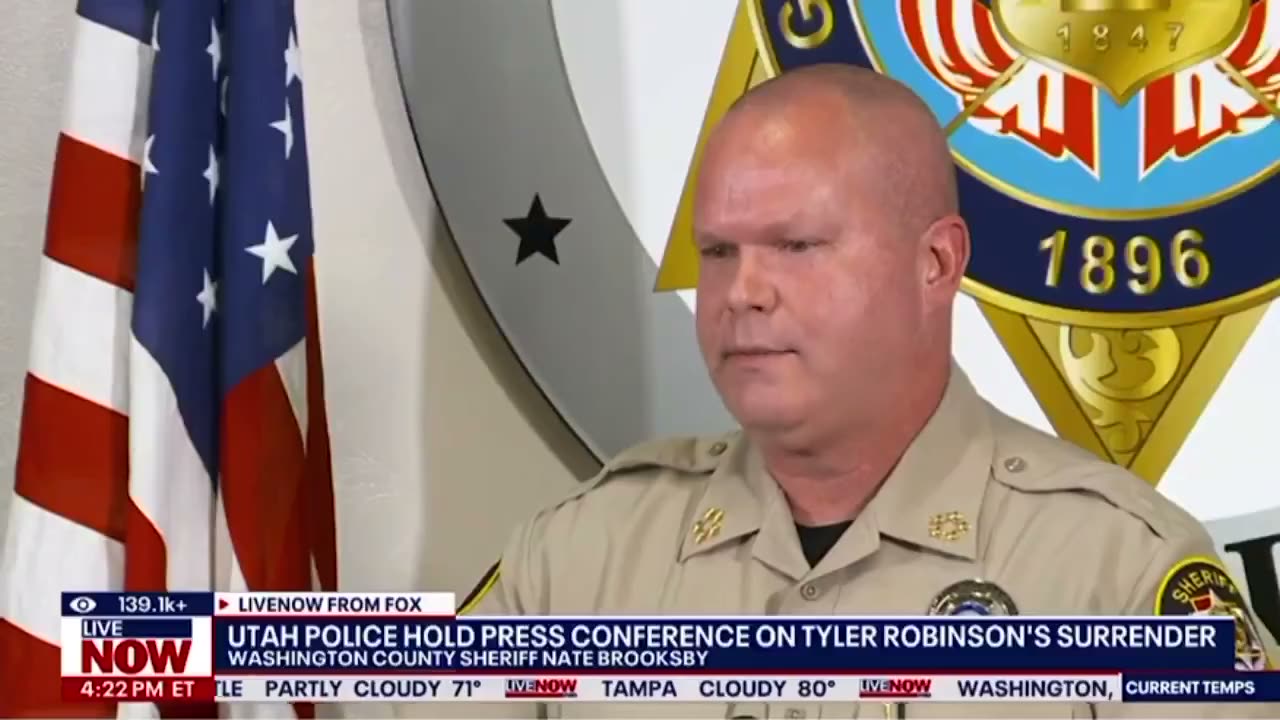
The sheriff at the centre of the September 11 surrender. The unresolved detail is the clock: commentary contrasts a reported 8:02 p.m. account with a 6:25 p.m. custody time, and hours matter for everything that followed.
Read this
UVU's police chief commanded roughly six officers for an event with a rooftop nobody was on. The perimeter and rooftop failures begin with how thin that contingent was.
Read this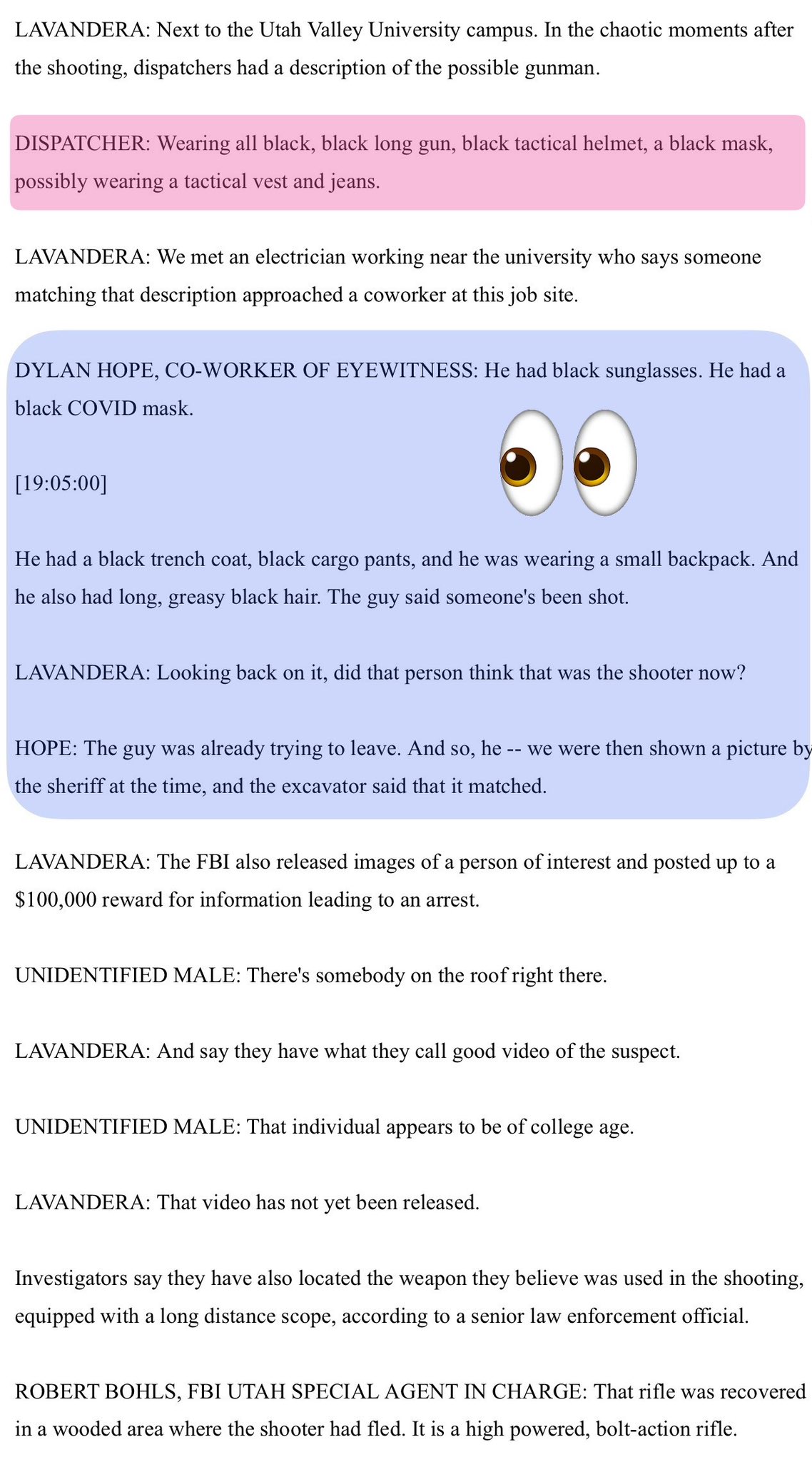
He took over the FBI's Salt Lake City field office in August 2025 and led the September 11 press conference. Citizen researchers keep returning to the timing: a new lead, one month before.
Read this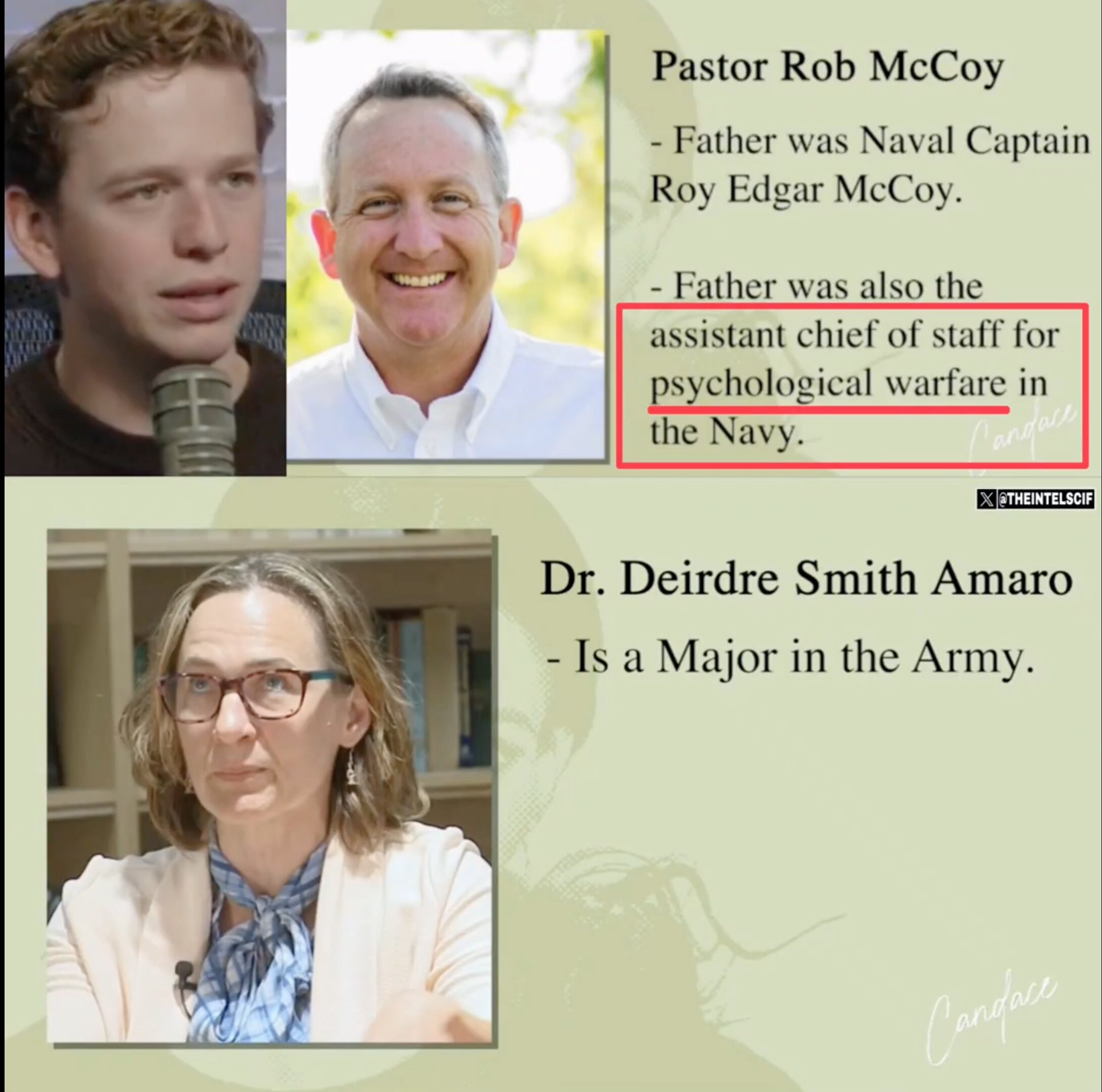
Utah's chief medical examiner, newly in the role. Her autopsy report reached the court through Agent David Hull rather than from her own mouth on the stand.
Read thisElsewhere In The Investigation
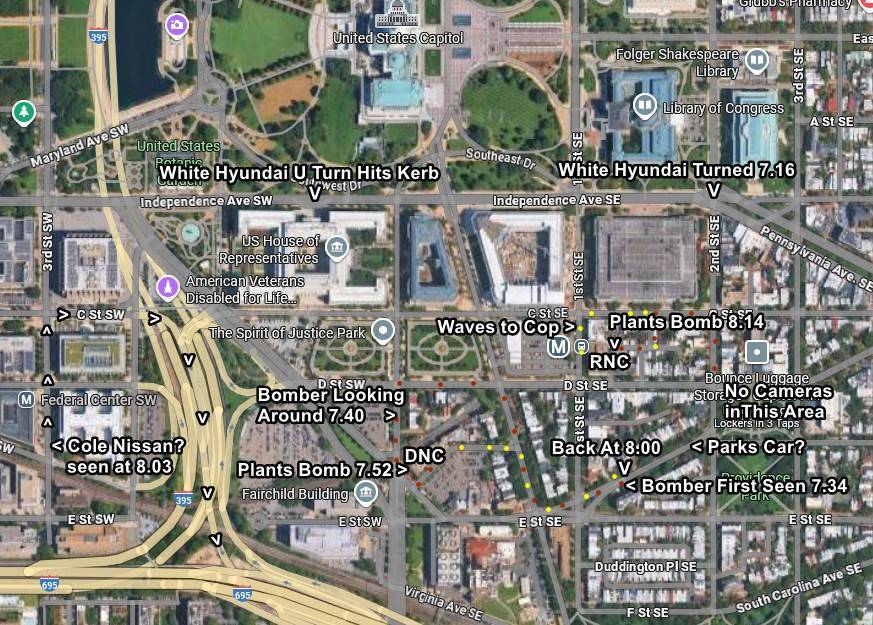
Explosive-detection dogs were reportedly stood down before the event. If a device belongs on the table at all, that decision is where to start.
Read this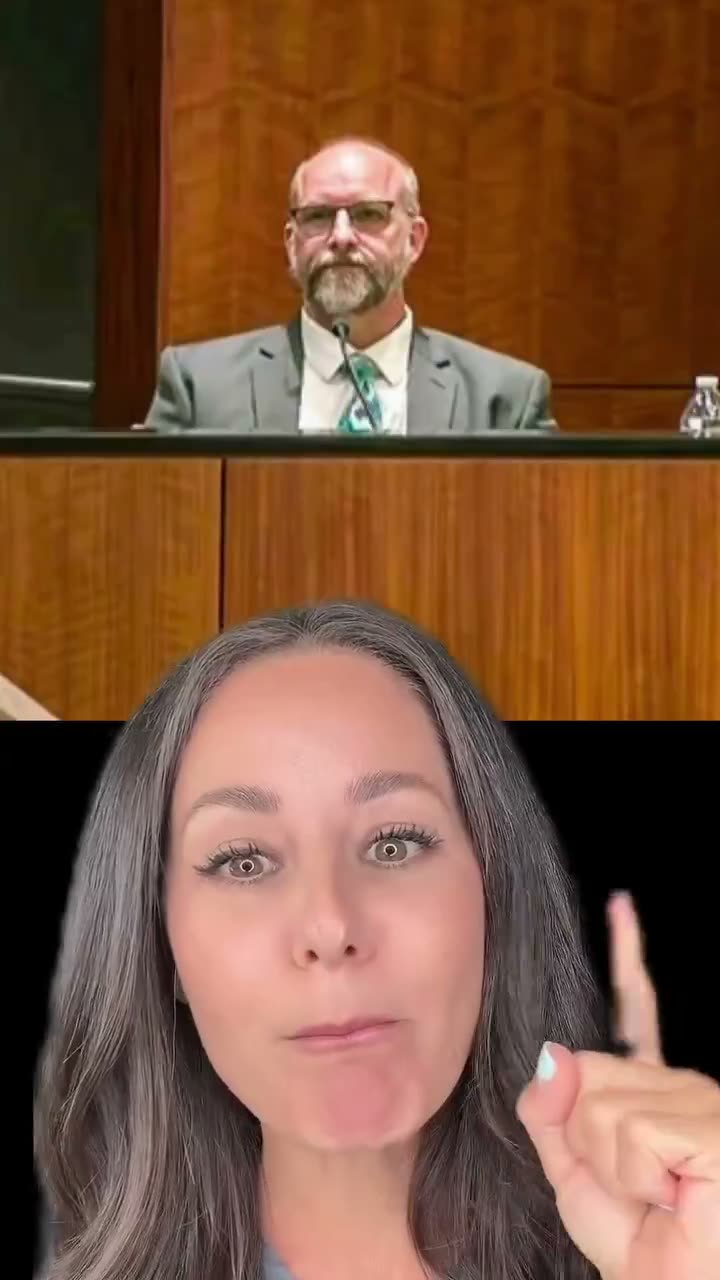
Officer Bagley — Body Cam Died on Roof
The body camera on the officer who reached the roof reportedly died there. The minutes it would have covered are the exact minutes everyone is arguing about.
Read this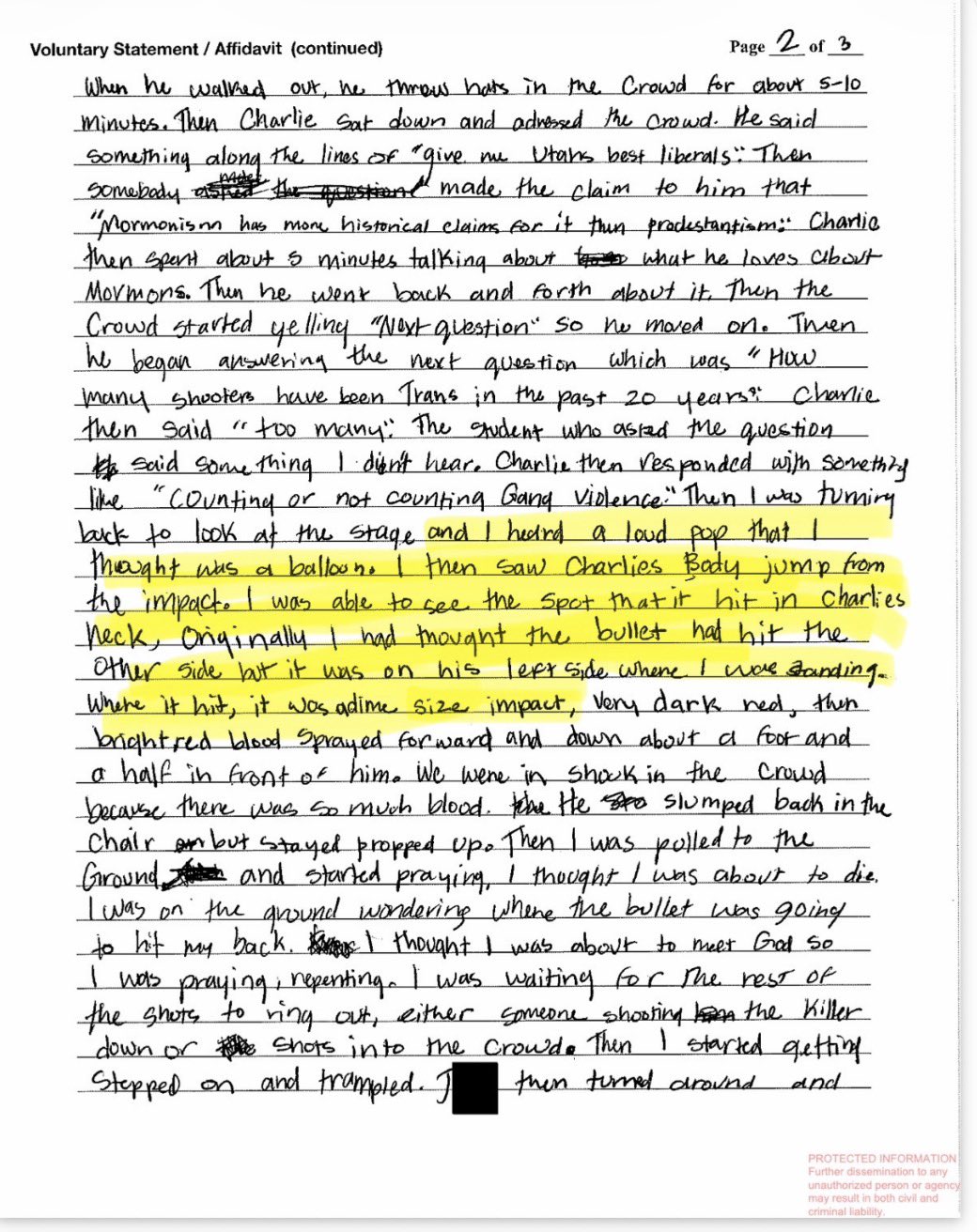
The Missing Spinal Cord: When Was It Removed?
The spinal cord is the part of the body that would settle the trajectory argument, and it is the part missing from the account. When it was removed, and by whom, is still unanswered publicly.
Read this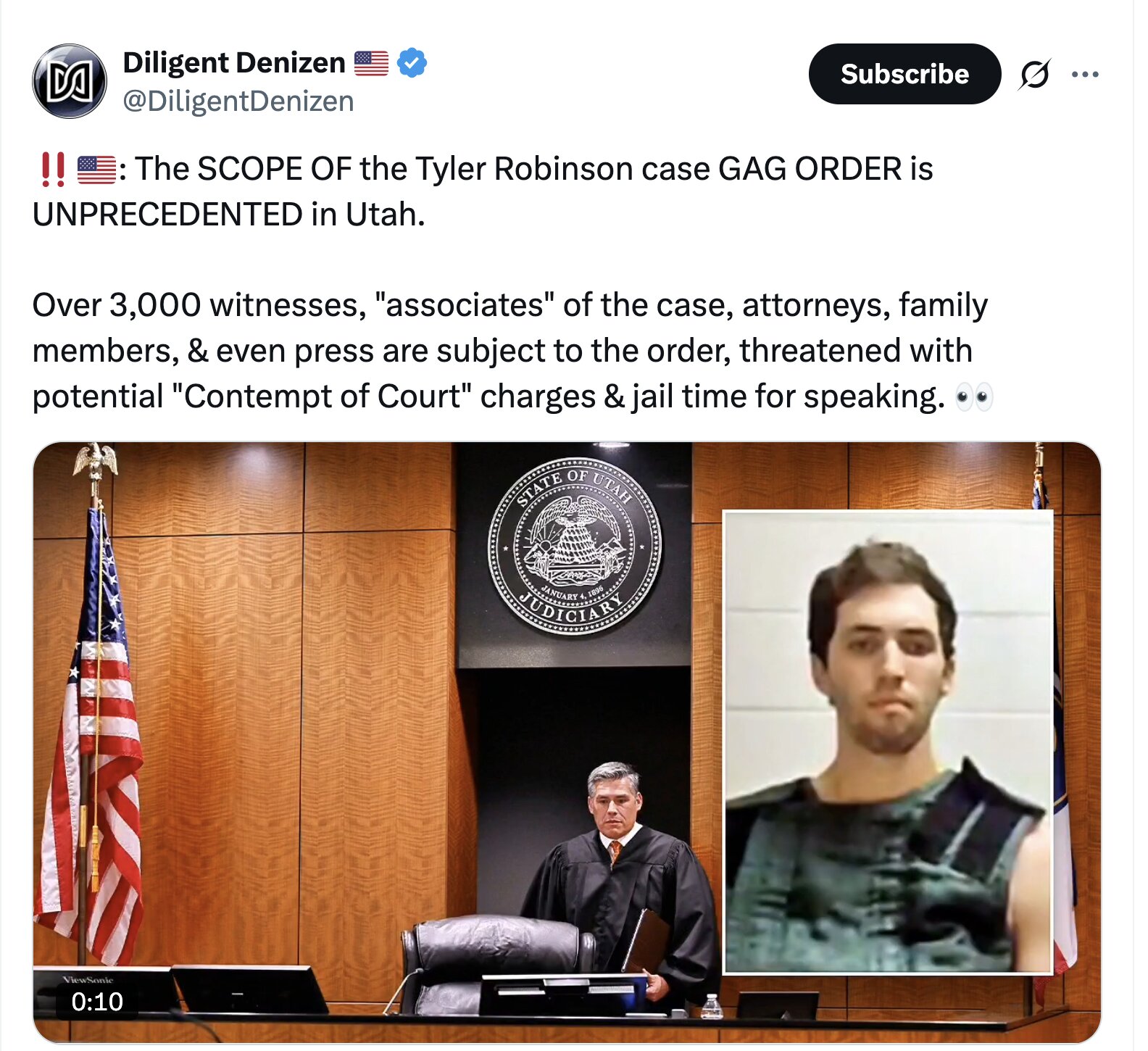
Gag orders and sealing keep most of this case out of public view. The page catalogues what has been closed off and on what stated grounds.
Read thisThis website's author is @HolonCitizen on X and YouTube/@HolonCitizen. Follow me there.
Interesting
- A witness ten feet from Kirk may be the man media introduced under another name.
- Carroll cites an April 2025 message warning against an Iran regime-change war.
- The Israel index treats the blocked federal follow-up itself as the finding.